
자료
세계시민교육에 대한 이해를 넓히고 연구, 옹호 활동, 교수, 학습 등을 향상시킬 수 있는 다양하고 유용한 자료를 찾아보세요.
2,776 건의 결과가 검색되었습니다
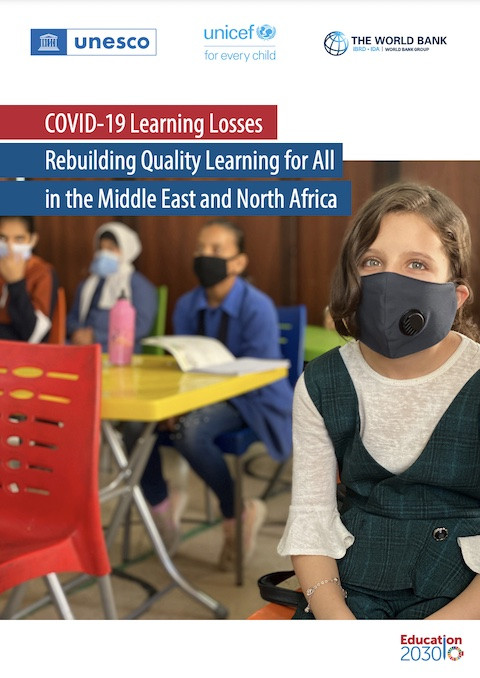 COVID-19 Learning Losses: Rebuilding Quality Learning for All in the Middle East and North Africa 발행 연도: 2021 저자: Hana Yoshimoto | Jeannette Vogelaar | Brenda Haiplik 단체 저자: UNESCO | United Nations Children's Fund (UNICEF) | World Bank An entire generation of children in the Middle East and North Africa (MENA) is estimated to be affected by the education crisis determined by the COVID-19 pandemic, with potential impacts that are going beyond the immediate/short term and also well beyond the education domain itself, with consequences on children’s socialisation, mental well-being, and future perspective of being active members of their society, including in the labor market. More information on the impact of the crisis would help countries to put in place strategies to mitigate the impacts. Timely investment and action to prevent extreme impacts of this crisis on education are of paramount importance in MENA, which already tackling a learning crisis before the COVID-19 outbreak.This publication delineates the overall education status in MENA after the breakout of COVID-19 pandemic, by presenting the education responses in MENA, and assessing the potential learning loss through a simulation analysis, recommendations are provided on how to build back better and enhance access and quality learning for all.
 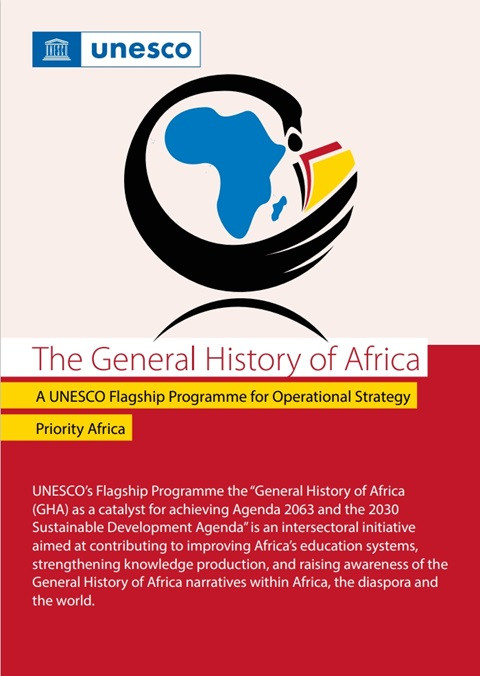 The General History of Africa: A UNESCO Flagship Programme for Operational Strategy Priority Africa 발행 연도: 2024 단체 저자: UNESCO As part of UNESCO’s Operational Strategy for Priority Africa (2022 – 2029), the General History of Africa (GHA) Flagship Programme responds to the challenge of reconstructing Africa and its diaspora historical memory and conscience by revisiting Eurocentric and colonial biases in the representation of their history and societies. It aims to advance a common identity and pride in Africa’s heritage, progress towards greater justice and an inclusive and fair future through the reappropriation and production of knowledge on Africa and its diaspora history in a manner that could contribute to the transformation of education in Africa and beyond. The GHA is aligned with the African Union Agenda 2063, The Africa We Want, the Charter for African Cultural Renaissance, and the United Nations 2030 Agenda for Sustainable Development.
  UNESCO Futures of Education Report Explained by Members of the International Commission 발행 연도: 2022 단체 저자: UNESCO Initiated by UNESCO, the International Commission on the Futures of Education has prepared a new report on how education can best shape the future of humanity and the planet. In this video, members of the Commission and its chair explain the main recommendations and defining features of their report, Reimagining our futures together: A new social contract for education. The report is part of UNESCO’s Futures of Education initiative which aims to rethink education and shape the future. The initiative is catalyzing a global debate on how knowledge, education and learning need to be reimagined in a world of increasing complexity, uncertainty, and precarity.
  Mapping Cultural Policies in Small Island Developing States: Amplifying SIDS Voices in the Global Policy Dialogue on Culture and Sustainable Development 발행 연도: 2025 단체 저자: UNESCO Mapping Cultural Policies in Small Island Developing StatesSpanning three sub-regions – the Atlantic, Indian Ocean and South China Sea (AIS), the Caribbean, and the Pacific – the Small Island Developing States (SIDS) represent 39 UNESCO Member States and 9 Associate Members. Countries and regional organizations have increasingly demonstrated their commitment in the context of fast-evolving policy landscape and cultural ecosystems, encompassing the different dimensions of culture through its diversity and a wide spectrum of concerned stakeholders. Today, a SIDS-specific, culture-led development vision is on the rise.Culture has a multifaceted impact on sustainable development pathways of the SIDS, from climate action, biodiversity protection and food security to economic diversification, social inclusion, gender equality or urban sustainability. The voices and aspirations of SIDS must be heard in the global policy dialogue, in acknowledgement of their priorities, opportunities and insights. International cooperation efforts by UNESCO and other organizations are also essential in identifying areas for future policy investment and adaptation at the national and regional levels.Following the UNESCO World Conference on Cultural Policies and Sustainable Development – MONDIACULT 2022, SIDS are championing culture for sustainable development towards the adoption of a new Programme of Action, the Antigua and Barbuda Agenda for SIDS 2024-2034.
 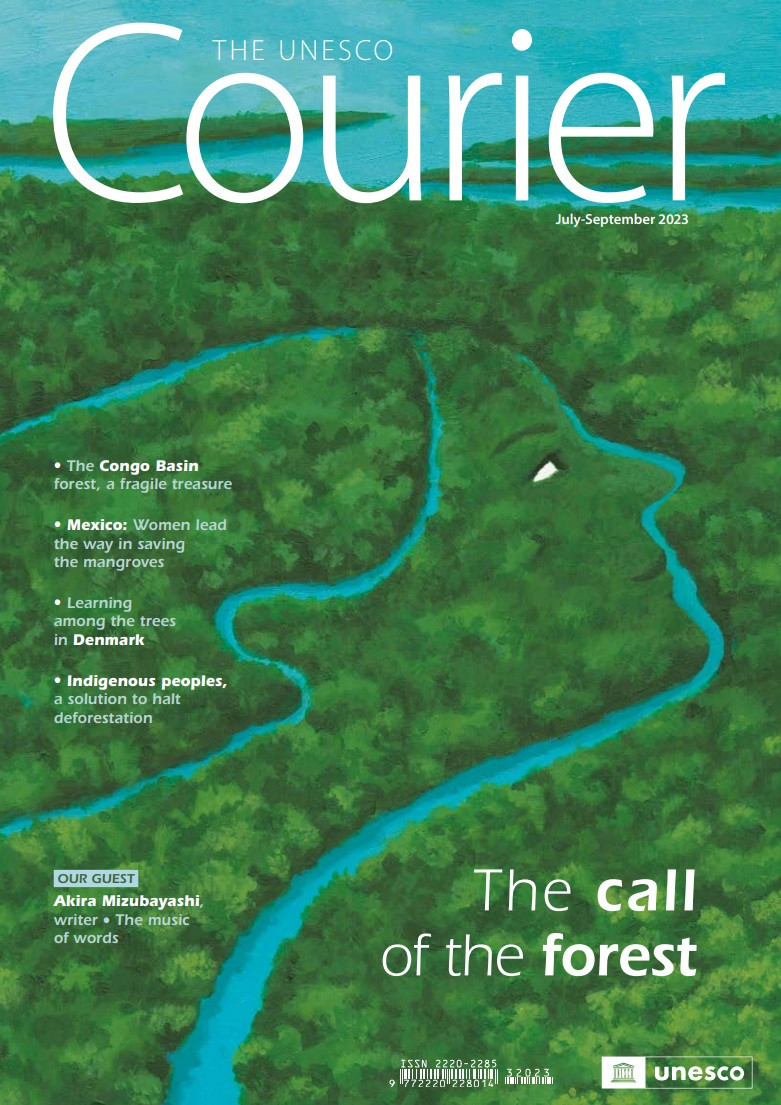 UNESCO World Heritage sites: key to biodiversity conservation 발행 연도: 2023 단체 저자: UNESCO
 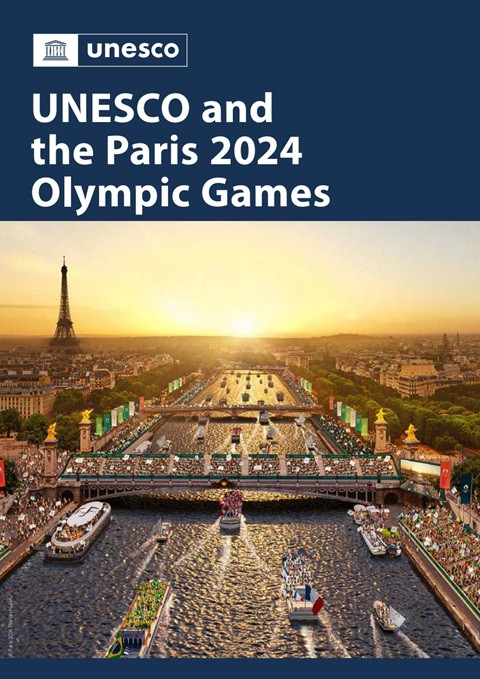 UNESCO and the Paris 2024 Olympic Games 발행 연도: 2024 단체 저자: UNESCO For the Olympic and Paralympic Games, UNESCO and The Associated Press are joining forces to ensure quality media coverage of Paris 2024. The Associated Press will set up on the premises and roof of the UNESCO headquarters building, facing the Eiffel Tower, to record and broadcast its television programmes. The Agency will provide spectators with unique media coverage of the Games and offer original content on the social impact of sport and sports policies, in collaboration with UNESCO.
 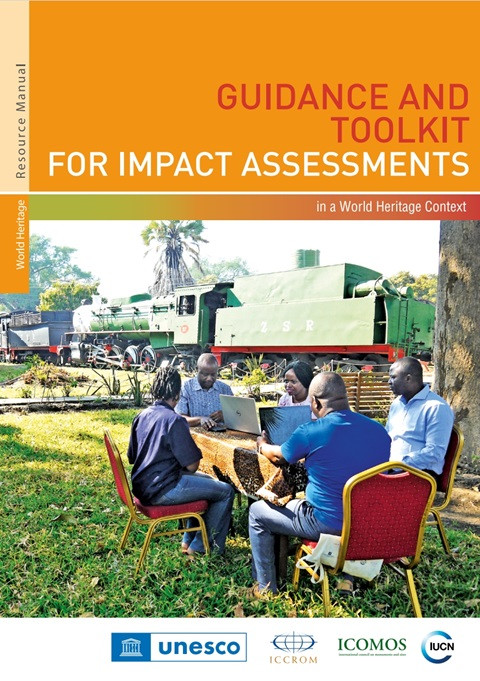 Guidance and Toolkit for Impact Assessments in a World Heritage Context 발행 연도: 2022 저자: Sarah Court | Eugene Jo | Richard Mackay | Mizuki Murai | Riki Therivel 단체 저자: UNESCO | International Centre for the Study of the Preservation and Restoration of Cultural Property (ICCROM) | International Council on Monuments and Sites (ICOMOS) | International Union for Conservation of Nature (IUCN) | Korea R. Cultural Heritage Administration As the World Heritage Convention celebrates its 50th anniversary in 2022, over 1100 sites around the world are recognized as World Heritage - places that are so valuable to humanity that there conservation has been deemed our collective responsibility. Yet many of these exceptional places face increasing pressure from diverse types of development projects within and around the sites. Assessing the impacts of such projects – before deciding to proceed with their implementation – is essential to both prevent damage to World Heritage and identify sustainable options.The Guidance and Toolkit for Impact Assessments in a World Heritage Context is the go-to reference that explains the process for achieving these goals. Offering practical tips and tools including checklists and a glossary, it provides a framework for conducting impact assessments for cultural and natural heritage sites.Developed by UNESCO and the Advisory Bodies to the World Heritage Committee, ICCROM, ICOMOS and IUCN, this Guidance and Toolkit fosters cross-sectoral, multidisciplinary collaboration to identify solutions for both protecting World Heritage sites and supporting good quality and appropriate development . States Parties to the World Heritage Convention, heritage managers, decision-makers, planners and developers are invited to use it to help realise our collective commitment to passing on our precious heritage to future generations. 세계유산 영향평가 지침서 발행 연도: 2023 저자: Sarah Court | Eugene Jo | Richard Mackay | Mizuki Murai | Riki Therivel 단체 저자: 유네스코 | International Centre for the Study of the Preservation and Restoration of Cultural Property (ICCROM) | International Council on Monuments and Sites (ICOMOS) | International Union for Conservation of Nature (IUCN) | Korea R. Cultural Heritage Administration 2022년 '세계유산협약'이 탄생 50주년을 맞았다. 그동안 전 세계적으로 1,100건이 넘는 곳이 세계유산으로 공인되어 그 가치를 보존하는 것이 인류 전체의 의무로 인식되고 있다. 그러나 많은 세계유산이 유산 안팎의 다양한 개발행위로 인해 위협받고 있다. 그러한 개발행위로 인한 유산의 훼손을 예방하고 지속가능한 대안을 찾기 위해서는 개발행위를 실행하기로 결정하기에 앞서 유산에 미칠 영향을 평가해야한다. 이러한 목적을 위해 편리하게 활용할 수 있도록 나온 안내서가 바로 본 '세계유산 영향평가 지침서(이하 '지침서')이다. 지침서는 실무에 바로 쓸 수 있도록 용어정의, 점검목록 등을 제안하며 문화유산과 자연유산의 영향평가에 모두 사용할 수 있다. UNESCO와 세계유산위원회의 자문기구인 ICCROM, ICOMOS와 ICUN이 개발한 이 지침서는 다양한 분야를 넘나드는 학제적 협력을 통해 세계유산보호와 고품질의 적절한 개발이라는 일석이조의 목적을 달성하는 대안을 찾기 위한 안내서이다. 세계유산협약의 당사국, 유산관리자, 계획정책 당국과 개발 사업자까지 본 지침서를 활용하여, 인류의 공동 사명인 소중한 유산을 후세에 전승하는데 기여해 주길 바란다.
 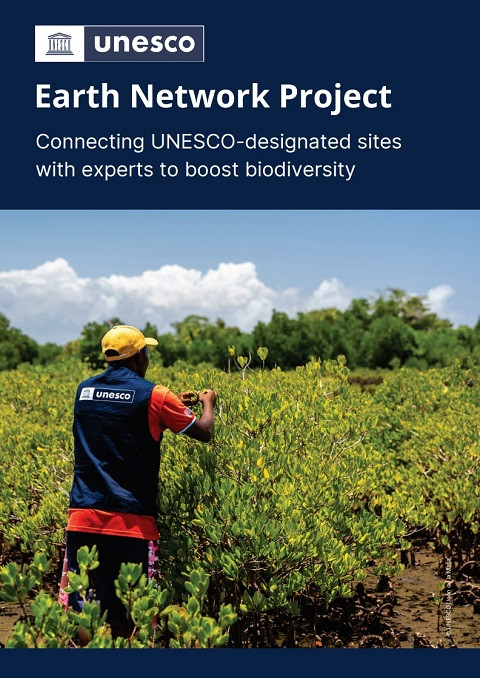 Earth Network Project: Connecting UNESCO-Designated Sites With Experts to Boost Biodiversity 발행 연도: 2024 단체 저자: UNESCO The Earth Network project was launched in 2021 with the support of the Government of Italy. It brings together over 380 experts from more than 60 countries, encompassing diverse biodiversity-related fields that include land restoration, environmental management and environmental law. The specialists volunteer to put their unique skillsets and knowledge at the disposal of sites designated by UNESCO which request their assistance. The Earth Network covers all scientific domains and proudly combines different forms of knowledge: scientific, practitioner, local and indigenous. On the ground, these experts provide technical advice, collect data, build partnerships, and provide training tailored to the specific needs and priorities of each UNESCO-designated site.
 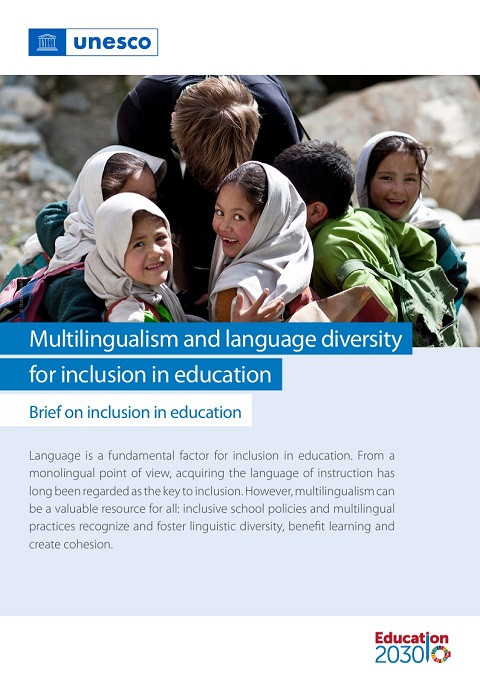 Multilingualism and Language Diversity for Inclusion in Education: Brief on Inclusion in Education 발행 연도: 2024 저자: Piet Van Avermart 단체 저자: UNESCO Language is a fundamental factor for inclusion in education. From a monolingual point of view, acquiring the language of instruction has long been regarded as the key to inclusion. However, multilingualism can be a valuable resource for all: inclusive school policies and multilingual practices recognize and foster linguistic diversity, benefit learning and create cohesion.