
자료
세계시민교육에 대한 이해를 넓히고 연구, 옹호 활동, 교수, 학습 등을 향상시킬 수 있는 다양하고 유용한 자료를 찾아보세요.
3,435 건의 결과가 검색되었습니다
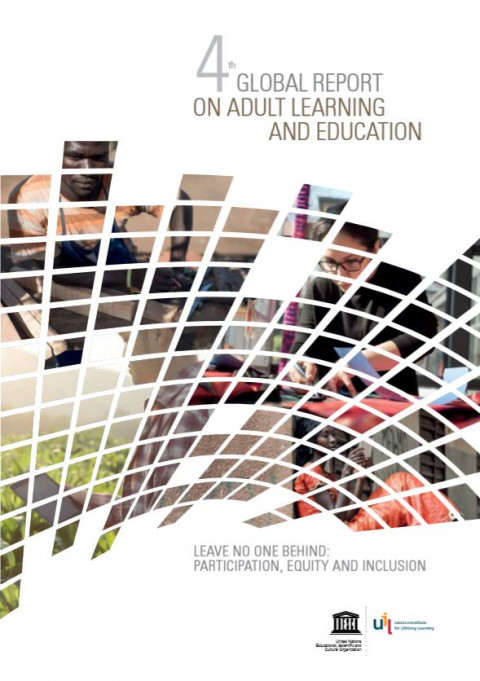 4e rapport mondial sur l’apprentissage et l’éducation des adultes: ne laisser personne pour compte: participation, équité et inclusion 발행 연도: 2019 단체 저자: Institut de l’UNESCO pour l’apprentissage tout au long de la vie (UIL) Le présent rapport démontre le rôle crucial que la participation à l’apprentissage et à l’éducation des adultes peut jouer dans la réalisation des objectifs de développement durable, souligne la distance qu’il nous reste à parcourir pour y parvenir et propose des orientations claires sur la manière d’aller de l’avant. Il ressort clairement du GRALE 4 que, ce n’est qu’en accordant la priorité à l’apprentissage et à l’éducation des adultes et en rééquilibrant les ressources en conséquence, que nous réussirons à réaliser pleinement et justement l’engagement à travers le Programme de développement durable à l’horizon 2030 de « ne laisser personne pour compte » dans notre quête d’un développement équitable, inclusif et durable.
  Adult Education and the Challenge of Exclusion: UIL Policy Brief 10 발행 연도: 2020 단체 저자: UNESCO Institute for Lifelong Learning (UIL) The fourth Global Report on Adult Learning and Education (G RALE 4) shows that raising participation in adult learning and education (ALE) is pivotal for achieving not only Sustainable Development Goal (SDG) 4 on education, but also the other goals of the 2030 Agenda, spanning issues from climate change to poverty reduction. This places an onus on countries to review ALE policies and progress in the light of evidence on participation, and to invest in sustainable provision that is accessible to all learners, throughout their lives and in all the different contexts in which adults learn. L’éducation des adultes face au défi de l’exclusion : Note d’orientation de l’UIL n° 10 발행 연도: 2020 단체 저자: UNESCO Institute for Lifelong Learning (UIL) Le quatrième Rapport mondial sur l’apprentissage et l’éducation des adultes (GRALE, Global Report on Adult Learning and Education) révèle qu’il est crucial d’accroître la participation à l’apprentissage et à l’éducation des adultes (AEA) pour atteindre non seulement l’objectif 4 des objectifs de développement durable (ODD) sur l’éducation, mais aussi les autres objectifs de ce Programme, qui vont du changement climatique à la réduction de la pauvreté. Cela impose aux pays d’évaluer leurs politiques en matière d’apprentissage et d’éducation des adultes, de progresser à la lumière des données factuelles sur la participation, ainsi que d’investir dans une offre durable accessible à tous les apprenants, tout au long de la vie et dans les différents contextes d’apprentissage. La educación de adultos y el desafío de la exclusion : Informe de políticas del UIL 10 발행 연도: 2020 단체 저자: UNESCO Institute for Lifelong Learning (UIL) El cuarto Informe Mundial sobre el Aprendizaje y la Educación de Adultos (GRALE 4) muestra que aumentar la participación en el aprendizaje y la educación de adultos (AEA) es fundamental para alcanzar no solo el Objetivo de Desarrollo Sostenible (ODS) 4 sobre educación, sino también los otros objetivos de la Agenda 2030, que abarcan temas que van desde el cambio climático hasta la reducción de la pobreza. Esto exige que los países revisen las políticas y los progresos del AEA de acuerdo con los datos sobre participación e inviertan en una oferta sostenible que sea accesible a todos los educandos, a lo largo de su vida y en todos los diferentes contextos en los que los adultos aprenden.
 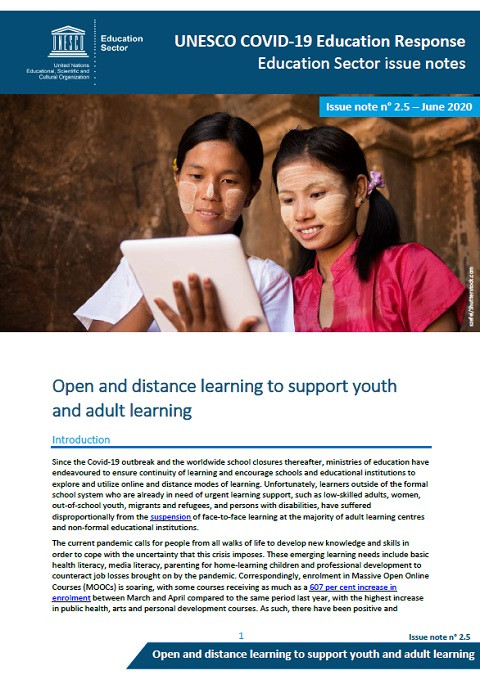 UNESCO COVID-19 Education Response: Open and Distance Learning to Support Youth and Adult Learning (Education Sector Issue Note; No. 2.5 – June 2020) 발행 연도: 2020 단체 저자: UNESCO Institute for Lifelong Learning (UIL) A new UNESCO issue note, produced by the UNESCO Institute for Lifelong Learning (UIL), aims to support education policy-makers and planners in ensuring open and distance learning to support youth and adult learning in the context of the current pandemic, now and in its aftermath.Since the COVID-19 outbreak and the worldwide school closures that followed, ministries of education have endeavoured to ensure continuity of learning and encourage schools and educational institutions to explore and utilize online and distance modes of learning. Unfortunately, learners outside of the formal school system who are already in need of urgent learning support, such as low-skilled adults, women, out-of-school youth, migrants and refugees, and persons with disabilities, have suffered disproportionally from the suspension of face-to-face learning at the majority of adult learning centres and non-formal educational institutions.The current pandemic calls for people from people from all socio-economic backgrounds, wherever they live in the world, to develop new knowledge and skills in order to cope with the uncertainty that this crisis imposes. These learning needs include basic health literacy, media literacy, parenting for home-schooling children and professional development to counteract job losses brought on by the pandemic. Correspondingly, enrolment in massive open online courses (MOOCs) is soaring. As such, there have been positive and demand-driven trends in exploring alternative options, such as open and distance learning (ODL), to ensure the continuity and expansion of non-formal education and adult learning.This issue note takes stock of opportunities and challenges in using ODL, both online and offline as defined in the UNESCO Issue Note on Distance Learning Strategies, for youth and adult learners outside the formal education system. After examining key issues and illustrating promising cases from public and private sectors, it provides key messages for policy interventions to support inclusive lifelong learning for youth and adults during and after the current pandemic.UNESCO Education Sector’s issue notes cover key topics related to the COVID-19 education response.
  Annual Report 2018 : UNESCO INSTITUTE FOR LIFELONG LEARNING 발행 연도: 2019 단체 저자: UNESCO Institute for Lifelong Learning (UIL) UIL’s 2018 Annual Report shows how, last year, our work contributed to fulfilling our mission to support better policy-making and strengthen the capacities of UNESCO Member States in the field of lifelong learning. UIL’s vision is for all children, youth and adults to benefit from quality lifelong learning, within the framework of sustainable development and peace, and we pursue it in the context of the United Nations 2030 Agenda for Sustainable Development, particularly Sustainable Development Goal (SDG) 4 on quality education and lifelong learning. Its publications are a valuable resource for education researchers, planners, policy-makers and practitioners.
 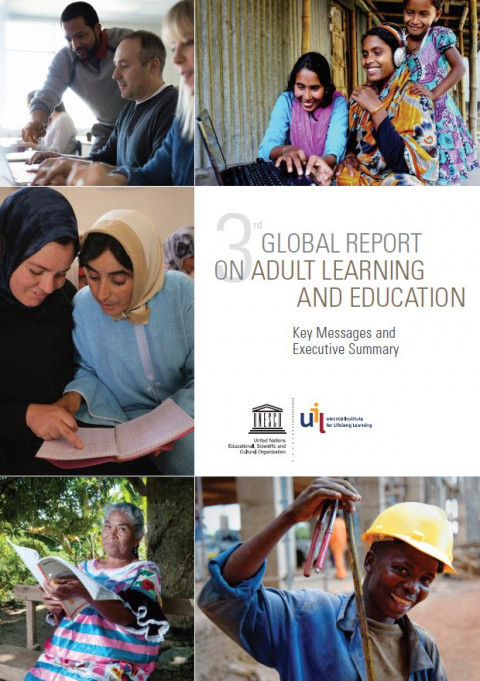 [Summary] 3rd Global Report on Adult Learning and Education: The Impact of Adult Learning and Education on Health and Well-being, Employment and the Labour Market, and Social, Civic and Community Life; Key Messages and Executive Summary 발행 연도: 2016 단체 저자: UNESCO Institute for Lifelong Learning (UIL) The third Global Report on Adult Learning and Education (GRALE III) draws on monitoring surveys completed by 139 UNESCO Member States to develop a differentiated picture of the global state of adult learning and education (ALE). It evaluates countries’ progress in fulfilling the commitments they made in the Belém Framework for Action, which was adopted at the Sixth International Conference on Adult Education (CONFINTEA VI) in 2009.In addition, the report examines the impact of ALE on three major areas: health and well-being; employment and the labour market; and social, civic and community life. GRALE III provides policymakers, researchers and practitioners with compelling evidence for the wider benefits of ALE across all of these areas. In so doing, it highlights some of the major contributions that ALE can make to realizing the 2030 Agenda for Sustainable Development. This report is guided by three goals: first, to analyse the results of a monitoring survey of UNESCO Member States, and to take stock of whether countries are fulfilling the commitments they made at CONFINTEA VI; second, to strengthen the case for adult learning and education with evidence of its benefits on health and well-being,employment and the labour market, and social, civic and community life; and third, to provide a platform for debate and action at national, regional and global levels. [Résumé] 3e rapport mondial sur l'apprentissage et l'éducation des adultes: l'impact de l'apprentissage et l'éducation des adultes sur la santé et le bien-être, l'emploi et le marché du travail, et la vie sociale, civique et communautaire, points à retenir et résumé exécutif 발행 연도: 2016 단체 저자: UNESCO Institute for Lifelong Learning (UIL) Le troisième Rapport mondial sur l’apprentissage et l’éducation des adultes (GRALE III) s’appuie sur les réponses de 139 Etats membres de l’UNESCO à l’enquête de suivi GRALE III et brosse un tableau nuancé de la situation de l’apprentissage et de l’éducation des adultes dans le monde. Le rapport évalue les progrès accomplis par les pays dans la mise en oeuvre des engagements qu’ils ont pris dans le Cadre d’action de Belém, document adopté lors de la sixième Conférence internationale sur l’éducation des adultes (CONFINTEA VI) en 2009.En outre, le rapport examine l’impact de l’apprentissage et de l’éducation des adultes sur trois domaines majeurs : la santé et le bien-être ; l’emploi et le marché du travail ; et la vie sociale, civique et communautaire. GRALE III fournit aux décideurs politiques, chercheurs et praticiens des preuves irréfutables des bénéfices élargis de l’apprentissage et l’éducation des adultes dans tous ces domaines et éclaire, de ce fait, les contributions essentielles qu’ils peuvent apporter à la réalisation du Programme de développement durable à l’horizon 2030.Ce rapport répond à trois objectifs : premièrement, analyser les résultats d’un suivi des États membres de l’UNESCO et établir si les pays remplissent les engagements pris à CONFINTEA VI ; deuxièmement, promouvoir l’apprentissage et l’éducation des adultes par des preuves de leurs effets positifs sur la santé et le bien-être, l’emploi et le marché du travail, ainsi que la vie sociale, civique et communautaire ; et troisièmement fournir une plate-forme de débat et d’action aux niveaux national, régional et international. [Resumen] 3do Informe mundial sobre el aprendizaje y la educación de adultos: el impacto del aprendizaje y la educación de adultos sobre la salud y el bienestar, el empleo y el mercado de trabajo, y la vida social, cívica y comunitaria, mensajes clave y resumen ejecutivo 발행 연도: 2016 단체 저자: UNESCO Institute for Lifelong Learning (UIL) El tercer Informe mundial sobre el aprendizaje y la educación de adultos (GRALE III) se funda en los estudios de monitoreo completados por 139 Estados Miembros de la UNESCO a fin de producir una visión diferenciada sobre el estado global del aprendizaje y la educación de adultos (AEA). Evalúa el progreso de los países en lo que respecta al cumplimiento de los compromisos que hicieron en el Marco de acción de Bélem, aprobado en la VI Conferencia Internacional de Educación de Adultos (CONFINTEA VI) en 2009.Además, el informe examina el impacto del AEA en tres áreas importantes: salud y bienestar; empleo y mercado de trabajo, así como vida cívica y comunitaria. El GRALE III brinda a los responsables de la formulación de política, investigadores y practicantes pruebas convincentes de los más amplios beneficio del AEA en todas estas áreas. Al hacerlo, destaca algunas de las contribuciones más importantes que el AEA puede hacer para realizar los objetivos de la Agenda 2030 para el Desarrollo Sostenible.El presente informe responde a tres objetivos: en primer lugar, analizar los resultados de una encuesta de seguimiento realizada entre los Estados Miembros de la UNESCO y determinar si los países están cumpliendo los compromisos que contrajeron en CONFINTEA VI; en segundo lugar, reforzar los argumentos en favor del aprendizaje y la educación de adultos con datos fehacientes sobre los beneficios que reportan en los ámbitos de la salud y el bienestar, el empleo y el mercado de trabajo y la vida social, cívica y comunitaria; y en tercer lugar, proporcionar un referente a partir del cual debatir y pasar a la acción a escala nacional, regional e internacional.
  Curriculum GlobALE: Competency Framework for Adult Educators 발행 연도: 2021 단체 저자: DVV International | German Institute for Adult Education, Leibniz Centre for Lifelong Learning | International Council for Adult Education | UNESCO Institute for Lifelong Learning (UIL) This publication introduces Curriculum globALE, a basic com- petence framework for the training of adult educators worldwide. By providing a modular, competency-based framework and cross-curricular approach, Curriculum globALE is unique in its aim to professionalize adult learning and education (ALE) on an international scale, via the competencies that support adult educators to work in any educational setting, field or form.It strives to ensure that educators’ knowledge, competencies, skills and attitudes are of a professional standard.Curriculum globALE is suitable to different contexts and its character and structure enables its inclusion in diverse national education systems.Curriculum globALE aims to: enhance the professionalization of ALE by providing a common reference framework for adult learning programmes and a suggested standard of competencies for adult educators; support ALE providers in the design and implementation of ‘train-the-trainer’programmes; foster knowledge exchange and mutual understanding between adult educators worldwide.