
자료
세계시민교육에 대한 이해를 넓히고 연구, 옹호 활동, 교수, 학습 등을 향상시킬 수 있는 다양하고 유용한 자료를 찾아보세요.
1,451 건의 결과가 검색되었습니다
 L'avenir de l'éducation à la citoyenneté mondiale après COVID 발행 연도: 2020 단체 저자: Spur Change Ceci est une vidéo du webinaire Activer le changement intitulé "L'Avenir de l'éducation à la citoyenneté mondiale apres Covid" qui a eu lieu le 22 octobre 2020.
 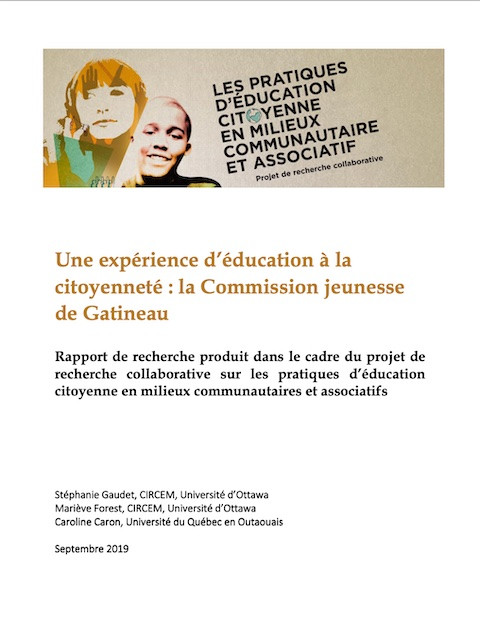 Une expérience d’éducation à la citoyenneté: La Commission jeunesse de Gatineau; Rapport de recherche produit dans le cadre du projet de recherche collaborative sur les pratiques d’éducation citoyenne en milieux communautaires et associatifs 발행 연도: 2019 저자: Stéphanie Gaudet | Mariève Forest | Caroline Caron 단체 저자: Conseil de recherches en sciences humaines du Canada | Centre interdisciplinaire de recherche sur la citoyenneté et les minorités (CIRCEM) | Université d'Ottawa Notre équipe de recherche collaborative pose l'hypothèse qu'une partie de la réponse aux enjeux d’apathie politique, de cynisme et de radicalisation se trouve dans une éducation citoyenne vivante et engageante. Alors que les représentants de milieux communautaires et municipaux participant à des initiatives d’éducation à la citoyenneté auprès de jeunes peuvent témoigner de l’importance que prennent ces expériences dans la vie de ces personnes, peu de chercheurs se sont penchés sur cette dynamique jusqu’à présent. Cette recherche collaborative vise à comprendre la portée éducative, citoyenne et démocratique de l’expérience participative des jeunes qui prennent part à des initiatives d’éducation à la citoyenneté. Six initiatives ayant cours en dehors des cursus scolaires ont été retenues dans cette étude, dont la Commission jeunesse de Gatineau (CJG). Ce rapport porte précisément sur les résultats d’observations ethnographiques et d’entretiens réalisés auprès de la CJG au cours de l’année 2017- 2018. Les questions de recherche que nous avons retenues sont les suivantes : Comment la CJG conçoit-elle la citoyenneté des jeunes? Quelles qualités citoyennes sont développées? Quelles approches éducatives sont mises de l’avant? Quelle est la portée démocratique des activités réalisées? La CJG est une instance municipale qui rassemble des jeunes, qui les incite à réfléchir et à discuter des dimensions de la vie municipale les touchant particulièrement et qui les amène à prendre des décisions à ce sujet. Plus largement, la CJG se présente comme une « école municipale de participation citoyenne. » Elle se dit également « une instance représentative reconnue en matière de jeunesse, où le sentiment d’appartenance à l’école et à la ville est un levier de l’engagement des adolescents. »
  Civil and Political Participation From Immigrant Citizens (Diversité urbaine; vol. 9, no. 2) 발행 연도: 2016 저자: Carolle Simard | Michel Pagé 단체 저자: Groupe de recherche diversité urbaine (GRDU) | Centre d’études ethniques des universités montréalaises (CEETUM) In this article, we report an exploratory investigation carried amongst new Canadian citizens originating from non-democratic countries. Our study is based on the analysis of 30 interviews with Montrealers from Haiti, Lebanon and Peru. The variables presented here are most likely to explain their per- ceptions with regard to the Canadian and Québécois political systems and their political behaviors. We are particularly interested in the interrelation- ships between three groups of variables: political, psychological and socio- demographic. Participation civique et politique des citoyens issus de l’immigration (Diversité urbaine; vol. 9, no. 2) 발행 연도: 2016 저자: Carolle Simard | Michel Pagé 단체 저자: Groupe de recherche diversité urbaine (GRDU) | Centre d’études ethniques des universités montréalaises (CEETUM) Dans cet article, nous présentons les conclusions d’une enquête exploratoire réalisée auprès de nouveaux citoyens canadiens originaires de pays non dé- mocratiques. Sont notamment étudiées les variables susceptibles d’expliquer leurs perceptions des systèmes politiques canadien et québécois ainsi que leurs comportements politiques. Plus particulièrement, nous nous intéressons aux interrelations entre ces trois groupes de variables : politiques, psycholo- giques et sociodémographiques. Notre étude s’appuie sur l’analyse de 30 entretiens semi-directifs complétés auprès de répondants montréalais nés en Haïti, au Liban et au Pérou.
 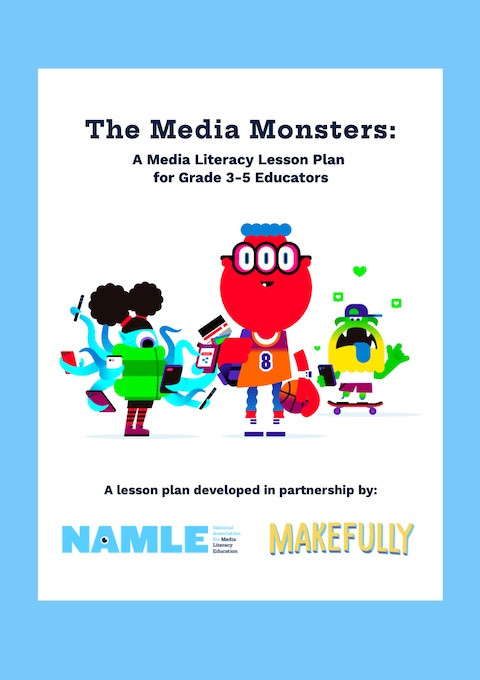 The Media Monsters: A Media Literacy Lesson Plan for Grade 3-5 Educators 발행 연도: 2021 단체 저자: National Association for Media Literacy Education (NAMLE) | Makefully Studios In response to the increasing amount of media children are exposed to on a regular basis, the National Association for Media Literacy Education (NAMLE) and Makefully Studios are teaming up to provide educators with unique content that will inspire relevant, rich, and age-appropriate discussion in their classrooms about how we all consume and interact with different types of media. Using this lesson plan, students will begin to identify, reflect and recognize behaviors and media practices in themselves, and identify the media literacy skills needed to improve the ways they engage with media and think critically about the media messages around them.
  Citizen Participation and Participatory Research in the Field of Social Inequalities (Nouvelles pratiques sociales; vol. 30, no. 1) 발행 연도: 2018 저자: Baptiste Godrie | Guillaume Ouellet | Robert Bastien | Sylvia Bissonnette | Jean Gagné | Luc Gaudet | Audrey Gonin | Isabelle Laurin | Chrisopher McAll | Geneviève McClure | François Régimbal | Jean-François René | Mireille Tremblay 단체 저자: University of Quebec at Montreal This article analyzes the effect of citizen participation on social inequalities, based on research conducted by a multidisciplinary team of researchers and community partners. Citizen participation may ensure comments and knowledge that have been completely or partially left out of the public space to emerge, and can help participants to get rid of a pre-established look towards people living in poverty. The analysis also focuses on power relations build during participatory research processes. Participation citoyenne et recherches participatives dans le champ des inégalités sociales (Nouvelles pratiques sociales; vol. 30, no. 1) 발행 연도: 2018 저자: Baptiste Godrie | Guillaume Ouellet | Robert Bastien | Sylvia Bissonnette | Jean Gagné | Luc Gaudet | Audrey Gonin | Isabelle Laurin | Chrisopher McAll | Geneviève McClure | François Régimbal | Jean-François René | Mireille Tremblay 단체 저자: University of Quebec at Montreal Cet article analyse les effets de processus de participation citoyenne sur les inégalités sociales à partir de projets de recherche réalisés par les auteurs de l’article, membres d’une équipe multidisciplinaire composée de chercheurs et de partenaires issus de la communauté. La participation citoyenne peut avoir pour effet de lutter contre les inégalités sociales, en particulier d’accès à la parole des groupes les plus exclus, et de conduire les différents participants à se défaire d’un regard préétabli vis-à-vis des populations en situation de pauvreté. L’analyse met également l’accent sur les rapports de pouvoir au cœur des processus participatifs de recherche.
  Consortium en développement social de la Mauricie: Rapport d’activités 2020-2021 발행 연도: 2021 단체 저자: Consortium en développement social de la Mauricie (Canada) Bien que le CONSORTIUM en développement social de la Mauricie existe depuis 2000, c’est l’an dernier qu’il a pris son autonomie organisationnelle en obtenant sa charte en juillet 2020 et en tenant virtuellement l’assemblée générale de fondation le 16 décembre dernier. Même si les assises reposent sur une base ancrée solidement dans toute la Mauricie, cette histoire à la fois extraordinaire et singulière témoigne de la constance dans la mobilisation, la concertation, l’accompagnement et l’action.La symbolique de la nébuleuse représente cette capacité de se déposer, de se relier, de naviguer, de s’ancrer, de se rapprocher pour mieux comprendre et entendre, de prendre du recul pour avoir une vision globale des différents enjeux. Cette capacité de voir, analyser et agir repose sur les expertises et compétences de chaque personne qui gravite avec nous dans ces contours qui demandent agilité, souplesse et adaptabilité.Nos lentilles permettent à la fois de considérer le passé en regardant dans le rétroviseur, de focaliser sur le présent en s’ancrant dans vos réalités et de projeter une lumière sécurisante sur une vision globale et juste des défis et enjeux à relever en conjoncture d’incertitude.Chose certaine devant ces doutes, la lutte contre la pauvreté et l’exclusion sociale demeurent essentielle toujours dans l’espoir et la volonté d’améliorer les conditions de vie de la population de la Mauricie.
  Rapport de la tournée de consultations autonomes des membres du ROCAJQ dans le cadre des Journées de la jeunesse 발행 연도: 2020 단체 저자: Regroupement des organismes communautaires autonomes jeunesse du Québec (ROCAJQ) Véritable levier pour l’action communautaire autonome jeunesse, le Regroupement des organismes communautaires autonomes jeunesse du Québec (ROCAJQ) défend et représente les intérêts de ses quelque 65 membres qui à eux seuls rejoignent chaque année près de 300000 jeunes aux parcours de vie différenciés. Depuis 1991, nous soutenons les organismes qui travaillent en approche globale auprès des jeunes de 12 à 35 ans. Notre mission est de reconnaître le potentiel des jeunes aux parcours de vie différenciés et de porter leurs voix et celles des organismes qui les accompagnent auprès de la population et des instances publiques. Répartis dans 9 régions du Québec, nos membres ont des pratiques diversifiées et complémentaires. Contexte Le ROCAJQ est fier de participer aux consultations du gouvernement dans le cadre du renouvellement de la stratégie jeunesse du Québec et plus particulièrement, de son plan d’action. Trois consultations locales, à Montréal, à Québec et au Saguenay, ont été réalisées dans le but de prendre le pouls de nos membres afin de refléter le plus fidèlement possible leurs enjeux et ceux des jeunes qui les fréquentent. La diversité de pratiques et l’enracinement dans leur communautéet les particularités de celles-ci sont ainsi mis davantage en évidence, ce qui démontre un réseau fort d’un très grand champ d’action pour rejoindre les jeunes aux parcours de vie diversifiés. Nous sommes convaincus que la stratégie jeunesse est l’outil nécessaire pour relever les défis qui attendent ces jeunes au cours des prochaines années. Cependant, nos membres sont d’avis que celle-ci, dans sa forme actuelle, ne s’adresse pas et ne rejoint pas suffisamment les jeunes aux parcours de vie différenciés.En effet, plutôt que de s’attarder aux actions à poser pour assurer une égalité des chances à tous les jeunes, la stratégie semble se concentrer davantage sur les jeunes dont le cheminement est plus typique. Les intervenants des organismes membres du ROCAJQ ont précisé que les enjeux et besoins des jeunes vont au-delà des sept axes tels que proposés dans la stratégie et que, pour y répondre adéquatement, il faut garder en tête les besoins de base de la pyramide de Maslow, à savoir se loger, se nourrir et s’épanouir dans un milieu sécuritaire.De plus, la présentation actuelle ne semble pas inclure suffisamment les jeunes de la diversité ou marginalisés issus de la diversité LGBTQ+,desminorités visibles ni les jeunesvivant avec un handicap. Elle n’est pas présentée et expliquée d’une façon inclusive et les membres du ROCAJQ croient que des ajustements majeurs sont nécessaires. Au ROCAJQ, nous croyons que cette responsabilité doit être partagée, et une co-construction entre les jeunes issus de toutes les sphères socio-économiques et le gouvernement serait de mise. Les organismes membres ont tous d’abord consulté les jeunes qu’ils rejoignent avant de participer aux consultations organisées par le ROCAJQ. Heureux de faire partie des partenaires de choix du gouvernement, nous sommes persuadés qu’ensemble nous pourrons ajuster la stratégie et le nouveau plan d’action de la Politique jeunesse, afin de nous assurer que tous les jeunes, même les plus vulnérables, s’y retrouvent à titre égal et que celle-ci répondeà leurs préoccupations et réalités.
  Grande conultation jeunesse: Je suis… au-delà des étiquettes 발행 연도: 2018 단체 저자: Regroupement des organismes communautaires autonomes jeunesse du Québec (ROCAJQ) Le présent rapport vise à rendre compte des discussions, réflexions et recommandations élaborées par les jeunes présent·e·s à la Grande consultation jeunesse 2018, tenue les 19 et 20 novembre à l’hôtel Le Concorde de Québec et ayant pour thème #JeSuis...au-delà des étiquettes. Dans un premier temps, nous abordons les propos tenus par les participant·e·s en plénière, autour de la thématique générale. Par la suite, nous exposons les réflexions et recommandations des jeunes réparti.e.s en quatre ateliers reflétant différents contextes dans lesquels ils et elles évoluent (école, famille, emploi et société). Les thèmes de l’école et de la société ont particulièrement suscité l’intérêt des jeunes.La plénière a révélé la nécessité de dépasser les étiquettes, souvent posées au premier regard, et fait émerger le constat selon lequel le réel problème n’est pas les étiquettes, mais le jugement négatif qui y est associé. Lors des ateliers, les jeunes ont exprimé comment les étiquettes pouvaient avoir un impact négatif sur différentes sphères de leur vie. Celles-ci nuisent à leur construction identitaire et minent leur estime et confiance en eux. Dans le cadre de l’atelier portant sur l’école, les participant·e·s ont dénoncé : la dévalorisation de certains parcours scolaires qui feraient obstacle à leur épanouissement, la stigmatisation des élèves en difficulté dans les classes et écoles dites régulières, ainsi que les jugements négatifs portés par l’école, le personnel scolaire et les élèves. L’ensemble de ces étiquettes teinterait négativement l’expérience scolaire des jeunes, et de ce fait, leur réussite éducative. Autour du thème familial, les jeunes ont soulevé diverses situations problématiques : leur diagnostic en santé mentale peut influencer négativement le jugement de leurs parents, la conception binaire et hétéronormative ainsi que la pression à performer et à correspondre à l'idéal parental. Les jeunes ont soutenu qu’il valait parfois mieux s’affranchir, du moins partiellement, de sa famille pour être soi-même et retrouver la confiance en soi. Les participant·e·s réuni·e·s dans l’atelier emploi ont, de leur côté, déploré le fait que leur motivation à se trouver un emploi se heurte souvent au manque de compréhension des employeurs à l’égard de leurs problèmes de santé mentale et physique. Les jeunes ont critiqué les différentes discriminations faites à leur endroit notamment, par rapport à leur apparence physique. Pour conclure, ils ont souligné le manque de sensibilité pour la conciliation travail-études. L'atelier société a quant à lui, réuni une très grande diversité de jeunes. D’ailleurs, de nouvelles réflexions sont apparues : le traitement et le manque de soutien à l’égard des personnes marginalisées et le rôle des médias sociaux et de la publicité dans la (re)production des étiquettes. Chacun de ces ateliers a donné lieu à certaines recommandations propres au thème qui sont énumérées à la fin de chacune des sections. Par ailleurs, des recommandations communes ont émergé témoignant de l’importance de faire de la sensibilisation et de l’éducation populaire autour des étiquettes, ainsi que d’écouter et de considérer la parole des jeunes. Parmi ces recommandations, soulignons : augmenter les ressources, l’aide et l’accompagnement psychosocial en santé mentale, sensibiliser les différents groupes (personnel scolaire, professionnel.le.s et intervenant.e.s social et l'ensemble de la population) aux effets négatifs des étiquettes. Favoriser la désignation non genrée des personnes ainsi qu’écouter et prendre en compte la parole des jeunes. Notamment, en multipliant les rencontres à l’image de la Grande consultation jeunesse.