
자료
세계시민교육에 대한 이해를 넓히고 연구, 옹호 활동, 교수, 학습 등을 향상시킬 수 있는 다양하고 유용한 자료를 찾아보세요.
36 건의 결과가 검색되었습니다
 Teaching Lebanese-Oriental Economic and Social History: Promoting a Societal Unity Which Acknowledges and Values Diversity 발행 연도: 2012 저자: لبكي، بطرس 단체 저자: Lebanese Association for Educational Studies (LAES) Teaching the economic and social history of the Lebanon and the Orient contributes towards the cooling down of sectarian tensions in the minds of learners and clears up common prejudices. Economic transactions connect everyone within a given area: Buying and selling, production and distribution of resources are operations in which everyone cooperates, regardless what their religious, confessional or ethnic affiliation might be. Economic and social history informs about the economic and political organization of society: in rural areas taxed farmers, governors and the Sultan; in the cities guilds (corporations) and the sheikhs of the guilds/corporations. Indeed, teaching the economic and social history of Lebanon and the Orient contributes to a societal unity which acknowledges and values diversity because this aspect of history highlights the longstanding cooperation among the people in the production, distribution or use of resources, no matter what their religious, ethnic or tribal affiliation might be. It also highlights the organization of these activities in society and their relation to the political system. This aspect of history also points to the fact that the intervals of conflict between the sectarian communities were short, whereas the intervals of peacefully living together were the rule. Besides, this aspect of history highlights the cultural unity and its diversity in all domains and the fact that all are shaped in their lives by this same experience of unity in diversity which comes from: religions, languages, regions, societal organization (guilds/corporations in the cities, clans in rural areas) or adjacent cultures: Turkish, Persian, Greek and Indian. It allows us to see how our ancestors lived this diversity within the unity of the Arab-Oriental culture.
  مؤتمر العولمة ومناهج البحث العلمي: التوصيات 발행 연도: 2014 단체 저자: Generation of Scientific Research Center يعيش العالم اليوم تحت مضلة العولمة والتي لم تبقى مقتصرة على الجانب الاقتصادي والاجتماعي فحسب بل تعدت ذلك لتمس بمناهج الفكر والبحث العلمي، ومن منطلق حرص مركز جيل البحث العلمي على مواكبة كل جديد على مستوى البحث العلمي نظم مؤتمره الدولي الثالث تحت عنوان: “العولمة ومناهج البحث العلمي” ببيروت أيام 25-26- 27 أبريل 2014. توزعت أوراق عمل المؤتمر على عشر جلسات علمية تناولت موضوع العولمة من كل جوانبه ودارت حول ستة محاور، استهل المحور الأول بـ” الإطار المفاهيمي” من خلال التوقف عند العولمة والبحث العلمي الرؤى والمفاهيم وتناول المحور الثاني مظاهر تأثر المؤسسات الأكاديمية بالعولمة وخصص المحور الثالث للعولمة والبحث العلمي في مجال الدراسات القانونية والسياسية أما المحور الرابع فلقد تطرق فيه الباحثون للعولمة والبحث العلمي في مجال الدراسات الإجتماعية والإنسانية ليضيء المحور الخامس على العولمة والبحث العلمي في مجال الدراسات الأدبية والفكرية، وأخيرا تناول المحور السادس والأخير العولمة والبحث العلمي في مجال الدراسات الإسلامية. أجمع الباحثون في نهاية المؤتمر على مجموعة من التوصيات تضمنها البيان الختامي الصادر عن اللجنة العلمية للمؤتمر المشكلة من: د. سرور طالبي لبنان/ الجزائر؛ رئيسة المؤتمر. أ. د طارق السعدي – لبنان؛ أ.د. عبد الله العساف (سوريا/ السعودية) أ. د نور الهدى حماد – مصر. أ.د. مصطفى رحومة – ليبيا. أ.د. ميلاد مفتاح – ليبيا. د. سالم بن خلفان بن حميد الخايفي- سلطنة عمان. د. فرج محمد نصر لاما – ليبيا. د. سالم أحمد العجيل – ليبيا. د. جهاد الغرام – فلسطين. أ. غزلان هاشمي – الجزائر. د. بومدين بلخثير- الجزائر. أ. عمر عبد الله الكروش – العراق. أ. اميمة الزين – لبنان. وفيما يلي توصيات المؤتمر: Conference on Globalization and Scientific Research Methods: Recommendations 발행 연도: 2014 단체 저자: Generation of Scientific Research Center The world today lives under the misleading of globalization, which has not only been confined to the economic and social aspect, but has gone beyond that to affect the methods of thought and scientific research. Scientific papers ”in Beirut on 25-26-27 April 2014. The working papers of the conference were distributed on ten scientific sessions dealing with the subject of globalization in all its aspects and it revolved around six axes. The first axis started with the“ conceptual framework ”through stopping at globalization and scientific research. The second manifestations of the institutional impact The third axis focused on globalization and scientific research in the field of social and human studies. The fifth axis sheds light on globalization and scientific research in the field of literary and intellectual studies. Finally, the sixth and final axis dealt with globalization and scientific research. In the field of Islamic studies. At the end of the conference, the researchers unanimously agreed on a set of recommendations contained in the final statement issued by the scientific committee of the conference.Sorour Talbi Lebanon / Algeria; President of the Conference. a. Dr. Tariq Al-Saadi - Lebanon; Abdullah Al-Assaf (Syria / Saudi Arabia) Dr. Nour El Hoda Hammad - Egypt. Prof.Dr. Mustafa Rahouma - Libya. Prof.Dr. Milad Moftah - Libya. Dr.. Salem bin Khalfan bin Humaid Al-Khaifi - Sultanate of Oman. Dr.. Farag Mohamed Nasr Lama - Libya. Dr.. Salem Ahmed Al - Ajeel - Libya. Dr.. Jihad Al - Gharam - Palestine. a. Ghazlan Hashemi - Algeria. Dr.. Boumediene Belkhther - Algeria. a. Omar Abdullah Al Krouche - Iraq. a. Omaima Zein - Lebanon. The Conference's recommendations are as follows:
 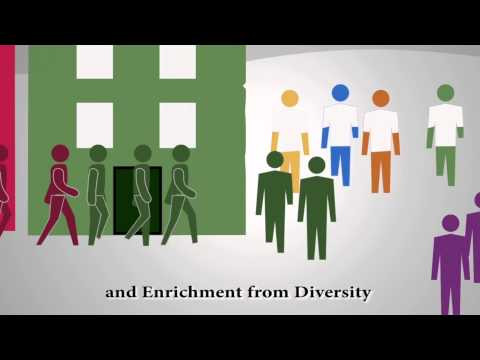 [Video] التربية على المواطنة والتنوع الثقافي 발행 연도: 2014 단체 저자: Adyan Foundation هذا الفيديو تم تحميله بواسطة مؤسسة أديان، ويتحدث الفيديو عن المواطنة وأسسها الداعمة. يسرد الفيديو في المقدمة أن المواطنة ترتكز عى القيم الانسانية المشتركة وخدمة الصالح العام. في الفيديو هناك أشارات للقضايا والتحديات التي تواجه المجتمعات التي تنتج من تهميش بعض الأديان والجماعات، وكيف يمكن أن يقود هذا التهميش لانهيار واندثار المواطنة في المجتمع. الفيديو يؤكد أن المواطنين في أي مجتمع عليهم أن يشاركوا في أنشطة الحياة العامة، مع احترامهم لبعضهم البعض. على المجتمعات أن تستفيد من التنوع الثقافي الذي بها، وبأن الحوار والتفاعل بين المواطنين هو السبيل لدعم وتقوية الافراد ومجتمعاتهم. في الختام، هناك تأكيد بأن المواطنة هي الطريق المؤدي للازدهار والتنمية المستدامة. [Video] Education for citizenship and cultural diversity 발행 연도: 2014 단체 저자: Adyan Foundation The video talks about citizenship and its foundations. It narrates at the introduction that citizenship is based on the respect of common human values and serving of common goods. The video also talks about the issue and challenge of marginalization of certain groups and religions in societies. How such issue is also leading to the collapse of citizenship is presented. It is argued that all citizens in a society have to participate in public life activities in which everyone respect each other. The society should benefit from diversity not get harmed by it. As a solution, it is mentioned that dialogue and interaction between citizens enriches individuals lives and their groups. At the end, it highly emphasized that citizenship is the way to prosperity and sustainable development. Includes English Subtitles
  Sustainable Development Goal 4: The Dubai Roadmap for Education 2030 in the Arab Region (2017-2018) 발행 연도: 2017 단체 저자: UNESCO Beirut SDG 4 agenda inspires us to pursue a humanistic vision of education and development based on human rights and dignity, social justice, protection, cultural diversity, and shared responsibility and accountability. Also, it is underpinned by the principle that education is a public good, a fundamental human right and a basis for guaranteeing the realization of other rights. Furthermore, it is essential for peace, human fulfillment and sustainable development. Having adopted the Arab Regional Roadmap for SDG 4 and Education 2030 (Cairo Roadmap) at ARMED I, we, Arab Member States and partners, have since commenced implementation of the Agenda as appropriate and relevant to national contexts.
  Promoting the culture of dialogue between cultures in the Arab world 발행 연도: 2013 저자: Selim El Sayegh 단체 저자: UNESCO Beirut The major challenge of the Arab uprisings resides in the youth drive. Accounting for 60 per cent of the Arab population, Youth have been calling for political and economic reforms. During the revolts, these claims have become more radical seeking a fundamental change. This gradual evolution, from a relatively partial change to a more absolute comprehensive one, ushers in a new era with a different intellectual construct. With the ousting of dictatorships, all civil society forces are unleashed with huge actual and potential resources mobilized to contribute to building up the new order. Groups of solidarity, communities, parties, associations, and organizations of all nature among many others put forward new ideas and adequate action plans. Liberty thus acclaimed becomes the outcry for dignity, honor and pride. Never before in the Arab world has the individual had such a central place as it does today. An individual fully grasping the possibilities of restored liberty and recognized dignity gives birth to a new citizen acting in a new paradigm; a new citizen that seeks a transcendence of the ego to relate the individual to the common good. This fresh paradigm empowers the individual as a citizen in the name of equality, while simultaneously recognizing the right of difference of each citizen when it comes to belonging to a culture or sub‐culture. The right to be different involves more than the right to differ and to dispute and by the same token, the obligation of peaceful settlement. The right to be different, by belonging to a culture or a sub‐culture means in a new era of liberty and dignity, the obligation to conduct a transformation of the patterns generating disputes and conflicts among cultures. Henceforth, the issue of promoting the culture of intercultural dialogue in the aftermath of the Arab revolts represents major characteristics that will be reflected hereafter. Promouvoir la culture du dialogue entre les cultures dans le monde Arabe 발행 연도: 2013 저자: Selim El Sayegh 단체 저자: UNESCO Beirut Le défi majeur des soulèvements arabes réside dans le lecteur de la jeunesse. Comptabilisation de 60 pour cent de la population arabe, de la jeunesse ont été réclame des réformes politiques et économiques. Pendant les révoltes, ces créances sont devenues plus radicales à la recherche d'un changement fondamental. Cette évolution progressive, d'un changement relativement partielle à l'une complète plus absolue, ouvre la voie à une nouvelle ère avec une construction intellectuelle différente. Avec l'éviction des dictatures, toutes les forces de la société civile se déchaînent avec d'énormes ressources réelles et potentielles mobilisées pour contribuer à l'édification du nouvel ordre. Des groupes de solidarité, les communautés, les partis, les associations et organisations de toute nature parmi beaucoup d'autres mettent en avant de nouvelles idées et plans d'action adéquats. Liberté ainsi acclamé devient le cri de la dignité, l'honneur et la fierté. Jamais auparavant dans le monde arabe a l'individu avait une telle place centrale comme il le fait aujourd'hui. Un individu de saisir pleinement les possibilités de la liberté restaurée et reconnue la dignité donne naissance à un nouveau citoyen agissant dans un nouveau paradigme; un nouveau citoyen qui cherche une transcendance de l'ego de relier l'individu au bien commun. Ce nouveau paradigme permet l'individu en tant que citoyen au nom de l'égalité, tout en reconnaissant en même temps le droit à la différence de chaque citoyen en ce qui concerne l'appartenance à une culture ou sous-culture. Le droit d'être différent implique plus que le droit à la différence et à contester et par le fait même, l'obligation de règlement pacifique. Le droit à la différence, par l'appartenance à une culture ou d'une sous-culture signifie une nouvelle ère de liberté et de dignité, l'obligation de procéder à une transformation des modèles de génération de différends et les conflits entre les cultures. Dès lors, la question de la promotion de la culture du dialogue interculturel dans la foulée des révoltes arabes représente les principales caractéristiques qui seront reflétées ci-après.
 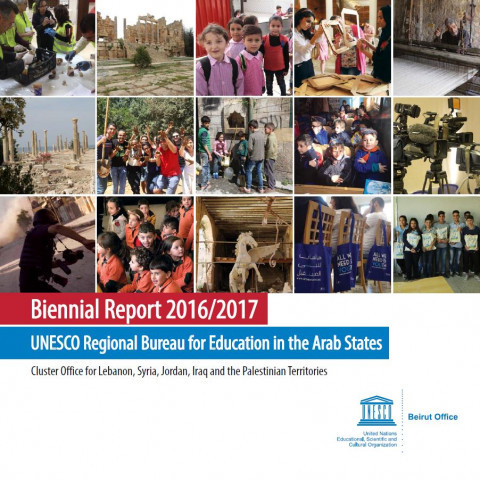 Biennial Report 2016/2017: UNESCO Regional Bureau for Education in the Arab States 발행 연도: 2018 단체 저자: UNESCO Beirut As Regional Bureau for Education, UNESCO Beirut is the lead coordinator for SDG 4 in the Arab Region. We strive to provide tangible support for each Member State in the region, taking into account national needs and priorities, thereby employing nationally relevant approaches. More specifically, our work aims to address both the humanitarian and development aspects brought about by the protracted crisis in Syria through bridging the learning gaps for the youth, both for Syrian refugees and vulnerable youth in host communities. Our response also targets teachers, mentors and facilitators as well as Ministries’ technical officials. The crisis in Syria has created a need for specific support in education in emergencies and quality education to which we actively engage from both, upstream analytical and capacity building and downstream operational levels. UNESCO Beirut has also strengthened its leadership to respond to the deliberate destruction of cultural heritage, illicit trafficking, and attacks against individuals on religious or cultural grounds. We raise the alarm to protect heritage in danger, assessing damages to World Heritage sites in conflict. We also raise awareness among the public about the values of cultural heritage and the need to protect it for future generations. In today’s diverse societies, the Organization’s fundamental humanist mission guides us to support people, especially the youth, in understanding each other and working together to build lasting peace and enables people to create and use knowledge for just and inclusive societies. We continue to advocate free, independent and pluralistic media in print, broadcast and online to enhance freedom of expression as a contributor to peace, sustainability, poverty eradication and human rights. This biennial report summarizes the work and achievements accomplished between 2016 and 2017 by our office.
  التعصّب الدينيّ : من التشدّد إلى التعدّد 발행 연도: 2017 저자: Pitsa Stefano 단체 저자: Al-Machriq Digital Mgazine مقال يناقش مفهوم التعصب بطريقة حديثة. وتحاول الكاتبة أن تضع للقارىء مفهوم التعصب من خلال المقارنة بين التعددية والتشدد.