
자료
세계시민교육에 대한 이해를 넓히고 연구, 옹호 활동, 교수, 학습 등을 향상시킬 수 있는 다양하고 유용한 자료를 찾아보세요.
124 건의 결과가 검색되었습니다
 How to Understand Misinformation, Disinformation and Malinformation 발행 연도: 2020 단체 저자: Shout Out UK | U.S. Embassy London | Association for Citizenship Teaching (ACT) We live in a world where information is very easy to fabricate. Now more than ever, media literacy (the ability to critically analyse information) is critical for us as citizens and for our democracy to function. This video explains the difference between Misinformation, Disinformation and Malinformation and presents you with some examples! This video is part of a resource pack created and designed by Shout Out UK, supported by the US Embassy in London and in collaboration with the Association For Citizenship Teaching.For more info: https://www.shoutoutuk.org/media-literacy/
  Information Neighbourhoods 발행 연도: 2020 단체 저자: Shout Out UK | U.S. Embassy London | Association for Citizenship Teaching (ACT) We live in a world where information has a variety of purposes. So how can you identify what each type of information is trying to do? Now more than ever, media literacy (the ability to critically analyse information) is critical for us as citizens and for our democracy to function. This video explains what Information neighbourhoods exist and how to identify them.
  ‘Hate Speech’ Explained: A Toolkit 발행 연도: 2015 단체 저자: ARTICLE 19 In this toolkit, ARTICLE 19 provides a guide to identifying ’hate speech‘ and how effectively counter it, while protecting the rights to freedom of expression and equality. It responds to a growing demand for clear guidance on identifying “hate speech,” and for responding to the challenges ‘hate speech’ poses within a human rights framework.The toolkit is guided by the principle that coordinated and focused action taken to promote the rights to freedom of expression and equality is essential for fostering a tolerant, pluralistic and diverse democratic society in which all human rights can be realised for all people.As such, it addresses three key questions: How do we identify ‘hate speech’ that can be restricted, and distinguish it from protected speech?What positive measures can States and others take to counter ‘hate speech’? Which types of ‘hate speech’ should be prohibited by States, and under which circumstances? The toolkit is guided by the principle that coordinated and focused action taken to promote the rights to freedom of expression and equality is essential for fostering a tolerant, pluralistic and diverse democratic society in which all human rights can be realised for all people. It is informed by, and builds upon, ARTICLE 19’s existing policy work in this field.In Part I, we outline that there is no uniform definition of ‘hate speech’ under international human rights law, rather, it is a broad concept which captures a wide range of expression. The toolkit advances a typology for identifying and distinguishing different forms of ‘hate speech’ according to their severity, guided by states’ international human rights law obligations. In Part II, we provide guidance on what policy measures State and non-state actors can undertake to create an enabling environment for freedom of expression and equality that addresses the underlying causes of ‘hate speech’ while maximising opportunities to counter it.Finally, in Part III, we outline the exceptional circumstances in which the State is obliged by international law to prohibit the most severe forms of ‘hate speech’, and where also States may under international law place other restrictions on ‘hate speech’. This includes guidance on ensuring that such prohibitions are not abused, and to ensure that where sanctions are imposed they are appropriate and proportionate, as well as ensuring support and redress for victims.ARTICLE 19 believes that ensuring that responses to ‘hate speech’ comply with international human rights law is crucial. Prohibitions that censor offensive viewpoints are often counter-productive to the aim of promoting equality, as they fail to address the underlying social roots of the kinds of prejudice that drive ‘hate speech’. In most instances, equality is better-promoted through positive measures which increase understanding and tolerance, rather than through censorship.This toolkit is not a definitive version, and will be continuously updated to reflect the developing case law and best practices in this area.
  The United Nations Matters: Teacher’s Handbook 발행 연도: 2012 단체 저자: United Nations Association - UK (UNA-UK) | United Kingdom National Commission for UNESCO This resource pack has been created to support Key Stage 3 and 4 Citizenship (England) and Education for Sustainable Development and Global Citizenship (Wales). It is also relevant to Learning for Life and Work (Northern Ireland), One Planet and Sustainable Development (Scotland), as well as Geography; History; Local and Global Citizens; Personal, Social, Health and Economic Education; Politics; and Religious and Moral Education. The pack supports the ‘Global Dimension’ in all parts of the UK.This resource aims to develop students’ awareness and understanding of the United Nations (UN) system and the global issues it tackles. It encompasses five lessons that can either be run as a full scheme of work or used independently.
  A Review of Education for Sustainable Development and Global Citizenship Education in Teacher Education 발행 연도: 2017 저자: Douglas Bourn, Frances Hunt, Phil Bamber 단체 저자: University College London. Institute of Education This paper has been produced to inform UNESCO in its preparation for the 2017 Global Education Monitoring Report (GEM) Report. Its purpose is to examine the current preparation of teachers in Education for Sustainable Development (ESD) and Global Citizenship Education (GCED) as outlined in the Sustainable Development Goal (SDG) target 4.7.The literature for this study is based on looking not only at material that makes direct reference to ESD and GCED, but also broader themes that have a potential bearing on these areas such as a sense of global, social and environmental responsibility and a commitment to social justice.In this paper teacher education includes the initial and in-service continuing professional development (CPD) of teachers.
  Learning About Human Rights in the Primary School 발행 연도: 2013 단체 저자: Amnesty International UK This booklet provides a sample of our human rights education resources produced for primary schools. It helps provide pupils with an understanding of their own human rights and the values and attitudes that underpin them. It will help to foster attitudes of respect and an appreciation of the uniqueness of each individual. Pupils will also develop skills to enable them to take action to defend human rights.You will find a set of 10 interactive lessons for children – five for age 5+ (England and Northern Ireland: Key Stage 1; Wales: Foundation Phase; Scotland: Early and First Level) and five for age 7-11 (England, Nothern Ireland and Wales: Key Stage 2; Scotland: Second Level). Please photocopy and adapt these exercises for your own classroom use.All the activities are designed to encourage pupils to take a basic starting point, often based on something close to home or an event or situation they’ve experienced or can relate to, and then develop it. Pupils are then invited to expand their understanding beyond themselves and to begin to think outwards and towards others, whether locally, nationally or globally.The final activity, Taking action for human rights, explains how schools can sign up to the Junior Urgent Action Network. It’s an opportunity for children to become more actively involved with Amnesty International’s human rights work through our letter-writing campaign. In addition, you can download free resources on a range of human rights issues and order free posters for your school from www.amnesty.org.uk/resources-schools.
  Evaluating the Link between Conflict and Education 발행 연도: 2005 저자: Lynn Davies 단체 저자: SAGE Publishing This paper examines two areas of important evaluation: the impact of education on peace and the impact of education on conflict, and argues that they are not necessarily the same type of evaluation. Evaluating the Link between Conflict and Education 발행 연도: 2005 저자: Lynn Davies 단체 저자: SAGE Publishing Cet article examine deux domaines importants d’évaluation : l'impact de l'éducation sur la paix et l'impact de l'éducation sur les conflits ; il démontre ensuite que le même type d'évaluation ne s’applique pas nécessairement au deux.
 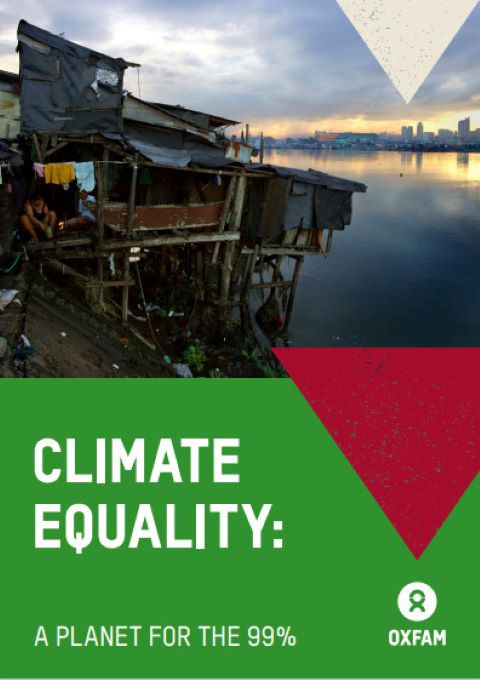 Climate Equality: A Planet for the 99% 발행 연도: 2023 저자: Ashfaq Khalfan | Astrid Nilsson Lewis | Carlos Aguilar | Max Lawson | Safa Jayoussi | Jacqueline Persson | Nafkote Dabi | Sunil Acharya 단체 저자: Oxfam International The world faces twin crises of climate breakdown and runaway inequality. The richest people, corporations and countries are destroying the world with their huge carbon emissions. Meanwhile, people living in poverty, those experiencing marginalization, and countries in the Global South are those impacted the hardest. Women and girls, Indigenous Peoples, people living in poverty and other groups experiencing discrimination are particularly at a disadvantage. The consequences of climate breakdown are felt in all parts of the world and by most people, yet only the richest people and countries have the wealth, power and influence to protect themselves. With that power comes huge responsibility.If no action is taken, the richest will continue to burn through the carbon we have left to use while keeping the global temperature below the safe limit of 1.5°C, destroying any chance of ending poverty and ensuring equality. The world needs an equal transformation. Only a radical reduction in inequality, transformative climate action and fundamentally shifting our economic goals as a society can save our planet while ensuring wellbeing for all.
 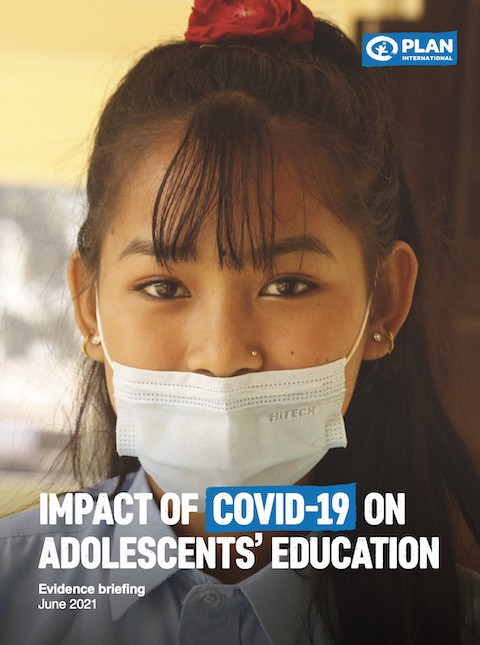 Impact of COVID-19 on Adolescents’ Education: Evidence Briefing 발행 연도: 2021 저자: Adrienne Monteath-van Dok | Anthony Davis | Nicholas Frost 단체 저자: Plan International UK This paper highlights the impact of COVID-19 on the education of adolescent girls and boys.