
자료
세계시민교육에 대한 이해를 넓히고 연구, 옹호 활동, 교수, 학습 등을 향상시킬 수 있는 다양하고 유용한 자료를 찾아보세요.
45 건의 결과가 검색되었습니다
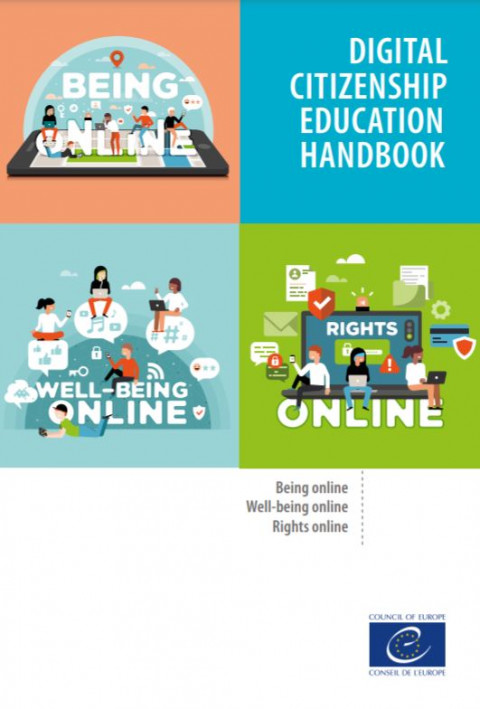 Digital Citizenship Education Handbook 발행 연도: 2019 저자: Janice Richardson | Elizabeth Milovidov 단체 저자: Council of Europe Digital citizenship and engagement involves a wide range of activities, from creating, consuming, sharing, playing and socialising, to investigating, communicating, learning and working. Competent digital citizens are able to respond to new and everyday challenges related to learning, work, employability, leisure, inclusion and participation in society, respecting human rights and intercultural differences.This Digital citizenship education handbook is designed to help educators and other interested adults understand and deal with them. It builds on the Council of Europe’s Reference Framework of Competences for Democratic Culture and the achievements of our longstanding Education for Democratic Citizenship programme, and complements the Internet literacy handbook as part of a coherent approach to educating citizens for the society of the future.
  T-KIT 4: Intercultural Learning 발행 연도: 2018 저자: Oana Nestian Sandu | Nadine Lyamouri-Bajja 단체 저자: Council of Europe | European Commission Intercultural learning is an important topic for the priorities of both the European Commission and the Council of Europe, and of their partnership in the field of youth.Intercultural learning is an educational approach that can lead to social transformation, so that people from different cultural backgrounds can develop positive relations based on the values and principles of human rights and on seeing cultural differences as positive things. It is a form of political and social education that needs to pay attention not only to intercultural relations, but also to different understandings of culture and diversity, power relations, distribution of resources, political and social context, human rights, discrimination, history and daily interactions among different groups.This T-Kit was developed for the context of youth work and non-formal education with young people, both of which support the personal development, social integration and active citizenship of young people. Educators and youth workers have an important role in addressing intercultural learning in their work with young people. They can stimulate young people’s learning in their daily lives, so that they can question and extend their perception, develop competences to interact positively with people from different cultural backgrounds and embrace the values of diversity, equality and dignity. In today’s Europe, these values and skills are fundamental for young people and for society as a whole in order to continue building peace and mutual understanding.
 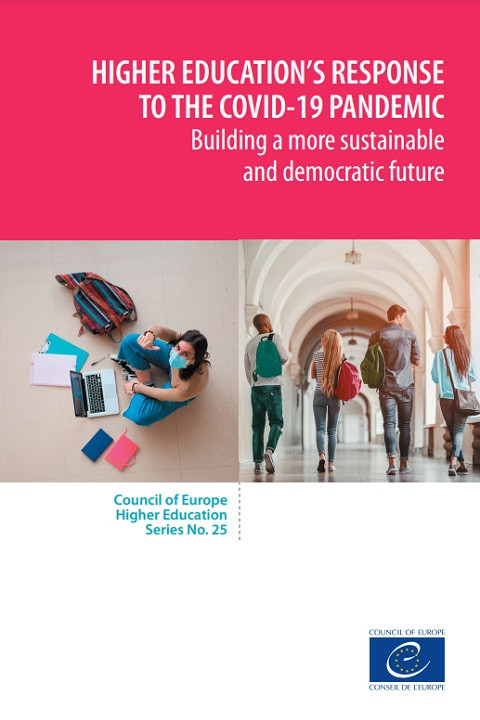 Higher Education's Response to the COVID-19 Pandemic: Building a More Sustainable and Democratic Future (Council of Europe Higher Education Series; No. 25) 발행 연도: 2021 저자: Sjur Bergan | Tony Gallagher | Ira Harkavy | Ronaldo Munck | Hilligje van’t Land 단체 저자: Council of Europe Public health was the immediate concern when the Covid-19 pandemic struck in Asia, then in Europe and other parts of the world. The response of our education systems is no less vital. Higher education has played a major role in responding to the pandemic and it must help shape a better, more equitable and just post-Covid-19 world. This book explores the various responses of higher education to the pandemic across Europe and North America, with contributions also from Africa, Asia and South America.The book describes the various ways in which higher education is facing the Covid-19 pandemic. It is designed to help universities, specifically their staff and students as well as their partners, contribute to a more sustainable and democratic future.
 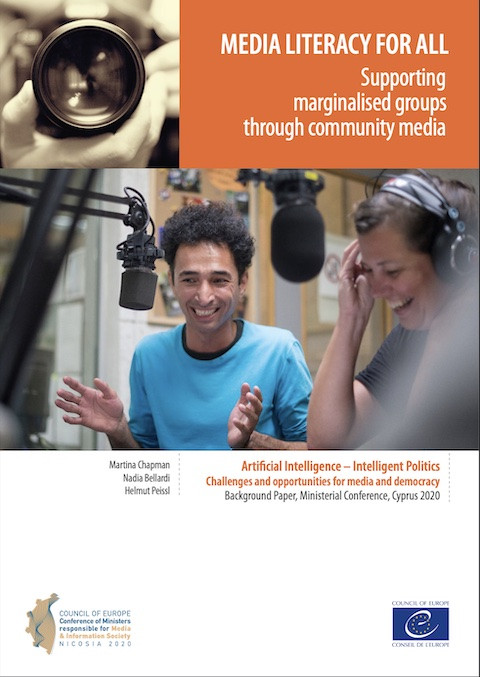 Media Literacy for All: Supporting Marginalised Groups Through Community Media 발행 연도: 2020 저자: Martina Chapman | Nadia Bellardi | Helmut Peiss 단체 저자: Council of Europe Being media literate means being able to critically understand and evaluate media content and to responsibly and safely use digital media services. Media literacy helps us engage with others in the public sphere, using the creative and participatory potential that new technologies and services can offer. Nowadays, it also includes understanding how data is used and how algorithms and AI can influence media production and choices.The importance of community media in supporting the formation of an ‘informed citizenry’ is well recognised by the Council of Europe. Community media have the ability to empower community groups with the neces- sary access and skills to create their own communica- tion channels and to foster their participation in the public sphere in a structured and professional man- ner. However, in many European countries community media still lack formal, legal recognition, fair access to distribution platforms and sustainable funding.This background paper explores how the community media sector promotes media literacy and how this work can strengthen marginalised communities’ partic- ipation in the media environment and public discourse. Comparing five models of community media from Cyprus, Ireland, Luxembourg, Spain and the United Kingdom, it seeks to inform and inspire practitioners and policy-makers, highlighting a number of findings and policy responses that can help member States fully realise the potential of community media. 모두를 위한 미디어 리터러시: 공동체 미디어를 통해 소외된 사람들 지원하기 발행 연도: 2020 저자: Martina Chapman | Nadia Bellardi | Helmut Peiss 단체 저자: Council of Europe 미디어 리터러시를 갖춘다는 것은 미디어 콘텐츠를 비판적으로 이해 하고 평가할 수 있으며, 디지털 미디어 서비스를 책임감 있고 안전하 게 이용할 수 있다는 뜻이다. 미디어 리터러시는 새로운 기술과 서비 스가 제공할 수 있는 창의적이고 참여적인 잠재력을 이용해서 공론장 에서 다른 사람들과 교류할 수 있도록 돕는다. 오늘날에는 데이터가 어떻게 사용되는지, 알고리즘과 인공지능이 미디어의 생산과 선택에 어떤 영향을 미치는지 이해하는 것도 미디어 리터러시에 포함된다.유럽평의회는 공동체 미디어가 ‘정보에 밝은 시민’의 형성을 지원하 는 데에 얼마나 중요한 역할을 하는지 잘 인식하고 있다. 공동체 미디 어는 공동체 집단들이 자체적인 커뮤니케이션 수단을 만들 때 필요한 접근과 역량을 제공하고, 체계적이고 전문적인 방법으로 공론장에 대 한참여를조성할수있는능력을갖추고있다.그러나많은유럽국가 에서 공동체 미디어는 여전히 공식적인 법률적 인정과 유통 플랫폼에 대한 공정한 접근, 지속 가능한 자금 조달이 부족한 상태다.이 배경자료는 공동체 미디어 부문이 어떻게 미디어 리터러시를 증진 하는지, 그리고 이 활동이 어떻게 미디어 환경과 공적 담론에서 소외 된 공동체의 참여를 고양하는지 탐구한다. 키프로스와 아일랜드, 룩 셈부르크, 스페인, 영국의 공동체 미디어 다섯 가지 모델을 비교해서, 회원국들이 공동체 미디어의 잠재력을 충분히 실현하는 데 도움을 줄 수 있는 일련의 연구 결과와 정책적 조치를 조명하며, 실무자와 정책 입안자에게 정보를 제공하고 영감을 줄 수 있기를 바란다.
 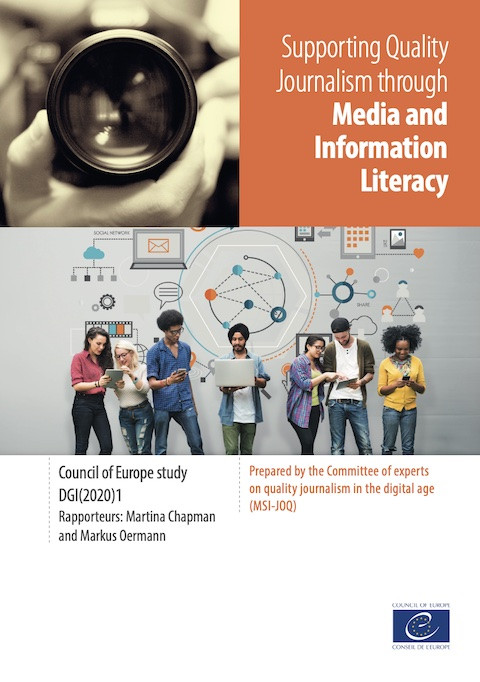 Supporting Quality Journalism Through Media and Information Literacy 발행 연도: 2020 저자: Martina Chapman | Markus Oermann 단체 저자: Council of Europe This report provides the findings of a study on Media and Information Literacy (MIL) that was conducted in support of the work of the Committee of experts on quality journalism in the digital age (MSI-JOQ), as well as a series of recommendations from the authors of the study to be considered by member states and other stakeholders.The purpose of this study is to provide context and evidence to MSI-JOQ, member states and all other relevant stakeholders on media literacy activities in Europe supporting quality journalism.
 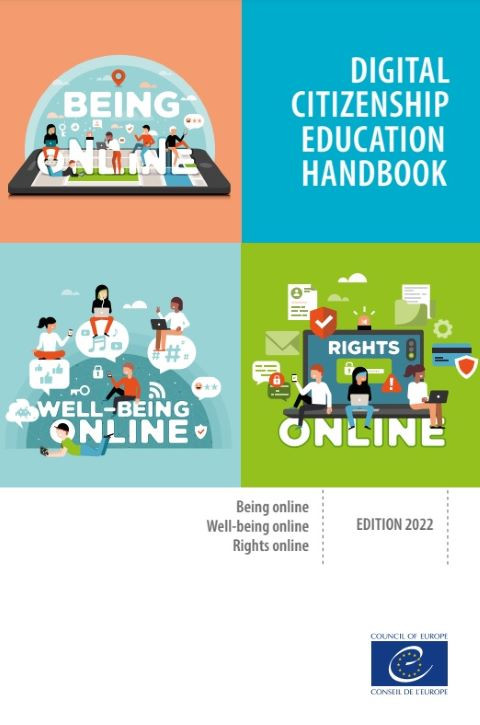 Digital Citizenship Education Handbook (Edition 2022) 발행 연도: 2022 저자: Janice Richardson | Elizabeth Milovidov 단체 저자: Council of Europe Digital citizenship competences define how we act and interact online. They comprise the values, attitudes, skills and knowledge and critical understanding necessary to responsibly navigate the constantly evolving digital world, and to shape technology to meet our own needs rather than to be shaped by it. The Digital citizenship education handbook offers information, tools and good practice to support the development of these competences in keeping with the Council of Europe’s vocation to empower and protect children, enabling them to live together as equals in today’s culturally diverse democratic societies, both on- and offline.The Digital citizenship education handbook is intended for teachers and parents, education decision makers and platform providers alike. It describes in depth the multiple dimensions that make up each of 10 digital citizenship domains, and includes a fact sheet on each domain providing ideas, good practice and further references to support educators in building the competences that will stand children in good stead when they are confronted with the challenges of tomorrow’s digital world. The Digital citizenship education handbook is consistent with the Council of Europe’s Reference Framework of Competences for Democratic Culture and compatible for use with the Internet literacy handbook.
 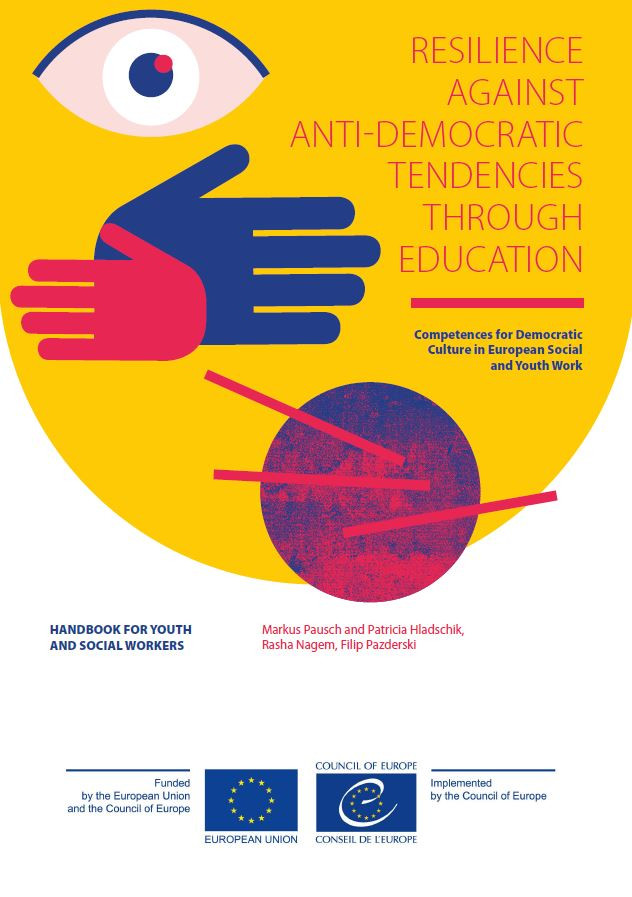 Resilience Against Anti-Democratic Tendencies through Education: Competences for Democratic Culture in European Social and Youth Work 발행 연도: 2021 저자: Markus Pausch | Patricia Hladschik | Filip Pazderski | Rasha Nagem 단체 저자: Council of Europe In this handbook the authors focus on competences for democracy and thus on how to prevent and avoid anti-democratic phenomena like authoritarianism, violent radicalisation, extremism, hate speech or conspiracy theories. This material contains a set of new or refreshed educational methods, tailored to work specifically with social workers and youth workers. All of them should help them prepare to counter these tendencies. Handbook was developed in the project “Resilience through Education for Democratic Citizenship” (REDE), implemented in the programme “Democratic and Inclusive School Culture in Operation” (DISCO) of the European Commission and the Council of Europe.
  Bank of Digital Task Sheets 단체 저자: Council of Europe Around forty sheets of tasks anchored in real life and reflective tasks are available. The proposed tasks implement the didactic framework that promotes a socio-interactional approach and extends the usual typology of tasks with tasks anchored in real life.These tasks, carried out on online participatory sites, allow the people who carry them out to experience both authentic (inter)actions and digital citizenship.Alongside these tasks, reflective tasks invite learners to reflect on online practices and in particular on their own uses of digital technology. They are to be adapted according to the contexts of use and provide examples of the implementation of the approach defined in the Didactic Framework. Banque de fiches de tâches numériques 단체 저자: Conseil de l'Europe Une quarantaine de fiches de tâches ancrées dans la vie réelle et de tâches réflexives sont disponibles. Les tâches proposées mettent en œuvre le cadre didactique qui promeut une approche socio-interactionnelle et étend la typologie habituelle des tâches avec des tâches ancrées dans la vie réelle.Ces tâches, réalisées sur des sites participatifs en ligne, permettent aux personnes qui les réalisent de faire l'expérience, à la fois, d'(inter)actions authentiques et de la citoyenneté numérique.A côté de ces tâches, des tâches réflexives invitent les apprenant·es à réfléchir sur les pratiques en ligne et notamment sur leurs propres usages du numérique. Elles sont à adapter en fonction des contextes d'utilisation et permettent de donner des exemples de mise en œuvre de l'approche définie dans le Cadre didactique.