
자료
세계시민교육에 대한 이해를 넓히고 연구, 옹호 활동, 교수, 학습 등을 향상시킬 수 있는 다양하고 유용한 자료를 찾아보세요.
89 건의 결과가 검색되었습니다
 Achieving SDG4 Through a Human Rights Based Approach to Education: World Development Report 2018 Background Paper 발행 연도: 2018 저자: Kate Moriarty 단체 저자: World Bank Quality education is a critical dimension for the achievement of sustainable development. The renewed political commitment set out in sustainable development goal 4 (SDG4) is an opportunity to ensure strong coherence between education policy and the right to education first articulated more than 70 years ago. This paper presents the results of a desk-based study on a human rights-based approach to education (HRBAE) in the context of SDG4. It explores the ways in which such an approach can guide policy, planning, and the delivery of education in observance with agreed international frameworks providing for the right to education. The paper argues that the human rights conventions on the right to education are not passive instruments designed to remain only at the level of discourse but, as legal obligations, require action from the state and should be central in the development of education services, including in the context of large scale displacement and crisis. This paper outlines the legally binding commitments of the right to education. It considers how these can be applied practically through a HRBA-E to address the continuing barriers to access and completion of quality education and learning.
 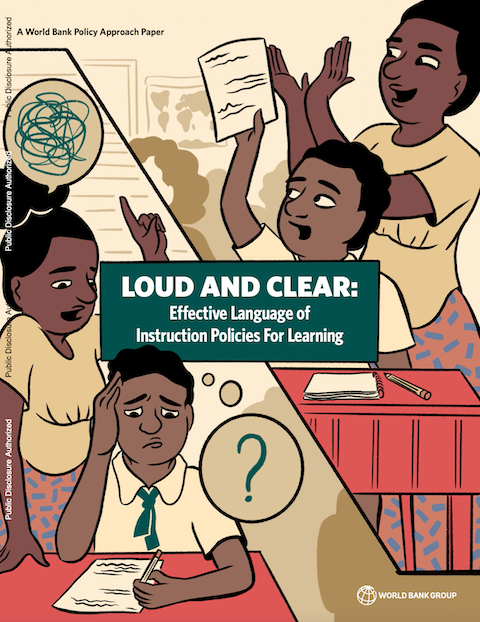 Loud and Clear: Effective Language of Instruction Policies for Learning 발행 연도: 2021 단체 저자: World Bank This paper describes the new World Bank policy approach on language of instruction(LoI), as part of the operationalization of the literacy policy package in support of the Bank’s new learning target. This new approach aims to support progress on language of instruction(LoI) Policies and interventions, as loi-based challenges are identified and addressed in light of each country’s context. Haut et fort: Politiques efficaces de Langue d’Enseignement Pour l’Apprentissage 발행 연도: 2021 단체 저자: World Bank Ce document décrit la nouvelle approche de la politique de la Banque mondiale en matière de langue d’enseignement, en tant que composante dans l’opérationnalisation du paquet de politique de littératie en appui au nouvel objectif d’apprentissage de la banque. Cette nouvelle approche vise à soutenir les progrès dans le domaine des politiques et des interventions en matière de LE (Langue d'Enseignement), dans la mesure où les défis liés à la PLE(Politique de Langue d'Enseignement) sont identifiés et traités à la lumière du contexte de chaque pays.
 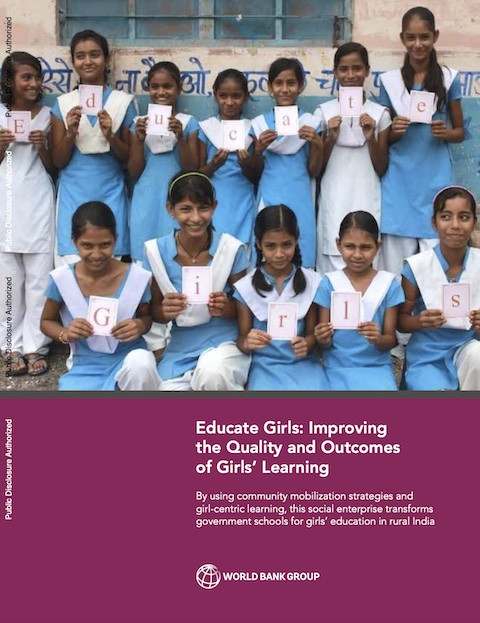 Educate Girls: Improving the Quality and Outcomes of Girls’ Learning 발행 연도: 2017 단체 저자: World Bank In India, women and girls, especially in rural areas, are particularly affected by the country’s illiteracy problem, since they face discrimination based on their sex and need for childbearing. In Rajasthan, the north- western Indian state that borders Pakistan, 9 out of 26 districts have the worst gender gap in India for girls’ education.Established in 2007, Educate Girls is holistically tackling issues at the root cause of gender inequality in India’s education system that has helped to ensure over 90% enrollment and significantly higher attendance for all girls as well as improved school infrastructure, quality of education and learning outcomes for all children.As a result of Educate Girls’ efforts to date, an army of “girls champions” has been created to combat cultural issues and support systemic change. More than 150,000 out-of-school girls have been enrolled in school and the program has benefitted around 3.8 million of beneficiaries. Continuing to address the social and cultural barriers in girls’ education can bring about real transformation, such as improvement in health, income levels, and overall livelihoods in rural populations.
 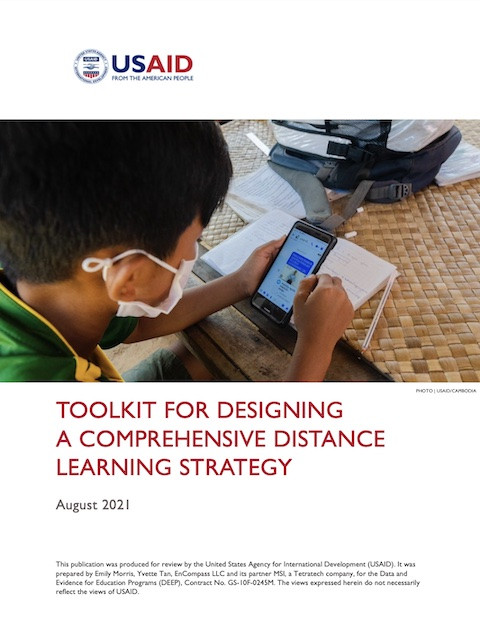 Toolkit for Designing a Comprehensive Distance Learning Strategy 발행 연도: 2021 저자: Emily Morris | Yvette Tan 단체 저자: United States Agency for International Development (USAID) The purpose of this toolkit is to provide practical guidance (tools, examples, and resources) for designing a comprehensive distance learning strategy that covers an entire education sector or system.
 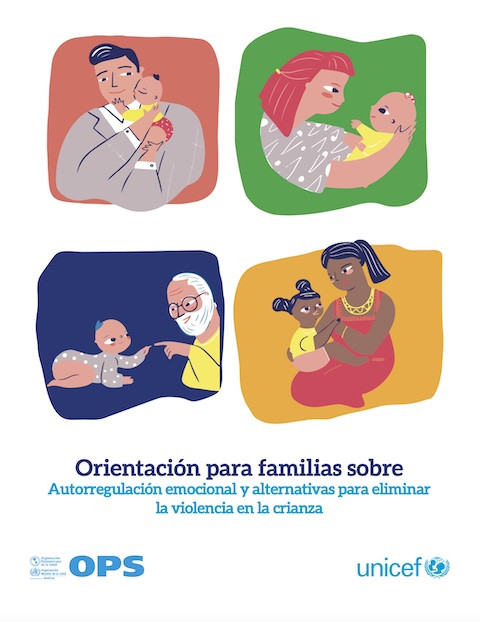 Guidance for Families on Emotional Self-Regulation and Alternatives to Eliminate Violence in Parenting 발행 연도: 2020 저자: Maite Onochie 단체 저자: United Nations Children's Fund (UNICEF) | Pan American Health Organization (PAHO) This material seeks to guide families in the role of caregivers. It proposes important recommendations in the first three years of life. It gives alternatives on how to calm young children, how to handle self-care by caregivers, how to handle crying, and promote emotional regulation and containment. Orientación para familias sobre: Autorregulación emocional y alternativas para eliminar la violencia en la crianza 발행 연도: 2020 저자: Maite Onochie 단체 저자: United Nations Children's Fund (UNICEF) | Pan American Health Organization (PAHO) Este material busca guiar a las familias en el papel de cuidadores. Propone recomendaciones importantes en los tres primeros años de vida. Da alternativas sobre como calmar a los niños pequeños, cómo manejar el autociodado por parte de los cuidadores, como manejar el llanto y promover la regulación y contención emocional.
 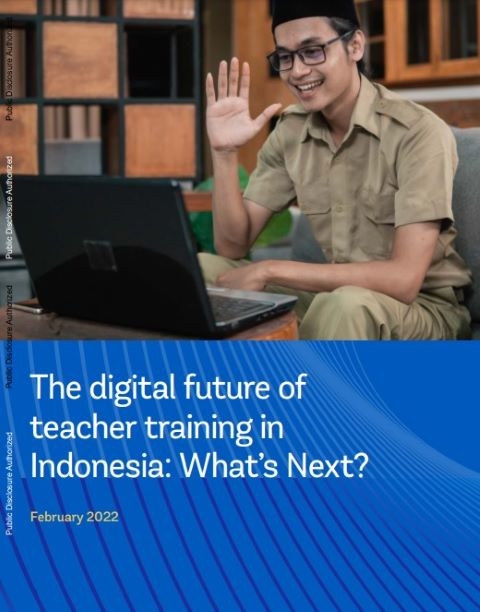 The Digital Future of Teacher Training in Indonesia: What’s Next? 발행 연도: 2022 저자: Noah Yarrow | Noviandri Khairina | Jacobus Cilliers | Indah Dini 단체 저자: World Bank | Government of Australia This report reflects on the Indonesia’s online teacher training ecosystem based on unique data collected from both teachers and providers during the COVID-19 period. A detailed mapping of the eight largest providers of online teacher training in Indonesia was conducted, covering 25 programs. We find that the majority of programs are short in duration and focus on digital literacy skills and remote learning. Training programs were mostly provided using online lectures, few provided individual coaching, while none provided opportunities for personalized learning. Second, we conducted a nationally representative phone survey of 435 primary and junior secondary teachers spanning 30 provinces across Indonesia (66 percent of whom are female teachers). The teacher survey was conducted between February and March 2021 and covered teachers under both the Ministry of Education, Research, and Technology (MoECRT) and the Ministry of Religious Affairs (MoRA). We find that 44 percent of teachers participated in online learning during the pandemic, and that three quarters of these teachers had never participated in online training prior to the pandemic. Many training participants reported challenges in implementing what they learned from online training. Most of the teachers who participated (88 percent) would like to continue receiving training online even after the pandemic ends. These results suggest that demand for online training is expected to persist, but more can be done to improve their quality.
  Gender Bias, Citizen Participation, and AI (Policy Research Working Papers; Planet; RRR; 11046) 발행 연도: 2025 저자: Jose Antonio Cuesta Leiva | Natalia Gisel Pecorari 단체 저자: World Bank This paper investigates the role of gender bias in artificial intelligence–driven analyses of citizen participation, using data from the 2023 Latinobarómetro Survey. The paper proposes that gender bias—whether societal, data driven, or algorithmic—significantly affects civic engagement. Using machine learning, particularly decision trees, the analysis explores how self-reported societal bias (machismo norms) interacts with personal characteristics and circumstances to shape civic participation. The findings show that individuals with reportedly low levels of gender bias, who express political interest, have high levels of education, and align with left-wing views, are more likely to participate. The paper also explores different strategies to mitigate gender bias in both the data and the algorithms, demonstrating that gender bias remains a persistent factor even after applying corrective measures. Notably, lower machismo thresholds are required for participation in more egalitarian societies, with men needing to exhibit especially low machismo levels. Ultimately, the findings emphasize the importance of integrated strategies to tackle gender bias and increase participation, offering a framework for future studies to expand on nonlinear and complex social dynamics.
  Genocide Timeline 발행 연도: 2024 단체 저자: United States Holocaust Memorial Museum (USHMM) This timeline proposed by the United States Holocaust Memorial Museum shows the major conceptual and legal advances in the evolution of the term "genocide" . It does not seek to detail every case that could be considered genocide, but to show how the term has entered the political, legal and ethical vocabulary from 1900 to 2016 to express threats of violence against groups.