
자료
세계시민교육에 대한 이해를 넓히고 연구, 옹호 활동, 교수, 학습 등을 향상시킬 수 있는 다양하고 유용한 자료를 찾아보세요.
3,433 건의 결과가 검색되었습니다
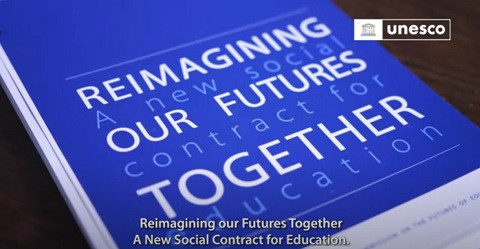 UNESCO Futures of Education Report Explained by Members of the International Commission 발행 연도: 2022 단체 저자: UNESCO Initiated by UNESCO, the International Commission on the Futures of Education has prepared a new report on how education can best shape the future of humanity and the planet. In this video, members of the Commission and its chair explain the main recommendations and defining features of their report, Reimagining our futures together: A new social contract for education. The report is part of UNESCO’s Futures of Education initiative which aims to rethink education and shape the future. The initiative is catalyzing a global debate on how knowledge, education and learning need to be reimagined in a world of increasing complexity, uncertainty, and precarity.
  The Impact of Climate Displacement on the Right to Education 발행 연도: 2020 단체 저자: UNESCO Ce rapport tente d'expliquer les conséquences du réchauffement climatique sur l'éducation des populations, vouées à se déplacer pour fuir la dégradation de leur environnement, ce qui empêche les enfants de suivre une scolarisation complète et de qualité. This report attempts to explain the consequences of global warming on the education of populations, who are forced to move to escape the degradation of their environment, preventing children from receiving a complete, quality education. Los efectos del desplazamiento climático sobre el derecho a la educación 발행 연도: 2020 단체 저자: UNESCO Ce rapport tente d'expliquer les conséquences du réchauffement climatique sur l'éducation des populations, vouées à se déplacer pour fuir la dégradation de leur environnement, ce qui empêche les enfants de suivre une scolarisation complète et de qualité. This report attempts to explain the consequences of global warming on the education of populations, who are forced to move to escape the degradation of their environment, preventing children from receiving a complete, quality education. L’impact du déplacement climatique sur le droit à l’éducation 발행 연도: 2020 단체 저자: UNESCO Ce rapport tente d'expliquer les conséquences du réchauffement climatique sur l'éducation des populations, vouées à se déplacer pour fuir la dégradation de leur environnement, ce qui empêche les enfants de suivre une scolarisation complète et de qualité. This report attempts to explain the consequences of global warming on the education of populations, who are forced to move to escape the degradation of their environment, preventing children from receiving a complete, quality education.
  Green School Quality Standard: Greening Every Learning Environment 발행 연도: 2024 단체 저자: UNESCO Climate change threatens our planet and future. Schools and other learning institutions are central places for accelerating climate action among learners and local communities. By empowering teachers and students to understand climate change in their own context contribute to making societies more sustainable and climate resilient. This publication provides for the first time ever a quality standard for greening schools and other learning environments. It outlines four core areas for integrating sustainability principles and climate action: 1) school governance, 2) facilities and operation, 3) teaching and learning, and 4) community engagement. Through the Greening Education Partnership, this standard establishes a common language for all stakeholders to jointly reach the global target of greening at least 50% of schools in all countries by 2030. Policy-makers and ministries in charge of education accreditation schemes, as well as educators, learners and communities are encouraged to use the green school quality standard and join the climate-ready school movement to ensure that every learner is equipped to address climate challenges.
 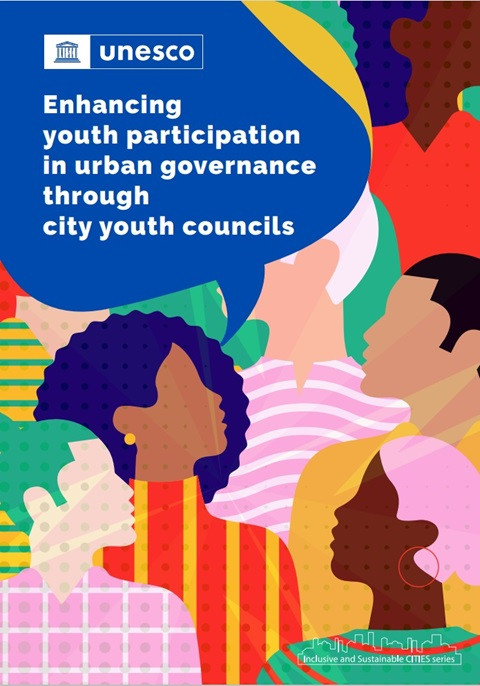 Enhancing Youth Participation in Urban Governance through City Youth Councils 발행 연도: 2023 단체 저자: UNESCO City youth councils offer a formalized arrangement for continuous dialogue with policymakers. They have played a key role in fostering the next generation of leaders and encouraging youth to be contributors and agents to social change and dialogue. UNESCO is publishing this report to ensure that the actions and solutions proposed by youth can be applied and scaled up worldwide. It encourages local governments to create spaces for youth to participate actively and genuinely in decision-making processes.
 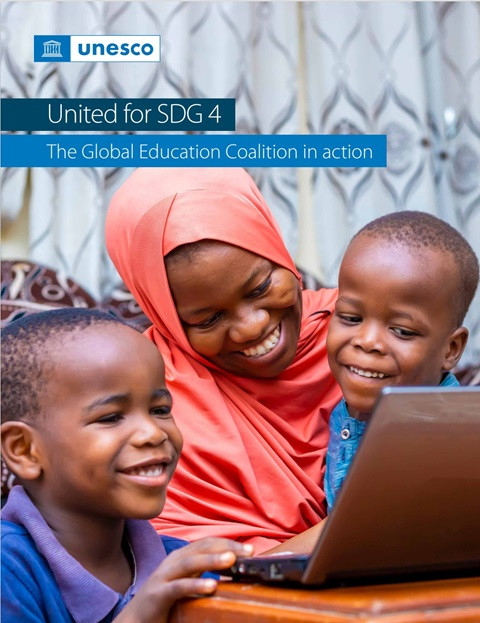 United for SDG 4: The Global Education Coalition in Action 발행 연도: 2024 단체 저자: UNESCO The Global Education Coalition, launched by UNESCO, is a platform for collaboration and exchange to protect the right to education and serves as a transformative accelerator towards SDG 4. This progress report of the Coalition builds on documents published in September 2020, March 2021, and March 2023 and covers activity between March 2023 and March 2024. Four years in and moving into its fifth, the Coalition works together to ensure all learners are empowered equally in and through education.
 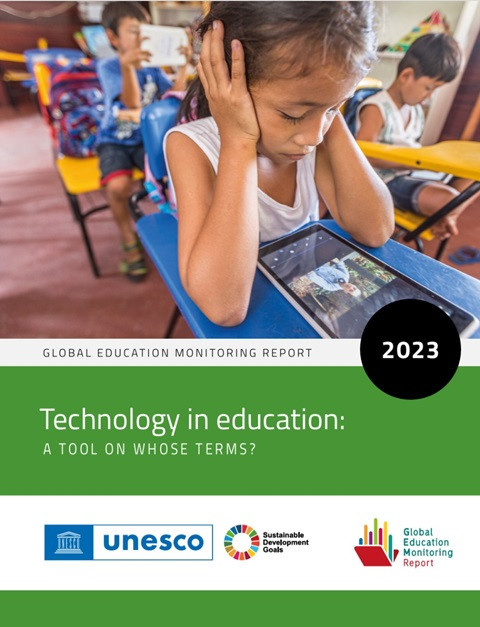 Global Education Monitoring Report 2023: Technology in Education; A Tool on Whose Terms? 발행 연도: 2023 단체 저자: UNESCO | Global Education Monitoring Report Team This report recommends that technology should be introduced into education on the basis of evidence showing that it would be appropriate, equitable, scalable and sustainable. In other words, its use should be in learners’ best interests and should complement face-to-face interaction with teachers. It should be seen as a tool to be used on these terms. Midway to the deadline, the 2023 Global Education Monitoring Report assesses the distance still to go to reach the 2030 education targets. Education is the key to unlocking the achievement of other development objectives, not least the goal of technological progress.
 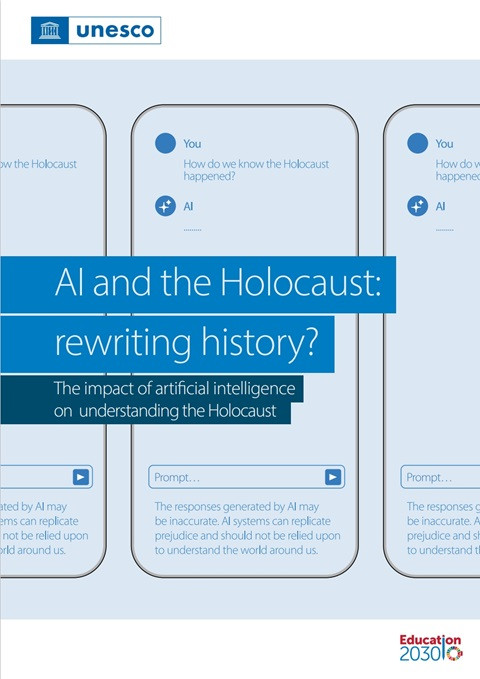 AI and the Holocaust: Rewriting History?; The Impact of Artificial Intelligence on Understanding the Holocaust 발행 연도: 2024 저자: Mykola Makhortykh | Heather Mann 단체 저자: UNESCO The threats associated with AI on safeguarding the record of the Holocaust are manifold, including the potential for manipulation by malicious actors, the introduction of falsehoods or dissemination of biased information, and the gradual erosion of public trust in authentic records. This paper provides a warning of what is at stake for the preservation of historical truth in a digital era increasingly mediated by AI. It highlights five major concerns:1. AI automated content may invent facts about the Holocaust2. Falsifying historical evidence: Deepfake Technology3. AI models can be manipulated to spread hate speech4. Algorithmic bias can spread Holocaust denial5. Oversimplifying history While there are some benefits to be gained, such as enhanced engagement and interaction opportunities for learners, as well as more efficient data processing capabilities for researchers, to navigate these challenges and capitalize on the benefits, it’s essential for AI designers, policymakers, educators, and researchers to collaborate closely. Only AI systems equipped with robust safeguards and human rights assessments, coupled with an increased focus on developing digital literacy skills, can uphold the integrity of historical truth and ensure the responsible use of artificial intelligence.
 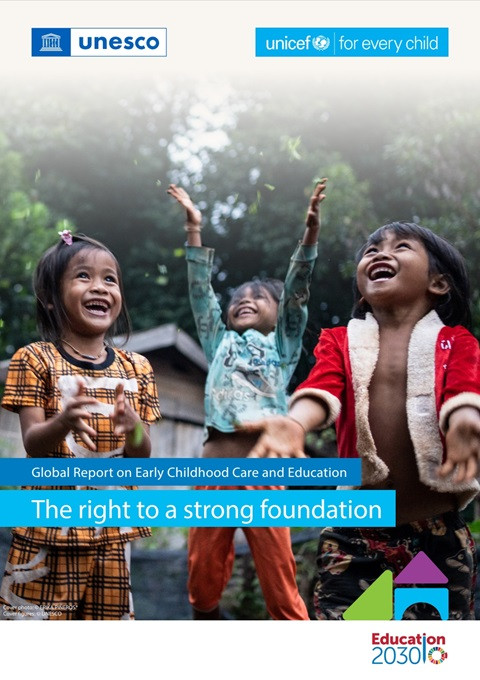 Global Report on Early Childhood Care and Education: The Right to a Strong Foundation 발행 연도: 2024 단체 저자: UNESCO | United Nations Children's Fund (UNICEF) Inclusive and quality early childhood care and education (ECCE) are vital for promoting school readiness, foundational learning, and lifelong well-being. Yet almost 60% of children in low-income countries do not have access to early care and learning opportunities. To meet national targets of providing at least one year of organized learning before primary school, low-income and lower-middle-income countries must fill an annual financial gap of USD 21 billion and recruit at least six million more educators before 2030. The first global report, jointly published by UNESCO and UNICEF, offers insights into global and regional ECCE trends. The report, which is a key response to the commitments outlined in the Tashkent Declaration, synthesizes scientific evidence on ECCE’s importance, and exposes persistence gaps in policy and investment. It illustrates how countries have responded to providing equitable and quality ECCE opportunities. The report invites all stakeholders, from governments and policy-makers, to educators, parents and organizations, to ensure that the commitments made in the Tashkent Declaration are fully realized by building a strong foundation for every child.