
자료
세계시민교육에 대한 이해를 넓히고 연구, 옹호 활동, 교수, 학습 등을 향상시킬 수 있는 다양하고 유용한 자료를 찾아보세요.
3,376 건의 결과가 검색되었습니다
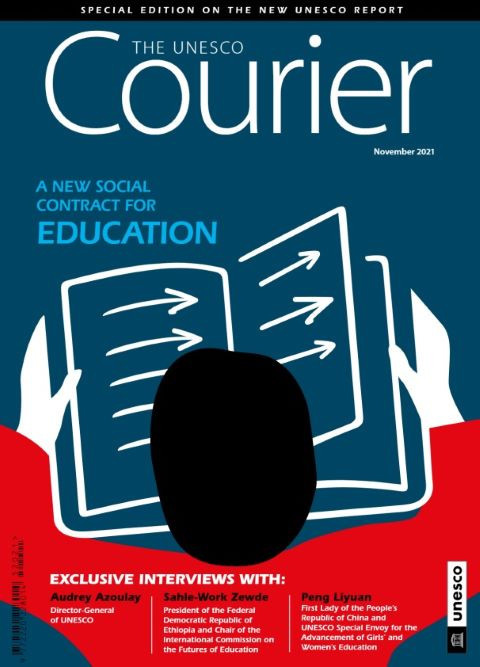 面向教育的新社会契约 (The UNESCO Courier Special Edition; November 2021) 발행 연도: 2021 단체 저자: 联合国教科文组织 (UNESCO) Reimagining Our Futures Together upholds the tradition of the major UNESCO reports that have already structured education policies throughout the world in the past. The Faure report, Learning to be, in 1972, and the Delors report, Learning: The Treasure Within, in 1996, have become benchmarks in the debate on learning. This third document presents a lucid assessment of the challenges confronting education today.Faced with the rapid changes in our environment, a change of direction is needed. We need to devote more importance to ecology; to provide students with the critical tools to detect misinformation, prejudices, and preconceived ideas; to strengthen teamwork, and to improve the professionalization of teachers. Beyond these imperatives, we must also rethink the multiple interdependencies, the links between generations and between cultures, and our relationship with living beings, to establish a new social contract for education.
 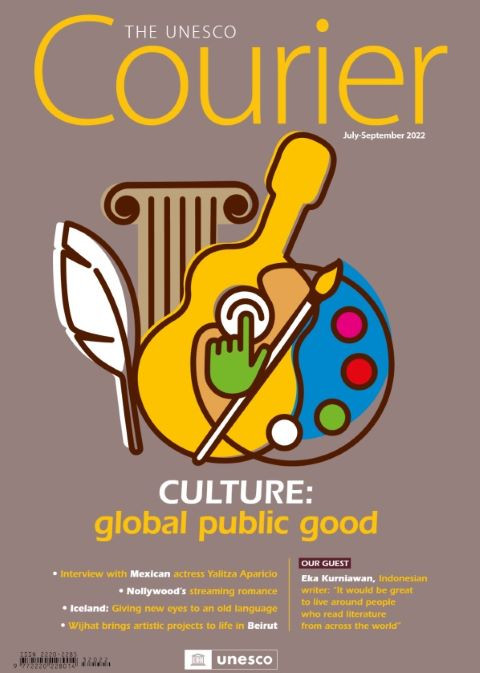 Culture: Global Public Good (The UNESCO Courier no. 3; July-September 2022) 발행 연도: 2022 단체 저자: UNESCO Culture is what defines us in space and time – our past and present roots, our prospects. Culture is an inexhaustible and renewable resource, which adapts to changing contexts and which speaks to humans first and foremost through their capacity to imagine, create and innovate. Culture is our most powerful global public good. In the words of Javier Pérez de Cuéllar, former Secretary-General of the United Nations, culture has a role “as a desirable end in itself, as giving meaning to our existence”. Today, more than ever, we need to find meaning, we need universality, we need culture in all its diversity. La Cultura: Un bien público mundial (The UNESCO Courier no. 3; July-September 2022) 발행 연도: 2022 단체 저자: UNESCO Culture is what defines us in space and time – our past and present roots, our prospects. Culture is an inexhaustible and renewable resource, which adapts to changing contexts and which speaks to humans first and foremost through their capacity to imagine, create and innovate. Culture is our most powerful global public good. In the words of Javier Pérez de Cuéllar, former Secretary-General of the United Nations, culture has a role “as a desirable end in itself, as giving meaning to our existence”. Today, more than ever, we need to find meaning, we need universality, we need culture in all its diversity. La Culture: Un bien public mondial (The UNESCO Courier no. 3; July-September 2022) 발행 연도: 2022 단체 저자: Organisation des Nations Unies pour l'éducation, la science et la culture (UNESCO) Culture is what defines us in space and time – our past and present roots, our prospects. Culture is an inexhaustible and renewable resource, which adapts to changing contexts and which speaks to humans first and foremost through their capacity to imagine, create and innovate. Culture is our most powerful global public good. In the words of Javier Pérez de Cuéllar, former Secretary-General of the United Nations, culture has a role “as a desirable end in itself, as giving meaning to our existence”. Today, more than ever, we need to find meaning, we need universality, we need culture in all its diversity.
 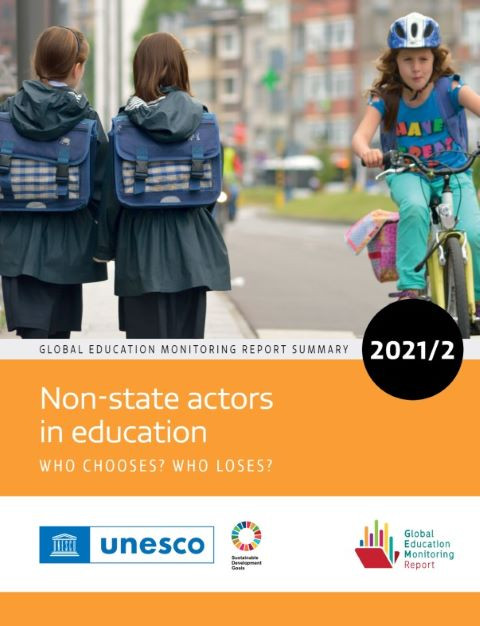 [Summary] Global Education Monitoring Report 2021/2: Non-state Actors in Education: Who Chooses? Who Loses? 발행 연도: 2022 단체 저자: UNESCO Non-state actors’ role extends beyond provision of schooling to interventions at various education levels and influence spheres. Alongside its review of progress towards SDG 4, including emerging evidence on the COVID-19 pandemic’s impact, the 2021/2 Global Education Monitoring Report urges governments to see all institutions, students and teachers as part of a single system. Standards, information, incentives and accountability should help governments protect, respect and fulfill the right to education of all, without turning their eyes away from privilege or exploitation. Publicly funded education does not have to be publicly provided but disparity in education processes, student outcomes and teacher working conditions must be addressed. Efficiency and innovation, rather than being commercial secrets, should be diffused and practiced by all. To that end, transparency and integrity in the public education policy process need to be maintained to block vested interests. The report’s rallying call – Who chooses? Who loses? – invites policymakers to question relationships with non-state actors in terms of fundamental choices: between equity and freedom of choice; between encouraging initiative and setting standards; between groups of varying means and needs; between immediate commitments under SDG 4 and those to be progressively realized (e.g. post-secondary education); and between education and other social sectors.
  Technical Note on the Implementation of the Convention on the Rights of Persons with Disabilities in Uzbekistan 발행 연도: 2023 단체 저자: World Bank This compilation of technical briefs lays out the key problems faced by persons with disabilities in Uzbekistan under all areas of life and formulates detailed recommendations, providing the evidence base for a Strategic Note that aims to guide Uzbekistan's next five-year National Action Plan (NAP) for implementing the United Nations Convention on the Rights of Persons with Disabilities (CRPD). Технические справки по имплементации Конвенции о правах инвалидов 발행 연도: 2023 단체 저자: World Bank В этом сборнике девяти отраслевых технических справок очень подробно анализируются проблемы, с которыми сталкиваются лица с инвалидностью в Узбекистане во всех сферах жизни, и формулируются подробные рекомендации, обеспечивающие доказательную базу для Стратегической записки, которая призвана служить ориентиром для следующего пятилетнего Национального плана действий Узбекистана (НПД) по имплементации Конвенции Организации Объединенных Наций о правах инвалидов (КПИ) в стране.
 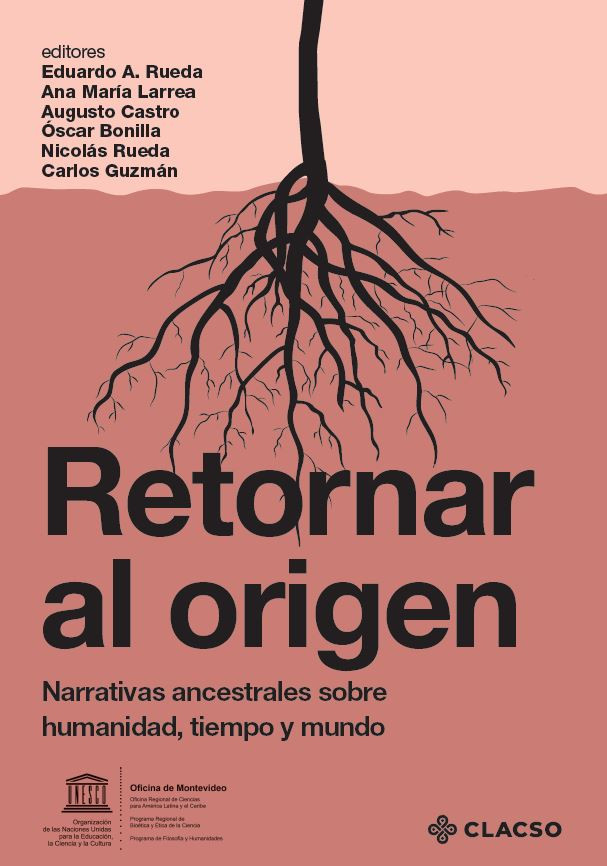 Return to the Origin: Ancient Narratives about Humanity, Time and the World 발행 연도: 2022 저자: Eduardo A. Rueda | Ana María Larrea | Augusto Castro | Óscar Bonilla | Nicolás Rueda | Carlos Guzmán 단체 저자: Latin American Council of Social Sciences (CLACSO) | UNESCO In this brief reflection, only in an introductory way, two questions are addressed. The first has to do with the relevance or impertinence of a program to record the narratives of our original peoples about the origins and trajectories of humanity. In relation to this first point, they are interested in proposing the bases for an emancipatory approach, that is, counter-hegemonic, of the original narratives. The second question asks about the consequences that it has, for the self-understanding of the crises and tensions of current societies, to highlight non-Western conceptions of human origins and trajectories. Retornar al origen: Narrativas ancestrales sobre humanidad, tiempo y mundo 발행 연도: 2022 저자: Eduardo A. Rueda | Ana María Larrea | Augusto Castro | Óscar Bonilla | Nicolás Rueda | Carlos Guzmán 단체 저자: Latin American Council of Social Sciences (CLACSO) | UNESCO En esta breve reflexión se abordan, apenas de modo introductorio, dos cuestiones. La primera tiene que ver con la pertinencia o impertinencia de un programa de registro de las narrativas de nuestros pueblos originarios sobre los orígenes y trayectorias de la humanidad. Les interesa, en relación con este primer punto, proponer las bases para un abordaje emancipatorio, es decir, contrahegemónico, de las narrativas originarias. La segunda cuestión se interroga por las consecuencias que tiene, para la autocomprensión de las crisis y tensiones de las sociedades actuales, poner en evidencia concepciones no occidentales de los orígenes y las trayectorias humanas.
  Revised Recommendation Concerning Education for International Understanding, Co-operation and Peace and Education Relating to Human Rights and Fundamental Freedoms ('1974 Recommendation') 발행 연도: 2022 단체 저자: UNESCO The revision of the 1974 Recommendation provides the international community with the opportunity to strengthen the instrument so that it can support the design and implementation of effective educational policies and programmes, which can put the world on a pathway to lasting peace and sustainable development for all, in line with the requirements of the 2030 Agenda and the body of international legal norms adopted since 1974.