
자료
세계시민교육에 대한 이해를 넓히고 연구, 옹호 활동, 교수, 학습 등을 향상시킬 수 있는 다양하고 유용한 자료를 찾아보세요.
3,433 건의 결과가 검색되었습니다
 UNESCO Women for Ethical AI: Outlook Study on Artificial Intelligence and Gender 발행 연도: 2024 단체 저자: UNESCO The gender chapter of the UNESCO Recommendation on the Ethics of AI is a concrete commitment by 194 Member States to advance gender equality in the AI ecosystem. To track progress in the implementation of the gender provisions of UNESCO’s Recommendation, and to assess the impacts of AI on gender equality, the UNESCO Women for Ethical AI (W4EAI) Platform has been established. This report advances the workstream through evidence-based insights in three critical areas: women’s participation in AI development and deployment, the inclusion of gender equality concerns in AI governance and the impact of AI on gender equality. It highlights the significant underrepresentation of women in AI, the lack of gender-disaggregated data, and the compounded challenges women face in the field. The report also addresses the neglect of gender dimensions in AI policy, the risks posed by AI systems to women, and the need for responsible and ethical AI governance to promote gender equality. Finally, it outlines actionable recommendations to enhance gender equality through and in AI, emphasizing the importance of comprehensive data collection, targeted interventions, and inclusive policy-making.
  Youth Can Move the World 발행 연도: 2021 단체 저자: UNESCO The COVID-19 pandemic brought unprecedented educational disruption with 1.2 billion children and youth impacted by school closures. Yet, despite these challenges, there is hope. This documentary focuses on the power and agency of youth. It is developed under the framework of the long-term partnership between UNESCO's Global Citizenship and Peace Education and UNODC that bridges the justice and education sectors to guide young people towards building strong, just and democratic societies. Youth’s voices are in the forefront with sentiments echoed by world leaders, policy makers, justice actors and educators to deliver a compelling message on the power of youth to move the world.
  وضع تصورات جديدة لمستقبلنا معاً: عقد اجتماعي جديد للتربية والتعليم 발행 연도: 2022 단체 저자: International Commission on the Futures of Education | UNESCO تُستشف من أحوال العالم في الوضع الراهن أن البشرية وكوكب الأرض معرضان للخطر. وقد قدمت الجائحة التي حلت بنا في الفترة الأخيرة دليلاً دامغاً على أن العالم الذي نعيش فيه يتسم بالهشاشة وتترابط أجزاؤه ترابطاً وثيقاً. ولا بد لنا الآن من اتخاذ إجراءات عاجلة معاً لتغيير المسار ووضع تصورات جديدة لمستقبلنا. وينطوي هذا التقرير الصادر عن اللجنة الدولية المعنية بمستقبل التربية والتعليم على إقرار بقدرة التربية والتعليم على إحداث تغيير عميق في الأوضاع الراهنة. وثمة تحديان ماثلان أمامنا الآن، أولهما هو الوفاء بالوعد المتمثل في ضمان الحق في التعليم الجيد لجميع الأطفال والشباب والكبار، وهو وعد لم يتحقق بعد، وثانيهما هو تحقيق كامل الإمكانات الكفيلة بإحداث التغيير الجذري المنشود، التي ينطوي عليها التعليم بوصفه سبيلاً إلى بناء مستقبل جماعي مستدام. ولا سبيل إلى بلوغ هذه الغاية إلا بإبرام عقد اجتماعي جديد للتربية والتعليم يتيح إصلاح المظالم والاضطلاع في الوقت نفسه بتغيير المستقبل على النحو المنشود. ويجب أن يقوم هذا العقد الاجتماعي الجديد على حقوق الإنسان وأن يستند إلى مبادئ عدم التمييز، والعدالة الاجتماعية، واحترام الحياة، والكرامة الإنسانية، والتنوع الثقافي. ويجب أن يشتمل على أخلاقيات الرعاية والتبادل والتضامن. ويجب أن يعزز التعليم باعتباره عملاً ومنفعة مشتركة. وينطوي هذا التقرير، الذي استغرق إعداده عامين واسترشد معدوه بعملية تشاور عالمية شارك فيها نحو مليون شخص، على دعوة موجهة إلى الحكومات والمؤسسات والمنظمات والمواطنين في جميع أنحاء العالم لصياغة عقد اجتماعي جديد للتربية والتعليم يساعدنا في بناء مستقبل مستدام ينعم فيه الجميع بالسلام والعدل. وليست الرؤى والمبادئ والمقترحات المعروضة ههنا سوى منطلق لمزيد من العمل، إذ ينبغي بذل جهد جماعي لتجسيد هذه الرؤى والمبادئ والمقترحات بما يتماشى مع الظروف والبيئات التي تندرج فيها. وقد تحقق بالفعل العديد من المنجزات البارزة في هذا الشأن. ويسعى في هذا التقرير إلى استعراضها والارتكاز عليها لبناء صرح جديد. وليس هذا التقرير دليلاً إرشادياً ولا خطة لإيجاد حلول، بل هو فتح لباب التحاور في شأن يتسم بأهمية حيوية.
  Reimagining Our Futures Together: A New Social Contract for Education 발행 연도: 2021 단체 저자: International Commission on the Futures of Education | UNESCO Our humanity and planet Earth are under threat. The pandemic has only served to prove our fragility and our interconnectedness. Now urgent action, taken together, is needed to change course and reimagine our futures. This report by the International Commission on the Futures of Education acknowledges the power of education to bring about profound change. We face a dual challenge of making good on the unfulfilled promise to ensure the right to quality education for every child, youth and adult and fully realizing the transformational potential of education as a route for sustainable collective futures. To do this, we need a new social contract for education that can repair injustices while transforming the future.This new social contract must be grounded in human rights and based on principles of non-discrimination, social justice, respect for life, human dignity and cultural diversity. It must encompass an ethic of care, reciprocity, and solidarity. It must strengthen education as a public endeavour and a common good.This report, two years in the making and informed by a global consultation process engaging around one million people, invites governments, institutions, organizations and citizens around the world to forge a new social contract for education that will help us build peaceful, just, and sustainable futures for all.The visions, principles, and proposals presented here are merely a starting point. Translating and contextualizing them is a collective effort. Many bright spots already exist. This report attempts to capture and build on them. It is neither a manual nor a blueprint but the opening up of a vital conversation.
  함께 그려보는 우리의 미래: 교육을 위한 새로운 사회계약 발행 연도: 2022 단체 저자: International Commission on the Futures of Education | 유네스코 우리 인류와 지구는 위기에 처해 있다. 코로나19 팬데믹은 우리의 취약성과 상호연결성을 동시에 증명해 주었다. 이 경로를 바꾸고 우리의 미래를 다시 구상하기 위해서는 모두 함께 긴급한 행동에 나서야 한다. 국제미래교육위원회의 이 보고서는 교육의 힘이 심대한 변화를 불러일으킬 수 있다고 믿는다. 인류는 이중의 도전과제에 직면하고 있다. 한편으로는 모든 아동, 청소년, 성인들이 질 높은 교육을 받을 권리를 보장하겠다는 미완의 약속을 이행하면서, 다른 한편으로는 모두에게 지속가능한 미래로 가는 경로로서 교육이 갖고 있는 변혁적 잠재력을 완전히 실현해야 한다. 이를 위해서는 정의롭지 못한 부분을 바로잡으면서 미래를 바꿔 놓을 교육을 위한 새로운 사회계약이 필요하다. 이 새로운 사회계약은 인권에 근간을 두고 차별금지와 사회정의, 생명 존중, 인간 존중 및 문화 다양성에 기초해야 한다. 또한 돌봄의 윤리, 호혜주의, 연대를 포괄해야 하며, 공동의 사회적 노력(shared societal endeavours)이자 공동재(common good)로서 교육을 강화해야 한다. 이 보고서는 2년에 걸쳐 약 백만 명이 참여하는 세계적 협의 과정을 통해 작성되었으며, 전 세계의 정부, 교육기관, 단체, 시민들에게 모두를 위한 평화롭고 정의로우며 지속가능한 미래를 건설할 수 있도록 교육을 위한 새로운 사회계약을 맺는 데 참여할 것을 요청한다. 이 보고서가 제시하는 비전과 원칙, 제안은 단지 출발점일 뿐이다. 이를 각각의 상황에 맞게 변혁하기 위해서는 집단적 노력이 있어야 한다. 이미 긍정적인 부분도 많이 있다. 이 보고서는 그런 부분을 포착해 기반으로 삼으려고 노력했다. 이 보고서는 실용적 매뉴얼이나 청사진이 아니라, 역동적인 대화의 시작이다.
  Переосмыслим наше будущее – Hовый общественный договор в области образования 발행 연도: 2023 단체 저자: International Commission on the Futures of Education | UNESCO Наше человечество, наша планета находятся в опасности. Пандемия лишь подтвердила нашу хрупкость и взаимозависимость. Чтобы изменить ход вещей и переосмыслить наше будущее, необходимы неотложные совместные действия. В этом докладе Международной комиссии по перспективам образования подтверждается способность образования к осуществлению коренных изменений. Перед нами стоит двойная задача – выполнить невыполненное обещание обеспечить право на качественное образование для каждого ребенка, молодого человека и взрослого и полностью реализовать преобразующий потенциал образования, способного проложить путь к устойчивому коллективному будущему. Для этого нам нужен новый общественный договор в области образования, который сможет устранять проявления несправедливости, преобразуя будущее. Этот новый общественный договор должен основываться на принципах прав человека, недопущения дискриминации, социальной справедливости, уважения жизни, человеческого достоинства и культурного разнообразия. Он должен включать в себя этику заботы о людях, взаимности и солидарности. Он должен укреплять позиции образования как общественного дела и общего блага. Этот доклад, который готовился два года на основе глобального процесса консультаций с участием миллиона человек, предлагает правительствам, учреждениям, организациям и гражданам всего мира разработать новый общественный договор в области образования, который поможет нам построить мирное, справедливое и устойчивое будущее, отвечающее всеобщим интересам. Представленные здесь концепции, принципы и предложения являются лишь отправной точкой. Их воплощение в практику в конкретных условиях – это коллективная работа. Уже есть много положительных моментов, и в настоящем докладе предпринята попытка их отразить и развить. Это не инструкция и не план, а начало жизненно важного разговора.
  الصحافة، «الأخبار الزائفة» و«التضليل» : دليل التدريس والتدريب في مجال الصحافة 발행 연도: 2020 저자: Julie Posetti | Cherilyn Ireton | Claire Wardle | Hossein Derakhshan | Alice Matthews | Magda Abu-Fadil | Tom Trewinnard | Fergus Bell | Alexios Mantzarlis 단체 저자: منظمة الأمم المتحدة للتربية والعلم والثقافة (UNESCO) يسعى هذا الكتيب إلى توفير مقرر نموذجي ذي صلة دولياً، ومفتوح للتصرف أو التكييف، ويستجيب لمشكلة التضليل العالمي الناشئة التي تواجه المجتمعات بشكل عام، والصحافة بشكل خاص.تم تصميم هذا المقرر الدراسي النموذجي لتزويد مدارس ومدربي الصحافة بإطار ودروس لمساعدة الطلاب والممارسين في مجال الصحافة على التغلب على المشكلات المرتبطة بـ “الأخبار الزائفة“. ونأمل أيضاً أن يكون دليلاً مفيداً للصحفيين الممارسين.ويضم هذا المقرر مدخلات من كبار المدرسين والباحثين والمفكرين في مجال الصحافة الدولية الذين يسهمون في تحديث طرائق الصحافة وممارساتها لمواجهة تحديات التضليل ومعلوماته المضللة. والدروس قائمة على السياق وذات طبيعة نظرية، ولكن في حالة التحقق عبر الإنترنت، فهي عملية للغاية. وسواء استخدمت كمقرر دراسي في الجامعة أو بشكل مستقل، فإن هذه الصفحات تساعد في تحديث الوحدات التعليمية القائمة أو إنشاء مناهج جديدة.وهي جزء من “المبادرة العالمية للتميز في تدريس الصحافة“، والتي هي محور برنامج اليونسكو الدولي لتنمية الاتصال (IPDC). وتسعى هذه المبادرة إلى الانخراط في تدريس الصحافة والبحث في هذا المجال من منظور عالمي، بما في ذلك تبادل الممارسات الدولية الجديدة.
  Periodismo, “Noticias Falsas” & Desinformación : Manual de Educación y Capacitación en Periodismo 발행 연도: 2020 저자: Julie Posetti | Cherilyn Ireton | Claire Wardle | Hossein Derakhshan | Alice Matthews | Magda Abu-Fadil | Tom Trewinnard | Fergus Bell | Alexios Mantzarlis 단체 저자: Organización de las Naciones Unidas para la Educación, la Ciencia y la Cultura (UNESCO) Esta guía tiene como objetivo proporcionar un plan de estudios modelo relevante a nivel internacional, abierto a la implementación y/o adaptación, que responda al problema global emergente de la desinformación que afrontan las sociedades en general y el periodismo en particular. Este plan de estudios modelo está diseñado para brindar a los educadores y formadores de periodistas un marco de referencia y lecciones, a fin de ayudar a estudiantes y profesionales del periodismo a lidiar con los problemas relativos a las “noticias falsas”.El texto reúne el aporte de los principales educadores, investigadores y pensadores internacionales del periodismo que están ayudando a actualizar el método y la práctica del periodismo para afrontar los desafíos de la desinformación y la información errónea. Las lecciones son contextuales, teóricas y, en el caso de la verificación en línea, extremadamente prácticas. Empleadas juntas como un curso, o de manera independiente, pueden ayudar a actualizar los módulos de enseñanza existentes o crear nuevas ofertas.La Guía forma parte de la “Iniciativa Mundial para la Excelencia en la Enseñanza del Periodismo”, elemento esencial del Programa Internacional para el Desarrollo de la Comunicación de la UNESCO (PIDC). La Iniciativa tiene como objetivo contribuir con la enseñanza, la práctica y la investigación del periodismo, desde una perspectiva global, incluyendo el intercambio de buenas prácticas internacionales.
  Journalisme, fake news & désinformation : Manuel pour l’enseignement et la formation en matière de journalisme 발행 연도: 2019 저자: Julie Posetti | Cherilyn Ireton | Claire Wardle | Hossein Derakhshan | Alice Matthews | Magda Abu-Fadil | Tom Trewinnard | Fergus Bell | Alexios Mantzarlis 단체 저자: Organisation des Nations Unies pour l'éducation, la science et la culture (UNESCO) Cette publication vise à fournir un modèle de programme applicable à l’échelle internationale, qui peut être adopté tel quel ou adapté, pour répondre au problème de la désinformation auquel sont confrontées toutes les sociétés en général, dans le monde, et le secteur du journalisme en particulier. Ce modèle de programme a été conçu pour fournir aux formateurs et aux enseignants en journalisme un cadre et une série de leçons, destinés aux étudiants et aux professionnels du journalisme, sur les questions associées aux « fake news ».Ce manuel a été rédigé avec la contribution de journalistes, enseignants, chercheurs et intellectuels internationaux de premier plan, engagés dans l’innovation des méthodes et des pratiques journalistiques face aux menaces de la mésinformation et de la désinformation. Ces leçons sont contextuelles, théoriques et, en ce qui concerne la vérification en ligne, extrêmement pratiques. Qu’elles soient utilisées dans le cadre d’un cours complet ou chacune séparément, elles peuvent contribuer à mettre à jour les modules d’enseignement existants ou à créer une nouvelle offre. Cette publication fait partie de l’« Initiative mondiale d’excellence pour l’enseignement du journalisme » qui est au centre du Programme international pour le développement de la communication (PIDC) de l’UNESCO. Cette initiative souhaite traiter l’enseignement, la pratique et la recherche en matière de journalisme dans une perspective mondiale, y compris par le partage de bonnes pratiques internationales.
 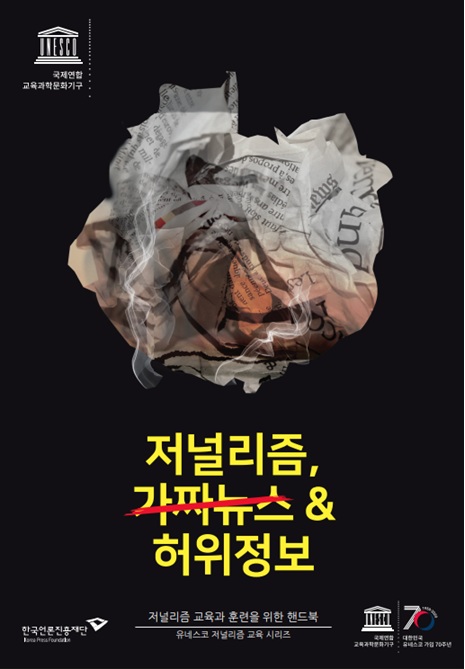 저널리즘, 가짜뉴스 & 허위정보 : 저널리즘 교육과 훈련을 위한 핸드북 발행 연도: 2020 저자: Julie Posetti | Cherilyn Ireton | Claire Wardle | Hossein Derakhshan | Alice Matthews | Magda Abu-Fadil | Tom Trewinnard | Fergus Bell | Alexios Mantzarlis 단체 저자: 유네스코 | 유네스코한국위원회 | 한국언론진흥재단 이 핸드북은 여러 나라에서 적절하게 활용할 수 있는 모델 커리큘럼을 제공하기 위해 만들어졌다. 그대로 채택하거나 상황에 맞게 수정해서 활용할 수 있다. 이를 통해 사회 문제로 떠오른, 특히 저널리즘 영역의 문제로 떠오른 전 세계적인 허위정보에 대응하고자 한다.모델 커리큘럼 역할을 할 이 책은 저널리즘 학생과 수행자들의 ‘가짜뉴스’와 관련된 이슈 탐구에 도움을 줄 수 있도록, 저널리즘 교육자와 훈련자들에게 적절한 프레임워크와 교과를 제공하도록 설계됐다. 우리는 또 이 자료가 저널리스트들의 실천에도 유용한 안내자가 되기를 바란다.이 콘텐츠들은 세계 최고 저널리즘 교육자, 연구자, 사상가들의 작업을 한데 모은 것이다. 이들은 잘못된 정보와 허위정보의 도전을 다루는 저널리즘 기법과 실천과 관련된 최신 정보를 제공하고 있다.이 교과들은 맥락적이며 이론적인 정보를 담고 있다. 하지만 온라인 검증은 굉장히 실질적인 내용들로 구성돼 있다. 이 자료들을 한 교과로 한꺼번에 사용할 수도 있고, 개별 모듈을 별도로 활용해도 된다. 이러한 자료들은 기존 교육 모델을 새롭게 하거나 새로운 교과를 만드는 데 도움이 될 것이다.이 책은 유네스코 국제 커뮤니케이션 개발 사업이 주력하고 있는 ‘탁월한 저널리즘 교육을 위한 글로벌 이니셔티브’의 일환이다. 이 이니셔티브는 국제적인 모범 실천 사례를 공유하고, 국제적 관점에서 저널리즘을 가르치고 실천하며 연구하는 작업에 참여하기 위해 노력한다.