
자료
세계시민교육에 대한 이해를 넓히고 연구, 옹호 활동, 교수, 학습 등을 향상시킬 수 있는 다양하고 유용한 자료를 찾아보세요.
2,162 건의 결과가 검색되었습니다
 Life Skills Through Drama: Equipping Adolescent Girls With Key Knowledge and Skills to Help Them to Mitigate, Prevent and Respond to Gender Based Violence 발행 연도: 2021 단체 저자: International Rescue Committee (IRC) The Life Skills through Drama curriculum aims at promoting the protection of Syrian and Lebanese adolescent girls from Gender Based Violence and enhancing their psychosocial wellbeing. This curriculum addresses the basic life skills that adolescent girls living in difficult conditions in any similar cultural context could need. The curriculum relies on active learning through experience, practice, reflection and discussion. And it has been designed based on drama techniques. Varied creative drama techniques were used to serve the objectives including techniques from Theater of the Oppressed. You may find some familiar games and activities that have been modified or developed to suit the intended objectives, and you may also find innovated games and activities by the author such as “Fruit Festival”.
  طرق تدريس ذوي الاحتياجات الخاصة " تخصص علوم" 발행 연도: 2010 저자: Marwa El-Baz 단체 저자: Port Said University هذا الملف يحتوي على المادة العلمية المستخدمة في تدريس مقرر طرق تدريس ذوي الاحتياجات الخاصة " تخصص علوم". تم تقسيم المقرر على مواضيع متعددة تعرف المتعلم بذوي الاحتياجات الخاصة وطرق تدريسهم. Methods of Teaching People with Special Needs "Specialization in Science" 발행 연도: 2010 저자: Marwa El-Baz 단체 저자: Port Said University This report contains the scientific material used in the teaching methodology for people with special needs course "Specialization Science". The course was divided into multiple topics that familiarize the learner with people with special needs and methods of teaching them.
  Guidelines for Data Collection to Measure SDG 4.7.4 and 4.7.5 발행 연도: 2021 저자: Andres Sandoval-Hernandez | Maria Magdalena Isac | Diego Carrasco | Daniel Miranda 단체 저자: UNESCO Institute for Statistics (UIS) This document provides guidance to apply a recently developed strategy to assess two indicators that embody tolerance, respect and sustainable development, namely:Indicator 4.7.4: Percentage of students in lower secondary education showing adequate understanding of issues relating to global citizenship and sustainabilityIndicator 4.7.5: Percentage of students in lower secondary education showing proficiency in knowledge of environmental science and geoscienceFollowing a thorough review and endorsement by the UIS’ Technical Cooperation Group on the Indicators for SDG 4-Education 2030 (TCG), the measurement strategy has since been applied to the last cycles of TIMSS, PISA and ICCS to produce scores to measure Indicators 4.7.4 and 4.7.5 for 60 countries. While this marks a significant achievement, it is important to acknowledge that two- thirds of UN members have yet to participate in these assessments. To promote wider participation among UN members, this document serves as a robust and easy-to-use set of guidelines offering detailed technical guidance for countries on how to collect the data necessary to produce the information to measure and monitor SDG Indicators 4.7.4 and 4.7.5. Notably, these guidelines will aid in the production of information that is comparable with that of the 60 countries for which this data already exists.
 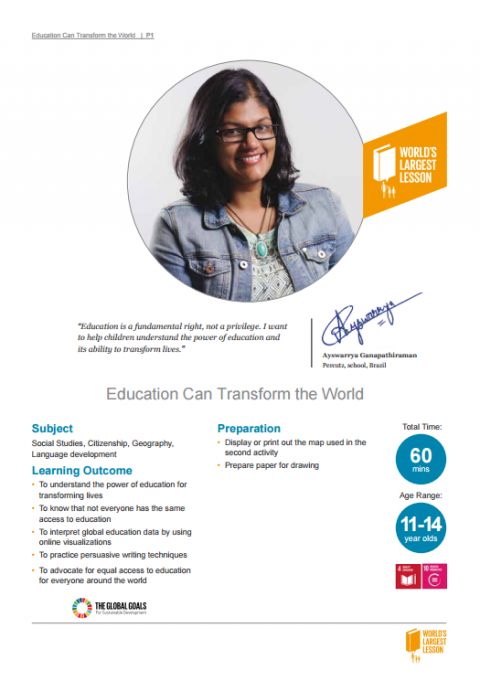 Education Can Transform the World 단체 저자: United Nations Children's Fund (UNICEF) World’s Largest Lesson is a collaborative education project to support the announcement of the United Nations Global Goals for Sustainable Development.Learning outcomes of the project is: • To understand the power of education for transforming lives • To know that not everyone has the same access to education • To interpret global education data by using online visualizations • To practice persuasive writing techniques • To advocate for equal access to education for everyone around the world
 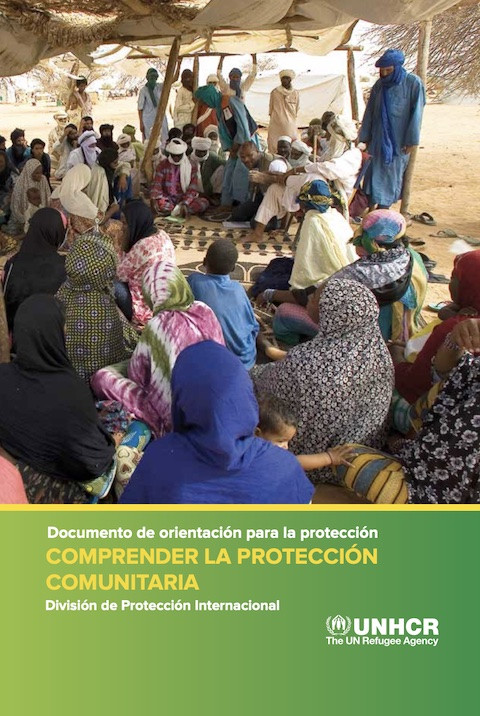 Comprender la protección comunitaria: Documento de orientación para la protección 발행 연도: 2013 단체 저자: UN. Office of the United Nations High Commissioner for Refugees (UNHCR) Documento que orienta la protección comunitaria desde el reconocimiento del enfoque comunitario, la definción de la protección y la protección comunitaria. Deja las bases de 12 lecciones funadamentales para este proceso.
 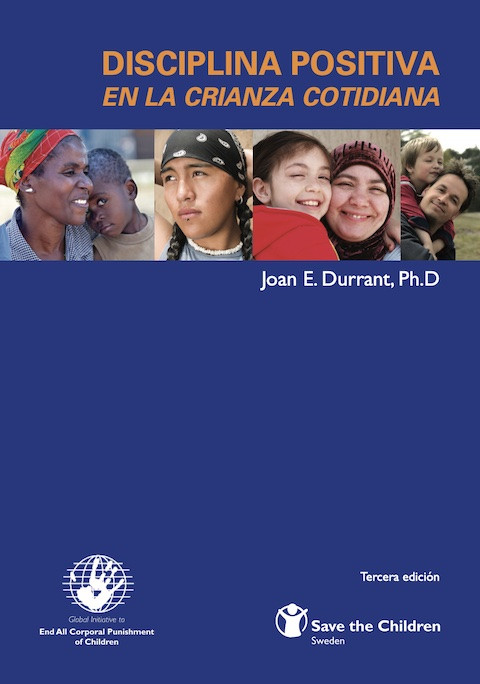 Disciplina positiva en la crianza cotidiana (Tecera edición) 발행 연도: 2013 저자: Joan E. Durrant 단체 저자: Save the Children Sweden Este documento es un respuesta al informe mundial sobre la violencia con la niñez en el año 2006, un estudio que determinó que el maltrato ocurre en los hogares de los niños y las nñas en todos los paises del mundo. Es un libro dirigido a padres y futuros padres de niños de todas las edades. Aborda temas que surgen desde el nacimiento y el final de la adolescencia.
  평화・통일교육 : 방향과 관점 발행 연도: 2018 단체 저자: 통일교육원 본 자료는 북한·통일교육에 대해 지식과 정보만을 전달하는 것이 아니라, 학교와 지역사회를 비롯한 통일교육의 현장에서 어떤 시각에서, 어디에 중점을 두고 가르쳐야 하는지와 같이 통일교육의 방향과 관점 등을 제시하고 있다. 본 저작물은 ‘국립통일교육원’에서 ‘2018’년 작성하여 공공누리 4유형으로 개방한 ‘ 평화・통일교육 : 방향과 관점 ’을 이용하였으며, 해당 저작물은 ‘국립통일교육원(www.uniedu.go.kr)’에서 무료로 다운받으실 수 있습니다.
  밀레니얼 세대를 위한 평화·통일 특강: 6인의 전문가가 들려주는 평화·통일의 이해 발행 연도: 2020 저자: 한완상 | 장달중 | 김주현 | 전현준 | 고수석 | 김재신 단체 저자: 통일교육원 본 자료는 국민대학교에서 통일교육원과 함께 진행한 '옴니버스 특강'의 강연 내용을 묶어 발간되었다. 3.1 운동과 상해임시정부 수립 101주년을 맞이한 2020년의 대한민국은 지난 100년을 정리하고, 다가올 100년을 구획해야 하는 새로운 시작점에 서 있다. 이 책에서 6명의 전문가들은 각자의 전문성을 바탕으로 한반도의 평화와 통일을 위한 여섯 가지 해법을 제시한다. 학자, 외교관, 경제인, 언론인 등 다양한 분야의 시선으로 평화와 통일에 대한 시각을 다각화하고, 사고를 확장할 수 있는 지혜와 통찰이 담겨 있다. 본 저작물은 ‘국립통일교육원’에서 ‘2020’년 작성하여 공공누리 4유형으로 개방한 ‘ 밀레니얼 세대를 위한 평화·통일 특강: 6인의 전문가가 들려주는 평화·통일의 이해 (한완상, 장달중, 김주현, 전현준, 고수석, 김재신)’를 이용하였으며, 해당 저작물은 ‘국립통일교육원(www.uniedu.go.kr)’에서 무료로 다운받으실 수 있습니다.
  Preventing Youth Violence: An Overview of the Evidence 발행 연도: 2015 단체 저자: World Health Organization (WHO) Every year about 200.000 adolescents and young people between the ages of 10 and 29 die, which places homicide in fourth place in the world as cause of death in young population. Several million adolescents and young people suffer from acts of violence, and trauma that require urgent medical and psychological treatment. The emotional imprints that youth volence leaves on its survivors and their loved ones are often profound. Youth violence destroys lives and its consequences have very high economic costs, both for society and for the families of young people. The goal of this manual is to provide a scientific framework that allows us to understand why some people have a greater tendency to be involved in acts of youth violence and how to prevent it.