
자료
세계시민교육에 대한 이해를 넓히고 연구, 옹호 활동, 교수, 학습 등을 향상시킬 수 있는 다양하고 유용한 자료를 찾아보세요.
3,441 건의 결과가 검색되었습니다
 Глобальные тенденции в области свободы выражения мнений и развития средств массовой информации: Цифровые средства информации, 2015 г. 발행 연도: 2017 저자: Iginio Gagliardone | Danit Gal | Thiago Alves Pinto | Gabriela Martinez Sainz 단체 저자: UNESCO Учитывая успех первого доклада о глобальных тенденциях и необходимость проведения дополнительных исследований, ЮНЕСКО возглавила работу над вторым изданием в серии докладов, сосредоточив внимание на подробном анализе ряда тенденций цифровой эпохи. В докладе ЮНЕСКО о «Глобальных тенденциях в области свободы выражения мнений и развития средств информации: цифровые средства информации» за 2015 г. содержится глубокий анализ ключевых областей, названных в первом докладе о глобальных тенденциях наиболее важными для дальнейшего изучения, а именно: язык ненависти в интернете, защита журналистских источников информации и роль интернет-посредников в содействии свободе выражения мнений, а также обращается особое внимание на вопрос безопасности журналистов. Доклад также опирается на вопросы, поднятые в проведенном ЮНЕСКО в 2015 г. исследовании под названием «Основные принципы построения инклюзивных обществ знаний».
  UNESCO Women for Ethical AI: Outlook Study on Artificial Intelligence and Gender 발행 연도: 2024 단체 저자: UNESCO The gender chapter of the UNESCO Recommendation on the Ethics of AI is a concrete commitment by 194 Member States to advance gender equality in the AI ecosystem. To track progress in the implementation of the gender provisions of UNESCO’s Recommendation, and to assess the impacts of AI on gender equality, the UNESCO Women for Ethical AI (W4EAI) Platform has been established. This report advances the workstream through evidence-based insights in three critical areas: women’s participation in AI development and deployment, the inclusion of gender equality concerns in AI governance and the impact of AI on gender equality. It highlights the significant underrepresentation of women in AI, the lack of gender-disaggregated data, and the compounded challenges women face in the field. The report also addresses the neglect of gender dimensions in AI policy, the risks posed by AI systems to women, and the need for responsible and ethical AI governance to promote gender equality. Finally, it outlines actionable recommendations to enhance gender equality through and in AI, emphasizing the importance of comprehensive data collection, targeted interventions, and inclusive policy-making.
 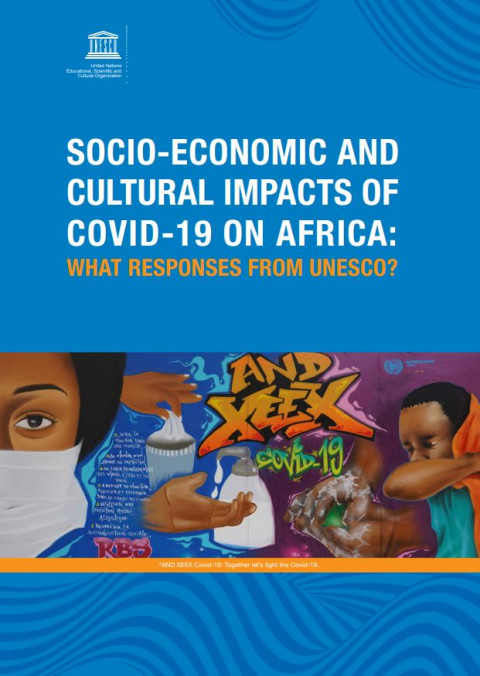 Socio-Economic and Cultural Impacts of COVID-19 on Africa: What Responses from UNESCO? 발행 연도: 2020 단체 저자: UNESCO This policy paper analyses the socio-economic and cultural impacts of the disease on Africa as a whole, caused by both the immediate effects and the present and future consequences of the pandemic, including on the African societal fabric, which is likely to lead to a fracture in the trust between States and their citizens and within communities themselves. As such, it highlights the main measures that were adopted by African countries to contain the crisis and its socio-economic and cultural effects. While committing to acting and reflecting on the present and future consequences of the pandemic, UNESCO aims to contribute substantially to the ongoing debates in Africa through the development of a strategic response to help the collective global and regional efforts against the pandemic. Incidences socio-économiques et culturelles de la COVID-19 sur l'Afrique: quelles réponses de l'UNESCO?? 발행 연도: 2020 단체 저자: UNESCO Ce document de politique analyse les incidences socioéconomiques et culturelles de la maladie sur l’Afrique dans son ensemble, aussi bien par les effets immédiats que les conséquences présentes et futures de la pandémie, y compris sur le tissu sociétal africain, susceptible d’entraîner une fracture de la relation de confiance entre les États et leurs citoyens, et au sein des communautés elles-mêmes. Ce faisant, elle met en lumière les principales mesures adoptées par les pays africains pour juguler la crise et ses effets socio-économiques et culturelles. Tout en s’engageant dans l’action et dans la réflexion sur les conséquences présentes et futures de la pandémie, l’UNESCO entend ainsi contribuer de manière substantielle aux débats en cours en Afrique à travers en l’articulation d’une réponse stratégique pour apporter sa contribution aux efforts collectifs mondiaux et régionaux de lutte contre la pandémie.
  Culture | 2030 Indicators: Thematic Indicators for Culture in the 2030 Agenda 발행 연도: 2019 단체 저자: UNESCO The Culture|2030 Indicators is a framework of thematic indicators whose purpose is to measure and monitor the progress of culture’s enabling contribution to the national and local implementation of the Goals and Targets of the 2030 Agenda for Sustainable Development (SDGs). The methodology is developed to assist countries and cities with very different capacities regarding the collection of data and cultural statistics. The evidence gathered will inform policies and decisions as well as operational actions enabling greater investments in culture as a sector of activity and a greater recognition of its transversal role across other sectors.
  Social Contract Pedagogy: A Dialogical and Deliberative Model for Global Citizenship Education (Background paper for the Futures of Education initiative) 발행 연도: 2020 저자: Richard Desjardins | Carlos Alberto Torres | Susan Wiksten 단체 저자: UNESCO We propose that together Social Contract Pedagogy (SCP) and Global Citizenship Education (GCE) offer a comprehensive vision including key principles and core elements that are important for rethinking education and shaping the future of the world. We introduce the novel concept of Social Contract Pedagogy (SCP) as a means to adapt the social contract in liberal democracies which has been (conceptually) located at the level of the state, to the level of the classroom and other pedagogically relevant contexts. A key feature of this pedagogy is the negotiation of values and norms in ways that maintain cohesion and inclusion and avoids too much power in the hands of sectarian extremes (of any kind) which tend to impose their views on others, oppress and exclude. This includes using fake news, denying scientific debates and/or any extremely politicized interpretations of evidence and facts to obfuscate or deny consequences of individual and group choices and behavior, but also ‘othering’ of any kind whether from the political right or the political left. In our view, this is an essential premise for the education of democratic citizens. Citizenship education of this kind is seen as essential for the survival and growth of liberal democracies in the future.
  Survey on Privacy in Media and Information Literacy With Youth Perspectives 발행 연도: 2017 저자: Sherri Hope Culver | Alton Grizzle 단체 저자: UNESCO This report aims to provide conceptual, development and policy recommendations to foster privacy in MIL, while enabling the critical engagement of people, including young women and men, in an environment conducive to sustainable development and to freedom of expression online and offline. It seeks to provide clarity on the complex issue of how MIL and privacy intersect.
 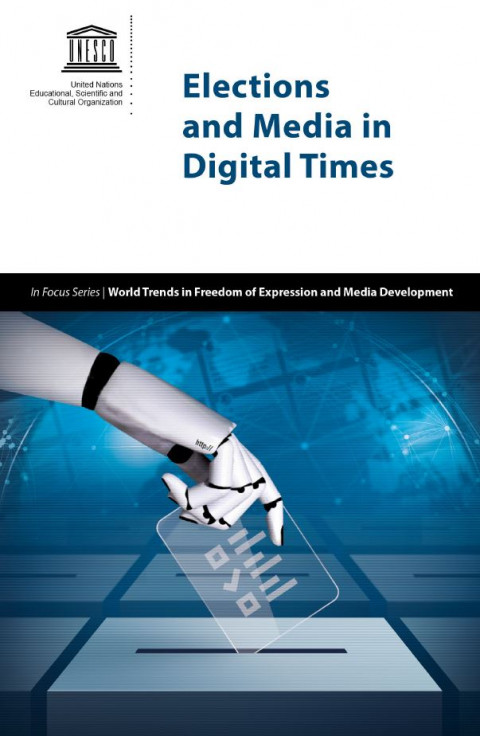 Elections and Media in Digital Times (In Focus Series: Global Trends in Freedom of Expression and Media Development) 발행 연도: 2019 저자: Tarlach McGonagle | Maciek Bednarski | Mariana Francese Coutinho | Arthur Zimin 단체 저자: UNESCO Digital companies are enabling politicians, political parties and voters to communicate in unprecedented ways, and expanding opportunities for seeking, receiving and imparting political information and ideas. Alongside positive developments, there also growing concerns about emerging and increasing threats to the integrity and credibility of elections, as well as the media's contribution to free, fair, transparent and peaceful electoral processes.This report highlights three converging trends in media and elections in digital times: the rise of disinformation, intensifying attacks on journalists, and disruptions linked to the use of information and communication technology in electoral arrangements. Offering possible responses to the challenges at hand, this study is a tool for governments, election practitioners, media organizations, journalists, civil society, the private sector, academia and individuals. Выборы и СМИ в цифровую эпоху (Серия в фокусе: Мировые тенденции в области свободы выражения мнений и развития СМИ) 발행 연도: 2019 저자: Tarlach McGonagle | Maciek Bednarski | Mariana Francese Coutinho | Arthur Zimin 단체 저자: UNESCO ИТ компании дают возможность политикам, политическим партиям и избирателям общаться беспрецедентными способами, расширяют возможности для поиска, получения и распространения политической информации и идей. Наряду с позитивными сторонами растет озабоченность по поводу вырисовывающихся и усиливающихся угроз целостности и авторитету выборов, а также вкладу средств массовой информации в свободные, справедливые, транспарентные и мирные избирательные процессы.В настоящем докладе освещаются три сходящиеся тенденции, связанные со СМИ и выборами в цифровую эпоху: рост дезинформации, усиление нападений на журналистов и перебои в предоставлении информационно-коммуникационных технологий в период выборов. Это исследование, предлагая возможные ответы на стоящие перед нами проблемы, является своего рода инструментом для правительств, специалистов по проведению выборов, организаций средств массовой информации, журналистов, гражданского общества, частного сектора, научных кругов и отдельных лиц.
  Background Document: National Media and Information Literacy (MIL) Policies and Strategies in Albania; 2020-2021 발행 연도: 2021 단체 저자: Albanian Media Institute | European Union (EU) | UNESCO This background study was conducted in the framework of the project "Building trust in the media in Southeast Europe and Turkey, phase II" supported by UNESCO and the European Union and implemented by the Albanian Media Institute. The project, at this stage of implementation, aims to increase the skills of young people for media and information literacy (MIL) through the integration of the MIL curriculum in the formal education system in Albania. The implementation of the project started in June 2020 and will last until 2022. This document suggests objectives for MIL policies and strategy, which should be extended to formal education (university and pre-university level); in non-formal and informal education thus affecting all members of society with the aim of increasing the level of education on media and information in Albania.