
자료
세계시민교육에 대한 이해를 넓히고 연구, 옹호 활동, 교수, 학습 등을 향상시킬 수 있는 다양하고 유용한 자료를 찾아보세요.
3,433 건의 결과가 검색되었습니다
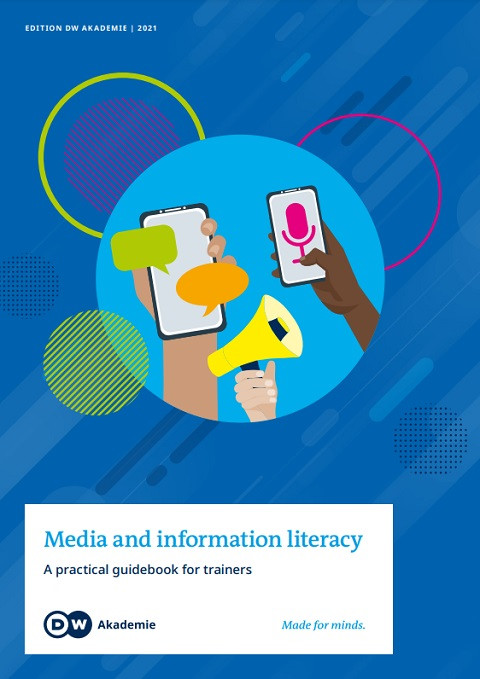 Media and Information Literacy: A Practical Guidebook for Trainers 발행 연도: 2021 저자: Sylvia Braesel | Thorsten Karg 단체 저자: DW Akademie Literacy is the ability to read and write. Media and information literacy (MIL) is the ability to understand how the media work and can be used to participate in public debate. MIL includes social media like Facebook, as well as traditional media like books, newspapers, radio and television.Media and information literacy - A practical guidebook for trainers provides MIL trainers with background information, training ideas, methods and worksheets. The book also provides sample training schedules to help you determine the length of time needed to teach individual aspects of media and information literacy.Download the Media and information literacy guidebook for trainers as well as the worksheets and guidelines.DW Akademie defines MIL as a composite of five core competencies:Access: The ability to find and access relevant media and information sources.Analyze: The ability to evaluate the credibility, accuracy and objectivity of media content, for example a news story.Create: The ability to create and produce media and information content, such as photos, texts, or videos.Reflect: The ability to think critically about media habits, experiences, trends, and technologies, and how they impact individuals and society.Act: The ability to use media to achieve specific goals, for example launching a social media campaign about health.Read more about DW Akademie's approach to Media and Information Literacy here.
 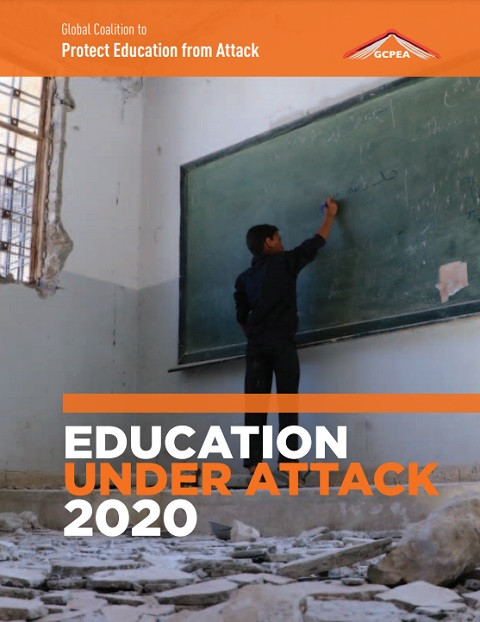 Education Under Attack 2020 발행 연도: 2020 단체 저자: Global Coalition to Protect Education from Attack (GCPEA) This study is published by the Global Coalition to Protect Education from Attack (GCPEA), which was formed in 2010 by organisations working in the fields of education in emergencies and conflict-affected contexts, higher education, protection, and international human rights and humanitarian law that were concerned about ongoing attacks on educational institutions, their students, and staff in countries affected by conflict and insecurity.GCPEA is a coalition of organizations that includes: co-chairs Human Rights Watch and Save the Children, the Council for At-Risk Academics (Cara), the Institute of International Education (IIE), the Office of the United Nations High Commissioner for Refugees (UNHCR), the Education Above All Foundation (EAA), Plan International, the United Nations Children’s Fund (UNICEF) and the United Nations Educational, Scientific and Cultural Organization (UNESCO). GCPEA is a project of the Tides Center, a non-profit 501(c)(3) organization. Education under Attack 2020 is the result of independent research conducted by GCPEA. It is independent of the individual member organizations of the Steering Committee of GCPEA and does not necessarily reflect the views of the Steering Committee member organizations.
  Literary Economic Unit 발행 연도: 2021 단체 저자: Luqman Education This video presents one of the geography lessons in the third secondary grade of in the Syrian Republic. The video focuses on the challenges people face in achieving sustainable development. It explains the 17 goals of the sustainable development goals. أدبي وحدة الاقتصاد 발행 연도: 2021 단체 저자: Luqman Education يقدم الفيديو أحد دروس مادة الجغرافيا بالصف الثالث الثانوي الأدبي بالجمهورية السورية. ويركز الفيديو عل التحديات التي تواجه الشعوب في تحقيق التنمية المستدامة. ويستعرض الفيديو الأهداف 17 لأهداف التنمية المستدامة.
  Leveraging Artificial Intelligence to Enhance Early Action towards the Kunming-Montreal Global Biodiversity Framework 발행 연도: 2024 저자: Nicole DeSantis | Lea Phillips | Christina Supples | Julien Pigot | Jamison Ervin | Doley Tshering | Juan Calles Lopez | Dharshani Seneviratne | Enrique Paniagua | Monica Mora 단체 저자: United Nations Development Programme (UNDP) This publication releases the methodology behind the National Biodiversity Strategies and Action Plans (NBSAP) Target Similarity Assessments and identifies key lessons learned and opportunities for future applications.
 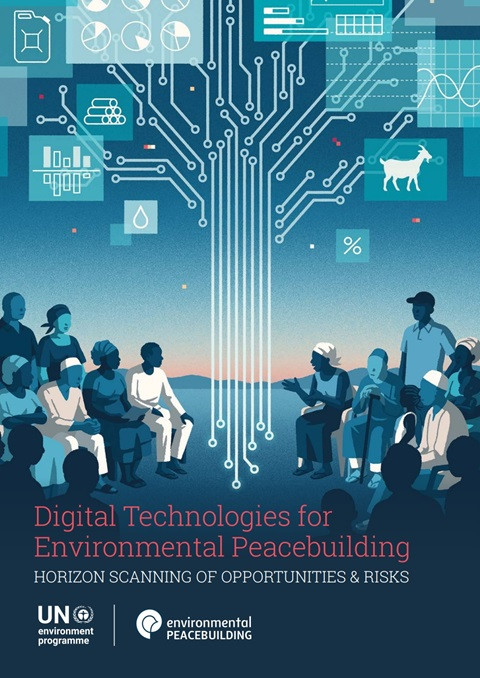 Digital Technologies for Environmental Peacebuilding: Horizon Scanning of Opportunities and Risks 발행 연도: 2024 단체 저자: United Nations Environment Programme (UNEP) This report specifically delves into how digital technologies can be harnessed to manage environmental and natural resource risks that contribute to insecurity and social conflict, as well as the opportunities they present for peacebuilding, cooperation, and social cohesion. It examines relevant use cases spanning the peace and security continuum and concludes with a set of important policy and governance recommendations. The report is designed to inform and contribute to significant upcoming frameworks addressing digital technologies, including the Summit of the Future and the Global Digital Compact.
 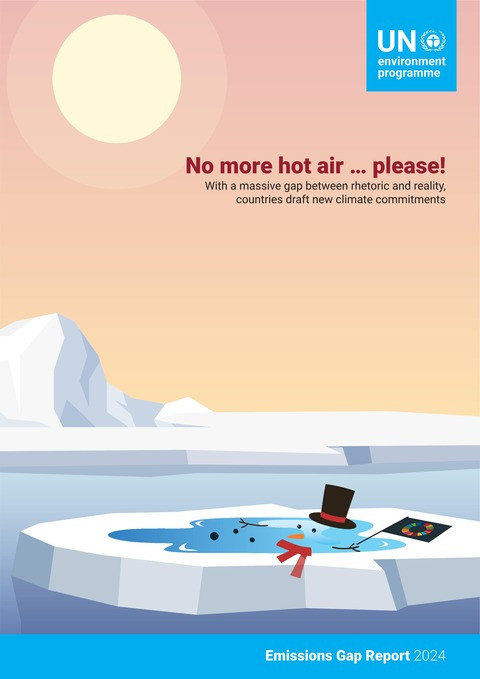 Emissions Gap Report 2024: No More Hot Air … Please! With a Massive Gap Between Rhetoric and Reality, Countries Draft New Climate Commitments 발행 연도: 2024 저자: Anne Olhoft | John Christensen | William F. Lamb | Minal Pathak | Takeshi Kuramochi | Taryn Fransen | Joeri Rogelj | Michel den Elzen | Joana Portugal-Pereira | Neil rant | Jiang Kejun | Stephanie Roe | Chris Bataille | Kornelis Blok | Kelly Levin | Eleonore Soubeyran | Costanza Strinati 단체 저자: United Nations Environment Programme (UNEP) As climate impacts intensify globally, the Emissions Gap Report 2024: No more hot air … please! finds that nations must deliver dramatically stronger ambition and action in the next round of Nationally Determined Contributions or the Paris Agreement’s 1.5°C goal will be gone within a few years. The report is the 15th edition in a series that brings together many of the world’s top climate scientists to look at future trends in greenhouse gas emissions and provide potential solutions to the challenge of global warming.
 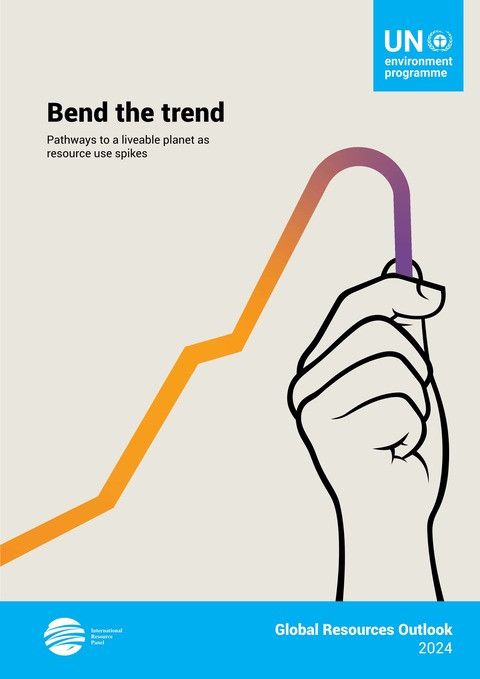 Global Resources Outlook: 2024 Bend the Trend; Pathways to a Liveable Planet as Resource Use Spikes 발행 연도: 2024 저자: Hans Bruyninckx, Steve Hatfield-Dodds, Stefanie Hellweg, Heinz Schandl 단체 저자: United Nations Environment Programme (UNEP) | International Resource Panel (IRP) The world is in the midst of a triple planetary crisis of climate change, biodiversity loss and pollution and waste. The global economy is consuming ever more natural resources, while the world is not on track to meet the Sustainable Development Goals. The scientific community has never before been more aligned or more resolute on the need for urgent global transformation towards the sustainable use of resources. This 2024 edition of the Global Resources Outlook sheds light on how resources are essential to the effective implementation of the Agenda 2030 and multilateral environmental agreements to tackle the triple planetary crisis. The report brings together the best available data, modelling and assessments to analyse trends, impacts and distributional effects of resource use. It builds on more than 15 years of work by the International Resource Panel, including scientific assessments and inputs from countries, a vast network of stakeholders in the field and regional experts. The report illustrates how, since the 2019 edition of this report, rising trends in global resource use have continued or accelerated. The report also shows how demand for resources is expected to continue increasing in the coming decades. This means that, without urgent and concerted action, by 2060 resource extraction could rise by 60% from 2020 levels – driving increasing damage and risks. However, this fate is not sealed. The report also describes the potential to turn negative trends around and put humanity on a trajectory towards sustainability. For that, bold policy action is critical to phase out unsustainable activities, speed up responsible and innovative ways of meeting human needs and create conditions conducive to social acceptance and equity within the necessary transitions. This includes urgent action to embed resources in the delivery of multilateral environmental agreements, define sustainable resource use paths and roll out appropriate financial, trade and economic incentives. The pathway towards sustainability is increasingly steep and narrow, and the window of opportunity is closing. The science is clear: The key question is no longer whether a transformation towards global sustainable resource consumption and production is necessary, but how to make it happen now. Addressing this reality, based on evolving concepts of a just transition, is an essential part of any credible and justifiable way forward.
  Guidelines for Contributing to the United Nations Sustainable Development Goals 발행 연도: 2024 단체 저자: International Organization for Standardization (ISO) | United Nations Development Programme (UNDP) The International Organization for Standardization (ISO) and United Nations Development Programme (UNDP) Guidelines for contributing to the Sustainable Development Goals (SDGs) offer a practical guidance on how organizations and businesses can manage and enhance their contributions to the SDGs. The guidelines draw on global expertise and best practices, complementing existing sustainability standards for aligning organizational strategies and operations with the SDGs as a whole. While other standards may address specific aspects of sustainable development, these guidelines emphasize a holistic approach and provide practical tools to enhance business performance, while at the same time optimizing the impact of all organizational activities on both people and the planet.
 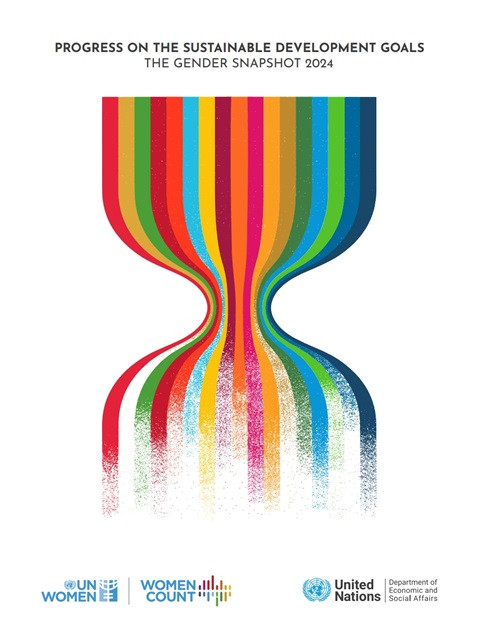 Progress on the Sustainable Development Goals: The Gender Snapshot 2024 발행 연도: 2024 저자: Papa Alioune Seck | Antra Bhatt | Farrah Frick | Yongyi Min | Heather Page | Natalia Tosi | Sokunpanha You | Guillem Fortuny Fillo 단체 저자: United Nations Entity for Gender Equality and the Empowerment of Women (UN Women) | UN. Department of Economic and Social Affairs (UN. DESA) This publication highlights new data and evidence on gender equality trends. It finds the world falling short on its commitments to women and girls. Despite declining poverty and narrowing gender gaps in education, not a single indicator under the global gender equality Goal has been achieved. The report stresses the high cost of not investing in women's rights and champions radical action to accelerate the pace of change.