
자료
세계시민교육에 대한 이해를 넓히고 연구, 옹호 활동, 교수, 학습 등을 향상시킬 수 있는 다양하고 유용한 자료를 찾아보세요.
1,451 건의 결과가 검색되었습니다
 以电影《美国女孩》为例分析中国集体主义和美国个人主义对家庭教育的影响 발행 연도: 2024 저자: 刘梦雨 단체 저자: 中国高校人文社会科学信息网 在中国家庭面对中美跨文化交际时 会表现出剧烈的冲突,以电影《美国女孩》为例,分析在美国长大的芳仪回到中国后会发生怎样的跨文化问题,不同的教育背景使芳仪产生自我矛盾,在家庭中和父母爆发了争吵,芳仪最后在不断冲突后接受了现实。在对影片分析后希望能够发现更恰当的方法去解决跨文化家庭的教育问题并解决他们的矛盾。
  Research on Child Labour in Agriculture in Eastern Europe and Central Asia 발행 연도: 2024 저자: Абдолова Садаф | Янбых Рената | Серова Евгения 단체 저자: Народонаселение The article deals with the problem of child labor in agriculture in Eastern Europe and Central Asia. An analysis of the legislation of these countries and scientific literature allowed us to uncover the causes and formulate some recommendations for preventing and reducing the use of child labor in agriculture in Eastern Europe and Central Asia. The article was prepared on the basis of a study conducted by The Institute of Agricultural Research of the Higher School of Economics in cooperation with the Food and Agriculture Organization of the United Nations (FAO) and the International by the International Labour Organization (ILO) in 2021. Детский труд в сельском хозяйстве Восточной Европы и Центральной Азии 발행 연도: 2024 저자: Абдолова Садаф | Янбых Рената | Серова Евгения 단체 저자: Народонаселение В статье рассматривается проблема детского труда в сельском хозяйстве Восточной Европы и Центральной Азии. Анализ законодательства этих стран и научной литературы позволили вскрыть причины и сформулировать некоторые рекомендации по предотвращению и сокращению использования детского труда в сельском хозяйстве Восточной Европы и Центральной Азии. Статья подготовлена на базе исследования, проведённого Институтом аграрных исследований НИУ «Высшая школа экономики» в сотрудничестве с Продовольственной и сельскохозяйственной организацией ООН (ФАО) и Международной организацией труда (МОТ) в 2021 году.
  Developing Digital Citizenship and Language Competences 발행 연도: 2023 저자: Christian Ollivier | Catherine Jeanneau 단체 저자: European Centre for Modern Languages (ECML) The profile of citizens who use languages and digital tools helps to define the objectives to pursue in language training that incorporates digital citizenship education. The Didactic Framework outlines a socio-interactional approach that enables this integration. Développer citoyenneté numérique et compétences langagières 발행 연도: 2023 저자: Christian Ollivier | Catherine Jeanneau 단체 저자: European Centre for Modern Languages (ECML) Le portrait des citoyens et citoyennes usagers et usagères des langues et du numérique permet de préciser les objectifs à poursuivre dans une formation en langue qui intègre l'éducation à la citoyenneté numérique. Le Cadre didactique définit une approche socio-interactionnelle permettant cette intégration.
  التعليم المسؤول للتاريخ كوسيلة للمصالحة التاريخية؟ : تجربة الرابطة الأوروبية لمعلمي التاريخ: هل تصلح كدراسة حالة؟ 발행 연도: 2012 저자: فان دير لييو-رورد، يوكي 단체 저자: Lebanese Association for Educational Studies (LAES) يكتب العديد من الباحثين الجامعيين المختصين بنظرية التاريخ وتعليم التاريخ عن المصالحة من خلال تعلّم التاريخ وتعليمه. ولكن تكاد لا توجد معلومات أمبيريقية عن تطبيقات عملية لمقاربات من هذا النوع ولا عن مسار وضعها قيد التنفيذ. أود في هذه المساهمة ان القي نظرة عن قرب على أساليب عمل يوروكليو EUROCLIO (الرابطة الأوروبية لمعلمي التاريخ) في البلدان التي توجد داخلها توترات سياسية وعرقية ودينية مثل بلغاريا واستونيا ولاتفيا ومولدوفا ورومانيا وروسيا وأوكرانيا وتركيا وفي البلدان والمناطق التي تعرضت حديثا لصراعات عنيفة مثل البوسنة وكرواتيا وقبرص وجورجيا وجمهورية مقدونيا وصربيا. ومن ثم أود أن أطرح السؤال حول عمل يوروكليو EUROCLIO وأستطلع ما يصح ان يكون مثلا عن المصالحة من خلال تعليم التاريخ وما اذا مقاربتها تنشئ تعليما وتعلما للتاريخ يكون داعما لكيانات سياسية مستدامة. Responsible History as a Tool for Historical Reconciliation? EUROCLIO, the European Association of History Educators as a Case Study? 발행 연도: 2012 저자: فان دير لييو-رورد، يوكي 단체 저자: Lebanese Association for Educational Studies (LAES) Many university researchers specialized in the theory of history and in teaching history write about reconciliation using history learning and teaching. However, there are almost no empirical data on practical applications of such approaches nor on the process of implementation. In this contribution. I’d like to have a close look at the working methods of the European Association of History Educators EUROCLIO, in countries with internal political, racial and religious tensions, such as Bulgaria, Estonia, Latvia, Moldovia, Romania, Russia, Ukraine, Turkey and in the countries and regions that were recently exposed to severe conflicts such as Bosnia, Croatia, Cyprus, Georgia, Republic of Macedonia and Serbia. Then I’d want to ask the question about how EUROCLIO functions and explore what applies to be an example of reconciliation through teaching history, and whether the reconciliation approach creates a history teaching and learning that would be supportive of sustainable political entities.
 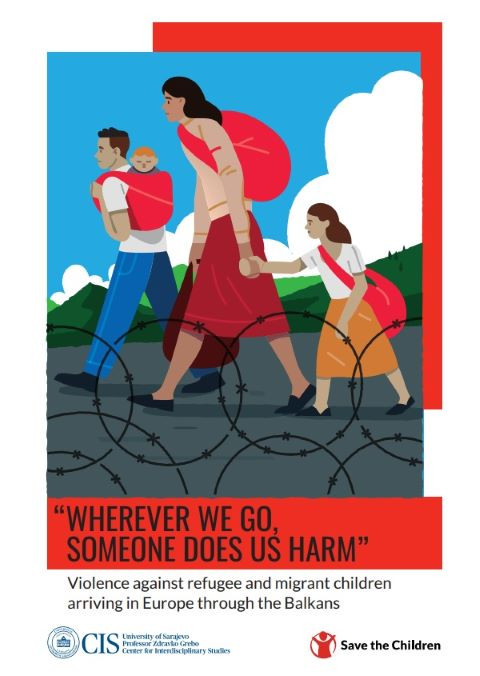 Wherever We Go, Someone Does Us Harm: Violence against Refugee and Migrant Children Arriving in Europe through the Balkans 발행 연도: 2022 저자: Anita Burgund Isakov | Dženana Husremović | Bogdan Krasić | Violeta Marković | Nikolina Milic | Tatjana Ristić | Alina Trkulja | Nevenka Žegarac 단체 저자: Save the Children Children, including thousands of unaccompanied and separated children, comprise about one-third of all refugees and migrants arriving in Europe. Many of these children come through the Balkans, travelling through countries including Greece, Bulgaria, Serbia, and Bosnia and Herzegovina. These are seen as transit countries by refugees and migrants as they try to continue their way toward Western Europe.In this report, Save the Children and the Center for Interdisciplinary Studies at the University of Sarajevo present in-depth research into the level and types of violence that children experience while attempting to reach Western Europe via the Balkans route, the circumstances of that violence, and the policies and practices that exist to support children. They also make recommendations for governments, NGOs and other stakeholders to strengthen the protection and support available to these children.The research was conducted in Bosnia and Herzegovina and Serbia, key transit countries on the threshold of the European Union and on the way to Western Europe. It is based on in-depth interviews with 48 children aged between 13 and 19 years old. This report also draws on focus group discussions with 27 professionals in Bosnia and Herzegovina and Serbia, mostly field workers who had extensive experience working with refugee and migrant children, and an extensive literature review. The findings of this research were analyzed thematically and interpreted within several keys: using ecological systems theory, an approach based on the rights of the child, and on trauma and resilience-based knowledge.
  Spot and Fight Disinformation 발행 연도: 2021 단체 저자: European Commission The pandemic demonstrated just how fast misleading or false information can spread online. With this toolkit, secondary school teachers can help their students separate what is real from what is fake when they are browsing online. The toolkit is comprised of an editable presentation (which includes real life examples and group exercises) and an instruction booklet for teachers. Detectar y combatir desinformación 발행 연도: 2021 단체 저자: European Commission La pandemia ha puesto de manifiesto la rapidez con que informaciones falsas se propagan en línea. Con este kit de herramientas, los profesores de enseñanza secundaria pueden ayudar a sus alumnos a distinguir lo verdadero de lo falso cuando navegan por internet. El kit de herramientas se compone de una presentación editable y de un folleto de instrucciones.