
자료
세계시민교육에 대한 이해를 넓히고 연구, 옹호 활동, 교수, 학습 등을 향상시킬 수 있는 다양하고 유용한 자료를 찾아보세요.
3,782 건의 결과가 검색되었습니다
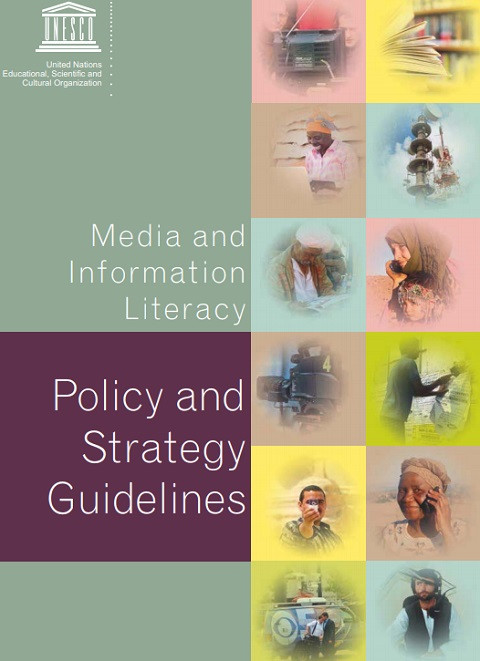 Media and Information Literacy: Policy and Strategy Guidelines 발행 연도: 2013 저자: Alton Grizzle | Penny Moore | Michael Dezuanni | Sanjay Asthana | Carolyn Wilson | Fackson Banda | Chido Onumah | Maria Carme Torras Calvo 단체 저자: UNESCO This resource aims to treat MIL as a composite concept, unifying information literacy and media literacy as well as considering the right to freedom of expression and access to information through ICTs. It is divided into two parts. Part 1 is the MIL Policy Brief, and is designed for policy or decision makers and can serve as a summary of the publication. Part 2 is divided into several comprehensive chapters and suggests: 1) how to enlist MIL a development tool; 2) conceptual frameworks for MIL policies and strategies; and 3) model MIL policy and strategies that can be adapted by countries globally.
 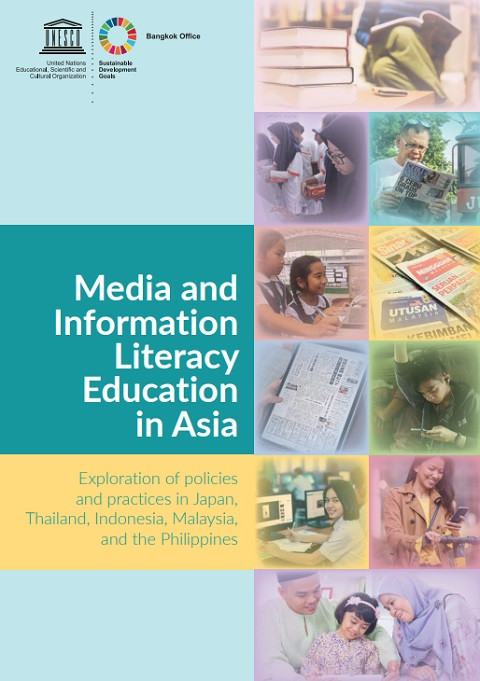 Media and Information Literacy Education in Asia: Exploration of Policies and Practices in Japan,Thailand, Indonesia, Malaysia, and the Philippines 발행 연도: 2020 저자: Masato Kajimoto | Phansasiri Kularb | Bobi Guntarto | Sabariah Mohamed Salleh | Therese Patricia S. Torres | Guillian Mae C. Palcon | Ramon Tuazon 단체 저자: UNESCO This book looked at the current media and information literacy education policies and teaching practices in formal and informal settings. It explores how MIL could address emerging and pressing problems such as political extremism, false news, online harassment and discrimination in Indonesia, Japan, Malaysia, the Philippines, and Thailand.
 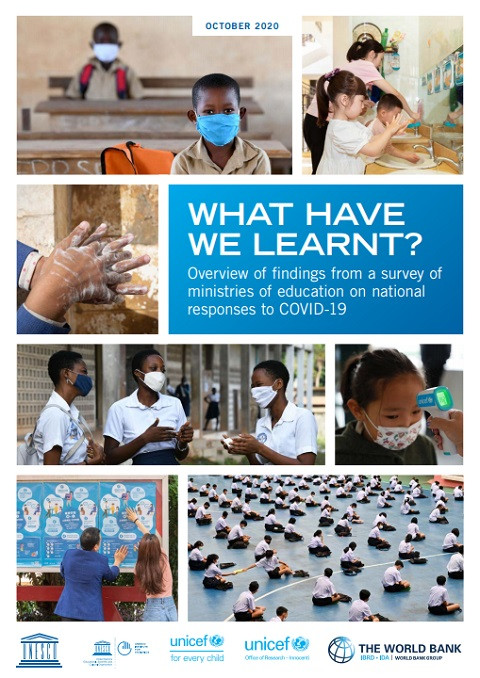 What Have We Learnt?: Overview of Findings From a Survey of Ministries of Education on National Responses to COVID-19 발행 연도: 2020 단체 저자: UNESCO | United Nations Children's Fund (UNICEF) | World Bank As part of the coordinated global education response to the COVID-19 pandemic, UNESCO, UNICEF and the World Bank conducted a Survey on National Education Responses to COVID-19 School Closures. In this joint report, the results of the first two rounds of data collection administered by the UNESCO Institute for Statistics (UIS) were analysed. They cover government responses to school closures from pre-primary to secondary education.
 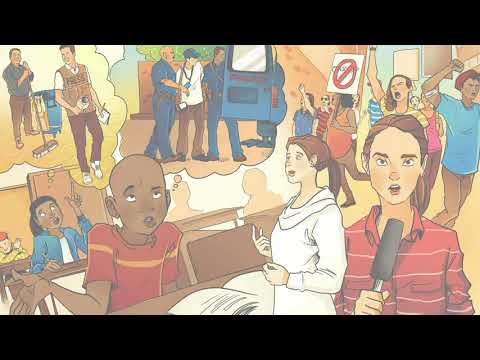 What Does the Rule of Law Have to Do With Me? 발행 연도: 2020 단체 저자: UNESCO Using fun, interactive pedagogical tools and a classroom setting, this video explains to young people the basic concept of the rule of law and how they can engage in building a society on just laws which protect the fundamental rights of the individual and promote citizenship (https://en.unesco.org/themes/gced).In simple engaging language with real life examples and interaction with pupils, it explains 'accountability', 'freedom of expression', the characteristics of good law and equality before the law.The video describes the UNESCO-UNODC partnership on education for the rule of law (https://en.unesco.org/themes/gced/rul...) which works to bridge the gap between education and justice and supports Sustainable Development Goals 4 (in particular target 4.7) and 16. The partnership has developed interactive handbooks for schools and guidance for policy-makers.
  Understanding Media and Information Literacy (MIL) in the Digital Age: A Question of Democracy 발행 연도: 2019 저자: Ulla Carlsson 단체 저자: University of Gothenburg | UNESCO This book consists of three parts. In the first part, a number of articles of a more general nature discuss media and information literacy (MIL) in a variety of contexts as well as courses of development on national, regional and global levels. The focus in the second part is on Sweden, the host the UNESCO Global MIL Week Feature Conference 2019. The articles in this part present current research findings, policy decisions and political initiatives, and some examples of ‘best practices’ in the MIL area. The third part presents a new approach to MIL in a context of social change and Agenda 2030.
  Teaching and Learning With Twitter 발행 연도: 2019 단체 저자: Twitter | UNESCO This resource is for educators who want to design lessons around media and information literacy and how it relates to global citizenship and digital citizenship education. Whether your focus is on media and information literacy (MIL) or nurturing good online habits, or other social competencies, there’ll be something here for you.
  World Programme for Human Rights Education: Plan of Action; Third Phase 발행 연도: 2017 단체 저자: UNESCO | UN. Office of the United Nations High Commissioner for Human Rights (UN. OHCHR) The plan of action for the third phase (2015–2019) of the World Programme, which benefited from the input and review of governmental and nongovernmental experts and practitioners, proposes a concrete strategy and practical ideas for further implementing human rights education and training in the above-mentioned areas at the national level. Its key elements are highlighted below:Human rights education in the primary and secondary school systems and in higher education, and human rights training for teachers and educators, civil servants, law enforcement officials and the military. Programa mundial para la educación en derechos humanos: Plan de acción; Tercera etapa 발행 연도: 2017 단체 저자: Organización de las Naciones Unidas para la Educación, la Ciencia y la Cultura (UNESCO) | UN. Office of the United Nations High Commissioner for Human Rights (UN. OHCHR) En el Plan de acción para la tercera etapa (2015-2019) del Programa Mundial —que contó con aportaciones y revisiones de diversos expertos y profesionales gubernamentales y no gubernamentales— se proponen una estrategia concreta e ideas prácticas para seguir impartiendo formación y educación en derechos humanos en los ámbitos mencionados en el plano nacional. A continuación se destacan sus elementos principales. Educación en derechos humanos en la enseñanza primaria y secundaria y en la enseñanza superior y formación en derechos humanos de los maestros y los educadores, los funcionarios públicos, los miembros de las fuerzas del orden y el personal military. Programme mondial en faveur de l’éducation aux droits de l’homme : Plan d’action ; Troisième phase 발행 연도: 2017 단체 저자: Organisation des Nations Unies pour l'éducation, la science et la culture (UNESCO) | UN. Office of the United Nations High Commissioner for Human Rights (UN. OHCHR) Le plan d’action pour la troisième phase (2015-2019) du Programme mondial, qui a bénéficié de l’apport et des avis critiques d’experts et praticiens gouvernementaux et non gouvernementaux, propose une stratégie concrète et des idées pratiques pour poursuivre la mise en œuvre de l’éducation et de la formation aux droits de l’homme dans les secteurs susmentionnés au niveau national. Ses principaux éléments sont indiqués ci-dessous:L’éducation aux droits de l’homme dans les systèmes d’enseignement primaire, secondaire et supérieur, ainsi que la formation aux droits de l’homme des enseignants, des éducateurs, des fonctionnaires, des responsables de l’application des lois et du personnel militaire. Всемирная программа образования в области прав человека: План действий; Третий этап 발행 연도: 2017 단체 저자: Организация Объединенных Наций по вопросам образования, науки и культуры (UNESCO) | UN. Office of the United Nations High Commissioner for Human Rights (UN. OHCHR) В плане действий для третьего этапа (2015–2019 годы) Всемирной программы образования в области прав человека, в составление и обзор которого внесли свой вклад эксперты и специалисты-практики из правительственных и неправительственных органов, предложена конкретная стратегия и практические идеи по дальнейшему внедрению образования в области прав человека в вышеупомянутых секторах на национальном уровне. Ниже изложены его ключевые элементы. Образование в области прав человека в системах начальных и средних школ и высшего образования, а также подготовка в области прав человека для учителей и воспитателей, государственных служащих, сотрудников правоохранительных органов и военнослужащих.