
자료
세계시민교육에 대한 이해를 넓히고 연구, 옹호 활동, 교수, 학습 등을 향상시킬 수 있는 다양하고 유용한 자료를 찾아보세요.
3,782 건의 결과가 검색되었습니다
 Multi-Stakeholder Approaches to Education for Sustainable Development in Local Communities: Towards Achieving the Sustainable Development Goals in Asia 발행 연도: 2020 단체 저자: UNESCO The idea for this publication first emerged from the ‘10th Asia-Pacific RCE Regional Meeting and Symposium on the Sustainable Development Goals: From Goals to Action’, held from 2 to 4 November 2017 at the India Habitat Centre in New Delhi, India. The case studies presented at the symposium became the basis for this publication.The cases presented in this publication show how RCEs create solutions that enable sustainable development practices in local communities by utilizing education, innovative learning methods and multi-stakeholder partnerships. Local stakeholders take ownership of the sustainability processes, consistently address the targeted SDGs, and demonstrate RCE contributions to the ESD for 2030 priority action areas – policy, education and training settings, educators, youth and community.
  Using Civic Participation and Civic Reasoning to Shape Our Future and Education (Background Paper for the Futures of Education Initiative) 발행 연도: 2020 저자: Sarah M. Stitzlein 단체 저자: UNESCO Actualizing a preferred future relies on citizens who are prepared to effectively engage perhaps the most fundamental civic question: ‘What should we do?’ (Levine, 2016; Dishon & Ben-Porath, 2018). It is a question that arises when people face a problem, must reach a decision, or must figure out how to flourish together as a group. This question is closely tied to the key question posed by the International Commission on the Futures of Education: ‘What do we want to become?’ Engaging both questions is a useful way for us to envision education in the future. These questions push us to consider not only what we merely can do, but also what is right for us to do in light of our responsibilities to others.Civic reasoning is the sort of reasoning we do as we answer the question, ‘What should we do?’ Civic discourse is a means or method by which people engage in civic reasoning. Efforts to envision improved education and futures should foreground civic reasoning and discourse as both a means and ends of citizen participation. They are important for the ways in which they directly engage citizens and for their products, which lead to future civic action and better futures.
  Textbooks and Inclusive Education: Background Paper Prepared for the 2020 Global Education Monitoring Report, Inclusion and Education 발행 연도: 2020 저자: Eckhardt Fuchs | Marcus Otto | Simiao Yu 단체 저자: UNESCO | Global Education Monitoring Report Team This report, based on an analysis of a sample of textbooks from 28 countries, shows that the subject of inclusion has become increasingly significant in terms of both structure and subject matter, and particularly in the contexts of human rights and citizenship. Social diversity is also increasingly taken into account and reflected upon, albeit with varying emphasis on the differing dimensions of diversity, given that genuinely intersectional perspectives via which these are linked only occur in isolated and rudimentary cases. With regard to inclusiveness in the gender-related dimension, the overall picture of the textbook sample under analysis here is a heterogeneous one; further, the incorporation of LGTBQIA+ perspectives remains insufficient. Nevertheless, the textbooks examined here do show increasing critical reflection on the social discrimination of different groups, and, ultimately, we do observe a significant trend towards a more pronounced consideration and representation of different social groups and minorities.
  Repenser nos futurs ensemble: un nouveau contrat social pour l'éducation 발행 연도: 2021 단체 저자: International Commission on the Futures of Education | UNESCO L’avenir de l’humanité sur la planète est, nous le savons aujourd’hui, compromis. La pandémie a eu au moins le mérite de démontrer combien nos existences sont fragiles et combien nos destins sont inextricablement liés. Il est nécessaire et urgent désormais, d’agir collectivement pour changer de cap et réinventer notre avenir. Dans ce tournant, l’éducation jouera un rôle crucial pour sa capacité, universellement reconnue, à provoquer le changement. Mais pour jouer son rôle, elle devra surmonter un double défi : honorer, d’une part, sa plus vieille promesse, c’est-à-dire d’être effective et d’assurer le droit à une éducation de qualité pour chaque enfant, chaque jeune, chaque adulte partout à travers le monde ; et, d’autre part, assumer entièrement son potentiel transformateur, afin d’ouvrir la voie vers un avenir collectif durable. Pour y parvenir, il convient de s’engager dans un nouveau contrat social pour l’éducation, qui permette de corriger les injustices tout en transformant l’avenir. Ce nouveau contrat social doit être enraciné dans les droits humains et être fondé sur les principes de non-discrimination, de justice sociale, de respect de la vie, de la dignité humaine et de la diversité culturelle ; il doit aussi s’appuyer sur une éthique de la sollicitude, de la réciprocité et de la solidarité ; il doit enfin renforcer l’éducation comme projet public et un bien commun de l’humanité. Le présent rapport, préparé durant deux ans et qui a pu s’appuyer sur une consultation mondiale de près d’un million de personnes, invite les gouvernements, les partenaires et les citoyens du monde entier à élaborer un nouveau contrat social en faveur de l’éducation, pour construire un avenir pacifique, juste et durable pour toutes et tous. Les conceptions, les principes et les propositions avancés ici ne constituent qu’un point de départ. Seul un effort collectif pourra les traduire en actes et les adapter aux situations locales. Il existe en effet de vraies lueurs d’espoir. Ce rapport essaie de les ressaisir afin que l’avenir se construise sur ces fondations. Qu’on n’y voit donc pas un manuel ou un plan directeur : c’est le début d’une conversation vitale.
  一起重新构想我们的未来:为教育打造新的社会契约 발행 연도: 2022 단체 저자: International Commission on the Futures of Education | UNESCO 我们人类和地球正遭受着威胁。新冠肺炎疫情只不过证明了我们的脆弱性和相互关联性。我们现在需要采取紧急行动,一起改变方向,重新构想我们的未来。“教育的未来”国际委员会的这份报告认可教育可以带来深刻变革。我们目前面临着双重挑战,即兑现尚未实现的承诺,确保每位儿童、青少年和成年人都有权接受优质教育,以及把教育当作我们通往可持续共同未来的路径,充分实现其变革潜力。为了做到这一点,我们需要一份能够在改变未来的同时,修复现有不公正的新的教育社会契约。这一新的社会契约必须以人权为依据,以非歧视性、社会正义、尊重生命、人的尊严和文化多样性等原则为基础。它必须包含关怀、互惠和团结的伦理。它必须加强教育作为公共事业、共同利益的地位。这份报告建立在历时两年、约100万人参与的全球协商过程的基础之上,它邀请世界各地政府、机构、组织和公民为教育订立一份新的社会契约,帮助我们为所有人创造和平、公正和可持续的未来。这份报告所提出的愿景、原则和建议只是一个起点。对其进行解读和本土化实践,是我们需要共同努力完成的事业。目前的工作中已经存在许多亮点,本报告试图捕捉这些亮点,同时也以其为基础进行构建。本报告既不是一部指南,也不是一幅蓝图,而是一场至关重要的对话的起点。
  Reimaginar juntos nuestros futuros: un nuevo contrato social para la educación 발행 연도: 2022 단체 저자: International Commission on the Futures of Education | UNESCO La humanidad y el planeta Tierra están amenazados. La pandemia solo ha servido para demostrar nuestra fragilidad y nuestra interconexión. Ahora es necesario actuar urgentemente, de forma conjunta, para cambiar el rumbo y reimaginar nuestros futuros. Este informe de la Comisión Internacional sobre los Futuros de la Educación reconoce el poder de la educación para provocar un cambio profundo. Nos enfrentamos a un doble reto: cumplir la promesa de garantizar el derecho a una educación de calidad para todos los niños, jóvenes y adultos, y aprovechar plenamente el potencial transformador de la educación como vía para un futuro colectivo sostenible. Para ello, necesitamos un nuevo contrato social para la educación que pueda reparar las injusticias, al tiempo que transforma el futuro. Este nuevo contrato social debe basarse en los derechos humanos y en los principios de no discriminación, justicia social, respeto a la vida, dignidad humana y diversidad cultural. Debe incluir una ética de cuidado, reciprocidad y solidaridad. Debe reforzar la educación como un proyecto público y un bien común. Este informe, que se ha elaborado en dos años y se ha basado en un proceso de consulta mundial en el que han participado alrededor de un millón de personas, invita a gobiernos, instituciones, organizaciones y ciudadanos de todo el mundo a forjar un nuevo contrato social para la educación que nos ayude a construir un futuro pacífico, justo y sostenible para todos. Las visiones, los principios y las propuestas que aquí se presentan deben considerarse simplemente un punto de partida. Traducirlos y contextualizarlos es un esfuerzo colectivo. Existen ya muchos aspectos positivos. Este informe intenta recogerlos y aprovecharlos. No se trata de un manual ni de un modelo, sino de un punto de partida para una conversación fundamental.
 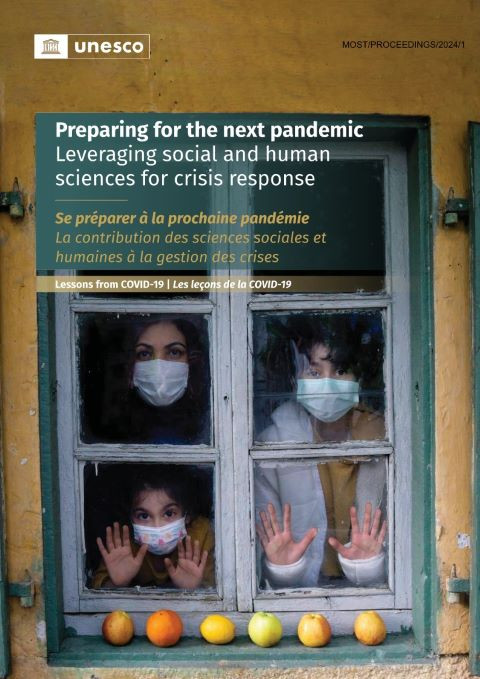 Preparing for the Next Pandemic Leveraging Social and Human Sciences for Crisis: Lessons from COVID-19 발행 연도: 2024 저자: Erwan Dianteill | N'Dri Thérèse Assié-Lumumba 단체 저자: UNESCO The Social Sciences Response to COVID-19 Understanding the social impact of the COVID-19 pandemic is crucial for crafting effective and inclusive recovery policies. Prior to the pandemic, growing gaps in well-being were already undermining environmental sustainability, the social fabric, and progress worldwide. Fragile and unequal systems proved to be a pre-existing aggravating condition that fuelled the pandemic on a global scale. COVID-19 widened the gap between developed countries—which already had the financial means to respond to the crisis and had easy access to the vaccine—and the rest of humanity, resulting in devastating effects in the Global South, with more than 130 million people crossing the poverty line. Addressed to policymakers and scholars, this publication presents a comprehensive state of knowledge of the social science perspectives on the COVID-19 pandemic, covering a wide range of topics from its impact on mental health, education, climate change, economy, governance, migration, demography, digitalization, and more. The authors analyse the challenges faced by society during the pandemic and present actionable proposals for policymakers and practitioners. This publication is a reminder of the importance of Social Sciences and Humanities in addressing global challenges and provides a roadmap for future research and policy action to build more resilient societies.
  미디어․정보 리터러시 갖춘 시민 되기: 비판적으로 사고하고 현명하게 클릭하기! 발행 연도: 2022 저자: Alton Grizzle | Carolyn Wilson | Ramon Tuazon | C.K. Cheung | Jesus Lau | Rachel Fischer | Dorothy Gordon | Kwame Akyempong | Jagtar Singh | Paul R. Carr | Kristine Stewart | Samy Tayie | Olunifesi Suraj | Maarit Jaakkola | Gina Thésée | Curmira Gulston 단체 저자: 유네스코 현명한 클릭으로 우리 사회를 개선할 수 있을까? 도서관을 비롯한 아카이브, 박물관, 미디어와 디지털 통신 회사 같은 콘텐츠 제공자는 모든 이를 포용하고 지속 가능한 개발을 이루어내려는 역할을 지니고 있다. 하지만 콘텐츠 제공자가 그와 같은 이상에 근거해서만 움직이는 것은 아니기 때문에 서비스 사용자들은 어려움을 겪게 된다. 모든 콘텐츠 제공자는 평생학습의 기회를 열어 주기도 하지만 동시에 잘못된 정보나 허위정보, 혐오 표현, 온라인 프라이버시 침해 등과 같은 과제도 안겨 준다. 미디어·정보 리터러시란 사람들이 취할 수 있는 혜택은 최대로 얻고, 입을 수 있는 피해는 최소화할 수 있도록 하는 일련의 역량을 의미한다. 미디어·정보 리터러시는 커뮤니케이션 콘텐츠와 해당 콘텐츠를 제공하는 기관 및 디지털 기술을 비판적이고 효과적으로 이용할 수 있는 역량이다. 이는 나이, 배경과 관계없이 모든 시민이 필수적으로 갖추어야 하는 능력이다. 이 선구적인 커리큘럼은 미디어·정보 리터러시 역량의 종합적인 프레임워크를 제공하며, 교육자와 학습자가 활용할 수 있는 체계적인 교육적 방안을 제안한다. 또한 다양한 모듈을 제시하여 오늘날의 커뮤니케이션 생태계를 이해하는 데 필수적인 역량 범위를 상세하게 다루고 있다. 이 자료에서는 미디어·정보 리터러시를 지금 우리 사회에서 새롭게 부상하고 있는 문제들, 즉 인공지능을 비롯해 디지털 시민 교육, 지속가능 발전 교육, 문화 리터러시 및 허위정보와 잘못된 정보의 급증 등과 연계하여 다루고 있다. 본 커리큘럼을 효과적으로 활용한다면 누구나 미디어·정보 리터러시를 갖춘 시민은 물론, 미디어·정보 리터러시 동료 교육자도 될 수 있을 것이다.
  Recommendation on Education for Peace, Human Rights and Sustainable Development: An Implementation Guide 발행 연도: 2025 단체 저자: UNESCO There is no peace without education. With conflicts rising on so many fronts, there has never been a more urgent need for a transformed education geared towards building and sustaining peace.The Recommendation on Education for Peace and Human Rights, International Understanding, Cooperation, Fundamental Freedoms, Global Citizenship and Sustainable Development, adopted by all 194 Member States of UNESCO in 2023, articulates a humanistic and transformative vision of education that can help address contemporary and future affronts to peace. These challenges range from the resurgence of conflicts driven by systemic inequalities and injustices, the rise and spread of hate speech, racism and discrimination particularly online, to the adverse effects of digital technologies and the existential threat of climate change.UNESCO has developed this Guide as the first of several tools to assist Member States in unpacking and fully implementing the 2023 Recommendation. The Guide elaborates its contents, integrating the 2023 Recommendation’s transdisciplinary lens to connect key concepts and issues. It also provides concrete ideas and curated resources for action at different levels and types of education, while calling for a multi-stakeholder and whole-of-society approach that includes everyone and builds on existing positive efforts.The Guide is a timely addition to the pool of available collective resources to fully implement the 2023 Recommendation and foster an education that is transformative for a just and peaceful world. Recomendación sobre la educación para la paz, los derechos humanos y el desarrollo sostenible: guía de implementación 발행 연도: 2026 단체 저자: UNESCO Sin educación no hay paz. Una educación transformadora, orientada a la construcción y el mantenimiento de la paz es más urgente que nunca, dado el aumento de los conflictos en diversos frentes.La Recomendación sobre la Educación para la Paz y los Derechos Humanos, la Comprensión Internacional, la Cooperación, las Libertades Fundamentales, la Ciudadanía Mundial y el Desarrollo Sostenible, que fue adoptada por los 194 Estados Miembros de la UNESCO en 2023, articula la visión humanista y transformadora de la educación que ayuda a abordar los actuales y futuros agravios a la paz. Estos desafíos abarcan desde el resurgimiento de conflictos impulsados por desigualdades e injusticias sistémicas, el auge y la propagación del discurso de odio, el racismo y la discriminación—especialmente en línea—, hasta los efectos adversos de las tecnologías digitales y la amenaza existencial del cambio climático.La UNESCO ha elaborado esta Guía como la primera de varias herramientas que ayudarán a los Estados miembro a comprender e implementar plenamente la Recomendación de 2023. Su contenido ha sido desarrollado integrando la perspectiva transdisciplinaria para conectar conceptos y cuestiones clave de la Recomendación de 2023. Además, proporciona ideas concretas y recursos seleccionados para la acción en distintos niveles y tipos de educación. Asimismo, promueve un enfoque multisectorial que parte de las iniciativas positivas ya en marcha y busca la inclusión de todas las personas.Esta Guía es una incorporación oportuna al conjunto de recursos colectivos disponibles para implementar plenamente la Recomendación de 2023 y promover así una educación transformadora para un mundo justo y pacífico.