
자료
세계시민교육에 대한 이해를 넓히고 연구, 옹호 활동, 교수, 학습 등을 향상시킬 수 있는 다양하고 유용한 자료를 찾아보세요.
2,668 건의 결과가 검색되었습니다
 Summit of the Future Outcome Document: Pact for the Future, Global Digital Compact and Declarations on Future Generations 발행 연도: 2024 단체 저자: United Nations (UN) World leaders adopt a Pact for the Future that includes a Global Digital Compact and a Declaration on Future Generations (A/RES/79/1). The Pact covers a broad range of themes including peace and security, sustainable development, climate change, digital cooperation, human rights, gender, youth and future generations, and the transformation of global governance.
 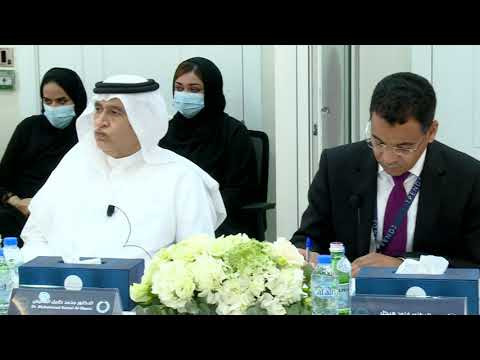 Spreading a Culture of Peace and Tolerance in the World: What Should We Do? 발행 연도: 2021 단체 저자: TRENDS Research & Advisory The video is a symposium, moderated by Emirati researcher and writer Mohammed Khalfan Al Sawafi. The symposium focuses on six main axes: “Religious discourse and the importance of confronting hate speech and extremism, the Human Fraternity Document as a framework for promoting the values of peace and tolerance around the world, and human rights as an entry point for promoting a culture of tolerance and peace, making it an entry point to confront the conflicts of the world and the region, and ways to strengthen it in the region and the world, and toward a vision common for a more peaceful and tolerant world. The video interviews a group of specialists. نشر ثقافة السلام والتسامح في العالم: ما الذي ينبغي علينا فعله؟ 발행 연도: 2021 단체 저자: TRENDS Research & Advisory الفيديو عبارة عن ندوة أدراها الباحث والكاتب الإماراتي محمد خلفان الصوافي. تركز الندوة على ستة محاور رئيسية هي "الخطاب الديني وأهمية مواجهة خطابات الكراهية والتطرف، ووثيقة الأخُوَّة الإنسانية كإطار لتعزيز قيم السلام والتسامح حول العالم، وحقوق الإنسان كمدخل لتعزيز ثقافة التسامح والسلام، وجعلها مدخلاً لمواجهة صراعات العالم والمنطقة، وسبل تعزيزها في المنطقة والعالم، ونحو رؤية مشتركة لعالم أكثر سلاماً وتسامحاً". الفيديو يتحاور فيه مجموعة من المختصين.
  Transforming our world: the 2030 Agenda for Sustainable Development 발행 연도: 2015 단체 저자: United Nations (UN) This Agenda is a plan of action for people, planet and prosperity. It also seeks to strengthen universal peace in larger freedom. We recognize that eradicating poverty in all its forms and dimensions, including extreme poverty, is the greatest global challenge and an indispensable requirement for sustainable development. All countries and all stakeholders, acting in collaborative partnership, will implement this plan. We are resolved to free the human race from the tyranny of poverty and want and to heal and secure our planet. We are determined to take the bold and transformative steps which are urgently needed to shift the world on to a sustainable and resilient path. As we embark on this collective journey, we pledge that no one will be left behind.The 17 Sustainable Development Goals and 169 targets which we are announcing today demonstrate the scale and ambition of this new universal Agenda. They seek to build on the Millennium Development Goals and complete what they did not achieve. They seek to realize the human rights of all and to achieve gender equality and the empowerment of all women and girls. They are integrated and indivisible and balance the three dimensions of sustainable development: the economic, social and environmental. The Goals and targets will stimulate action over the next 15 years in areas of critical importance for humanity and the planet.
  Message from Ms Audrey Azoulay, Director-General of UNESCO, on the occasion of International Day of Peace, 21 September 2018 발행 연도: 2018 단체 저자: UNESCO. Director-General, 2017-2025 (Azoulay, A.) This message was delivered by Audrey Azoulay, Director-General of UNESCO, on the occasion of the International Day of Peace, on 21 September 2018. 联合国教科文组织总干事奥德蕾·阿祖莱国际和平日致辞 발행 연도: 2018 단체 저자: UNESCO. Director-General, 2017-2025 (Azoulay, A.) 2018年9月21号,联合国教科文组织总干事奥德蕾·阿祖莱国际和平日致辞
 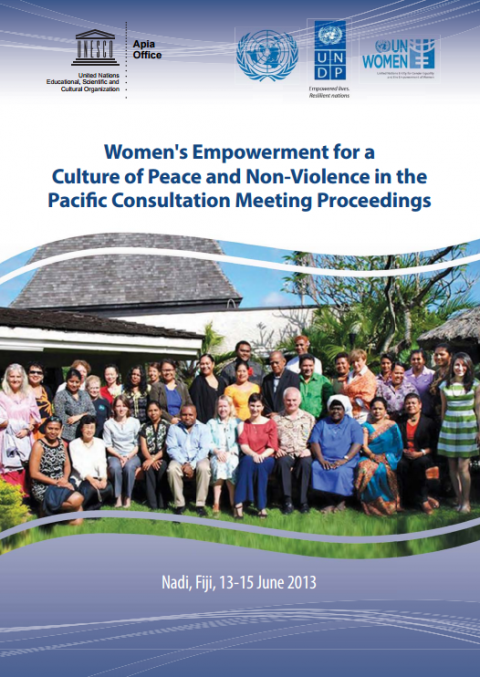 Women's empowerment for a culture of peace and non-violence in the pacific consultation meeting proceedings 발행 연도: 2013 단체 저자: UNESCO Apia The Consultation on Women’s Empowerment for a Culture of Peace and Non Violence in the Pacific was held in Nadi, Fiji, from 13 to 15 June 2013. The consultation was an interagency collaboration between the United Nations Educational, Scientific and Cultural Organization (UNESCO), the United Nations Entity for Gender Equality and the Empowerment of Women (UN WOMEN) and the United Nations Development Programme (UNDP) Pacific Centre as part of the United Nations strategy “Delivering as One”. This collaboration focused on efforts to design, promote and strengthen a culture of peace in the Pacific at the country and regional levels. The consultation brought together 30 senior representatives, including development professionals and community members, from governments, regional organizations, women’s organizations, faith-based groups, academic institutions and development partners from the Cook Islands, Fiji, Kiribati, Palau, Papua New Guinea, Samoa, Solomon Islands, Tonga and Vanuatu. The consultation ended with an agreement on a range of actions that could be adopted at the local, national and regional levels to promote increased dialogue between leaders and policy makers on the contributions that culture and heritage can make to addressing issues of gender inequality and reducing GBV. The outcome statement identifies the importance of building positive cultural models, using a range of key factors, including female leaders, faith-based leaders and traditional leaders as well as political leaders and parties. The statement also emphasized education as a means of promoting a culture of peace and non-violence. The consultation’s outcome statement noted that the school curriculum should place a stronger emphasis on values, gender equality, sexual and reproductive health and rights, and the building of positive cultural models. The follow up actions identified include increasing public awareness on achieving equality for Pacific women, including women at the grassroots level, in bringing peace to conflict-affected communities; targeting young people as the next generation of leaders; using the arts and cultural and sports events to break down gender stereotypes; actions relating to economic empowerment, access to justice and service delivery; and intangible cultural heritage capacity building incorporating substantive gender equality components. L'autonomisation des femmes pour une culture de paix et de non-violence dans la procédure de réunion de consultation pacifique 발행 연도: 2013 단체 저자: UNESCO Apia La Consultation sur l'Autonomisation des Femmes pour une Culture de la Paix et de la Non-Violence dans le Pacifique a eu lieu à Nadi, Fidji, du 13 au 15 Juin 2013. La consultation a été une collaboration interinstitutions entre la culture (UNESCO) Organisation des Nations Unies pour l'éducation, la science et l'Entité des Nations Unies pour l'égalité des sexes et l'autonomisation des femmes (ONU Femmes) et le Programme des Nations Unies pour le développement (PNUD) Centre du Pacifique dans le cadre de la stratégie des Nations Unies «Delivering as One». Cette collaboration a porté sur les efforts pour concevoir, promouvoir et renforcer une culture de paix dans le Pacifique au niveau national et régional. La consultation a réuni 30 représentants de haut niveau, y compris les professionnels du développement et des membres de la communauté, des gouvernements, des organisations régionales, des organisations de femmes, les groupes religieux, les institutions académiques et les partenaires de développement des îles Cook, Fidji, Kiribati, Palau, Papouasie-Nouvelle-Guinée, Samoa , Îles Salomon, Tonga et Vanuatu. La consultation a pris fin avec un accord sur une série d'actions qui pourraient être adoptées aux niveaux local, national et régional pour promouvoir le dialogue accru entre les dirigeants et les décideurs politiques sur les contributions que la culture et le patrimoine peuvent apporter à résoudre les problèmes d'inégalité entre les sexes et la réduction de GBV . L'énoncé de résultat souligne l'importance de la construction de modèles culturels positifs, en utilisant une gamme de facteurs clés, y compris les femmes leaders, des dirigeants religieux et les chefs traditionnels ainsi que des dirigeants et partis politiques. La déclaration a également souligné l'éducation comme un moyen de promouvoir une culture de paix et de non-violence. La déclaration des résultats de la consultation a noté que le programme scolaire devrait mettre davantage l'aCECnt sur les valeurs, l'égalité des sexes, la santé et les droits sexuels et de la reproduction, et la construction de modèles culturels positifs. Les actions de suivi identifiées comprennent la sensibilisation du public sur la réalisation de l'égalité pour les femmes du Pacifique, y compris les femmes au niveau local, pour ramener la paix dans les communautés touchées par le conflit; ciblant les jeunes comme la prochaine génération de leaders; en utilisant les arts et et des événements culturels de sport pour briser les stéréotypes de genre; les actions relatives à l'autonomisation économique, l'accès à la justice et la prestation des services; et immatériel renforcement des capacités du patrimoine culturel incorporant fond composantes égalité entre les sexes.
  Address by Irina Bokova, Director-General of UNESCO, on the occasion of the Inaugural Lecture on: Diverse Societies, Inclusive Democracies: New Skills for a Sustainable World, Organized by the Mahatma Gandhi Institute of Education for Peace 발행 연도: 2014 단체 저자: UNESCO. Director-General, 2009-2017 (Bokova, I.G.) This document is the address of Irina Bokova, Director-General of UNESCO, on the occasion of the inaugural lecture on: Diverse Societies, Inclusive Democracies: New Skills for a Sustainable World, organized by the Mahatma Gandhi Institute of Education for Peace in Delhi, India, 25 November 2014. She insisted the importance of social integration, the human rights for all and education for sustainable development. Address by Irina Bokova, Director-General of UNESCO, on the occasion of the Inaugural Lecture on: Diverse Societies, Inclusive Democracies: New Skills for a Sustainable World, Organized by the Mahatma Gandhi Institute of Education for Peace 발행 연도: 2014 단체 저자: UNESCO. Director-General, 2009-2017 (Bokova, I.G.) Ce document est le discours de Irina Bokova, Directrice générale de l'UNESCO, à l'occasion de la conférence inaugurale sur: les sociétés diversifiées, les démocraties inclusives: De nouvelles compétences pour un monde durable, organisé par l'Institut Mahatma Gandhi d'Éducation pour la Paix à Delhi, Inde, le 25 Novembre 2014. Elle a insisté sur l'importance de l'intégration sociale, le droit de l'homme pour tous et éudcation pour le développement durable.