
자료
세계시민교육에 대한 이해를 넓히고 연구, 옹호 활동, 교수, 학습 등을 향상시킬 수 있는 다양하고 유용한 자료를 찾아보세요.
55 건의 결과가 검색되었습니다
 Риски в борьбе за справедливость и права человека в Центральной Азии: Защита гражданского общества в регионе в 2017 году 발행 연도: 2018 단체 저자: International Partnership for Human Rights (IPHR) В этом отчете за 2017 год представлен обзор основных тенденций, касающихся гражданского общества в пяти странах Центральной Азии: Казахстане, Кыргызстане, Таджикистане, Туркменистане и Узбекистане. Отчет главным образом основан на результатах мониторинга, проведенного центрально-азиатскими организациями в своих странах и на регулярных отчетах, подготовленных ими совместно с МППЧ в рамках инициативы CIVICUS Monitor, направленной на отслеживание состояния гражданского общества во всем мире.
  BRIGHTS Course Curriculum 발행 연도: 2017 저자: Federica Funghi | Francesca Vannucchi 단체 저자: Brights Project | European Union (EU) | European Commission This document presents the organization of the course to be delivered in the framework of the BRIGHTS project by specifying its diverse phases, the objectives and the learning outcomes, the kind of contents to be issued and how the participants (Teachers and Trainers working with youth) will be involved.
  Policy Recommendations on Global Citizenship Education (GCE): Boosting Global Citizenship Education Using Digital Storytelling 발행 연도: 2018 저자: Alessandra Accogli | Barbara Quarta 단체 저자: Brights Project | European Union (EU) | European Commission This document summarizes the experience gained from implementing the BRIGHTS methodology and curriculum for GCE and provides policy recommendations for their adoption in formal and non-formal educational contexts.
  Time to Reach for the Moon: The EU Needs to Step up Action and Lead the Transformation to Sustainability; Civil Society SDG Monitoring Report 발행 연도: 2020 저자: Sylvia Beales | George Gelber 단체 저자: SDG Watch Europe | Make Europe Sustainable for All This report explains why the EU’s SDG reporting creates an illusion of sustainability and makes concrete proposals for meaningful monitoring to become a stronger foundation for transformative policies. The report flags up serious gaps, bringing them to life with 17 individual stories. It also offers 17 solutions, real-life examples of progressive policies, innovative initiatives and truly sustainable business models.
 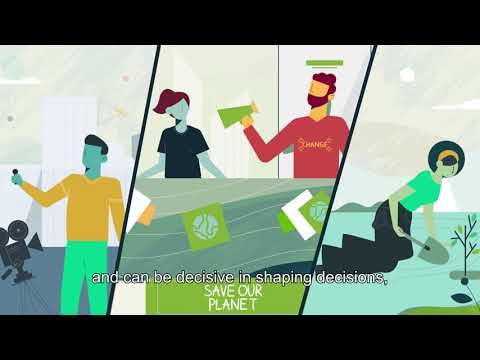 DEAR, Action Through Campaigning and Advocacy 발행 연도: 2020 단체 저자: Development Education and Awareness Raising (DEAR) Programme | European Commission This video gives an overview of the kind of work that DEAR-funded projects do in campaigning and advocacy. It also emphasizes the principles of Global Citizenship Education and the active involvement of citizens.
 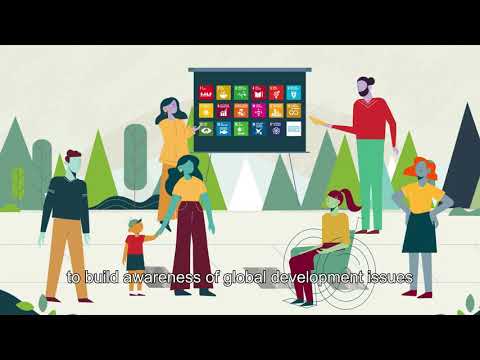 DEAR: Action Through Education 발행 연도: 2020 단체 저자: Development Education and Awareness Raising (DEAR) Programme | European Commission This video explains how DEAR programme works and supports educators in their endeavours to spread greater understanding of the world around us.
  Human Rights Storytelling: Manual For the Educators 발행 연도: 2018 단체 저자: Huristo Project Consortium Huristo project developed a methodology about awareness and advocacy about the European Human Rights Charter as a part of global citizenship education with low skilled adult learners (refugees and migrants living in the city and natives living in rural places). This methodology is based on digital storytelling: participants work on personal narratives illustrating different topics of the charter.The main result for the adult learners are increased digital skills, reading and writing skills, awareness about the Human Rights Charter and European citizenship. The work on the Charter and the personal narratives also improve participants’ analytic media literacy, interpersonal and intercultural skills, but also core skills for employability, such as teamwork, problem solving, learning to learn and communication. Additionally, the adult trainers who are involved increase their teaching skills using digital media and the methodology of digital storytelling in particular.
  The Role of Media Literacy in the Promotion Of Common Values and Social Inclusion: Position Paper 발행 연도: 2017 단체 저자: All Digital While we live in an increasingly digital society, a significant number of European citizens continue to lack basic digital skills. Media practices have changed, and now we are not only receiving information passively. Anyone can be active in content creation and (re-)produce (dis)information. For example, mobile technology and ubiquitous Internet access allow citizens to produce real time information, including content for mass media (newspapers, TV channels).The production of information and news thus no longer remains in the capacity of journalists, but something within everyone’s capacity. Without the necessary skills, however, the creation of information and news is not always done in a responsible or professional manner. This is only one example of many, highlighting why media literacy is more important than ever.This position paper talks about:the role for media literacy in promoting common values and social inclusion in several ways: resilience, content creation, dissemination, social inclusionthe role of non-formal education in teaching media literacy andgives examples of media literacy programmes and projects across Europeprovides policy recommendations in terms of funding, recognition and promotion.
  Monitoring education for global citizenship: a contribution to debate 발행 연도: 2015 저자: Harm-Jan Fricke | Cathryn Gathercole | Amy Skinner 단체 저자: DEEEP | CONCORD DARE Forum 1. This report aims to provide a stimulus for further thought, work and debate in the design of assessment frameworks for an education that supports people in leading fulfilling lives in a changing, globalised world, and in particular within the context of debates around post-2015 universal targets and indicators that are relevant to an education for global citizenship (EfGC). 2. In providing that stimulus the report addresses the following questions: a. What are the key differences and similarities between diverse forms of ‘adjectival educations’ that contribute to, or generally express themselves as allied to an ‘education for global citizenship’? b. What do they contribute to an education for global citizenship? c. How, if at all, do they interpret the notion of ‘transformation’? d. What do practitioners consider to be the major challenges and opportunities for monitoring (transformative) education for global citizenship? e. Which approaches and means of monitoring and assessing transformative education for global citizenship appear to be feasible? 3. The report is based on information obtained from: a. Literature reviews; b. Workshops, involving 65 educators in total, held in Brazil, Tanzania, Zimbabwe, and three locations in Europe; c. Responses to a questionnaire completed by 218 educators working in more than 50 countries, albeit with a predominance of respondents based in Europe. 4. The origins and key characteristics of development education, global education and global learning, human rights education, and education for sustainable development are explored, leading to statements about their commonalities and contributions to an education for global citizenship. These commonalties appear to be particularly in the areas of their shared global orientation, pursuit of personal and/or societal transformation, active and enquiry based teaching and learning methodologies, and overlapping content. 5. The commonalities which the discussed educations contribute to - and share with – education for global citizenship appear to be particularly around: a. values and dispositions which enable a response to, and advocacy for, change, b. engagement with diverse ideas, opinions and understandings, c. a stimulus to investigate and develop creativity by means of learning, d. building skills and capacities as part of a process of lifelong learning, e. a generic educational approach that aims at involvement in an explicit process of change. 6. Within such a context differences appear amongst practitioners and theoreticians in the use, meaning and function of the term ‘global citizenship’, with some seeing it primarily as a tool in advocacy while others view it primarily as a means of explanation of human relations globally. 7. Critique on the usefulness and use of the terms ‘global citizenship’ is outlined and the world-wide, universal, use of the term ‘education for global citizenship’ is questioned. However, its intentions as an approach of transformative education for critical and active engagement in a globalised society are seen as having universal relevance. 8. That approach is described as “a learning process for people’s critical and active engagement in and with global society, involving people in developing their capacities, capabilities and motivation to be actively engaged in personal and collective human development. It does this by drawing on a critical understanding and consideration of global processes and interdependencies, of other people’s perspectives and interests, of environmental opportunities and limitations, and of universal rights.” 9. The approach is further defined by a number of ‘core signifiers’ (which can form the basis for indicators of achievement) relating to: a. pedagogy – characteristics of the teaching process, b. capacities and capabilities – regarding the learner’s competence, c. values – as exhibited in the teaching and learning process, d. content – the learner’s acquisition of core understandings, e. outcome – regarding the learner’s dispositions, f. social transformation – regarding the learner’s contributions to community and wider society. 10. The report continues by providing a summary review of selected literature regarding the design of monitoring frameworks that appear pertinent to an education for global citizenship. It discusses work done in relation to universal targets and indicators, country based frameworks, education institutional monitoring, educator competence, and learner outcomes. It draws particular attention to the importance of quality assessment, the need to involve the range of education stakeholders in the design, application and interpretation of indicators, and the need to enable learning from experiences. 11. Further information about the challenges and opportunities for monitoring education for global citizenship is obtained from ideas and opinions given by workshop participants and questionnaire respondents. Respondents recognise that developing a universal monitoring framework can help to clarify the purpose and meaning of EfGC for both practitioners and policy makers. However, they also recognise that there is a risk that agreement might be reached around a lowest common denominator approach. The importance of participation by practitioners in, and their ownership of, the monitoring content and process is highlighted. The potential uses of monitoring data and analyses in demonstrating the impact of EfGC on broader cross-curricular outcomes and educational achievements, is seen by respondents as a means to gain further recognition of the value of EfGC. 12. Based on the foregoing, the final chapter of the report provides a number of suggestions as a stimulus for further work, thought and debate. These suggestions focus on: a. a monitoring framework that addresses the holistic nature of EfGC; b. an assessment framework to do with learning outcomes that exemplify the core signifiers mentioned in paragraph 9 above; c. indicators and a monitoring approach that is applicable at national levels, enabling monitoring of progress for specific sectoral aspects of EfGC (teacher education is given as an example of such a sectoral aspect); d. a universal target that builds on the description of EfGC given in paragraph 8 above; e. indicator groupings that can show progress against such a universal target. Suivi de l’ éducation à la citoyenneté mondiale: une contribution au débat 발행 연도: 2015 저자: Harm-Jan Fricke | Cathryn Gathercole | Amy Skinner 단체 저자: DEEEP | CONCORD DARE Forum 1. Le présent rapport vise à fournir un stimulus pour la pensée plus loin, le travail et le débat dans la conception de cadres d'évaluation pour une éducation qui prend en charge les gens à mener une vie épanouissante dans un monde changeant, globalisé, et en particulier dans le contexte des débats autour de l ' activités après 2015 des objectifs universels et les indicateurs qui sont pertinents pour une éducation à la citoyenneté mondiale (ECM). 2. En fournissant ce stimulus le rapport aborde les questions suivantes: a. Quelles sont les principales différences et similitudes entre les diverses formes de «éducations adjectivales» qui contribuent à, ou généralement eux-mêmes expriment comme allié à une «éducation à la citoyenneté mondiale»? b. Que contribuent-ils à l'éducation à la citoyenneté mondiale? c. Comment, le cas échéant, interprètent-ils la notion de «transformation»? ré. Qu'est-ce que les praticiens considèrent comme les principaux défis et opportunités pour l'éducation suivi (transformation) pour la citoyenneté mondiale? e. Quelles approches et des moyens de Suivi et évaluation de l'éducation transformatrice à la citoyenneté mondiale semblent être faisable? 3. Le rapport est basé sur des informations obtenues à partir de: a. Les revues littéraires; b. Ateliers, impliquant 65 enseignants au total, tenu au Brésil, en Tanzanie, au Zimbabwe, et trois sites en Europe; c. Les réponses à un questionnaire rempli par 218 éducateurs travaillant dans plus de 50 pays, mais avec une prédominance des répondants basés en Europe. 4. Les origines et les caractéristiques clés de l'éducation au développement, l'éducation globale et l'apprentissage global, l'éducation aux droits de l'homme, et de l'éducation pour le développement durable sont explorés, conduisant à des déclarations sur leurs points communs et des contributions à l'éducation à la citoyenneté mondiale. Ces points communs semblent particulièrement dans les domaines de leur orientation partagée globale, la poursuite de personnel et / ou transformation de la société, active et en fonction d'enseignement et d'apprentissage des méthodes d'enquête, et le contenu de chevauchement. 5. Les points communs qui les éducations discutées contribuent - et partagent avec - l'éducation à la citoyenneté mondiale semblent être particulièrement autour de: a. des valeurs et des dispositions qui permettent une réponse à, et le plaidoyer pour, changement, b. l'engagement avec des idées diverses, des opinions et interprétations, c. un stimulus pour étudier et développer la créativité au moyen d'apprentissage, d. le renforcement des compétences et des capacités dans le cadre d'un processus d'apprentissage continu, e. une approche éducative générique qui vise à la participation à un processus de changement explicite. 6. Dans un de ces différences de contexte apparaissent entre les praticiens et les théoriciens de l'utilisation, le sens et la fonction de la notion de «citoyenneté mondiale», avec certains le voir avant tout comme un outil de plaidoyer tandis que d'autres le considèrent principalement comme un moyen d'explication des relations humaines à l'échelle mondiale. 7. Critique sur l'utilité et l'utilisation des termes de citoyenneté mondiale »est définie et le monde entier, universel, l'utilisation du terme« éducation à la citoyenneté mondiale »est remise en question. Cependant, ses intentions comme une approche de l'éducation transformatrice pour l'engagement critique et active dans une société mondialisée sont considérés comme ayant une pertinence universelle. 8. Cette approche est décrite comme «un processus d'apprentissage pour l'engagement critique et active de la population et avec la société globale, impliquant des personnes à développer leurs capacités, les capacités et la motivation à participer activement dans le développement humain individuel et collectif. Elle le fait en appuyant sur une compréhension critique et l'examen des processus mondiaux et des interdépendances, des perspectives et des intérêts des autres, des opportunités et des contraintes environnementales et des droits universels. » 9. L'approche est en outre défini par un certain nombre de« signifiants de base '(qui peut constituer la base d'indicateurs de succès) concernant: a. pédagogie - les caractéristiques du processus d'enseignement, b. les capacités et les capacités - en ce qui concerne la compétence de l'apprenant, c. valeurs - comme exposé dans le processus d'enseignement et d'apprentissage, d. contenu - l'acquisition d'une compréhension de base de l'apprenant, e. résultat - en ce qui concerne les dispositions de l'apprenant, f. transformation sociale - en ce qui concerne les contributions de l'apprenant à la communauté et la société au sens large. 10. Le rapport poursuit en fournissant un examen sommaire de la littérature sélectionnée concernant la conception des cadres de Suivi qui semblent pertinents pour une éducation à la citoyenneté mondiale. Il examine le travail fait par rapport aux objectifs universels et les indicateurs, les cadres en fonction des pays, l'éducation, les compétences institutionnelles suivi des éducateurs, et les résultats d'apprentissage. Il attire particulièrement l'attention sur l'importance de l'évaluation de la qualité, la nécessité d'associer l'éventail des acteurs de l'éducation dans la conception, l'application et l'interprétation des indicateurs, et la nécessité de permettre l'apprentissage d'expériences. 11. Pour en savoir plus sur les défis et opportunités pour l'éducation de Suivi à la citoyenneté mondiale est obtenue à partir des idées et des opinions exprimées par les participants à l'atelier et les répondants au questionnaire. Les répondants reconnaissent que l'élaboration d'un cadre de suivi universel peut aider à clarifier le but et le sens de l'ECM pour les praticiens et les décideurs politiques. Cependant, ils reconnaissent aussi qu'il existe un risque que l'accord pourrait être atteint autour d'une approche du plus petit dénominateur commun. L'importance de la participation des praticiens dans, et de leur propriété, le contenu et le processus est mis en surbrillance Suivi. Les utilisations potentielles des données de suivi et analyse pour démontrer l'impact de l'ECM sur les résultats transversales plus larges et les résultats scolaires, est perçue par les répondants comme un moyen d'obtenir une plus grande reconnaissance de la valeur de l'ECM. 12. Sur la base de ce qui précède, le dernier chapitre du rapport fournit un certain nombre de suggestions comme un stimulant pour le travail plus loin, la pensée et le débat. Ces suggestions portent sur: a. un cadre de Suivi qui traite de la nature globale de l'ECM; b. un cadre d'évaluation à faire avec les résultats d'apprentissage qui illustrent les signifiants fondamentaux mentionnés au paragraphe 9 ci-dessus; c. indicateurs et une approche de suivi qui est applicable au niveau national, permettant Suivi des progrès des aspects sectoriels spécifiques des ECM (formation des enseignants est donnée à titre d'exemple d'un tel aspect sectoriel); d. une cible universelle qui repose sur la description de l'ECM donnée au paragraphe 8 ci-dessus; e. indicateurs groupements qui peuvent montrer des progrès contre une telle cible universelle.