
자료
세계시민교육에 대한 이해를 넓히고 연구, 옹호 활동, 교수, 학습 등을 향상시킬 수 있는 다양하고 유용한 자료를 찾아보세요.
45 건의 결과가 검색되었습니다
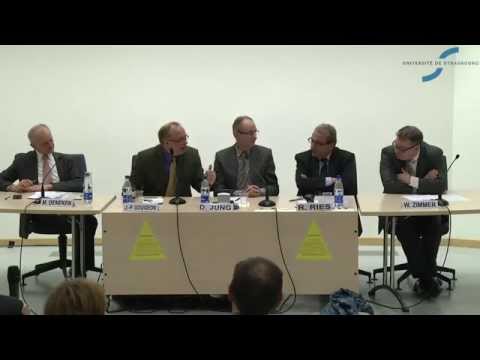 Conference-Debate: Can Citizenship Be Taught? 발행 연도: 2015 단체 저자: University of Strasbourg At the initiative of the Faculty of Law, Political Science and Management, this conference/debate brings together: Roland Ries, Mayor of Strasbourg; Jacques-Pierre Gougeon, rector of the Academy of Strasbourg, chancellor of universities; Michel Deneken, 1st vice-president of the University of Strasbourg; Willy Zimmer, professor of public law;Dominique Jung, editor-in-chief of Latest News from Alsace (moderator). Conférence-débat: La citoyenneté peut-elle être enseignée? 발행 연도: 2015 단체 저자: University of Strasbourg À l'initiative de la Faculté de droit, de sciences politiques et de gestion, cette conférence/débat réunit : Roland Ries, maire de Strasbourg ; Jacques-Pierre Gougeon, recteur de l'académie de Strasbourg, chancelier des universités ; Michel Deneken, 1er vice-président de l'Université de Strasbourg ; Willy Zimmer, professeur de droit public ; Dominique Jung, rédacteur en chef des Dernières nouvelles d’Alsace (modérateur).
  Intersections – Politiques et pratiques pour l’enseignement des religions et des visions non religieuses du monde en éducation interculturelle 발행 연도: 2015 저자: Robert Jackson Que peut apporter l’étude des religions et des visions non religieuses du monde à l’éducation interculturelle des élèves européens ? Dans une importante recommandation, la Recommandation CM/Rec(2008)12 relative à la dimension des religions et des convictions non religieuses dans l’éducation interculturelle, le Comité des Ministres du Conseil de l’Europe explique la nature et les objectifs de cet enseignement.Intersections va beaucoup plus loin, car il s’agit ici d’aider les décideurs, les établissements scolaires (enseignants et équipe de direction) et les formateurs d’enseignants à relever au mieux les défis que soulève la recommandation. En tenant dûment compte de l’avis de responsables pédagogiques, d’enseignants et de formateurs d’enseignants des États membres du Conseil de l’Europe, Intersections fournit des conseils pour, par exemple, comprendre la terminologie employée dans cette forme d’enseignement; développer des compétences d’enseignement et d’apprentissage, et adopter différentes approches pédagogiques; créer en classe un « espace sécurisant » propice au dialogue entre élèves; aider les élèves à analyser les représentations des religions dans les médias; parler à la fois des visions non religieuses du monde et des points de vue religieux ; aborder les questions de religions et de convictions sous l’angle des droits de l’homme ; et tisser des liens entre établissements scolaires (de différents types) et entre l’école et son environnement.Intersections n’est ni un programme à suivre ni un manifeste politique. L’ouvrage vise à donner aux décideurs, aux établissements scolaires et aux formateurs d’enseignants des États membres du Conseil de l’Europe, ainsi qu’à toutes les personnes intéressées, les outils nécessaires pour résoudre les problèmes d’interprétation de la recommandation et adapter son message aux besoins propres à chaque pays. Intersections est le fruit du travail d’un groupe international d’experts réunis sous les auspices du Conseil de l’Europe et du Centre européen Wergeland. Il a été rédigé au nom du groupe par le professeur Robert Jackson.
  [Video] Global Education Week 2018 Highlights 발행 연도: 2019 단체 저자: North-South Centre of the Council of Europe This video clip shows some highlights from the 2018 edition (The world is changing: What about us?) of the Global Education Week (GEW).#GlobalEducationWeek#GEW18
  Charte du Conseil de l’Europe sur l’éducation à la citoyenneté démocratique et l’éducation aux droits de l’homme : Recommandation CM/Rec(2010)7 et exposé des motifs 발행 연도: 2011 단체 저자: Conseil de l’Europe L’éducation joue un rôle essentiel dans la promotion des valeurs fondamentales du Conseil de l’Europe que sont la démocratie, les droits de l’homme et l’Etat de droit, ainsi que dans la prévention des violations des droits de l’homme. Par ailleurs, l’éducation est de plus en plus considérée comme un moyen de combattre la montée de la violence, du racisme, de l’extrémisme, de la xénophobie, de la discrimination et de l’intolérance.Cette prise de conscience croissante se traduit par l’adoption de la Charte du Conseil de l’Europe sur l’éducation à la citoyenneté démocratique et l’éducation aux droits de l’homme (ECD/EDH) par les 47 Etats membres de l’Organisation, dans le cadre de la Recommandation CM/Rec(2010)7. Elaborée à la suite de consultations étendues sur plusieurs années, la Charte n’est pas de nature contraignante. Elle servira de référence importante à tous ceux qui s’occupent d’éducation à la citoyenneté et aux droits de l’homme. Son application devrait inciter les Etats membres à prendre des mesures dans ce domaine et, ce faisant, à diffuser de bonnes pratiques et à améliorer la qualité de l’enseignement en Europe et au-delà.