
자료
세계시민교육에 대한 이해를 넓히고 연구, 옹호 활동, 교수, 학습 등을 향상시킬 수 있는 다양하고 유용한 자료를 찾아보세요.
2,668 건의 결과가 검색되었습니다
 Formalism, Tribalism, and Nationalism in the Protection of Children’s Rights in Kazakhstan 발행 연도: 2020 저자: Aigerim Musabalinova 단체 저자: Central Asian Bureau for Analytical Reporting (CABAR) | Institute for War and Peace Reporting (IWPR) Aigerim Musabalinova, an expert on children’s rights tries to find an answer to the question of how the social and cultural aspect of the country affects the well-being of children and the observance of their rights and interests, in an article for CABAR.asia. Формализм, трайбализм и национализм в вопросах защиты прав детей в Казахстане 발행 연도: 2020 저자: Aigerim Musabalinova 단체 저자: Central Asian Bureau for Analytical Reporting (CABAR) | Institute for War and Peace Reporting (IWPR) Айгерим Мусабалинова, казахстанский эксперт по правам ребенка в статье для CABAR.asia пробует найти ответ на вопрос как социальный и культурный аспект страны влияет на благополучие детей и соблюдение их прав и интересов.
  Борьба с семейным насилием в Кыргызстане: Защищены ли Жертвы? 발행 연도: 2020 저자: Anna Zubenko 단체 저자: Central Asian Bureau for Analytical Reporting (CABAR) | Institute for War and Peace Reporting (IWPR) В данной статье автор анализирует некоторые результаты реформ судебно-правовой системы, благодаря которым в Кыргызстане появился ряд новых кодексов, была направлена прежде всего на гуманизацию законодательства и декриминализацию отдельных видов преступлений. Семейное насилие, в рамках изменения законодательства напротив, было криминализовано – его включили в Кодекс о проступках, являющийся частью уголовного законодательства. Однако по мнению автора де-факто привлекать к ответственности виновников стало сложнее.
 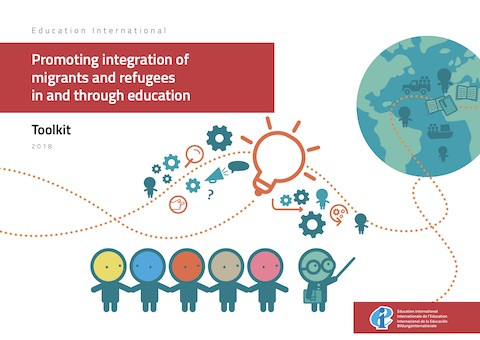 Promoting Integration of Migrants and Refugees in and Through Education: Toolkit 발행 연도: 2018 단체 저자: Education International (EI) The past years have seen large numbers of refugees moving to Europe. This, and the rise of populist movements in Europe and North America, has led unions to develop activities engaging schools, local communities, authorities, etc. to promote the rights of migrants and build inclusive schools and communities.With the support of Education International (EI), exchange visits, information sharing and peer-learning activities allowed education unions to inspire each other and explore synergies across borders. This toolkit aims to build on these experiences and facilitate education unions to develop their work in this area. It also assists unions by exploring the issues around integrating migrants and refugees in education and sharing what others have been doing in this domain. Promouvoir l'intégration des personnes migrantes et réfugiées dans et à travers l'éducation: Boite à outils 발행 연도: 2018 단체 저자: Education International (EI) Beaucoup de personnes réfugiées se sont installées en Europe ces dernières années. Ceci et la montée des mouvements populistes en Europe et en Amérique du Nord ont conduit les syndicats à développer des activités engageant les écoles, les communautés locales, les autorités, etc. pour promouvoir les droits des migrant.e.s et développer des écoles et communautés inclusives.Avec le soutien de l’Internationale de l’Education (IE), les visites d’échange, le partage d’informations et les activités d’apprentissage avec leurs pairs ont permis aux syndicats de l’éducation de s’inspirer mutuellement et d’explorer les synergies transfrontalières. Cette boite à outils vise à tirer parti de ces expériences et à aider les syndicats de l’éducation à amplifier leur travail dans ce domaine. Elle aide également les syndicats en explorant les questions liées à l’intégration des personnes migrantes et réfugiées dans l’éducation et en partageant ce que les autres ont fait sur cette thématique.
 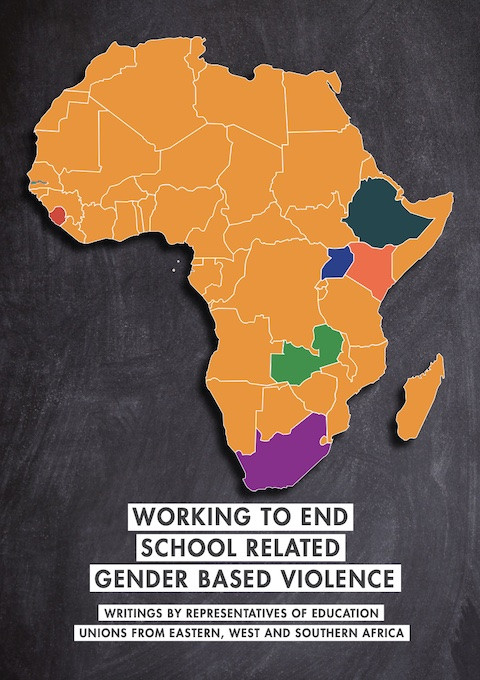 Trabajando para acabar con la violencia de género en el ámbito escolar: Ensayos por representantes de sindicatos de la educación de África Oriental, Occidental y Austral 발행 연도: 2019 저자: Shamim Meer 단체 저자: Gender at Work | Labour Research Service (LRS) | Global Affairs Canada (GAC) | United Nations Girls' Education Initiative (UNGEI) | Education International (EI) La Violencia de Género en el Ámbito Escolar (VGAE) es una forma de violencia que menoscaba la integridad corporal, los derechos humanos y la igualdad de género de todas las personas involucradas, pero especialmente de los niños y niñas escolares. En 2016, 7 docentes sindicales - SADTU y NAPTOSA de Sudáfrica, BETUZ y ZNUT de Zambia, UNATU de Uganda, ETA de Etiopía y KNUT de Kenia y en 2018, SLTU de Sierra Leona, GTU de Gambia y el personal de la Oficina Regional de África de la Internacional de la Educación con base en Ghana – participaron activamente en Gender at Work (G@W) – Proceso de Acción de Aprendizaje en Género (GAL, por sus siglas en inglés). El objetivo principal de este proceso GAL específico fue crear un programa piloto participativo de la IE en África, oriental, occidental y del sur enfocado en la capacidad de docentes individuales y sindicatos de docentes para abordar la VGAE. Con el apoyo de facilitadoras de Gender at Work, las y los participantes fortalecieron su comprensión de la desigualdad de género y la violencia basada en el género en el contexto escolar. A lo largo del proceso GAL, las y los participantes hablaron con el corazón, compartiendo historias inspiradoras sobre el cambio. Oeuvrer pour mettre un terme à la violence liée au genre en milieu scolaire: Écrits de représentantes et représentants de syndicats de l’enseignement en Afrique de l’est, Afrique de l’ouest et Afrique australe 발행 연도: 2019 저자: Shamim Meer 단체 저자: Gender at Work | Labour Research Service (LRS) | Global Affairs Canada (GAC) | United Nations Girls' Education Initiative (UNGEI) | Education International (EI) La violence liée au genre en milieu scolaire (VGMS) est un type de violence qui porte atteinte à l’intégrité physique, aux droits humains et à l’égalité entre tous les acteurs de la vie de l’école, mais avant tout à ceux de l’enfant scolarisé.En 2016, sept syndicats d’enseignants, le SADTU et la NAPTOSA d’Afrique du Sud, le BETUZ et la ZNUT de Zambie, l’UNATU d’Ouganda, l’ETA d’Éthiopie et le KNUT du Kenya, puis en 2018, le SLTU de la Sierra Leone, le GTU de Gambie, ainsi que les collaborateurs et collaboratrices du Bureau régional Afrique de l’Internationale de l’Éducation sis au Ghana, se sont activement engagés dans un programme de Gender at Work, le processus d’apprentissage par l’action en genre.Ce processus spécifique visait à créer un programme pilote participatif de l’IE en Afrique de l’Est, de l’Ouest et australe qui porterait sur la capacité individuelle des enseignants et enseignantes et sur celle de leurs syndicats à affronter la violence fondée sur le genre. Avec l’appui des animatrices de Gender at Work, les participants et participantes ont pu comprendre de façon plus approfondie l’inégalité entre les genres et la violence liée au genre en milieu scolaire. Tout au long de ce processus d’action-apprentissage, les participants et participantes ont été en mesure de parler à coeur ouvert et de partager des histoires de changement inspirantes.
  Children's Rights Are They Necessary? 발행 연도: 2017 단체 저자: CuriosaMente This video rises the question about the need for children´s rights. It describes the historical perspectives of childhood and how their rights were developed, stressing their importance. Los derechos de los niños, ¿son necesarios? 발행 연도: 2017 단체 저자: CuriosaMente Este video hace la pregunta sobre la necesidad de los derechos de los niños. Realiza una descripción de la perspectiva historica de los niños y como a medida que pasó el tiempo los derechos fueron desarrollándose y mostrando su importancia.
  Voices Against Violence 발행 연도: 2006 저자: Benjamin Bond 단체 저자: Save the Children Violence against children has become a crisis that affects every country in the world. In this document, Save the children makes an urgent call to governments to commit themselves to eradicating violence against children.