
자료
세계시민교육에 대한 이해를 넓히고 연구, 옹호 활동, 교수, 학습 등을 향상시킬 수 있는 다양하고 유용한 자료를 찾아보세요.
63 건의 결과가 검색되었습니다
 Address by Mr Koïchiro Matsuura, Director-General of UNESCO, on the occasion of the Opening Ceremony of the UNESCO World Conference on Education for Sustainable Development: Moving into the Second Half of the UN Decade, delivered on his behalf by Mr Nicholas Burnett, Assistant Director-General for Education; Bonn, Germany, 31 March 2009 발행 연도: 2009 단체 저자: UNESCO. Director-General, 1999-2009 (Matsuura, K.) This address by Mr Koïchiro Matsuura, Director-General of UNESCO, on the occasion of the opening ceremony of the UNESCO World Conference on Education for Sustainable Development: Moving into the Second Half of the UN Decade, was delivered on his behalf by Mr Nicholas Burnett, Assistant Director-General for Education; Bonn, Germany, 31 March 2009. Discours de M. Koïchiro Matsuura, Directeur général de l'UNESCO, à l'occasion de la cérémonie d'ouverture de la Conférence Mondiale de l'UNESCO sur l'éducation pour le développement durable: passer à la deuxième moitié de la Décennie des Nations Unies prononcée en son nom par M. Nicholas Burnett, Directeur général de l'éducation; Bonn, Allemagne, 31 mars 2009 발행 연도: 2009 단체 저자: UNESCO. Director-General, 1999-2009 (Matsuura, K.) Cette allocution de M. Koïchiro Matsuura, Directeur général de l'UNESCO, à l'occasion de la cérémonie d'ouverture de la Conférence mondiale de l'UNESCO sur l'éducation au service du développement durable: la deuxième moitié de la Décennie des Nations Unies a été prononcée en son nom par M. Nicholas Burnett , Sous-Directeur général pour l'éducation; Bonn, Allemagne, 31 mars 2009. مؤتمر اليونسكو العالمي للتعليم من أجل التنمية المستدامة: ٣١ آذار/مارس - ٢ نيسان/أبريل ٢٠٠٩ 발행 연도: 2009 단체 저자: German Federal Ministry of Education and Research (BMBF) | German Commission for UNESCO As the United Nations Decade of Education for Sustainable Development (DESD) approached its midpoint, the “UNESCO World Conference on Education for Sustainable Development – Moving into the Second Half of the UN Decade” was held from 31 March to 2 April 2009 in Bonn, Germany. It brought together 900 participants from 147 countries, among them 49 Ministers and Deputy-Ministers. Participants included representatives of UNESCO Member States, UN agencies, civil society organizations, education institutions, youth, and the private sector, as well as individual experts. The Conference was organized by UNESCO and the German Federal Ministry of Education and Research, in cooperation with the German Commission for UNESCO. The programme was developed in consultation with an international advisory group. Conférence mondiale de l'UNESCO sur l'éducation au développement durable: 31 mars-2 avril 2009, Bonn, Allemagne: procédure 발행 연도: 2009 단체 저자: German Federal Ministry of Education and Research (BMBF) | German Commission for UNESCO Alors que la Décennie des Nations Unies pour l'éducation en vue du développement durable (DEDD) approchait de son point médian, le «Worldconferenceon Education pour le développement durable de l'UNESCO - Passer à la deuxième moitié de la Décennie des Nations Unies» s'est tenu du 31 mars au 2 avril 2009 à Bonn. Elle a réuni 900 participants de 147 pays, dont 49 ministres et sous-ministres. Les participants comprenaient des représentants des États membres de l'UNESCO, des organismes des Nations Unies, des organisations de la société civile, des établissements d'enseignement, des jeunes et du secteur privé, ainsi que des experts individuels. La Conférence a été organisée par l'UNESCO et le Ministère fédéral allemand de l'éducation et de la recherche, en coopération avec la Commission allemande pour l'UNESCO. Le programme a été élaboré en consultation avec un groupe consultatif international. UNESCO world conference on education for sustainable development: 31 March-2 April 2009, Bonn, Germany: proceedings 발행 연도: 2009 단체 저자: German Federal Ministry of Education and Research (BMBF) | German Commission for UNESCO As the United Nations Decade of Education for Sustainable Development (DESD) approached its midpoint, the “UNESCO World Conference on Education for Sustainable Development – Moving into the Second Half of the UN Decade” was held from 31 March to 2 April 2009 in Bonn, Germany. It brought together 900 participants from 147 countries, among them 49 Ministers and Deputy-Ministers. Participants included representatives of UNESCO Member States, UN agencies, civil society organizations, education institutions, youth, and the private sector, as well as individual experts. The Conference was organized by UNESCO and the German Federal Ministry of Education and Research, in cooperation with the German Commission for UNESCO. The programme was developed in consultation with an international advisory group. Материалы Всемирной конференции ЮНЕСКО по образованию в интересах устойчивого развития (2009 г., Бонн, Германия) 발행 연도: 2009 단체 저자: German Federal Ministry of Education and Research (BMBF) | German Commission for UNESCO As the United Nations Decade of Education for Sustainable Development (DESD) approached its midpoint, the “UNESCO World Conference on Education for Sustainable Development – Moving into the Second Half of the UN Decade” was held from 31 March to 2 April 2009 in Bonn, Germany. It brought together 900 participants from 147 countries, among them 49 Ministers and Deputy-Ministers. Participants included representatives of UNESCO Member States, UN agencies, civil society organizations, education institutions, youth, and the private sector, as well as individual experts. The Conference was organized by UNESCO and the German Federal Ministry of Education and Research, in cooperation with the German Commission for UNESCO. The programme was developed in consultation with an international advisory group. Conférence mondiale de l'UNESCO sur l'éducation en vue du développement durable, 31 Mars-2 Avril 2009, Bonn, Allemagne: actes 발행 연도: 2009 단체 저자: German Federal Ministry of Education and Research (BMBF) | German Commission for UNESCO As the United Nations Decade of Education for Sustainable Development (DESD) approached its midpoint, the “UNESCO World Conference on Education for Sustainable Development – Moving into the Second Half of the UN Decade” was held from 31 March to 2 April 2009 in Bonn, Germany. It brought together 900 participants from 147 countries, among them 49 Ministers and Deputy-Ministers. Participants included representatives of UNESCO Member States, UN agencies, civil society organizations, education institutions, youth, and the private sector, as well as individual experts. The Conference was organized by UNESCO and the German Federal Ministry of Education and Research, in cooperation with the German Commission for UNESCO. The programme was developed in consultation with an international advisory group. Integrating sustainable development in technical and vocational education and training: six case studies from Southern and Eastern Africa 발행 연도: 2010 저자: Roland Dubois | Koontee Balgobin | Modesto Sylvester Gomani | Joy Kasandi Kelemba | Gabriel S. Konayuma | Matthews Lebogang Phiri | John W. Simiyu 단체 저자: UNESCO International Centre for Technical and Vocational Education and Training (UNEVOC) The case studies in Southern and Eastern Africa were commissioned in Botswana, Kenya, Malawi, Mauritius and Zambia. They were carried out by writers connected with the UNEVOC Network as part of capacity building and of contributing to knowledge building and sharing. They have described and have analysed experiences, practices relating to integrating ESD in TVET programmes, primarily. Also, they have identified gaps for additional action so that the integration can be satisfactorily done. Through the case studies it is intended to build a pool of resources and tools of what works as part of the UNESCO-UNEVOC International Centre’s clearinghouse. Intégration du développement durable dans l'enseignement et la formation techniques et professionnels: six études de cas en Afrique australe et orientale 발행 연도: 2010 저자: Roland Dubois | Koontee Balgobin | Modesto Sylvester Gomani | Joy Kasandi Kelemba | Gabriel S. Konayuma | Matthews Lebogang Phiri | John W. Simiyu 단체 저자: UNESCO International Centre for Technical and Vocational Education and Training (UNEVOC) Les études de cas en Afrique australe et orientale ont été commandées au Botswana, au Kenya, au Malawi, à Maurice et en Zambie. Ils ont été réalisés par des auteurs liés au Réseau UNEVOC dans le cadre du renforcement des capacités et de la contribution à la construction et au partage des connaissances. Ils ont décrit et analysé les expériences, les pratiques relatives à l'intégration de la EDD dans les programmes d'EPT, principalement. De plus, ils ont identifié des lacunes pour des actions supplémentaires afin que l'intégration puisse être effectuée de manière satisfaisante. Grâce aux études de cas, il est prévu de constituer un pool de ressources et d'outils de ce qui fonctionne dans le cadre du centre d'échange du Centre international UNESCO-UNEVOC.
 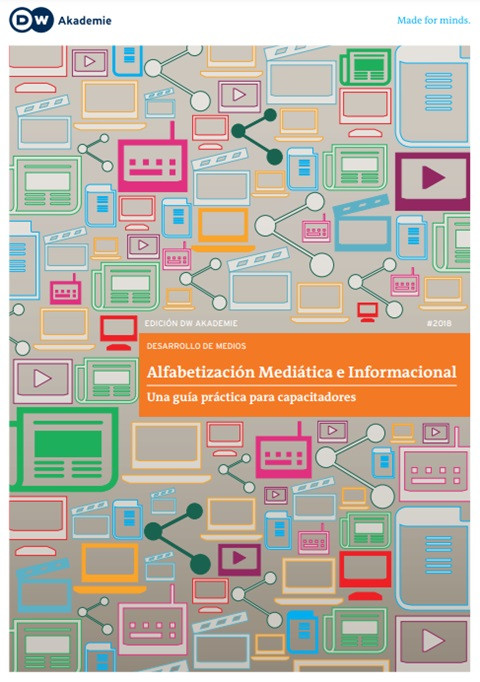 Media and Information Literacy: A Practical Guidebook for Trainers; Media Development 발행 연도: 2018 저자: Sylvia Braesel | Thorsten Karg 단체 저자: DW Academy The Media and Information Literacy (MIL) guide provides trainers with background information, ideas, methodology and practical exercises for training. Literacy is the ability to read and write. Media and Information Literacy (MIL) is the ability to understand how the media works and how it can be used to participate in public debate. MIL includes social media such as Facebook as well as traditional media such as books, newspapers, radio and television. This practical guide provides MIL trainers with background information, ideas, methodology and practical exercises for training.