
자료
세계시민교육에 대한 이해를 넓히고 연구, 옹호 활동, 교수, 학습 등을 향상시킬 수 있는 다양하고 유용한 자료를 찾아보세요.
1,405 건의 결과가 검색되었습니다
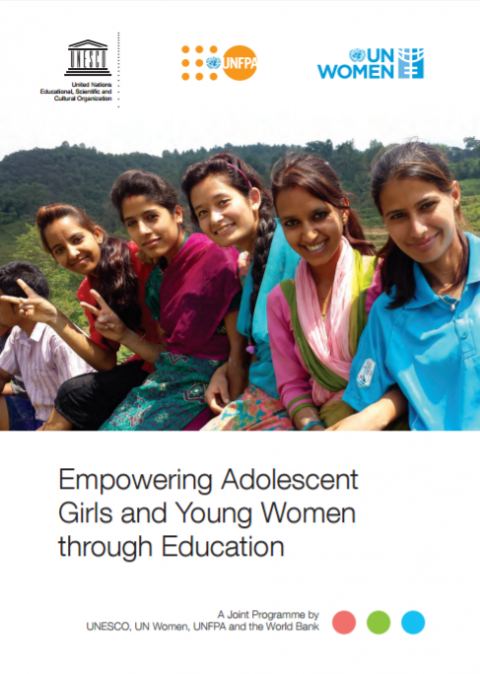 L'Autonomisation des adolescentes et des jeunes femmes par l'éducation 발행 연도: 2015 단체 저자: Organisation des Nations Unies pour l'éducation, la science et la culture (UNESCO)
 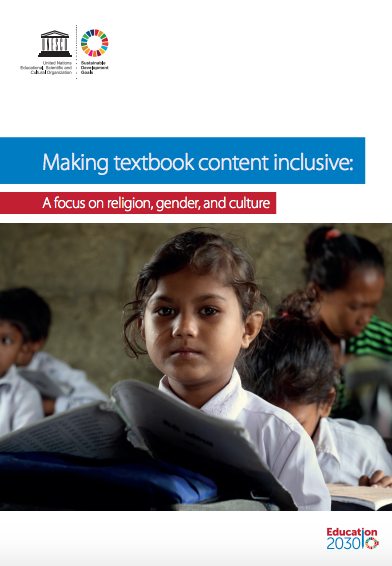 Making Textbook Content Inclusive: A Focus on Religion, Gender, and Culture 발행 연도: 2017 단체 저자: UNESCO UNESCO has been working on textbook development issues since its inception in 1945 as part of its fundamental mandate to “build peace in the minds of men and women.” The present guide’s primary task is to enable its users to address and counter stereotypes in a variety of educational contexts, through teaching and learning materials. The three key issues – religion, gender and culture – were chosen for their common link to the concept of human diversity. These three potentially controversial topics are important aspects of inclusive education because they help shape the learning environment of a school as well as its educational practices.The guide was intentionally written in a simple, practical style so as to be immediately accessible to textbook developers, adopters, and users, even those who are working on their own. Although it is designed primarily for textbook authors, curriculum developers, and teachers, it might also be particularly useful for publishers, political stakeholders, and teacher educators. Pour des manuels scolaires au contenu inclusif 발행 연도: 2017 단체 저자: UNESCO UNESCO has been working on textbook development issues since its inception in 1945 as part of its fundamental mandate to “build peace in the minds of men and women.” The present guide’s primary task is to enable its users to address and counter stereotypes in a variety of educational contexts, through teaching and learning materials. The three key issues – religion, gender and culture – were chosen for their common link to the concept of human diversity. These three potentially controversial topics are important aspects of inclusive education because they help shape the learning environment of a school as well as its educational practices.The guide was intentionally written in a simple, practical style so as to be immediately accessible to textbook developers, adopters, and users, even those who are working on their own. Although it is designed primarily for textbook authors, curriculum developers, and teachers, it might also be particularly useful for publishers, political stakeholders, and teacher educators.
 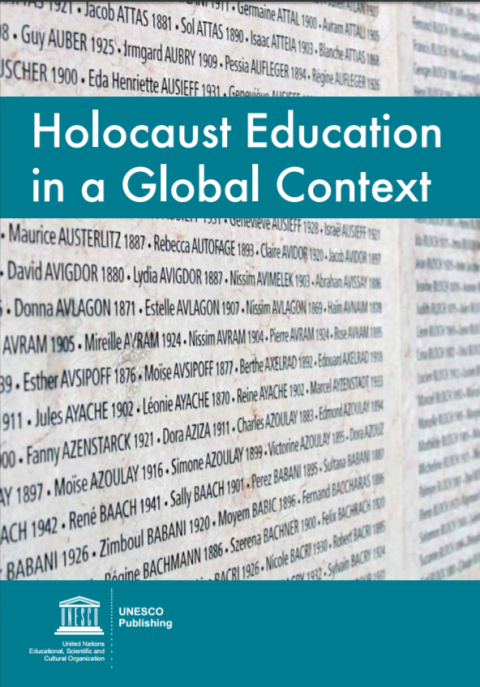 Holocaust Education in a Global Context 발행 연도: 2014 저자: Karel Fracapane | Matthias Haß 단체 저자: UNESCO | Topography of Terror Foundation (Germany) International interest in Holocaust education has reached new heights in recent years. This historic event has long been central to cultures of remembrance in those countries where the genocide of the Jewish people occurred. But other parts of the world have now begun to recognize the history of the Holocaust as an effective means to teach about mass violence and to promote human rights and civic duty, testifying to the emergence of this pivotal historical event as a universal frame of reference. In this new, globalized context, how is the Holocaust represented and taught? How do teachers handle this excessively complex and emotionally loaded subject in fast-changing multicultural European societies still haunted by the crimes perpetrated by the Nazis and their collaborators? Why and how is it taught in other areas of the world that have only little if any connection with the history of the Jewish people? Holocaust Education in a Global Context will explore these questions.
 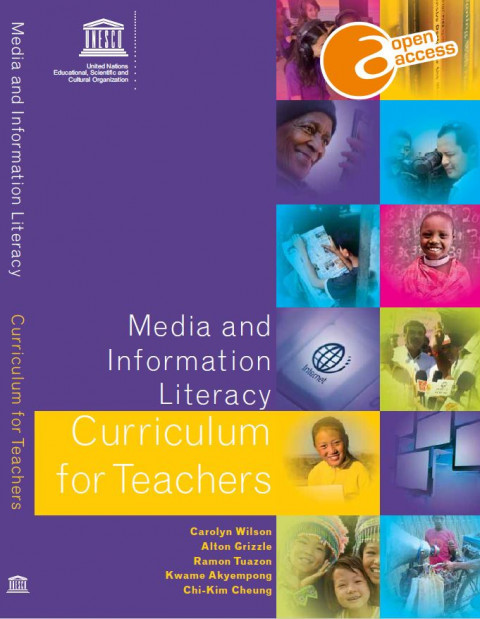 Education aux médias et à l'information: programme de formation pour les enseignants 발행 연도: 2011 저자: Carolyn Wilson | Alton Grizzle | Ramon Tuazon | Kwame Akyempong | Chi Kim Cheung 단체 저자: UNESCO Nous vivons dans un monde où la qualité de l’information que nous recevons détermine largement nos choix et nos actions et en particulier, notre capacité à pro ter des libertés fondamentales et notre possibilité d’autodétermination et de développement. Ce programme d’éducation aux médias et à l’information pour les enseignants est une ressource importante pour les États membres de l’UNESCO et une publication expérimentale. Elle est prospective et s’efforce de réaliser la convergence de la radio, la télévision, l’Internet, les journaux, les livres, les archives numériques et les bibliothèques sur une même plate-forme. Elle est aussi spécialement conçue pour permettre l’intégration de ce programme dans le système formel de formation des enseignants. L’UNESCO croit que ce programme sera une étape importante d’innovation et de progrès pour tous les niveaux d’éducation. Медийная и информационная грамотность: программа обучения педагогов 발행 연도: 2011 저자: Carolyn Wilson | Alton Grizzle | Ramon Tuazon | Kwame Akyempong | Chi Kim Cheung 단체 저자: UNESCO Данная программа обучения педагогов медийной и информационной грамотности — важный источник информации для государств-членов ЮНЕСКО, призванный содействовать их усилиям по достижению целей, сформулированных в Грюнвальдской декларации (1982 г.), Александрийской декларации (2005 г.) и Парижской повесткой дня (2007 г.), имеющих прямое отношение к медийной и информационной грамотности (МИГ). Данное издание состоит из двух частей. Часть 1 содержит описание программы обучения и системы компетенций МИГ. В ней описываются логика, структура и основные темы програм-мы. Она дополняет «Структуру ИКТ-компетентности учителей» (ICTs Competency Framework for Teachers), подготовленную ЮНЕСКО в 2008 г. Часть 2 включает в себя подробное описание базовых и дополнительных модулей учебной программы. Программа обучения учителей медийной и информационной грамотности переведена на арабский, французский, русский и испанский языки.
 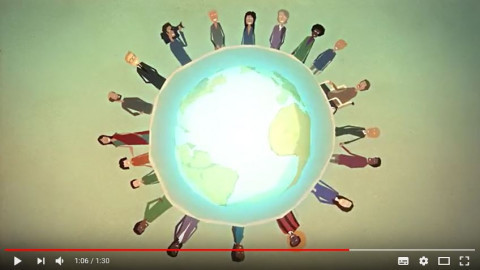 [Video] Global Citizenship Education to Prevent Violent Extremism 발행 연도: 2016 단체 저자: UNESCO The UNESCO video on “Global Citizenship Education to prevent violent extremism” explains how education can prevent violent extremism through equipping young people with the skills to dialogue and think critically, and engage meaningfully with others and their communities in order to build peaceful societies.
 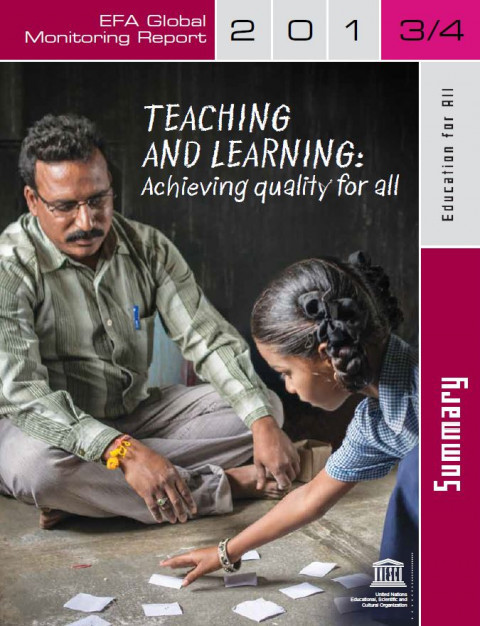 Teaching and Learning: Achieving Quality for All (EFA Global Monitoring Report, 2013-2014; Summary) 발행 연도: 2014 단체 저자: UNESCO This Report is an independent publication commissioned by UNESCO on behalf of the international community. It is the product of a collaborative effort involving members of the Report Team and many other people, agencies, institutions and governments. This 11th EFA Global Monitoring Report provides a timely update on progress that countries are making towards the global education goals that were agreed in 2000. It also makes a powerful case for placing education at the heart of the global development agenda after 2015.An education system is only as good as its teachers. Unlocking their potential is essential to enhancing the quality of learning. Evidence shows that education quality improves when teachers are supported – it deteriorates if they are not, contributing to the shocking levels of youth illiteracy captured in this Report. This Report identifies four strategies to provide the best teachers to reach all children with a good quality education. The Report shows also that teachers can only shine in the right context, with well-designed curricula and assessment strategies to improve teaching and learning. This Report’s evidence clearly shows that education provides sustainability to progress against all development goals. Educate mothers, and you empower women and save children’s lives. Educate communities, and you transform societies and grow economies. This is the message of this EFA Global Monitoring Report. Преподавание и обучение: Обеспечение качества для всех 발행 연도: 2014 단체 저자: UNESCO Настоящий доклад представляет собой независимую публикацию, подготовленную по заказу ЮНЕСКО для международного сообщества. Он является результатом совместной работы, в которой участвовали члены Группы по подготовке Всемирного доклада по мониторингу "Образование для всех" (ОДВ), а также многие другие специалисты, учреждения, институты и правительства.Настоящий 11-й Всемирный доклад по мониторингу ОДВ представляет обновленную информацию о прогрессе стран на пути к достижению глобальных целей в области образования, согласованных в 2000 г. В докладе также приводятся серьезные доводы в пользу обеспечения приоритетного внимания вопросам образования в рамках глобальной повестки дня в области развития на период после 2015 г.Система образования напрямую зависит от учителей. Раскрытие их потенциала играет ключевую роль для повышения качества обучения. Факты говорят о том, что качество образования повышается при оказании поддержки учителям и понижается при ее отсутствии, что влияет на шокирующий уровень неграмотности молодежи, отраженный в настоящем докладе.В данном докладе представлены четыре стратегии по обеспечению школ лучшими учителями в целях предоставления всем детям качественного образования. В докладе также отмечается, что учителя могут действительно добиваться успеха только в благоприятных условиях при использовании хорошо разработанных стратегий в области учебных программ и процедур оценки, направленных на повышение уровня преподавания и обучения. В настоящем докладе представлены четкие доказательства того, что образование обеспечивает устойчивые условия для достижения всех целей в области развития. Просвещение матерей позволяет не только расширить права и возможности женщин, но и сохранить жизни детей. Просвещение общин способствует преобразованию обществ и развитию экономики. В этом и заключается главная идея настоящего Всемирного доклада по мониторингу ОДВ.
 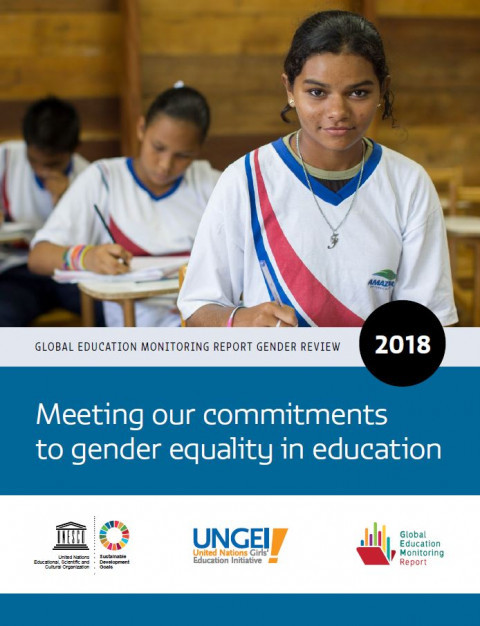 Meeting Our Commitments to Gender Equality in Education: Global Education Monitoring Report Gender Review 2018 발행 연도: 2018 단체 저자: UNESCO The Education 2030 Framework for Action, a tool aimed at helping the international community achieve SDG 4 on education, explicitly recognizes gender equality as a guiding principle linked to the realization of the right to education. It states clearly that girls and boys, women and men, must be equally empowered ‘in and through education’.In this sixth Gender Review, in a series that began in 2011, the Global Education Monitoring Report team maintains the focus on a broad conception of gender equality that extends beyond counting boys and girls in classrooms. The review’s first part examines disparities in participation and skills, in education and political leadership positions, and in selected aspects of infrastructure and curricula. It also examines gender issues in professional development by exploring the role of education in three other SDGs: those concerning agriculture, health, and water and sanitation.The second part of the review analyses institutions, laws and policies to explore ways to determine and enforce accountability for gender equality in education.