
자료
세계시민교육에 대한 이해를 넓히고 연구, 옹호 활동, 교수, 학습 등을 향상시킬 수 있는 다양하고 유용한 자료를 찾아보세요.
950 건의 결과가 검색되었습니다
 Global Citizenship in a Digital World (The MILID Yearbook, 2014) 발행 연도: 2014 저자: Sherri Hope Culver | Paulette Kerr 단체 저자: International Clearinghouse on Children, Youth and Media (Sweden) | NORDICOM | University of Gothenburg The theme of the 2014 Yearbook is Global Citizenship in a Digital World. Global citizenship assumes ease of participation in global spaces in which persons are media and information literate and are equipped with competencies and attitudes to deal with the multi-faceted nature of a mediated world in which information is no longer bound by space or time. The unprecedented access to and use of media and Internet technologies for communication and collaboration especially among youth, suggest that effective strategies must be found to enable active critical inquiry and effective media production. The proliferation of mediated spaces throughout education environments, as well as personal and professional environments, does not in itself guarantee that citizens will consider their role as global citizens as they create and consume media. This awareness must be cultivated, encouraged and taught.The 2014 MILID Yearbook brings together a range of reviewed articles, which articulate the theme of global citizenship from varied perspectives and regions of the world. The articles represent different expressions on media and information literacy from researchers and practitioners who offer bold new strategies, share research findings and best practices, and share musings and reflections.
  Promoting the culture of dialogue between cultures in the Arab world 발행 연도: 2013 저자: Selim El Sayegh 단체 저자: UNESCO Beirut The major challenge of the Arab uprisings resides in the youth drive. Accounting for 60 per cent of the Arab population, Youth have been calling for political and economic reforms. During the revolts, these claims have become more radical seeking a fundamental change. This gradual evolution, from a relatively partial change to a more absolute comprehensive one, ushers in a new era with a different intellectual construct. With the ousting of dictatorships, all civil society forces are unleashed with huge actual and potential resources mobilized to contribute to building up the new order. Groups of solidarity, communities, parties, associations, and organizations of all nature among many others put forward new ideas and adequate action plans. Liberty thus acclaimed becomes the outcry for dignity, honor and pride. Never before in the Arab world has the individual had such a central place as it does today. An individual fully grasping the possibilities of restored liberty and recognized dignity gives birth to a new citizen acting in a new paradigm; a new citizen that seeks a transcendence of the ego to relate the individual to the common good. This fresh paradigm empowers the individual as a citizen in the name of equality, while simultaneously recognizing the right of difference of each citizen when it comes to belonging to a culture or sub‐culture. The right to be different involves more than the right to differ and to dispute and by the same token, the obligation of peaceful settlement. The right to be different, by belonging to a culture or a sub‐culture means in a new era of liberty and dignity, the obligation to conduct a transformation of the patterns generating disputes and conflicts among cultures. Henceforth, the issue of promoting the culture of intercultural dialogue in the aftermath of the Arab revolts represents major characteristics that will be reflected hereafter. Promouvoir la culture du dialogue entre les cultures dans le monde Arabe 발행 연도: 2013 저자: Selim El Sayegh 단체 저자: UNESCO Beirut Le défi majeur des soulèvements arabes réside dans le lecteur de la jeunesse. Comptabilisation de 60 pour cent de la population arabe, de la jeunesse ont été réclame des réformes politiques et économiques. Pendant les révoltes, ces créances sont devenues plus radicales à la recherche d'un changement fondamental. Cette évolution progressive, d'un changement relativement partielle à l'une complète plus absolue, ouvre la voie à une nouvelle ère avec une construction intellectuelle différente. Avec l'éviction des dictatures, toutes les forces de la société civile se déchaînent avec d'énormes ressources réelles et potentielles mobilisées pour contribuer à l'édification du nouvel ordre. Des groupes de solidarité, les communautés, les partis, les associations et organisations de toute nature parmi beaucoup d'autres mettent en avant de nouvelles idées et plans d'action adéquats. Liberté ainsi acclamé devient le cri de la dignité, l'honneur et la fierté. Jamais auparavant dans le monde arabe a l'individu avait une telle place centrale comme il le fait aujourd'hui. Un individu de saisir pleinement les possibilités de la liberté restaurée et reconnue la dignité donne naissance à un nouveau citoyen agissant dans un nouveau paradigme; un nouveau citoyen qui cherche une transcendance de l'ego de relier l'individu au bien commun. Ce nouveau paradigme permet l'individu en tant que citoyen au nom de l'égalité, tout en reconnaissant en même temps le droit à la différence de chaque citoyen en ce qui concerne l'appartenance à une culture ou sous-culture. Le droit d'être différent implique plus que le droit à la différence et à contester et par le fait même, l'obligation de règlement pacifique. Le droit à la différence, par l'appartenance à une culture ou d'une sous-culture signifie une nouvelle ère de liberté et de dignité, l'obligation de procéder à une transformation des modèles de génération de différends et les conflits entre les cultures. Dès lors, la question de la promotion de la culture du dialogue interculturel dans la foulée des révoltes arabes représente les principales caractéristiques qui seront reflétées ci-après.
  Education and Disability: Analysis of Data from 49 Countries (UIS Information Paper No. 49) 발행 연도: 2018 단체 저자: UNESCO Institute for Statistics (UIS) Sustainable Development Goal (SDG) 4 calls for “inclusive and quality education for all”. Persons with a disability are among the population groups most likely to suffer from exclusion from education but data that permit an analysis of the links between disability and education remain scarce.This paper examines educational disparities linked to disability based on data from 49 countries and territories for five education indicators: Proportion of 15- to 29-year-olds who ever attended school Out-of-school rate (primary school age, lower secondary school age) Completion rate (primary education, lower secondary education) Mean years of schooling of the population 25 years and older Adult literacy rate (population 15 years and older)
 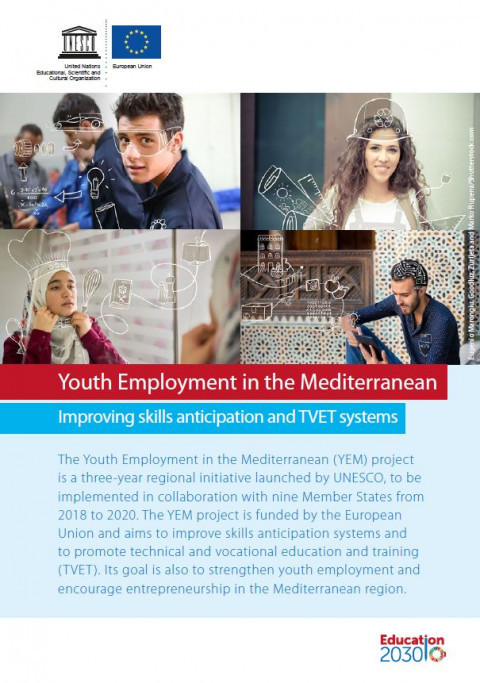 Youth Employment in the Mediterranean: Improving Skills Anticipation and TVET Systems 발행 연도: 2018 단체 저자: European Union (EU) The Youth Employment in the Mediterranean (YEM) project is a three-year regional initiative launched by UNESCO, to be implemented in collaboration with nine Member States from 2018 to 2020. The YEM project is funded by the European Union and aims to improve skills anticipation systems and to promote technical and vocational education and training (TVET). Its goal is also to strengthen youth employment and encourage entrepreneurship in the Mediterranean region.
 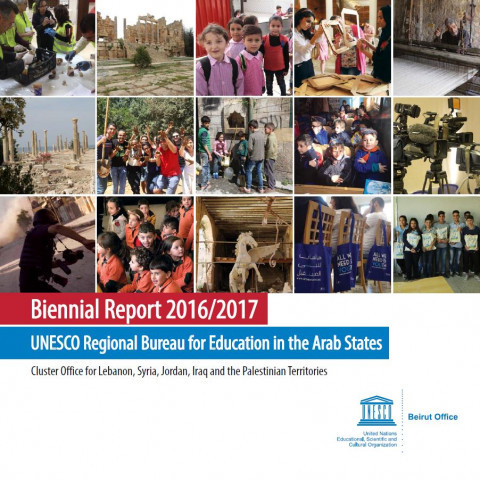 Biennial Report 2016/2017: UNESCO Regional Bureau for Education in the Arab States 발행 연도: 2018 단체 저자: UNESCO Beirut As Regional Bureau for Education, UNESCO Beirut is the lead coordinator for SDG 4 in the Arab Region. We strive to provide tangible support for each Member State in the region, taking into account national needs and priorities, thereby employing nationally relevant approaches. More specifically, our work aims to address both the humanitarian and development aspects brought about by the protracted crisis in Syria through bridging the learning gaps for the youth, both for Syrian refugees and vulnerable youth in host communities. Our response also targets teachers, mentors and facilitators as well as Ministries’ technical officials. The crisis in Syria has created a need for specific support in education in emergencies and quality education to which we actively engage from both, upstream analytical and capacity building and downstream operational levels. UNESCO Beirut has also strengthened its leadership to respond to the deliberate destruction of cultural heritage, illicit trafficking, and attacks against individuals on religious or cultural grounds. We raise the alarm to protect heritage in danger, assessing damages to World Heritage sites in conflict. We also raise awareness among the public about the values of cultural heritage and the need to protect it for future generations. In today’s diverse societies, the Organization’s fundamental humanist mission guides us to support people, especially the youth, in understanding each other and working together to build lasting peace and enables people to create and use knowledge for just and inclusive societies. We continue to advocate free, independent and pluralistic media in print, broadcast and online to enhance freedom of expression as a contributor to peace, sustainability, poverty eradication and human rights. This biennial report summarizes the work and achievements accomplished between 2016 and 2017 by our office. Emploi des jeunes dans la région méditerranéenne: améliorer la prévision des compétences et les systèmes d'EFTP 발행 연도: 2018 단체 저자: European Union (EU) Emploi des jeunes dans la région méditerranéenne (YEM) est un projet à l’échelle régionale de trois ans initié par l’UNESCO et mis en oeuvre en collaboration avec les États membres sur une période de trois ans (2018-2020). Le projet YEM est financé par l’Union européenne (UE) et vise à améliorer les systèmes de prévision des compétences et à promouvoir l’enseignement et la formation techniques et professionnels (EFTP) pour renforcer l’emploi et l’entrepreneuriat dans la région méditerranéenne.
  دولة اإلمارات العربية المتحدة وأجندة 2030 للتنمية المستدامة 발행 연도: 2018 단체 저자: National Committee on Sustaiable Development Goals يحتوي هذا التقرير على فصلين رئيسيين وهما دور دولة الإمارات في وضع خطة التنمية المستدامة 2030 والفصل الثاني اللجنة الوطنية لأهداف التنمية المستدامة في دولة الإمارات العربية المتحدة The United Arab Emirates and the 2030 Agenda for Sustainable Development 발행 연도: 2018 단체 저자: National Committee on Sustaiable Development Goals This report contains two main chapters: the role of the UAE in the development of the 2030 Agenda for Sustainable Development and Chapter Two of the National Committee for the Sustainable Development Goals in the United Arab Emirates.
 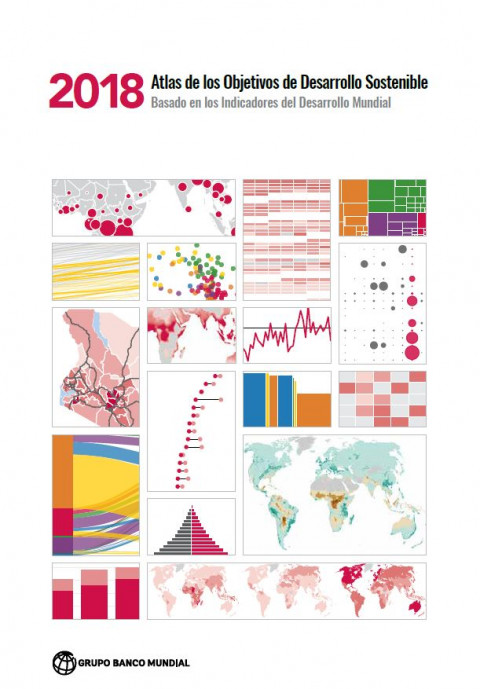 Atlas de los Objetivos de Desarrollo Sostenible 2018 발행 연도: 2018 단체 저자: البنك الدولي للانشاء والتعمير En el Atlas de los Objetivos de Desarrollo Sostenible 2018 se presentan mapas, gráficos e historias relacionadas con los ODS.Los datos provienen de la base de datos de los WDI.