
자료
세계시민교육에 대한 이해를 넓히고 연구, 옹호 활동, 교수, 학습 등을 향상시킬 수 있는 다양하고 유용한 자료를 찾아보세요.
875 건의 결과가 검색되었습니다
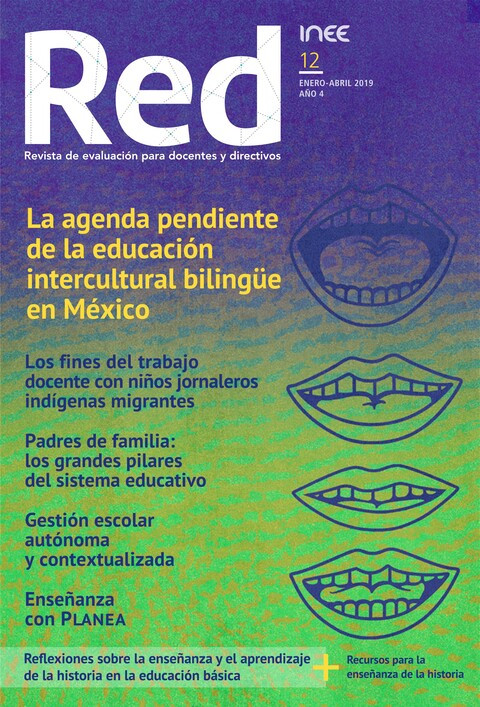 Revista de evaluación para docentes y directivos: La agenda pendiente de la educación intercultural bilingüe en México (Revista Red; No.4, 2019) 발행 연도: 2019 단체 저자: National Institute for the Evaluation of Education (NIEE) Esta revista aborda una asignatura pendiente del Estado mexicano: la educación indígena, intercultural y bilingüe en nuestro país. La enseñanza de la historia en primaria y secundaria, y los recursos que nos ofrece internet para propiciar el interés de los alumnos en esta asignatura también se plantean en nuestra primera entrega de 2019. No menos interesantes resultan la profesionalización docente y las opiniones que varias maestras nos comunican sobre este tema. En el diálogo directo “De profesor a profesor”, la maestra Tsut Tsuy Tamayo nos comparte igualmente su experiencia en la enseñanza de las matemáticas. Las significativas cifras arrojadas por PLANEA, un reportaje sobre la participación de los padres de familia en la educación académica de sus hijos, un curso masivo sobre evaluación dirigido a docentes expuesto en entrevista por Bernardo Naranjo, consejero del INEE.
  Transformer les entreprises par la diversité et l’inclusion 발행 연도: 2022 단체 저자: Organisation Internationale du Travail Depuis plus de cent ans, l’Organisation internationale du Travail (OIT) promeut le travail productif et décent des hommes et des femmes dans des conditions de liberté, de dignité, de sécurité économique et d’égalité des chances. L’OIT s’efforce de promouvoir des lieux de travail plus inclusifs et de lutter contre les discriminations pour tous les motifs, notamment le sexe, l’origine ethnique, la race, le statut d’autochtone, le handicap, la séropositivité, l’orientation sexuelle et l’identité de genre, en garantissant l’égalité des chances et de traitement au travail. L’action de l’OIT dans ce domaine participe à la réalisation du Programme de développement durable à l’horizon 2030 et de l’engagement de ne laisser personne de côté. En établissant des normes internationales du travail, en fournissant des conseils techniques et en renforçant les capacités de ses mandants, l’OIT a contribué à l’élaboration et à l’application d’une législation, de politiques et de bonnes pratiques d’entreprise inclusives et à la promotion de l’égalité et de la non-discrimination sur le lieu de travail. For over a hundred years, the International Labour Organization (ILO) has promoted productive and decent work for men and women in conditions of freedom, dignity, economic security and equal opportunity. The ILO strives to promote more inclusive workplaces and to combat discrimination on all grounds, including gender, ethnic origin, race, indigenous status, disability, HIV status, sexual orientation and gender identity, guaranteeing equality of opportunity and treatment at work. The ILO's action in this field contributes to the achievement of the 2030 Agenda for Sustainable Development and the commitment to leave no one behind. By setting international labor standards, providing technical advice and building the capacity of its constituents, the ILO has contributed to the development and application of inclusive legislation, policies and good corporate practices, and to the promotion of equality and non-discrimination in the workplace.
  Cultural Diversity and Interculturality in Higher Education. Experiences in Latin America 발행 연도: 2008 저자: Daniel Mato 단체 저자: UNESCO International Institute for Higher Education in Latin America and the Caribbean (IESALC) The work that we present below under the title Cultural Diversity and Interculturality in Higher Education. Experiences in Latin America offers a documented and novel analysis on the subject, accompanied by more than thirty studies on concrete experiences that allow to appreciate the richness and vitality that this field exhibits in Latin America, as well as the problems and challenges it faces. The volume brings together thirty-six studies of experiences of the types mentioned, each of which identifies achievements, obstacles and learning, and culminates in offering recommendations. This collection of texts is preceded by a study of regional scope that analyzes significant contextual elements, as well as salient aspects of the studied experiences, evaluates problems, challenges and opportunities, and offers a set of recommendations. Diversidad Cultural e Interculturalidad en Educación Superior. Experiencias en América Latina 발행 연도: 2008 저자: Daniel Mato 단체 저자: UNESCO International Institute for Higher Education in Latin America and the Caribbean (IESALC) La obra que a continuación presentamos bajo el título Diversidad Cultural e Interculturalidad en Educación Superior. Experiencias en América Latina ofrece un documentado y novedoso análisis sobre el tema, acompañado de más de treinta estudios sobre experiencias concretas que permiten apreciar la riqueza y vitalidad que este campo exhibe en América Latina, así como los problemas y desafíos que enfrenta. El volumen reúne treinta y seis estudios de experiencias de los tipos mencionados, cada uno de los cuales identifica logros, obstáculos y aprendizajes, y culmina ofreciendo recomendaciones. Esa colección de textos es precedida por un estudio de alcance regional que analiza elementos contextuales significativos, así como aspectos salientes de las experiencias estudiadas, evalúa problemas, retos y oportunidades, y ofrece un conjunto de recomendaciones.
  Educación para la ciudadanía y la convivencia: sintiendo y pensando; ciclo uno (primero y segundo) 발행 연도: 2014 단체 저자: Secretaría de Educación del Distrito (SED) | Fe y Alegría These twelve modules make reference to a series of activities that focus on how children from all the educative grades understand and live citizenship, strengthening and facilitating the learning processes based on autonomy. This educative materials, which are aimed at being implemented inside the classrooms, attempt to serve as input resources for educators and other agents that work on or are interested in working with citizenship education and coexistence. The overall objective is to provide quality education.
  The Clandestine Schools in Ecuador. Roots of Intercultural Indigenous Education 발행 연도: 2015 저자: María Isabel González Terreros By the mid-twentieth century in Ecuador, indians implemented clandestine schools to teach their people. Those schools were persecuted and harassed by landowners, who did not see pertinent that indians were educated. This was a pioneering, innovative and different project. Pioneer because it is the first known project with these features in Ecuador; innovative because it was leaded by Indians who took their cultural background to school (such as the teaching of ancestral language and some knowledge about nature and territory); and different because it was a proposal contrary to the homogenizing and assimilationist education that the Nation-state was implementing in rural areas. That proposal was led by Dolores Cacuango, a Quechua Indian who was subject to the hacienda system (in which communities did farm work for the employer, in exchange for a piece of land to live in with their families). She, who suffered injustice and had no chance to go to school, insisted that children and young people should "learn letter" (that is, they should learn Castilian). Las Escuelas Clandestinas en Ecuador. Raíces de la Wducación Indígena Intercultural 발행 연도: 2015 저자: María Isabel González Terreros A mediados del siglo xx en Ecuador los indígenas implementaron escuelas clandestinas para enseñar a los suyos, escuelas que fueron perseguidas y hostigadas por los hacendados que no veían pertinente que los indígenas se educaran. Se trató de un proyecto pionero, novedoso y diferente. Pionero porque es el primero que se conoce con estas características en el Ecuador; novedoso porque fue dirigido por indígenas que llevaron los saberes culturales a la escuela, como la enseñanza del idioma ancestral y algunos conocimientos sobre la naturaleza y el territorio; y diferente porque fue una propuesta contraria a la educación homogeneizante y asimilacionista que el Estado-nación implementaba en zonas rurales. Esta propuesta fue dirigida por Dolores Cacuango, una indígena kichwa que estuvo sometida al sistema de hacienda, en el que las comunidades realizaban trabajos agrícolas para el patrón a cambio de tener un pedazo de tierra y vivir con sus familias. Ella, que vivió la injusticia y no tuvo la posibilidad de ir a la escuela, se empeñó en que los niños y jóvenes “aprendieran letra”.
  The Game as a Fun Strategy for the Inclusive Education of Good Living 발행 연도: 2017 저자: Evelyn Fernanda Córdoba Pillajo | Fernando Lara Lara | Andrés García Umaña The discussion on the implementation of the educational political project of sumak kawsay in Ecuador demands resources and proposals that contribute to its development. In this sense it is proposed the game as a possible didactic resource that can offer spaces of educational inclusion of the different facets of the human being that demand good living demands as long as the constitutionally conceptualized the right to education in the holistic formation of the human being, the formation of consciousness, the identifycation of the ego as a barrier to dialogue and the possibilities of interculturality, humility through self-criticism among others. This paper aims to present a reflection and an idea about the game as a playful strategy in the learning of inclusive practices as well as justify the promotion as Formative medium of an educative culture of sumak kawsay. El Juego como Estrategia Lúdica para la Educación Inclusiva del Buen Vivir 발행 연도: 2017 저자: Evelyn Fernanda Córdoba Pillajo | Fernando Lara Lara | Andrés García Umaña La discusión sobre la implementación del proyecto político educativo del sumak kawsay en Ecuador demanda de recursos y propuestas que puedan contribuir a su desarrollo. En este sentido se propone lo lúdico como un posible recurso didáctico que permita ofrecer espacios de inclusión educativa de las distintas facetas del ser humano que demanda el buen vivir tanto en cuanto se conceptualiza constitucionalmente el derecho a la educación en su formación holística, de la conciencia, identificación del ego como barrera para el diálogo y las posibilidades de la interculturalidad, o la humildad mediante la autocrítica, entre otras. En este trabajo se persigue plantear una sucinta reflexión y propuesta concerniente al juego como estrategia lúdica favorecedora de prácticas inclusivas, así como justificar su promoción como medio formativo de una cultura educativa del sumak kawsay. Educación para la ciudadanía y convivencia: aprendiendo a vivir juntas y juntos, base para construir cultura de paz; ciclo uno (primero y segundo) 발행 연도: 2015 단체 저자: Secretaría de Educación del Distrito (SED) | Fe y Alegría These twelve modules make reference to a series of activities that focus on how children from all the educative grades understand and live citizenship, strengthening and facilitating the learning processes based on autonomy. This educative materials, which are aimed at being implemented inside the classrooms, attempt to serve as input resources for educators and other agents that work on or are interested in working with citizenship education and coexistence. The overall objective is to provide quality education.