
자료
세계시민교육에 대한 이해를 넓히고 연구, 옹호 활동, 교수, 학습 등을 향상시킬 수 있는 다양하고 유용한 자료를 찾아보세요.
875 건의 결과가 검색되었습니다
 Citizenship education in Latin America: priorities of school curricula (IBE working papers on curriculum issues no. 14) 발행 연도: 2014 저자: Cristián Cox | Martín Bascopé | Juan Carlos Castillo | Daniel Miranda | Macarena Bonhomme 단체 저자: UNESCO International Bureau of Education (IBE) This work focuses on the curricula of six Latin American countries – Colombia, Chile, the Dominican Republic, Guatemala, Mexico and Paraguay – which at the close of the past decade agreed to be part of the project Regional System of Evaluation and Development of Citizenship Competencies (SREDECC). With the support of the Inter-American Development Bank, SREDECC developed the Latin American module of the International Civic and Citizenship Study (ICCS- 2009) undertaken by the International Association for the Evaluation of Educational Achievement (IEA), in addition to encouraging the participation of the countries in that study (Cox 2010; Schulz, Ainley, Friedman and Lietz 2011).This document comprises four parts. The first section takes stock of the state of democratic belief in the region, drawing upon the most significant opinion studies of the past decade, so as to offer broader meaning bases for curriculum analysis and, more generally, for educational work in the field of citizenship. The second section describes the organizational (or structural) characteristics of the curricula of the six countries and presents a framework of categories for their comparative analysis. The subsequent section describes and analyses the contents of the six curricula examined and how they deal with the values, institutions and citizenship relations in their civic (political) and civil (coexistence) dimensions. On the basis of the most significant findings, the closing section includes some reflections regarding curriculum development with regard to citizenship. Éducation à la Citoyenneté en Amérique latine: les priorités de programmes scolaires(BIE papiers de travail sur les questions de curriculum no.14) 발행 연도: 2014 저자: Cristián Cox | Martín Bascopé | Juan Carlos Castillo | Daniel Miranda | Macarena Bonhomme 단체 저자: UNESCO International Bureau of Education (IBE) Ce travail se concentre sur les programmes de six pays d'Amérique latine - Colombie, le Chili, la République dominicaine, le Guatemala, le Mexique et le Paraguay - qui à la fin de la dernière décennie aCECpté de faire partie du projet de système régional d'évaluation et de développement des compétences citoyennes (SREDECC). Avec le soutien de la Banque interaméricaine de développement, SREDECC latino-américaine a développé le module de l'Étude internationale civique et la citoyenneté (ICCS- 2009) Pratiqué par l'Association internationale pour l'évaluation du rendement scolaire (AIE), en plus d'encourager la participation des clubs de pays dans cette étude (Cox 2010, Schulz, Ainley, Friedman et Lietz 2011). Ce document comprend quatre parties. La première section fait le point sur l'état de croyance démocratique dans la région, en tirant sur les études d'évaluation les plus importants de la dernière décennie, de manière à offrir la base de sens plus large pour l'analyse des programmes et, plus généralement, pour le travail éducatif dans le domaine de la citoyenneté . La deuxième section décrit les caractéristiques organisationnelles (ou structurelles) des programmes d'études des six clubs de pays et présente un cadre de catégories pour leur analyse comparative. La section suivante décrit le contenu et les analyses des six programmes examinés et comment ils traitent avec les valeurs, les institutions et les relations de citoyenneté dans leurs civiques (politiques) et civiles (coexistence) dimensions. Sur la base des conclusions les plus importantes, la section de fermeture comprend quelques réflexions concernant le développement de curriculum vitae à l'égard de la citoyenneté. Educación ciudadana en América Latina: prioridades de los currículos escolares (IBE working papers on curriculum issues no. 14) 발행 연도: 2014 저자: Cristián Cox | Martín Bascopé | Juan Carlos Castillo | Daniel Miranda | Macarena Bonhomme 단체 저자: UNESCO International Bureau of Education (IBE) This work focuses on the curricula of six Latin American countries – Colombia, Chile, the Dominican Republic, Guatemala, Mexico and Paraguay – which at the close of the past decade agreed to be part of the project Regional System of Evaluation and Development of Citizenship Competencies (SREDECC). With the support of the Inter-American Development Bank, SREDECC developed the Latin American module of the International Civic and Citizenship Study (ICCS- 2009) undertaken by the International Association for the Evaluation of Educational Achievement (IEA), in addition to encouraging the participation of the countries in that study (Cox 2010; Schulz, Ainley, Friedman and Lietz 2011).This document comprises four parts. The first section takes stock of the state of democratic belief in the region, drawing upon the most significant opinion studies of the past decade, so as to offer broader meaning bases for curriculum analysis and, more generally, for educational work in the field of citizenship. The second section describes the organizational (or structural) characteristics of the curricula of the six countries and presents a framework of categories for their comparative analysis. The subsequent section describes and analyses the contents of the six curricula examined and how they deal with the values, institutions and citizenship relations in their civic (political) and civil (coexistence) dimensions. On the basis of the most significant findings, the closing section includes some reflections regarding curriculum development with regard to citizenship.
 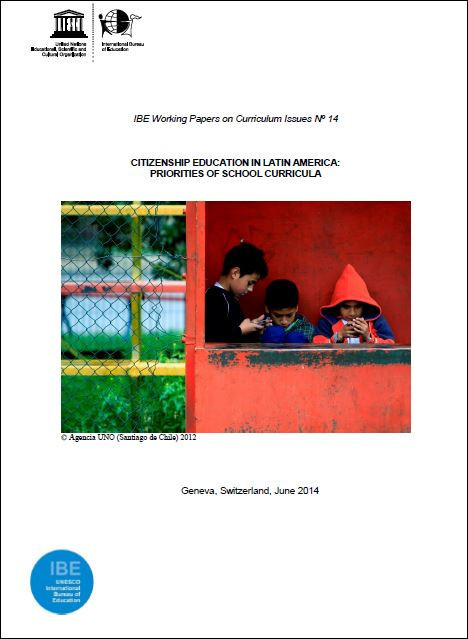 Citizenship education in Latin America: Priorities of School Curricula 발행 연도: 2014 저자: Cristián Cox | Martín Bascopé | Juan Carlos Castillo | Daniel Miranda | Macarena Bonhomme 단체 저자: UNESCO International Bureau of Education (IBE) This work focuses on the curricula of six Latin American countries – Colombia, Chile, the Dominican Republic, Guatemala, Mexico and Paraguay – which at the close of the past decade agreed to be part of the project Regional System of Evaluation and Development of Citizenship Competencies (SREDECC). With the support of the Inter-American Development Bank, SREDECC developed the Latin American module of the International Civic and Citizenship Study (ICCS- 2009) undertaken by the International Association for the Evaluation of Educational Achievement (IEA), in addition to encouraging the participation of the countries in that study (Cox 2010; Schulz, Ainley, Friedman and Lietz 2011). This document comprises four parts. The first section takes stock of the state of democratic belief in the region, drawing upon the most significant opinion studies of the past decade, so as to offer broader meaning bases for curriculum analysis and, more generally, for educational work in the field of citizenship. The second section describes the organizational (or structural) characteristics of the curricula of the six countries and presents a framework of categories for their comparative analysis. The subsequent section describes and analyses the contents of the six curricula examined and how they deal with the values, institutions and citizenship relations in their civic (political) and civil (coexistence) dimensions. On the basis of the most significant findings, the closing section includes some reflections regarding curriculum development with regard to citizenship. Educación Ciudadana en América Latina: Prioridades de los Currículos Escolares 발행 연도: 2014 저자: Cristián Cox | Martín Bascopé | Juan Carlos Castillo | Daniel Miranda | Macarena Bonhomme 단체 저자: UNESCO International Bureau of Education (IBE) El documento se organiza en cuatro partes. En la primera se da cuenta del estado de la creencia democrática en la región, recurriendo a evidencia de los estudios de opinión más importantes de la última década, de modo de ofrecer contexto y bases de significado amplios al análisis curricular, así como, más en general, al trabajo educativo en el área de ciudadanía. En la segunda sección se describe las características organizativas (o de estructura) de los currículos de los seis países y se presenta un esquema de categorías para el análisis comparado de los mismos. La sección siguiente describe y analiza los contenidos de los seis currículos examinados y su tratamiento de los valores, las instituciones y las relaciones de ciudadanía, en su dimensión cívica (política) y civil (convivencia). A partir de los hallazgos más importantes, la sección de cierre ofrece unas reflexiones orientadas al desarrollo curricular en el área.
 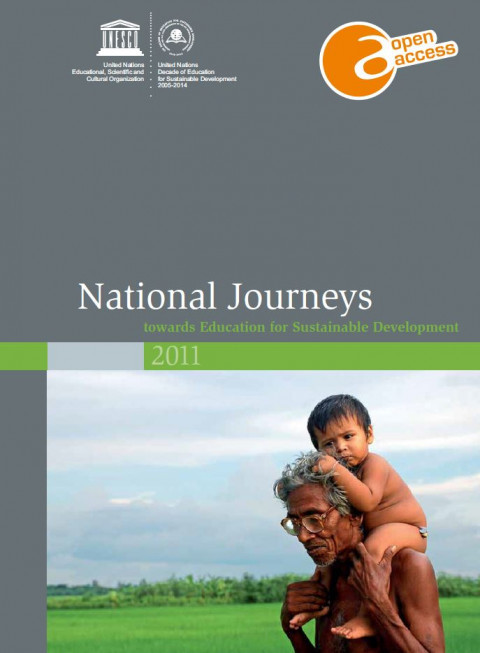 National journeys towards education for sustainable development, 2011: reviewing national experiences from Chile, Indonesia, Kenya, the Netherlands, Oman 발행 연도: 2011 저자: I. Mulà | Daniella Tilbury 단체 저자: UNESCO This publication has sourced information from a series of national reviews commissioned by UNESCO in 2010 and written by authoritative stakeholders in Chile, Indonesia, Kenya, the Netherlands and Oman. The selection of countries was based on: i) work showcased at the 2009 World Conference on Education for Sustainable Development held in Bonn, Germany; ii) submissions to the monitoring and evaluation process for the Decade of Education for Sustainable Development (DESD); as well as iii) through evaluation material submitted by UNESCO staff in regional bureaux of education.The countries showcased in this report are not necessarily the ‘best’ examples of the region, as many other countries are also progressing effectively towards implementing ESD. Rather, the countries selected illustrate the wide diversity of ESD approaches and initiatives taking place in different parts of the learnt world. The national studies were then edited and harmonized before common themes and lessons learned were identified to support other national efforts in moving towards the second half of the UN Decade of Education for Sustainable Development. Education for sustainable development lens: a policy and practice review tool 발행 연도: 2010 단체 저자: UNESCO The Education for Sustainable Development (ESD) Lens has been prepared to support UN Member States to respond to these challenges through implementation of the United Nations Decade of Education for Sustainable Development (DESD, 2005- 2014). The ESD Lens supports the goals of the DESD, and encourages policy-makers and practitioners in Member States to initiate the process of re-orienting education, particularly the formal education system, towards sustainable development. The overall goal of the UN Decade of Education for Sustainable Development (DESD) is for countries to integrate the understandings, skills and values inherent in sustainable development into all aspects of national education plans to encourage changes in lifestyles and behaviour that allow for a more sustainable and just society for all. This complements existing Education for All initiatives, and strengthens the objectives of the Millennium Development Goals. Education for Sustainable Development has the potential to improve the quality and relevance of education everywhere. 지속가능발전교육 렌즈: 정책 및 실행 평가도구 발행 연도: 2013 단체 저자: 유네스코 The Education for Sustainable Development (ESD) Lens has been prepared to support UN Member States to respond to these challenges through implementation of the United Nations Decade of Education for Sustainable Development (DESD, 2005- 2014). The ESD Lens supports the goals of the DESD, and encourages policy-makers and practitioners in Member States to initiate the process of re-orienting education, particularly the formal education system, towards sustainable development. The overall goal of the UN Decade of Education for Sustainable Development (DESD) is for countries to integrate the understandings, skills and values inherent in sustainable development into all aspects of national education plans to encourage changes in lifestyles and behaviour that allow for a more sustainable and just society for all. This complements existing Education for All initiatives, and strengthens the objectives of the Millennium Development Goals. Education for Sustainable Development has the potential to improve the quality and relevance of education everywhere. ESD レンズ政策および実践のためのリビュー・ツール 발행 연도: 2010 단체 저자: UNESCO The Education for Sustainable Development (ESD) Lens has been prepared to support UN Member States to respond to these challenges through implementation of the United Nations Decade of Education for Sustainable Development (DESD, 2005- 2014). The ESD Lens supports the goals of the DESD, and encourages policy-makers and practitioners in Member States to initiate the process of re-orienting education, particularly the formal education system, towards sustainable development. The overall goal of the UN Decade of Education for Sustainable Development (DESD) is for countries to integrate the understandings, skills and values inherent in sustainable development into all aspects of national education plans to encourage changes in lifestyles and behaviour that allow for a more sustainable and just society for all. This complements existing Education for All initiatives, and strengthens the objectives of the Millennium Development Goals. Education for Sustainable Development has the potential to improve the quality and relevance of education everywhere. La Lente de la educación para el desarollo sostenible: una herramienta para examinar las políticas y la práctica 발행 연도: 2010 단체 저자: Organización de las Naciones Unidas para la Educación, la Ciencia y la Cultura (UNESCO) The Education for Sustainable Development (ESD) Lens has been prepared to support UN Member States to respond to these challenges through implementation of the United Nations Decade of Education for Sustainable Development (DESD, 2005- 2014). The ESD Lens supports the goals of the DESD, and encourages policy-makers and practitioners in Member States to initiate the process of re-orienting education, particularly the formal education system, towards sustainable development. The overall goal of the UN Decade of Education for Sustainable Development (DESD) is for countries to integrate the understandings, skills and values inherent in sustainable development into all aspects of national education plans to encourage changes in lifestyles and behaviour that allow for a more sustainable and just society for all. This complements existing Education for All initiatives, and strengthens the objectives of the Millennium Development Goals. Education for Sustainable Development has the potential to improve the quality and relevance of education everywhere.