
자료
세계시민교육에 대한 이해를 넓히고 연구, 옹호 활동, 교수, 학습 등을 향상시킬 수 있는 다양하고 유용한 자료를 찾아보세요.
1,322 건의 결과가 검색되었습니다
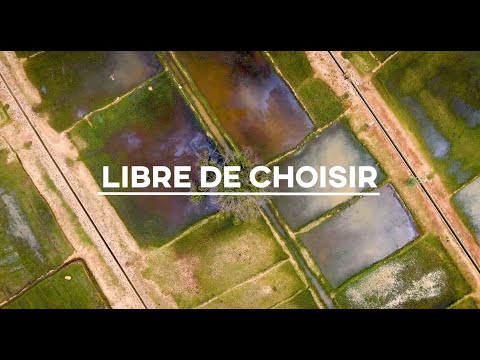 Libre de Choisir: L'après Iles de Paix; Reportage sur l'autonomie dans les pays du Sud 발행 연도: 2018 단체 저자: Îles de Paix Au Bénin et au Burkina Faso, Iles de Paix a soutenu pendant plusieurs années des familles rurales dans la réalisation de leurs projets afin d’améliorer leurs conditions de vie. Pas d’assistanat, mais plutôt un engagement au côté d’hommes et de femmes décidés à prendre leur futur en mains et à être porteurs de leur propre développement. Aujourd’hui, quelques 5 années se sont écoulées depuis qu’a pris fin l’accompagnement d’Iles de Paix, et le reportage « Libre de choisir » donne la parole à ces hommes et ces femmes engagés. Quel regard portent-ils sur l’autonomie qu’ils ont acquise ? Quels sont les leviers qui les ont aidé ? Qu’est-ce qui leur a permis de développer leurs capacités à mener les projets qui leur tiennent à cœur ?
 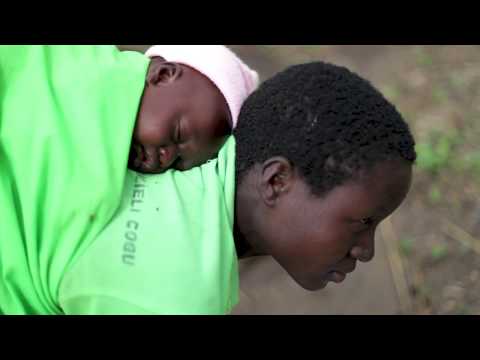 Yiéga (version courte, écoles primaires) 발행 연도: 2017 단체 저자: Îles de Paix Ana habite dans le village de Yiéga, au Burkina Faso. Elle vit avec sa maman Sibidi, son papa Arzoumbouga et ses 7 frères et sœurs. Ses voisins et ses parents sont agriculteurs et, dans ses temps libres, Ana les aide avec ses frères et sœurs. Au Burkina Faso, les agriculteurs rencontrent beaucoup de difficultés et doivent s'adapter au réchauffement de la planète, à la sécheresse et aux crises alimentaires. Ils apprennent de nouvelles manières de cultiver, agroécologiques, et varient leurs productions. Grâce à diverses pistes de solutions, et avec l’accompagnement d’Iles de Paix, ils deviennent capables de rebondir en cas de coup dur… on parle de résilience.
 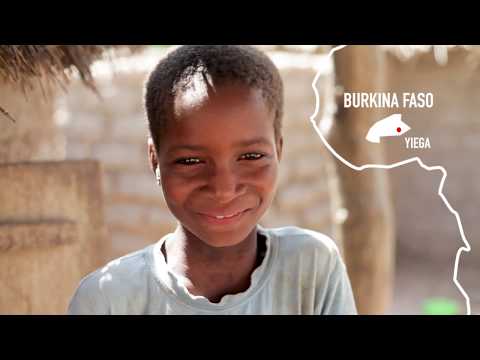 Yiéga (version longue, écoles secondaires) 발행 연도: 2017 단체 저자: Îles de Paix Ana habite dans le village de Yiéga, au Burkina Faso. Elle vit avec sa maman Sibidi, son papa Arzoumbouga et ses 7 frères et sœurs. Ses voisins et ses parents sont agriculteurs et, dans ses temps libres, Ana les aide avec ses frères et sœurs.Au Burkina Faso, les agriculteurs rencontrent beaucoup de difficultés et doivent s'adapter au réchauffement de la planète, à la sécheresse et aux crises alimentaires. Ils apprennent de nouvelles manières de cultiver, agroécologiques, et varient leurs productions. Grâce à diverses pistes de solutions, et avec l’accompagnement d’Iles de Paix, ils deviennent capables de rebondir en cas de coup dur… on parle de résilience.
  Management of Transboundary Water Resources in the Danube and the Sava River Basins 발행 연도: 2019 저자: Aksulu Kushanova 단체 저자: Regional Environmental Centre for Central Asia (CAREC) This analytical work “Management of transboundary water resources in the Danube and Sava River Basins” conveys knowledge and information on the management of the transboundary water resources by acknowledging the importance of the WEF Nexus in the Danube and Sava River Basins. Firsthand information was received during face-to-face meetings with the ICPDR and the ISRBC and the summarized work at hand shares the European experience with a wider audience.The analytical work narrates the institutional and legislative frameworks within the sectoral characteristics on the management of two River Basins: the Danube River Basin, which is the largest and the most international one in Europe, and the Sava River Basin, which serves as the greatest tributary to the Danube River. The study reviews the operations of the ICPDR and the ISRBC and technical tools applied at the basin level, which include accident emergency warning systems, monitoring networks, flood forecasting and more. Управление трансграничными водными ресурсами в бассейнах рек Дунай и Сава 발행 연도: 2019 저자: Aksulu Kushanova 단체 저자: Regional Environmental Centre for Central Asia (CAREC) Настоящая аналитическая записка «Управление трансграничными водными ресурсами в бассейнах рек Дунай и Сава» передает знания и информацию по вопросам управления ТВР, которые еще раз подчеркивают важную роль взаимосвязи (нексуса) «вода-энергия-продовольствие» (ВЭП), в данном случае на примере трансграничных рек Дунай и Сава. Информация из первых рук была получена в ходе рабочих встреч с представителями МКОРД и МКБРС и впоследствии обобщены для ознакомления с европейским опытом более широкой аудитории.В настоящей аналитической работе описываются институциональные и нормативно-правовые принципы построения и характеристики систем управления двумя речными бассейнами, а именно, бассейном р. Дунай – крупнейшим в Европе с наибольшим количеством прибрежных государств, и бассейном р. Сава – самого крупного притока Дуная. В документе анализируется деятельность МКОРД и МКБРС и технический инструментарий, применяемый ими на бассейновом уровне, включая системы предупреждения о чрезвычайных ситуациях, мониторинговые сети, системы прогнозирования наводнений и др.
 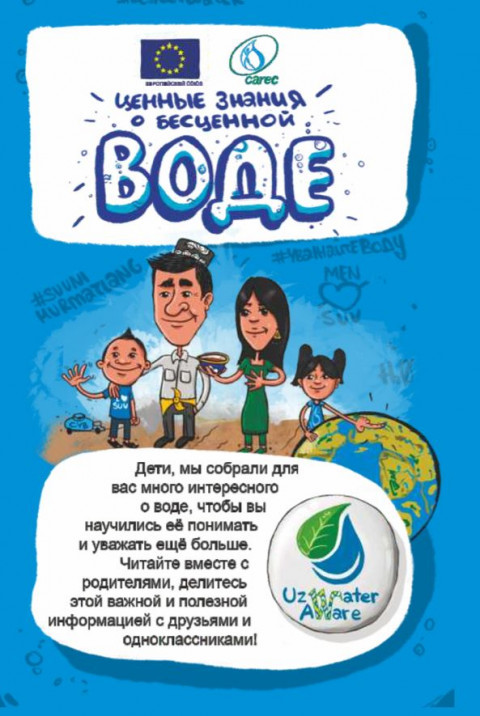 Valuable Knowledge on Invaluable Water 발행 연도: 2020 단체 저자: Regional Environmental Centre for Central Asia (CAREC) UzWaterAware Water Awareness Children's Learning Book “Valuable knowledge about invaluable water” is an illustrated children's collection on the respectful and respectful attitude to water resources, prepared as part of the UzWaterAware project. The project is implemented by CAREC with financial support from the European Union. National partner: Ministry of Water Resources of the Republic of Uzbekistan.The publication was prepared in the framework of the project’s cooperation with the only children’s eco-magazine “Rodnichok” (Uzbek. “Buloqcha”) of the Ecological Movement of Uzbekistan in Uzbekistan.The book, in a language accessible to children and in a fascinating, colorful format, provides information on the world’s water reserves, the main waterways of Uzbekistan, tells what “virtual water” is, water-saving technologies, and also provides many interesting facts, experiments with water, riddles, crosswords, etc. Ценные знания о бесценной воде 발행 연도: 2020 단체 저자: Regional Environmental Centre for Central Asia (CAREC) Детская познавательная книжка проекта UzWaterAware по водной осведомленности «Ценные знания о бесценной воде» - это иллюстрированный детский сборник о бережном и уважительном отношении к водным ресурсам, подготовленный в рамках проекта UzWaterAware. Проект реализуется РЭЦЦА при финансовой поддержке Европейского Союза. Национальный партнер: Министерство водного хозяйства РУ.Издание подготовлено в рамках сотрудничества проекта с единственным в Узбекистане детским эко-журналом «Родничок» (узб. «Buloqcha») Экологического движения Узбекистана.В книжке на доступном для детей языке и в увлекательном, красочном формате представлена информация о мировых запасах воды, основных водных артериях Узбекистана, рассказывается, что такое «виртуальная вода», водосберегающие технологии, а также приводится множество интересных фактов, опытов с водой, загадок, кроссвордов и т.д.
  Resolution 2178 (2014) Adopted by the Security Council at Its 7272nd Meeting, on 24 September 2014 발행 연도: 2014 단체 저자: United Nations Security Council Cette résolution a élargi le cadre de lutte contre le terrorisme en imposant des obligations aux États membres pour répondre à la menace des combattants terroristes étrangers. Grâce à la Résolution, le Conseil a condamné l'extrémisme violent et a décidé que les États Membres, conformément au droit international, empêcher le "recrutement, l'organisation, le transport ou l'équipement des personnes qui voyagent à un État autre que leur État de résidence ou de nationalité aux fins de le preperation, la planification de la, de la participation à des actes terroristes". Se déclarant préoccupée par la création de réseaux terroristes internationaux, le Conseil a souligné la «nécessité particulière et urgente" pour empêcher le Voyage et soutien aux combattants terroristes étrangers associés à l'État Islamique en Irak et au Levant (EIIL), Al-Nusra Avant (ANL) et d'autres sociétés affiliées ou des groupes dissidents d'Al-Qaida. Dans ce contexte, le Conseil, par la résolution, a décidé que tous les États doivent veiller à ce que leurs systèmes juridiques prévoient la poursuite, comme des infractions pénales graves, de Voyage pour le terrorisme ou la formation connexe, ainsi que le financement ou la facilitation de ces activités. États membres, il a également décidé, empêcher l'entrée ou le transit sur leur territoire de toute personne au sujet de laquelle cet état avait des informations crédibles de leurs intentions liées au terrorisme, sans préjudice de transit nécessaires à la poursuite des procédures judiciaires. Il a appelé les États à exiger des compagnies aériennes de fournir des listes de passagers à cette fin. Décrivant de nouvelles mesures de coopération internationale pour lutter contre le terrorisme international et d'empêcher la croissance de l'extrémisme violent, il est déclaré prêt à désigner des personnes supplémentaires pour des sanctions listes, et dirigé les organes subsidiaires lutte contre le terrorisme de l’ONU de consacrer une attention particulière aux combattants terroristes étrangers, l'évaluation de la menace qu'ils représentaient et les rapports sur les principales lacunes dans les capacités des États membres à supprimer leur voyage. 2014년 9월 24일, 제 7272차 회의에서 유엔 안전 보장 이사회에 의해 채택된 결의안 2178 (2014) 발행 연도: 2014 단체 저자: United Nations Security Council 이 결의안은 회원국들이 외국 테러리스트 전사들의 위협에 대응할 의무를 부과함으로써 대테러 프레임워크를 확대시켰다. 이 결의안을 통해 이사회는 폭력적 극단주의를 유죄로 선포하고, 회원국이 국제법에 따라 “테러리스트 활동에 참여, 준비, 계획할 목적으로 출생 또는 거주국 이외의 다른 국가로 여행하는 개인의 모집, 조직, 운송 또는 관련 장비 설치”를 금지할 것을 결정하였다. 국제 테러리스트 네트워크 구축에 대한 우려를 표명한 이사회는 이슬람 국가와 레반트(ISIL), 알 누스라 프론트(ANL) 및 알 – 카에다(Al-Qaida)의 분파 또는 연계 단체로의 외국 테러리스트 전사의 여행과 지원을 방지하기 위한 "특별하고 긴급한 필요성”을 강조했다. 이와 같은 맥락에서 이사회는 본 결의안을 통해, 모든 국가는 테러를 위한 여행 또는 테러 훈련, 테러 활동을 위한 자금 조달 혹은 자금 조장을 심각한 범죄행위로 규정하여 기소를 하도록 결정했다. 또한 회원국은 사법절차 발전에 필요한 체계를 침해함 없이, 테러리스트와 관련된 그 어떤 정보와 의도에 대해 신뢰할만한 정보를 가지고 있는 개인에 대해서는 그들이 자국 영토로 출입하는 것을 막아야 한다. 이 결의안은 회원국들이 항공사에게 승객 명부를 제공하도록 요구했다. 또한 국제 테러에 대응하기 위한 국제 협력 방안을 마련하고, 폭력적 극단주의의 성장을 막기 위해 추가 제제 대상을 지정하고, 유엔 대테러 보조 기구가 해외 테러 전사들에게 특별한 관심을 기울이도록 촉구하며, 그들이 제기한 위협을 평가하고, 회원국들의 여행 억제 능력의 주요 격차에 대해서도 보고한다. Resolution 2178 (2014) Adopted by the Security Council at Its 7272nd Meeting, on 24 September 2014 발행 연도: 2014 단체 저자: United Nations Security Council This resolution expanded the counter-terrorism framework by imposing obligations on member states to respond to the threat of foreign terrorist fighters. Through the resolution, the Council condemned violent extremism and decided that Member States shall, consistent with international law, prevent the "recruiting, organizing, transporting or equipping of individuals who travel to a State other than their States of residence or nationality for the purpose of the preperation, planning of, of participation in terrorist acts." Expressing concern over the establishment of international terrorist networks, the Council underscored the "particular and urgent need" to prevent the travel and support for foreign terrorist fighters associated with the Islamic State and the Levant (ISIL), Al-Nusra Front (ANL) and other affiliates or splinter groups of Al-Qaida. In that context, the Council, through the resolution, decided that all States shall ensure that their legal systems provide for the prosecution, as serious criminal offences, of travel for terrorism or related training, as well as the financing or facilitation of such activities. Member States, it also decided, shall prevent entry or transit through their territories of any individual about whom that state had credible information of their terrorist-related intentions, without prejudice to transit necessary for the furtherance of judicial processes. It called on States to require airlines to provide passenger lists for that purpose. Outlining further measures for international cooperation to counter international terrorism and prevent the growth of violent extremism, it expressed readiness to designate additional individuals for sanctions listings, and directed the United Nations counter-terrorism subsidiary bodies to devote special focus to foreign terrorist fighters, assessing the threat they posed and reporting on principal gaps in Member States' abilities to suppress their travel.