
자료
세계시민교육에 대한 이해를 넓히고 연구, 옹호 활동, 교수, 학습 등을 향상시킬 수 있는 다양하고 유용한 자료를 찾아보세요.
875 건의 결과가 검색되었습니다
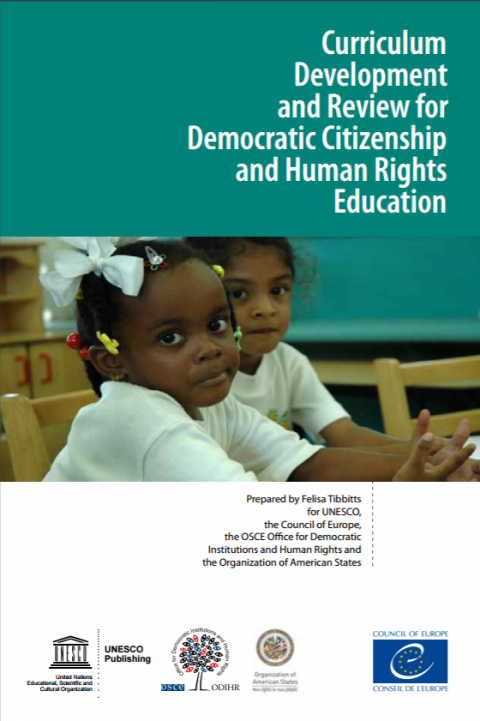 Élaboration et révision des programmes d'enseignement pour l'éducation à la citoyenneté démocratique et aux droits de l'homme 발행 연도: 2016 단체 저자: UNESCO | Conseil de l'Europe | Organization of American States (OAS) | OSCE. Office for Democratic Institutions and Human Rights (ODIHR) Education for democratic citizenship and human rights education are vital for peaceful, sustainable and inclusive societies based on respect for the human rights of every person. Effective teaching and learning processes require well-trained teachers, positive learning environments and high-quality learning materials. This is underpinned by education policy, including curriculum development and review, which is the main focus of this book. The strengthening of education policies in the fields of education for democratic citizenship and human rights lies at the very heart of the efforts of the Council of Europe, the United Nations Educational, Scientific and Cultural Organization, the Office for Democratic Institutions and Human Rights of the Organization for Security and Co-operation in Europe, and the Organization of American States. These organisations have jointly produced this publication in order to support states’ commitment to fostering citizenship and human rights education and improving access to quality education for all. Разработка и пересмотр учебных программ по воспитанию демократической гражданственности и образованию в области прав человека 발행 연도: 2016 단체 저자: UNESCO | Council of Europe | Organization of American States (OAS) | OSCE. Office for Democratic Institutions and Human Rights (ODIHR) Education for democratic citizenship and human rights education are vital for peaceful, sustainable and inclusive societies based on respect for the human rights of every person. Effective teaching and learning processes require well-trained teachers, positive learning environments and high-quality learning materials. This is underpinned by education policy, including curriculum development and review, which is the main focus of this book. The strengthening of education policies in the fields of education for democratic citizenship and human rights lies at the very heart of the efforts of the Council of Europe, the United Nations Educational, Scientific and Cultural Organization, the Office for Democratic Institutions and Human Rights of the Organization for Security and Co-operation in Europe, and the Organization of American States. These organisations have jointly produced this publication in order to support states’ commitment to fostering citizenship and human rights education and improving access to quality education for all.
 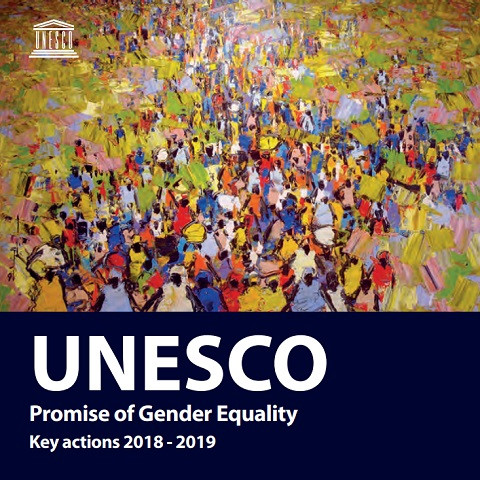 UNESCO: Promise of Gender Equality; Key Actions of 2018 and 2019 발행 연도: 2020 단체 저자: UNESCO This is the first UNESCO Annual Report on Gender Equality that highlights the key initiatives implemented in 2018-2019. The advancement of gender equality through education, the sciences, culture, information and communication, at the heart of UNESCO’s mandate, aims to equip both women and men to address the challenges of sustainable development in a fast-changing world. UNESCO: La Promesse de l’Egalité des genres; Actions clés de 2018 - 2019 발행 연도: 2020 단체 저자: UNESCO Ceci est le premier rapport annuel de l’UNESCO sur l’égalité des genres qui met en lumière quelques-unes des initiatives clés mises en place en 2018 - 2019. Les progrès en matière d’égalité des genres par l’éducation, les sciences, la culture, l’information et la communication, au cœur des activités de l’UNESCO, visent à donner aux femmes et aux hommes les moyens de relever les défis du développement durable dans un monde en perpétuelle mutation.
  Education for sustainable development; good practices in addressing biodiversity 발행 연도: 2012 단체 저자: UNESCO To support the growing interest in biodiversity issues and ESD, UNESCO is publishing this volume containing 24 examples of programmes addressing biodiversity in ESD settings and practices. These good practices and shared experiences, which were provided by a range of different stakeholders, are concrete examples of successful implementation of ESD in different fields and sectors, from the political to the school level, and including formal, non-formal and informal learning situations. Escuelas asociadas de la UNESCO news infos: educación sobre el cambio climático 발행 연도: 2009 단체 저자: UNESCO As the United Nations Climate Change Conference takes place on December 7 to 18 2009 in Copenhagen, Denmark, this special issue will focus on selected climate change education activities carried out by the ASP network around the globe. Climate change is one of the most urgent challenges of sustainable development and a key action theme in the UN Decade of Education for Sustainable Development (DESD). ASPnet schools around the world work on Climate Change Education in order to enable students to make informed and responsible decisions, turn passive awareness into behaviour change and make sustainable behaviours a daily habit. The development of good practices and innovative educational materials in climate change education is a key element in ASPnet’s strategy to meet the pressing educational needs of the future generation. This newsletter highlights only a few of the large number of activities of ASPnet worldwide. Ecoles associées de l'UNESCO news infos: l'éducation au changement climatique 발행 연도: 2009 단체 저자: UNESCO As the United Nations Climate Change Conference takes place on December 7 to 18 2009 in Copenhagen, Denmark, this special issue will focus on selected climate change education activities carried out by the ASP network around the globe. Climate change is one of the most urgent challenges of sustainable development and a key action theme in the UN Decade of Education for Sustainable Development (DESD). ASPnet schools around the world work on Climate Change Education in order to enable students to make informed and responsible decisions, turn passive awareness into behaviour change and make sustainable behaviours a daily habit. The development of good practices and innovative educational materials in climate change education is a key element in ASPnet’s strategy to meet the pressing educational needs of the future generation. This newsletter highlights only a few of the large number of activities of ASPnet worldwide. UNESCO associated schools news infos: climate change education 발행 연도: 2009 단체 저자: UNESCO As the United Nations Climate Change Conference takes place on December 7 to 18 2009 in Copenhagen, Denmark, this special issue will focus on selected climate change education activities carried out by the ASP network around the globe. Climate change is one of the most urgent challenges of sustainable development and a key action theme in the UN Decade of Education for Sustainable Development (DESD). ASPnet schools around the world work on Climate Change Education in order to enable students to make informed and responsible decisions, turn passive awareness into behaviour change and make sustainable behaviours a daily habit. The development of good practices and innovative educational materials in climate change education is a key element in ASPnet’s strategy to meet the pressing educational needs of the future generation. This newsletter highlights only a few of the large number of activities of ASPnet worldwide. Climate change education for sustainable development in small island developing states: report and recommendations 발행 연도: 2012 단체 저자: UNESCO This report summarizes the key outcomes of a three-day meeting of around one hundred climate change education (CCE) experts, primarily from Small Island Developing States (SIDS) in the Caribbean, the Pacific Ocean and the Indian Ocean, representing a multi-disciplinary and diverse group of stakeholders. The meeting discussed and reflected on the challenges that climate change poses to education systems in SIDS, and on the role that education must play in adaptation to climate change. It was held from 21 to 23 September 2011 in Nassau, with the support of the Commonwealth of the Bahamas, the Government of Denmark and the Government of Japan. SIDS in the Caribbean Sea, the Indian Ocean and the Pacific Ocean are among the most vulnerable countries with regard to climate change. SIDS are already confronted with the effects of climate change, including rising sea levels and changes in weather and climate extremes such as droughts, floods and tropical cyclones/hurricanes. With current and future impacts of climate change representing a real danger to SIDS communities and livelihoods – whether based on agriculture, fisheries, forestry, tourism or trade – the need for SIDS to reduce their vulnerability to climate change by strengthening their adaptive capacity is a matter of urgency. Moving further along the path to sustainable development and achieving sustainable development objectives will depend on the ability of SIDS to strengthen this adaptive capacity. Adaptation to climate change requires individuals to be aware of potential changes in the climate and to understand the implications of changes for their lives. It requires them to assess the risks such changes hold for their identity and future, and to make informed decisions on how to adapt their livelihoods, homes and communities. Education plays an essential role in increasing the adaptative capacity of communities and nations by enabling individuals to make informed decisions. In particular, the education of girls and women has proven to have a significant impact on the capacity of communities to adapt to climate change and develop sustainably. Quality education designed for the purpose of empowering people to address climate change and live sustainably improves the adaptation capacity at the community level. This implies educational programmes that explicitly prepare communities for natural disasters. Climate change education for sustainable development (CCESD) needs also to incorporate indigenous knowledge, and promote sustainable lifestyles in which the importance of heritage is recognised as an integral part of community identity and a key asset that can help build resilience. Finally, CCESD should stress the unique cultural and natural heritage of SIDS, which plays a major role in the building of community resilience. Le changement climatique éducation pour le développement durable dans les petits États insulaires en développement: rapport et recommandations 발행 연도: 2012 단체 저자: UNESCO Ce rapport résume les principaux résultats d'une réunion de trois jours d'une centaine éducation au changement climatique (ECC) experts, principalement des petits États insulaires en développement (PEID) dans les Caraïbes, l'océan Pacifique et l'océan Indien, ce qui représente un multi-disciplinaire et divers groupes d'intervenants. La réunion a discuté et réfléchi sur les défis que le changement climatique fait peser sur les systèmes éducatifs dans les PEID, et sur le rôle que l'éducation doit jouer dans l'adaptation au changement climatique. Il a eu lieu du 21 au 23 Septembre 2011 à Nassau, avec le soutien du Commonwealth des Bahamas, le gouvernement du Danemark et le Gouvernement du Japon. PEID dans la mer des Caraïbes, l'océan Indien et l'océan Pacifique sont parmi les pays les plus vulnérables en ce qui concerne le changement climatique. PEID sont déjà confrontés aux effets du changement climatique, y compris l'élévation du niveau de la mer et les changements météorologiques et climatiques extrêmes tels que les sécheresses, les inondations et les cyclones tropicaux / ouragans. Avec les impacts actuels et futurs des changements climatiques représentent un réel danger pour les communautés des PEID et des moyens de subsistance - qu'elle soit fondée sur l'agriculture, la pêche, la sylviculture, le tourisme ou le commerce - la nécessité pour les PEID afin de réduire leur vulnérabilité aux changements climatiques en renforçant leur capacité d'adaptation est une question d'urgence. Aller plus loin le long de la voie du développement durable et la réalisation des objectifs de développement durable dépendra de la capacité des PEID à renforcer cette capacité d'adaptation.Adaptation au changement climatique oblige les particuliers à être conscients des changements potentiels du climat et de comprendre les implications des changements pour leur vie. Il les oblige à évaluer les risques que ces changements tiennent pour leur identité et leur avenir, et de prendre des décisions éclairées sur la façon d'adapter leurs moyens de subsistance, les foyers et les communautés. L'éducation joue un rôle essentiel dans l'augmentation de la capacité d'adaptation des communautés et des nations en permettant aux individus de prendre des décisions éclairées. En particulier, l'éducation des filles et des femmes a prouvé avoir un impact significatif sur la capacité des communautés d'adaptation aux changements climatiques et à développer de manière durable. L'éducation de qualité conçu dans le but de permettre aux gens de faire face aux changements climatiques et à vivre de manière durable améliore la capacité d'adaptation au niveau communautaire. Cela implique des programmes éducatifs qui préparent explicitement les communautés aux catastrophes naturelles. Le changement climatique d’éducation pour le développement durable (CCEDD) doit également intégrer les connaissances autochtones, et de promouvoir des modes de vie durables dans laquelle l'importance du patrimoine est reconnue comme faisant partie intégrante de l'identité communautaire et un atout majeur qui peut aider à renforcer la résilience. Enfin, CECDD devrait insister sur le patrimoine culturel et naturel unique des PEID, qui joue un rôle majeur dans la construction de la résilience des communautés.