
자료
세계시민교육에 대한 이해를 넓히고 연구, 옹호 활동, 교수, 학습 등을 향상시킬 수 있는 다양하고 유용한 자료를 찾아보세요.
1,322 건의 결과가 검색되었습니다
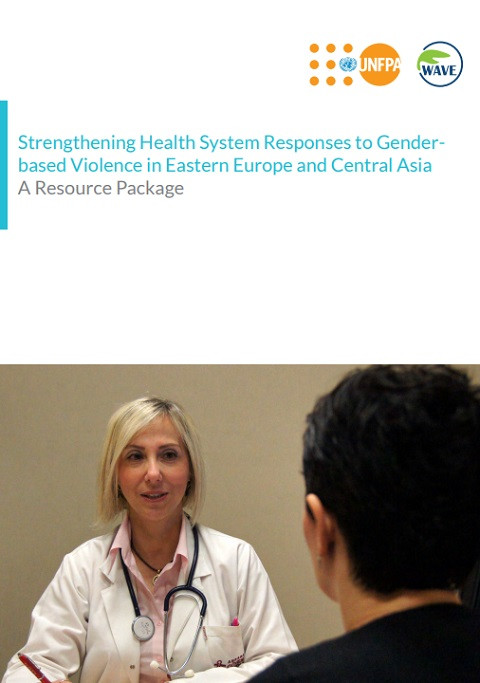 Усиление роли системы здравоохранения в реагировании на гендерное насилие в Восточной Европе и Центральной Азии: Сборник материалов. 발행 연도: 2014 단체 저자: United Nations Population Fund (UNFPA) | Women Against Violence Europe (WAVE) Данный сборник материалов является результатом сотрудничества ЮНФПА (Фонд ООН в области народонаселения), Регионального офиса Фонда ООН в области народонаселения для стран Восточной Европы и Центральной Азии и Сети WAVE («Женщины против насилия в Европе») и является обновленной редакцией сборник, переработанной в 2013-2014 гг. Теперь он в большей степени отвечает современным требованиям с точки зрения усиления реагирования системы здравоохранения на ГН, а его содержание обновлено с учетом новейших международных наработок.
 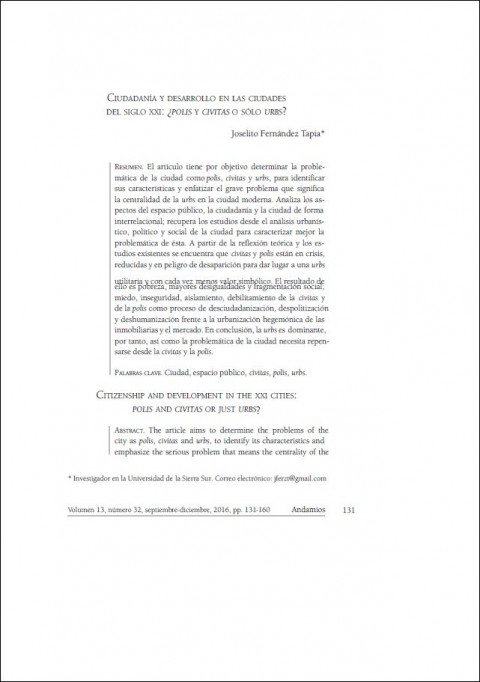 Citizenship and Development in the XXI Cities: Polis and Civitas or Just Urbs? 발행 연도: 2016 저자: Joselito Fernández Tapia The article aims to determine the problems of the city as polis, civitas and urbs, to identify its characteristics and emphasize the serious problem that means the centrality of the urbs in the modern city. It analyzes aspects of public space, citizenship and city, as interrelated, recovering from urban studies, political and social analysis of the city, to better characterize their problems. From the literature and existing studies we found that civitas and polisare in crisis, and reduced danger of disappearing, to result in a urbs, utilitarian and less and less symbolic value. The result is poverty, greater inequality and social fragmentation, fear, insecurity, isolation, weakening of the civitas and polis, disenfranchisement, depoliticization and dehumanization; against the hegemonic and development of real estate market. It is concluded that dominates the urbs, which, as all the problems of the city needs to be rethought from the civitas and polis. Ciudadanía y desarrollo en las ciudades del siglo XXI: ¿polis y civitas o sólo urbs? 발행 연도: 2016 저자: Joselito Fernández Tapia El artículo tiene por objetivo determinar la problemática de la ciudad como polis, civitas y urbs, para identificar sus características y enfatizar el grave problema que significa la centralidad de la urbs en la ciudad moderna. Analiza los aspectos del espacio público, la ciudadanía y la ciudad de forma interrelacional; recupera los estudios desde el análisis urbanístico, político y social de la ciudad para caracterizar mejor la problemática de ésta. A partir de la reflexión teórica y los estudios existentes se encuentra que civitas y polis están en crisis, reducidas y en peligro de desaparición para dar lugar a una urbs utilitaria y con cada vez menos valor simbólico. El resultado de ello es pobreza, mayores desigualdades y fragmentación social; miedo, inseguridad, aislamiento, debilitamiento de la civitas y de la polis como proceso de desciudadanización, despolitización y deshumanización frente a la urbanización hegemónica de las inmobiliarias y el mercado. En conclusión, la urbs es dominante, por tanto, así como la problemática de la ciudad necesita repensarse desde la civitas y la polis.
 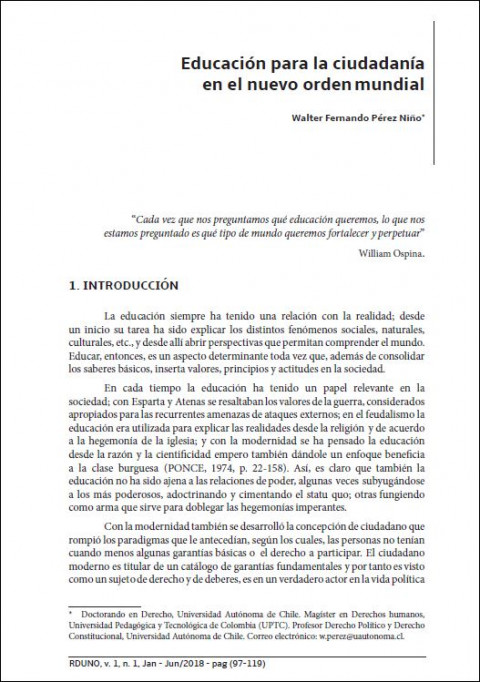 Education for Citizenship in the New Global Order 발행 연도: 2018 저자: Walter Fernando Pérez Niño This article analyzes the concept of citizenship from a historical perspective and confronting it with an analysis of the different hegemonies that have tried to impose a global order and the consequences of applying policies that obey to this order. After this, it revises the right of receiving an education bearing in mind the new global realities; and, finally, it centers the study in the different problems education is facing as a consquence of the world order and proposes a perspective to follow. Educación para la ciudadanía en el nuevo orden mundial 발행 연도: 2018 저자: Walter Fernando Pérez Niño En el siguiente trabajo se analiza la concepción de ciudadanía abordándola de manera histórica y confrontándola con un análisis de las diferentes hegemonías que han tratado de imponer un orden global y las consecuencia de la aplicación de políticas en obediencia a dicho orden. Luego de ello, revisa el derecho a la educación teniendo en cuenta las nuevas realidades globales para, finalmente, centrar el estudio en las diferentes problemáticas que afronta la educación como consecuencia del orden mundial y proponer un enfoque sobre el cual debería guiarse.
 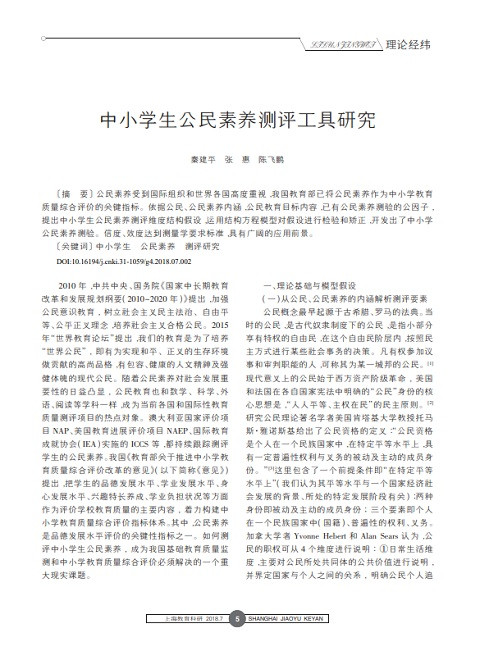 中小学生公民素养测评工具研究 (上海教育科研; No. 7) 발행 연도: 2018 저자: Qin Jianping | Zhanf Hui | Chen Feipeng 단체 저자: General Education Research Institute | Shanghai Academy of Educational Sciences 公民素养受到国际组织和世界各国高度重视,我国教育部已将公民素养作为中小学教育 质量综合评价的关键指标。依据公民、公民素养内涵,公民教育目标内容,已有公民素养测验的公因子, 提出中小学生公民素养测评维度结构假设,运用结构方程模型对假设进行检验和矫正,开发出了中小学 公民素养测验。信度、效度达到测量学要求标准,具有广阔的应用前景。
  코로나19와 교육: 교사전문성에 주는 시사점 발행 연도: 2020 저자: 조윤정 | 박휴용 단체 저자: 경기도교육연구원 코로나19는 우리 삶의 양태를 근본적으로 변화시키는 전환점이 되면서 교육적 위기와 사회적 위기를 빚어내고 있음. 교육에 있어서는 배움의 지체와 교육격차 현상이 심화되고 있으며, 코로나로 인해 자연과 자본 간 모순과 성장의 한계를 인식하게 되면서 생태의 중요성에 대해 눈을 뜨게 되었다. 또한 개인주의나 혐오와 차별이 횡행하고 국수주의로 회귀하는 현상이 나타나면서 인류는 고립과 연대 사이의 갈림길에 서 있다.코로나19는 우리가 당연시하였던 가치와 생활양식에 대해 성찰하는 계기로 작용하면서 우리에게 3가지 질문을 던져주고 있다. 첫째, 우리가 바라는 교육의 모습은 무엇인가? 둘째, 인간을 둘러싼 자연과 환경, 생태계와 어떻게 관계를 맺을 것인가? 셋째, 우리는 온라인 세상과 오프라인 세상에서 어떤 시민으로 살아가야 할 것인가?이 연구에서는 이상의 3가지 질문을 중심으로 포스트코로나 시대 학교교육의 방향과 교사전문성에 대해 고찰하였다. 첫째 우리가 바라는 교육의 모습은 배움과 성장의 지속성 확보이며, 이를 위해서 학습자 주도성을 살리는 교육, 학습동기를 높이고 상호작용과 소통을 강화하는 교육, 협력을 촉진하는 교육, 기초학력을 강화하고 교육격차를 완화하는 교육을 실천해야 한다. 둘째, 인간을 둘러싼 자연과 환경, 생태계와 어떻게 관계를 맺을 것인가?에 대해서는 생태적 전환을 실천하는 교육을 통해 인간과 생태계, 즉 모든 존재가 상호 창조하는 관계가 되어야 한다. 이를 위해서 교육자체가 생태적 전환이 되어야 하며, 학교를 생태적 전환의 리빙랩으로 전환하여야 하고, 지역사회를 순환경제로 전환하여야 하며 학교가 전환의 구심점이 되어야 한다. 셋째, 온라인 세상과 오프라인 세상에서 디지털 시민과 세계시민으로 살아가야 하며 이를 위해서 디지털 미디어 리터러시와 디지털 시민성을 키우는 교육, 범주 확장 교육, 글로벌 연대와 협력을 지향하는 세계시민교육을 실천해야 할 것이다.
  BRIGHTS Course Curriculum 발행 연도: 2017 저자: Federica Funghi | Francesca Vannucchi 단체 저자: Brights Project | European Union (EU) | European Commission This document presents the organization of the course to be delivered in the framework of the BRIGHTS project by specifying its diverse phases, the objectives and the learning outcomes, the kind of contents to be issued and how the participants (Teachers and Trainers working with youth) will be involved. Research on Civic Literacy Assessment Tools for Primary and Middle School Students (Journal of Shanghai Educational Research; No. 7) 발행 연도: 2018 저자: Qin Jianping | Zhanf Hui | Chen Feipeng 단체 저자: General Education Research Institute | Shanghai Academy of Educational Sciences Civic literacy is highly valued by international organizations and countries all over the world. China’s Ministry of Education has taken civic literacy as a key indicator for the comprehensive evaluation of the quality of primary and secondary education. Based on citizen, civic literacy connotation, civic education objective content, and common factors of civic literacy test, the dimensional structure hypothesis of civic literacy assessment for primary and middle school students was proposed, and the hypothesis was tested and corrected by using structural equation model, and the civic literacy test for primary and middle school students was developed. The reliability and validity meet the requirements of measurement and have a broad application prospect.
 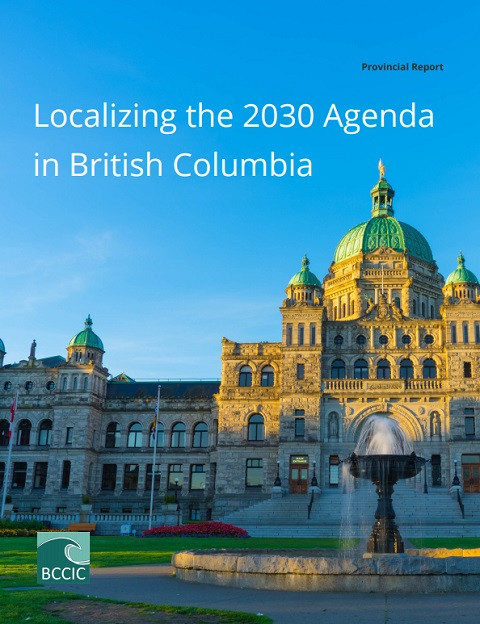 Localizing the 2030 Agenda in British Columbia 발행 연도: 2020 저자: Zosa De Sas Kropiwnicki-Gruber | Dan Harris 단체 저자: British Columbia Council for International Cooperation (BCCIC) This report details a British Columbian civil society response to the Government of Canada’s current interim national Sustainable Development Goals strategy. The report provides feedback on the interim strategy and Canada’s engagement with the United Nations Sustainable Development Goals (SDGs) including recommendations linked to the interim strategy’s key actions. At this time it represents the only provincial scale civil society consultation on the strategy in Canada. The report begins by introducing the origin of the interim national SDG strategy and the rationale for holding the consultation. While the following section on “What we heard” captures common themes on how to improve the strategy and Canada’s engagement with the SDGs, the report then concludes with recommendations synthesized from these suggestions on the ways in which we can strengthen and enact the interim national SDG strategy.