
자료
세계시민교육에 대한 이해를 넓히고 연구, 옹호 활동, 교수, 학습 등을 향상시킬 수 있는 다양하고 유용한 자료를 찾아보세요.
91 건의 결과가 검색되었습니다
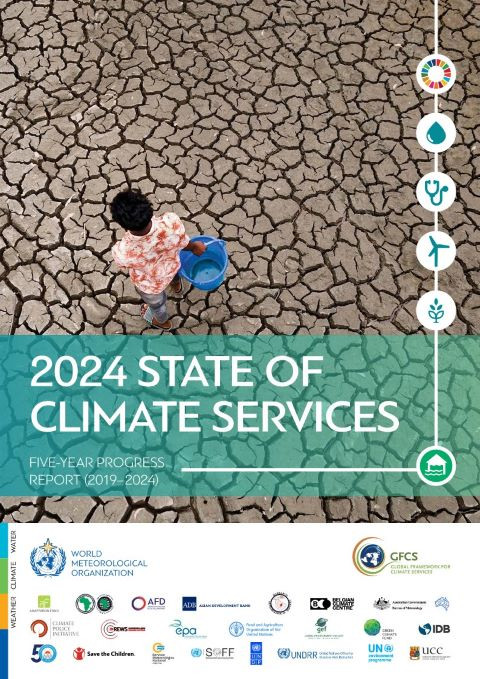 2024 State of Climate Services: Five-year Progress Report (2019–2024) 발행 연도: 2024 단체 저자: World Meteorological Organization (WMO) In 2018, the Conference of the Parties serving as the meeting of the Parties to the Paris Agreement at the 24th Conference of the Parties to the United Nations Framework Convention on Climate Change (UNFCCC) called on WMO, through its Global Framework for Climate Services (GFCS), to regularly report on the state of climate services. WMO has issued annual reports on the state of climate services since 2019 in response to this United Nations request for more information on the adaptation needs of countries. The information helps countries, funding agencies and development partners to identify steps needed to address climate services gaps and needs, to inform more effective investment and to enhance adaptation and development outcomes. The 2024 edition of the report describes the current state of climate services while also examining and assessing the progress that has been made during the last five years. The report explores the climate policy response to the climate challenge and advancements made by Members across numerous value chain components. This year’s edition also includes an in-depth look at how a selection of 13 countries have successfully leveraged climate services to deliver socioeconomic benefits at a national, regional or global level. The analysis draws on 113 case studies that were developed over the last five years across multiple sectors, and examines the key success factors, including showcasing the value being created by climate services. 2024기후서비스현황: 5년경과보고서 (2019–2024) 발행 연도: 2024 단체 저자: World Meteorological Organization (WMO) 2018년 유엔기후변화협약 (UNFCCC) 제24차 당사국 총회에서 파리협정 당사국 회의를 주재하는 총회 (COP)는 WMO가 기후서비스를 위한 글로벌 프레임워크 (GFCS)를 통해 기후 서비스 현황을 정기적으로 보고할 것을 촉구했습니다.WMO는 UNFCCC COP의 국가 적응 요구 사항에 대한 추가 정보 요청에 따라 2019년부터 기후 서비스 현황에 대한 연례 보고서를 발간했습니다.2 제공된 정보는 국가, 자금 기관 및 개발 파트너가 기후서비스 격차와 요구사항을 해결하는 데 필요한 단계를 식별하고, 보다 효과적인 투자를 알리고, 적응 및 개발 결과를 개선하는 데 도움이 됩니다. 2024년판 보고서는 기후 서비스의 현재 상태를 설명하는 동시에 지난 5년 동안 이루어진 진전을 조사하고 평가합니다. 이 보고서는 기후 문제에 대한 기후 정책 대응과 기후 서비스 가치 사슬 전반에 걸쳐 국가 기상 및 수문 서비스 (NMHSs)가 이룬 진전을 살펴봅니다. 올해의 에디션에는 13개국이 기후서비스를 성공적으로 사용하여 국가, 지역 또는 글로벌 수준에서 사회 경제적 혜택을 제공한 방법에 대한 심층적인 조사도 포함됩니다. 이 분석은 지난 5년 동안 여러 부문에 걸쳐 개발된 113개의 사례 연구를 기반으로 하며, 주요 지원 요소를 조사하고, 기후 서비스가 창출하는 가치를 보여줍니다.
 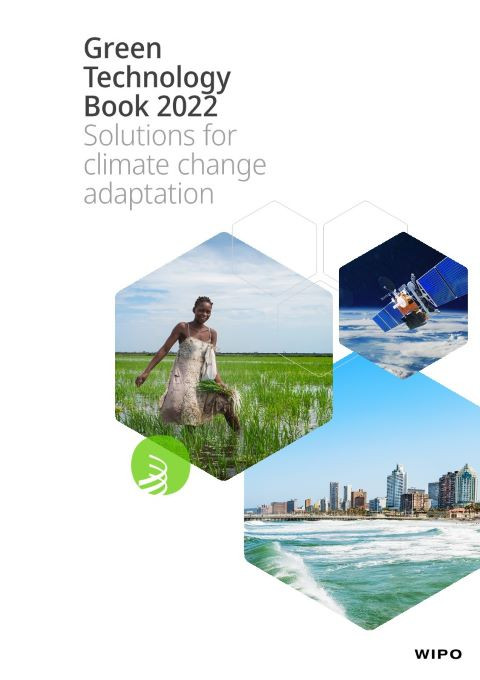 Green Technology Book 2022: Solutions for Climate Change Adaptation 발행 연도: 2022 단체 저자: World Intellectual Property Organization WIPO’s new Green Technology Book puts innovation, technology and intellectual property at the forefront in the fight against climate change. This inaugural edition focuses on available solutions for climate-change adaptation, which aim to reduce vulnerability and increase resilience to climate impacts. The Green Technology Book comes at a time when we are all experiencing the effects of climate change. It concentrates on three areas where climate impacts are important: agriculture and forestry, water and coastal regions, and cities. A practical guide for those struggling with climate change firsthand, the book showcases 200 solutions for climate-change adaptation that are readily available or in the making. The findings build on the WIPO GREEN Technology Database, which connects green technology providers from around the world with those seeking environmentally friendly solutions. The Green Technology Book is a source of encouragement and inspiration, demonstrating the diversity of solutions available and ready to be scaled up.1. Climate change adaptation and technology2. Innovation and transfer of solutions3. Agriculture and forestry4. Water and coastal regions5. Cities6. Conclusion and recommendations
 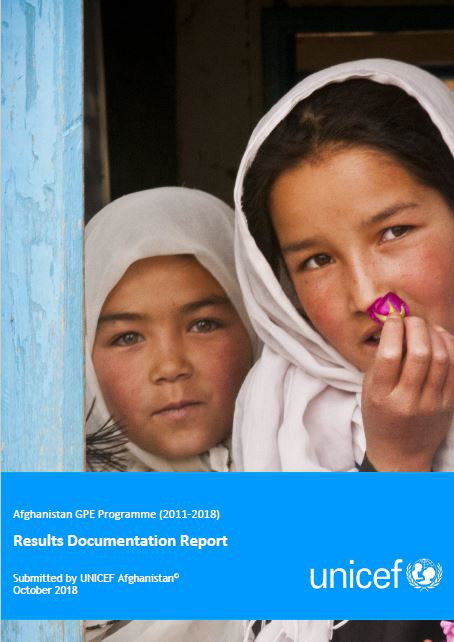 2018 grant completion report. Afghanistan 발행 연도: 2019 단체 저자: UNICEF Afghanistan This is the completion report of GPE’s program in Afghanistan, which ran from 2012 to 2018. Overall, it appears education access and equity has been improved in target districts, and some of these effects promise to persist beyond the program period.Community engagement in schooling has also improved, as well as school performance. Target schools have safer and more conducive learning environments for children, and monitoring of education pathways has also improved.Schools have been reopened, and numbers of female teachers in target areas have grown. Finally, the Ministry of Education and national education sectors have seen advances in institutional capacity, and national aid coordination mechanisms also seem to have improved.
 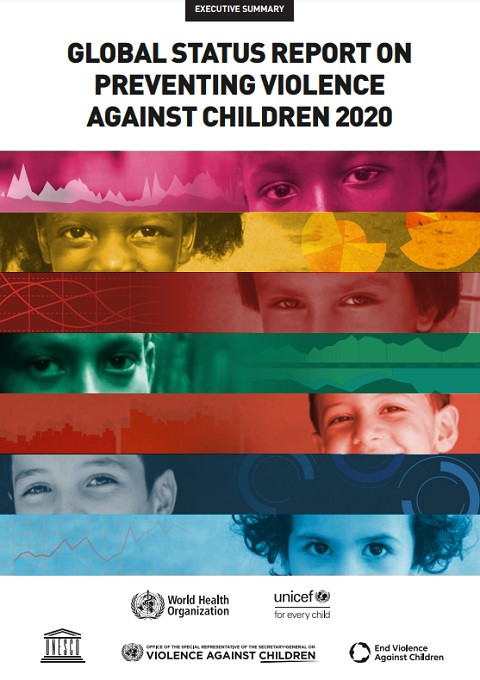 Global Status Report on Preventing Violence Against Children 2020: Executive Summary 발행 연도: 2020 단체 저자: World Health Organization (WHO) The Global status report on preventing violence against children 2020 charts countries’ progress towards the SDGs aimed at ending violence against children. Jointly published by WHO, UNICEF, UNESCO, the UN Secretary-General’s Special Representative on Violence against Children, and the Global Partnership to End Violence against Children, it collates inputs from over 1000 decision-makers in 155 countries who assessed their violence prevention status against the evidence-based approaches set out in INSPIRE: Seven strategies for ending violence against children. The report shows that while many of the participating countries are taking some action, government officials from these same countries acknowledge that their efforts are clearly insufficient to achieve the SDG targets. The report concludes with recommendations for boosting INSPIRE implementation efforts and accelerating national progress.
  Sharing Malaysian experience in participation of girls in STEM education 발행 연도: 2016 단체 저자: UNESCO International Bureau of Education (IBE) The Malaysia government has placed STEM as a focus in developing the country towards achieving the status of a developed nation. The government acknowledges the role of women as equal partners in nation building. Thus, various policies ranging from economy, education, women’s welfare and human resources have been formulated through the years. These policies have resulted in among others, the increase in women researchers from 35.8% in 2004 to 49.9% in 2012 as well as more women’s participation in selected STEM courses at the tertiary level. A total of 84 girls’ day schools with 6 of them as residential STEM Girls’ schools have been built since 1939. There are many female role models in STEM for the girls to emulate. This has been made possible by the successful implementation of the various policies related to women in STEM as well as innovative measures in facing the continuing challenges in STEM education.
  Ten Clues for Rethinking Curriculum (In-Progress Reflection; No. 42, 2021) 발행 연도: 2021 저자: Renato Opertti 단체 저자: UNESCO International Bureau of Education (IBE) This discussion document highlights the urgency of rethinking curriculum in light of reinforcing the commitments of the Education 2030 Agenda on learning, disruptive systemic worldwide societal changes, and crucially, the profound transformation of education and education systems post Covid-19. Curriculum is always at the core of giving effect to social aspirations and ideals on the why, what, how, when, and where of teaching, learning, and assessing. We propose a series of 10 interconnected clues to deepen on the systemic and holistic understanding of curriculum as contributing to lay foundations for a better, sustainable and fair future. These clues are: understanding the new generations; combatting factors related to vulnerability; reinforcing understanding between school and families; deepening glo-local education; enhancing the focus on the person; promoting synergies among values; valuing diversity; focusing on education that enhances freedom; moving toward hybrid modes of education; and inspiring affection for educators.
  Citizenship education in Latin America: priorities of school curricula (IBE working papers on curriculum issues no. 14) 발행 연도: 2014 저자: Cristián Cox | Martín Bascopé | Juan Carlos Castillo | Daniel Miranda | Macarena Bonhomme 단체 저자: UNESCO International Bureau of Education (IBE) This work focuses on the curricula of six Latin American countries – Colombia, Chile, the Dominican Republic, Guatemala, Mexico and Paraguay – which at the close of the past decade agreed to be part of the project Regional System of Evaluation and Development of Citizenship Competencies (SREDECC). With the support of the Inter-American Development Bank, SREDECC developed the Latin American module of the International Civic and Citizenship Study (ICCS- 2009) undertaken by the International Association for the Evaluation of Educational Achievement (IEA), in addition to encouraging the participation of the countries in that study (Cox 2010; Schulz, Ainley, Friedman and Lietz 2011).This document comprises four parts. The first section takes stock of the state of democratic belief in the region, drawing upon the most significant opinion studies of the past decade, so as to offer broader meaning bases for curriculum analysis and, more generally, for educational work in the field of citizenship. The second section describes the organizational (or structural) characteristics of the curricula of the six countries and presents a framework of categories for their comparative analysis. The subsequent section describes and analyses the contents of the six curricula examined and how they deal with the values, institutions and citizenship relations in their civic (political) and civil (coexistence) dimensions. On the basis of the most significant findings, the closing section includes some reflections regarding curriculum development with regard to citizenship. Éducation à la Citoyenneté en Amérique latine: les priorités de programmes scolaires(BIE papiers de travail sur les questions de curriculum no.14) 발행 연도: 2014 저자: Cristián Cox | Martín Bascopé | Juan Carlos Castillo | Daniel Miranda | Macarena Bonhomme 단체 저자: UNESCO International Bureau of Education (IBE) Ce travail se concentre sur les programmes de six pays d'Amérique latine - Colombie, le Chili, la République dominicaine, le Guatemala, le Mexique et le Paraguay - qui à la fin de la dernière décennie aCECpté de faire partie du projet de système régional d'évaluation et de développement des compétences citoyennes (SREDECC). Avec le soutien de la Banque interaméricaine de développement, SREDECC latino-américaine a développé le module de l'Étude internationale civique et la citoyenneté (ICCS- 2009) Pratiqué par l'Association internationale pour l'évaluation du rendement scolaire (AIE), en plus d'encourager la participation des clubs de pays dans cette étude (Cox 2010, Schulz, Ainley, Friedman et Lietz 2011). Ce document comprend quatre parties. La première section fait le point sur l'état de croyance démocratique dans la région, en tirant sur les études d'évaluation les plus importants de la dernière décennie, de manière à offrir la base de sens plus large pour l'analyse des programmes et, plus généralement, pour le travail éducatif dans le domaine de la citoyenneté . La deuxième section décrit les caractéristiques organisationnelles (ou structurelles) des programmes d'études des six clubs de pays et présente un cadre de catégories pour leur analyse comparative. La section suivante décrit le contenu et les analyses des six programmes examinés et comment ils traitent avec les valeurs, les institutions et les relations de citoyenneté dans leurs civiques (politiques) et civiles (coexistence) dimensions. Sur la base des conclusions les plus importantes, la section de fermeture comprend quelques réflexions concernant le développement de curriculum vitae à l'égard de la citoyenneté. Educación ciudadana en América Latina: prioridades de los currículos escolares (IBE working papers on curriculum issues no. 14) 발행 연도: 2014 저자: Cristián Cox | Martín Bascopé | Juan Carlos Castillo | Daniel Miranda | Macarena Bonhomme 단체 저자: UNESCO International Bureau of Education (IBE) This work focuses on the curricula of six Latin American countries – Colombia, Chile, the Dominican Republic, Guatemala, Mexico and Paraguay – which at the close of the past decade agreed to be part of the project Regional System of Evaluation and Development of Citizenship Competencies (SREDECC). With the support of the Inter-American Development Bank, SREDECC developed the Latin American module of the International Civic and Citizenship Study (ICCS- 2009) undertaken by the International Association for the Evaluation of Educational Achievement (IEA), in addition to encouraging the participation of the countries in that study (Cox 2010; Schulz, Ainley, Friedman and Lietz 2011).This document comprises four parts. The first section takes stock of the state of democratic belief in the region, drawing upon the most significant opinion studies of the past decade, so as to offer broader meaning bases for curriculum analysis and, more generally, for educational work in the field of citizenship. The second section describes the organizational (or structural) characteristics of the curricula of the six countries and presents a framework of categories for their comparative analysis. The subsequent section describes and analyses the contents of the six curricula examined and how they deal with the values, institutions and citizenship relations in their civic (political) and civil (coexistence) dimensions. On the basis of the most significant findings, the closing section includes some reflections regarding curriculum development with regard to citizenship.