
자료
세계시민교육에 대한 이해를 넓히고 연구, 옹호 활동, 교수, 학습 등을 향상시킬 수 있는 다양하고 유용한 자료를 찾아보세요.
3,401 건의 결과가 검색되었습니다
 《专题报道》安全议题中的女权主义视角和女性在和平建设中的作用 — 专访女权学者普里西尔.安克蒂尔 발행 연도: 2022 단체 저자: United Nations (UN) 本音频是对瑞典隆德大学的女权主义安全问题研究学者普里西尔.安克蒂尔的专访,主要讨论女权主义安全研究,即通过性别视角研究安全的各种形式及影响。
  The EU Education Initiative in Central Asia 발행 연도: 2010 저자: Peter Jones This report will examine: 1) the selective and limited experiences and expertise offered by the EU to its partners in Central Asia; 2) the content, processes, and relevance of the contents, processes, and the Education Initiative; 3) the balance achieved between regional and bilateral approaches; and 4) The validity of the EU's approach, taking into account the different needs Central Asian countries. Образовательная Инициатива ЕС в Центральной Азии 발행 연도: 2010 저자: Peter Jones Данный доклад рассмотрит: 1) выборочный и ограниченный опыт и знания, предложенные Евросоюзом его партнерам в Центральной Азии; 2) содержание, процессы и значимость Образовательной Инициативы; 3) равновесие, достигнутое между региональными и двусторонними подходами и 4) обоснованность подхода ЕС с учетом различных потребностей стран Центральной Азии.
  How to Understand the Educatee in Educational Development: Based on G. C. Spivak's Practice of “Subaltern” and Her Philosophy of Education (Modern Education Review; no. 6) 발행 연도: 2021 저자: Jiaqi Yu This article introduces Spivak's theoretical reflections on educational assistance and explores the ethical dilemmas in educational aid, based on the concept of the 'subaltern'. 斯皮瓦克的招待:教育援助中庶民的双重脆弱及其改写 (现代教育论丛; no. 6) 발행 연도: 2021 저자: Jiaqi Yu 该文围绕“庶民”的概念,介绍了斯皮瓦克对于教育援助的理论思考,并探讨教育援助中的道德困境。
  Citizenship Education and Youth Politicization in Quebec: Teacher Perspectives (vol. 46, no. 3) 발행 연도: 2020 저자: Alexandre Fortier-Chouinard 단체 저자: Université de Montréal. Faculté des sciences de l’éducation Civic education classes generally have a positive impact on political knowledge and citizen involvement. In Quebec, the mandatory History and citizenship education class, almost unstudied thus far, was recently replaced by a History of Quebec and Canada class in secondary 3 and 4. 14 interviewed History and citizenship education teachers in secondary 4 believe that these courses improve some indicators of students’ politicization but not necessarily future turnout, and that civic education takes too little space in the curriculum. An open classroom climate, which literature has found to have a positive impact on voting, seems to be absent from their teaching. Éducation à la citoyenneté et politisation des jeunes au Québec: Perspectives d’enseignant⋅e⋅s (vol. 46, no. 3) 발행 연도: 2020 저자: Alexandre Fortier-Chouinard 단체 저자: Université de Montréal. Faculté des sciences de l’éducation Les cours d’éducation citoyenne permettent généralement d’augmenter les connaissances politiques et l’engagement citoyen. Au Québec, le cours obligatoire Histoire et éducation à la citoyenneté, peu étudié jusqu’ici, a récemment été remplacé par le cours Histoire du Québec et du Canada s’adressant aux élèves de troisième et de quatrième secondaire. Quatorze enseignant⋅e⋅s d’histoire de quatrième secondaire interrogé⋅e⋅s croient que les deux cours augmentent certains indicateurs de politisation, sans grand impact sur le taux de vote, mais qu’ils n’accordent pas suffisamment de place à l’éducation citoyenne. En effet, leur enseignement semble dénué du climat de classe ouvert et des approches pédagogiques dont les écrits scientifiques ont montré l’effet positif sur la participation électorale des jeunes adultes.
 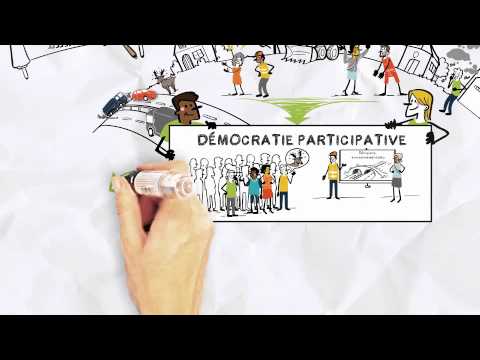 Why and How to Move Towards Participatory Democracy 발행 연도: 2015 단체 저자: Fondation pour la Nature et l'Homme Co-constructing tomorrow's solutions is the major challenge of participatory democracy. However, the participation of citizens in decisions is not always obvious and today many projects are contested in the territory. Solutions exist to involve citizens more directly in environmental decisions, discover these issues and solutions in 3 minutes! Pourquoi et comment aller vers une démocratie participative 발행 연도: 2015 단체 저자: Fondation pour la Nature et l'Homme Co-construire les solutions de demain, tel est l’enjeu majeur de la démocratie participative. Cependant, la participation des citoyens aux décisions n’est pas toujours évidente et aujourd’hui de nombreux projets sont contestés sur le territoire. Des solutions existent pour impliquer plus directement les citoyens dans les décisions environnementales, découvrez en 3 minutes ces enjeux et solutions !
  Anti-racist, Inclusive and Rights Education in the Development of Professional Competencies for School Staff and Student Abilities (Éthique en éducation et en formation; no. 3) 발행 연도: 2017 저자: Maryse Potvin 단체 저자: Université du Québec à Montréal (UQAM) This article examines the differences and convergences that emerge from the major theoretical trends in the area of education for ethnocultural (inter/multicultural, anti-racist/critical, civic, inclusive) diversity regarding the professional skills school personnel must acquire to achieve the major objectives of equity, effectiveness of rights, harmonious living and the development of students’ capabilities. The article is based on a review of the national and international literature, which aimed to identify the skills (knowledge, expertise, soft skills) that are essential for knowing how to act in the context of diversity and that, according to theoreticians, should be developed in all teacher training programs. These issues are discussed from a crosscutting perspective rather than from a disciplinary angle related to the Quebec curriculum (ethics and religious culture, history and education for citizenship). The article begins by providing some background on these trends in order to identify their common objectives and convergence toward an integrated and inclusive global approach. It then examines two objectives supported by all theoreticians in terms of the core professional skills needed by school personnel for developing students’ capabilities: 1) taking into account the realities, needs and rights of students, particularly those in minority or vulnerable groups, and 2) preparing students to live together in a pluralistic and democratic society. As well, it identifies the key challenges involved in the consideration and implementation of these two goals.