
자료
세계시민교육에 대한 이해를 넓히고 연구, 옹호 활동, 교수, 학습 등을 향상시킬 수 있는 다양하고 유용한 자료를 찾아보세요.
91 건의 결과가 검색되었습니다
 Measurement of global citizenship education 발행 연도: 2013 저자: Vegard Skirbekk | Michaela Potančoková | Marcin Stonawski 단체 저자: UNESCO In this study we provide an overview of Global Citizenship Education, focusing on definitions, methodological advances and data. We present an assessment of some of the existing initiatives for the measurement Global Citizenship Education, and make suggestions for how to move towards a globally consistent measure. Although there is some disagreement over how to measure global citizenship and global citizenship education, we also find consensus on parts of the concept. We are proposing to construct a composite indicator consisting of three complementary levels – the societal level (e.g., the level of democracy; macro level indicators of openness), the supplier level (e.g., provision of education; availability of training relevant for global citizenship); and the receiver level (civic identity, values, skills and knowledge). We conclude that one potential cost-effective approach could be to integrate evidence from several nationally representative surveys, providing us with world-wide coverage. We also discuss the feasibility and benefits of this measurement approach as well as its challenges. Measurement of global citizenship education 발행 연도: 2013 저자: Vegard Skirbekk | Michaela Potančoková | Marcin Stonawski 단체 저자: Organisation des Nations Unies pour l'éducation, la science et la culture (UNESCO) Dans cette étude, nous présentons un aperçu de l’Éducation à la Citoyenneté Mondiale, en se concentrant sur les définitions, les progrès méthodologiques et des données. Nous présentons une évaluation de quelques-unes des initiatives existantes pour la mesure d'éducation à la citoyenneté mondiale, et de faire des suggestions sur la façon de progresser vers une mesure cohérente au niveau mondial. Bien qu'il y ait un certain désaccord sur la façon de mesurer la citoyenneté mondiale et de l'éducation à la citoyenneté mondiale, on trouve aussi un consensus sur certaines parties du concept. Nous proposons de construire un indicateur composite constitué de trois niveaux complémentaires - le niveau de la société (par exemple, le niveau de la démocratie, les indicateurs macro-niveau d'ouverture), le niveau des fournisseurs (par exemple, la fourniture de l'éducation, la disponibilité de la formation pertinente à la citoyenneté mondiale) ; et le niveau du récepteur (identité civique, les valeurs, les compétences et les connaissances). Nous concluons qu'une approche potentielle rentable pourrait être d'intégrer des preuves de plusieurs enquêtes représentatives au niveau national, nous fournissant une couverture mondiale. Nous discutons aussi la faisabilité et les avantages de cette approche de mesures ainsi que ses défis.
 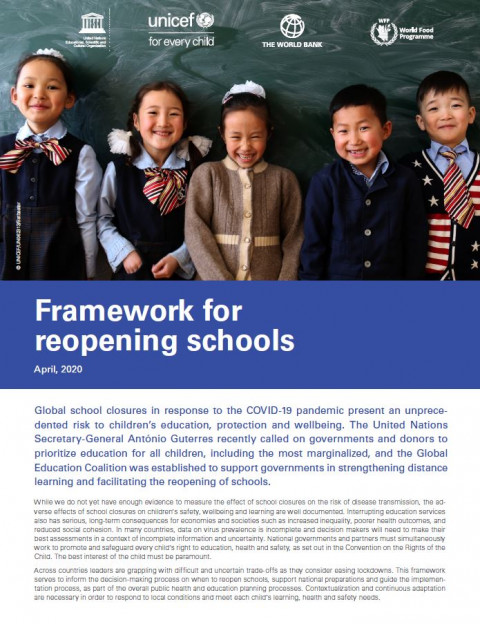 Framework for Reopening Schools; April, 2020 발행 연도: 2020 단체 저자: UNESCO | United Nations Children's Fund (UNICEF) | World Bank | World Food Programme By late April, nationwide school closures were still disrupting the learning of more than 73 per cent of students, or more than 1.2 billion children and youth. When deciding whether to reopen schools, authorities should look at the benefits and risks across education, public health and socio-economic factors, in the local context, using the best available evidence. The best interest of every child should be paramount.The guidelines aim to inform the decision-making process regarding school reopening, support national preparations and guide the implementation process, as part of overall public health and education planning processes. It is designed to be a flexible tool that can be adapted to each context and updated as the situation changes. The guidelines outline six key priorities to assess the readiness of those schools and inform planning.
  Q&A: Adolescents, Youth and COVID-19 발행 연도: 2020 단체 저자: World Health Organization (WHO) | UNESCO | United Nations Population Fund (UNFPA) | United Nations Children's Fund (UNICEF) As part of UNESCO’s work in promoting better health and well-being for all children and young people, it has contributed to the development of a practical guide in a ‘questions and answers’ (Q&A) format on children and adolescents and COVID-19. This work was led by the World Health Organization, in collaboration with the Adolescents and Youth Constituency of the Partnership for Maternal, Newborn and Child Health, UNESCO, UNFPA, and UNICEF.The Q&A provide children and adolescents with accurate, non-judgmental information and advice around COVID-19, including how to help stop the spread of the virus, what to do if they develop symptoms of the disease, and how to best manage their health and well-being during the confinement period and after. It considers children and young people as critical actors in the response to COVID-19, not as passive beneficiaries.
 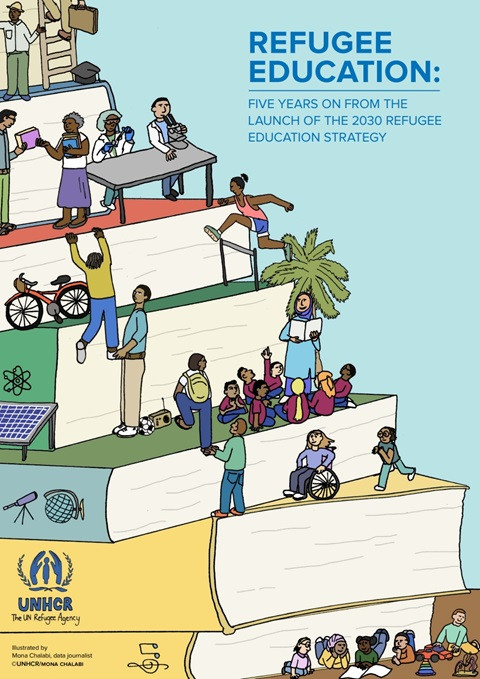 Refugee Education; Five Years on from the Launch of the 2030 Refugee Education Strategy 발행 연도: 2024 저자: Cirenia Chavez Villegas | Kate Bond 단체 저자: UN. Office of the United Nations High Commissioner for Refugees (UNHCR) The 2024 UNHCR Refugee Education Report draws on data from more than 65 countries worldwide to provide the most detailed picture yet of the state of refugee education and enrolment. The report reflects on the 2030 Refugee Education Strategy (launched in 2019) and where notable progress has been made as well as areas where greater investment and enhanced collaboration are needed to meet the strategic objectives of the Strategy.
 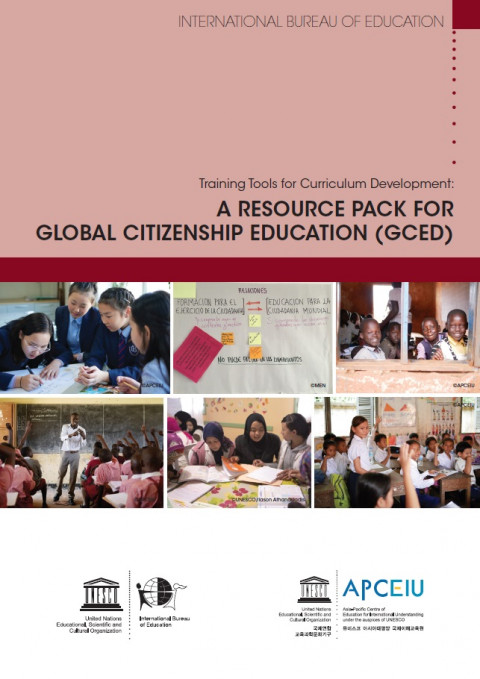 Training Tools for Curriculum Development: A Resource Pack for Global Citizenship Education (GCED) 발행 연도: 2018 단체 저자: UNESCO International Bureau of Education (IBE) | APCEIU The overarching objective of ‘A Resource Pack for Global Citizenship Education (GCED)’ is to share a broader understanding of GCED theory and practice, in order to support its effective development and implementation at the policy, school and classroom levels. The Resource Pack provides comprehensive guidance for national policymakers, curriculum specialists and developers, teacher educators, teachers, school leaders and district level administrators.The key topics covered are:Module 1: IntroductionModule 2: National PoliciesModule 3: CurriculumModule 4: Teaching, Learning and AssessmentModule 5: Teaching and Learning ResourcesModule 6: Whole School ApproachModule 7: Teacher Education and Professional Development
  Global Citizenship Concepts in the Curricula of Four Countries 발행 연도: 2017 저자: Natalie Browes 단체 저자: UNESCO International Bureau of Education (IBE) | APCEIU This report details the presence of Global Citizenship Education (GCED) concepts in the education systems of four countries: Cambodia, Colombia, Mongolia and Uganda. It highlights the main findings of eight reports: four expert reports, which predominately analyse curriculum content, and four situational analysis reports, which take a broader view and detail some of the country-specific challenges and opportunities with regard to GCED. Findings reveal the presence of GCED concepts across the curricula of the four countries. In addition to cognitive content related to GCED, competency-based content is also found present within the curricula of these countries. However, the majority of this content can only be indirectly linked to GCED, and it is better interpreted as part of the more traditional civics or citizenship education approach. As such, it generally lacks a global perspective and does not engage with all key themes of GCED. Furthermore, this content is often concentrated at the lower and upper secondary levels, instead of being equally distributed across all grade levels. This is particularly true in the case of behaviour-based competencies. Findings also reveal challenges beyond the curriculum. These include lack of teacher training and lack of support to implement GCED, which are concerns expressed by stakeholders in all four countries. A lack of GCED content in textbooks and lack of supplementary materials were also found to be issues. The report concludes with recommendations regarding the effective implementation of GCED within curricula. Among others, the report suggests the transversal integration of GCED - across the curriculum at all grade levels, while at the same time, actors from all levels of the education system, ranging from central government to teachers, should be engaged to ensure the use of complementary learning materials, pedagogies and assessment techniques. Herramientas para Desarrollo Curricular: Recursos para la Educación para la Ciudadanía Mundial (ECM) 발행 연도: 2018 단체 저자: UNESCO International Bureau of Education (IBE) | El Centro Asia Pacífico de Educación para el Entendimiento Internacional (APCEIU) El objetivo principal de “Recursos para la Educación para la Ciudadanía Mundial (ECM)” es el compartir una comprensión más profunda y amplia de la teoría y práctica de la ECM para poder propiciar su desarrollo efectivo e implementación a nivel de las políticas, escuelas y aulas. Los Recursos propician una guía comprensiva para los diseñadores de políticas nacionales, los especialistas y expertos en desarrollos de planes de estudios, formadores de maestros, educadores, líderes escolares y administradores a nivel de los distritos. Los principales temas abordados son:Módulo 1: IntroducciónMódulo 2: Políticas NacionalesMódulo 3: Diseño curricular Módulo 4: Enseñanza, aprendizaje y evaluaciónMódulo 5: Recursos para Enseñanza y AprendizajeMódulo 6: Enfoque Escolar IntegralMódulo 7: Formación de Maestros y Desarrollo Profesional
  World Programme for Human Rights Education, Fourth Phase: Plan of Action 발행 연도: 2022 단체 저자: Organización de las Naciones Unidas para la Educación, la Ciencia y la Cultura (UNESCO) | UN. Office of the Secretary-General’s Envoy on Youth | UN. Office of the United Nations High Commissioner for Human Rights (UN. OHCHR) Human rights education for youth, in both formal and non-formal settings, promotes a shared sense of humanity and fosters a common understanding that all human beings are equally deserving of dignity, respect and justice. It empowers youth to fulfil their role as active citizens, to take action and uphold their human rights and those of others, and to participate meaningfully in public affairs and democratic decision-making processes.In recognition of this, the United Nations Member States launched the fourth phase (2020–2024) of the World Programme for Human Rights Education to advance human rights education programming for youth at the national level. This focus also contributes to the achievement of the 2030 Agenda for Sustainable Development, particularly Goal 4 on Education and target 4.7, which touches upon the aims of education.
  The Digital Transformation of Education: Connecting Schools, Empowering Learners 발행 연도: 2020 저자: Ana Sepúlveda | Doreen Bogdan-Martin | Alex Wong | Chris Fabian | Borhene Chakroun | Anna Polomska | Samantha O’Riordan | Miguel Alcaine | Istvan Bozsoki | Vladimir Daigele | Jose Maria Diaz Batanero | Hani Eskandar | Aminata Amadou Garba | John Garrity | Farid Nakhli | Sylvia Poll Ahrens | Martin Schaaper | Christine Sund | Nancy Sundberg | Sandeep Taxali | Cleveland Thomas | Frank McCosker | James Lo | Fengchun Miao | Jaime Archundia | Janice Dean | Sophia Farrar | Sunita Grote | Aditi Poddar | Naroa Zurutuza | Nanjira Sambuli | Kavita Gupta 단체 저자: International Telecommunication Union (ITU) | UNESCO | United Nations Children's Fund (UNICEF) This report looks into school connectivity and introduces a methodology and framework for mapping and connecting primary and secondary schools to the Internet. It aims to help governments, their partners and interested stakeholders to develop more holistic school connectivity plans. The analysis of this report provides a better understanding of the school connectivity landscape and requirements, to evaluate the benefits of different technologies for different environments, and to analyze business and financial models, as well as suitable content articulating connectivity with quality, safe, and inclusive learning.