
자료
세계시민교육에 대한 이해를 넓히고 연구, 옹호 활동, 교수, 학습 등을 향상시킬 수 있는 다양하고 유용한 자료를 찾아보세요.
124 건의 결과가 검색되었습니다
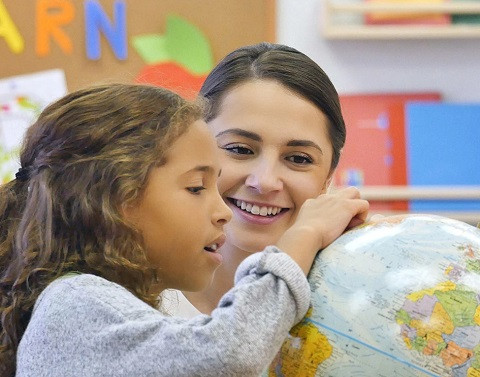 Global Education for Teachers: MOOC 발행 연도: 2020 저자: Nicole Blum | Frances Hunt 단체 저자: University College London (UCL) The Global Education for Teachers MOOC (Massive Online Open Course) is a three-week course for teachers (3 hours per week) around the world hosted by FutureLearn. The course has been designed specifically for teachers as an introduction to global education and related terms such as global learning / global citizenship education. It will engage teachers with key issues and debates in global education, support collaboration between teachers around the world and provide practical support on how to introduce global issues into teaching. It is intended to develop teachers’ confidence, knowledge and skills to include global education in teaching and in so doing, better prepare students to take on the global challenges they will face now and in the future.
  Shifting the Agenda on Education & Extremism 발행 연도: 2018 단체 저자: Think Global This research report aims to build an understanding of young people’s idea of diversity, identity and extremism as well as how schools and young people can be better supported to promote social cohesion and engage in active citizenship opportunities.
  The Emergence of Global Citizenship Education in Colombia: Lessons Learned From Existing Education Policy (Compare: A Journal of Comparative and International Education; Vol. 50, No. 6) 발행 연도: 2019 저자: Jana De Poorter | Nicolás Aguilar-Forero 단체 저자: Taylor & Francis Colombia has joined the international movement of countries which, under the impulse of the United Nations Educational, Scientific and Cultural Organization (UNESCO), are looking to integrate global citizenship education (GCED) into their educational system. However, being a recently emerging initiative, the characteristics and possible effects of GCED have not been discussed sufficiently in academia, nor among policy makers. This paper presents a critical discourse analysis of the most recent antecedents of GCED to be found in Colombian education policy. It thereby contributes to the national and international debate surrounding the integration of GCED in contexts that differ from those of Western and ‘developed’ countries, which have been the main focus of GCED research and interventions to date. It is argued that, in the case of Colombia, educational initiatives that are based on critical approaches to GCED should be recuperated and strengthened, since these initiatives provide powerful clues for a truly transformative integration of GCED in the country.
  Global Citizenship Education Discourses in a Province in Northern Italy (International Journal of Development Education and Global Learning; Vol. 12, No. 1) 발행 연도: 2020 저자: Sara Franch 단체 저자: UCL Press While global citizenship education (GCE) is becoming increasingly popular, it is also a complex and ambiguous concept that assumes different meanings. This article explores the dominant discourses that construct GCE in terms of the qualification, socialization and subjectification functions of education. Based on a qualitative study that used constructivist and informed grounded theory, the article focuses on the emergence of GCE in the educational discourse of the Province of Trento in northern Italy. The article shows elements of convergence and divergence between the perspectives of policymakers and teachers, and illustrates how in the discourses the three purposes of GCE – qualification, socialization and subjectification – are deeply intertwined and overlapping.
 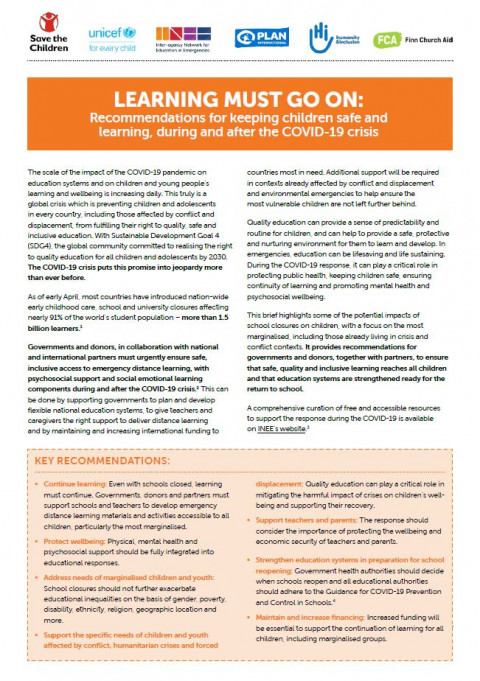 Learning Must Go On: Recommendations for Keeping Children Safe and Learning, During and After the COVID-19 Crisis 발행 연도: 2020 단체 저자: Save the Children | United Nations Children's Fund (UNICEF) | The Inter-agency Network for Education in Emergencies (INEE) This brief highlights some of the potential impacts of school closures on children, with a focus on the most marginalised, including those already living in crisis and conflict contexts. It provides recommendations for governments and donors, together with partners, to ensure that safe, quality and inclusive learning reaches all children and that education systems are strengthened ready for the return to school.A comprehensive curation of free and accessible resources to support the response during the COVID-19 is available on INEE’s website.
  How Children Living in Poor Informal Settlements in the Greater Accra Region, Ghana, Perceive Global Citizenship (International Journal of Development Education and Global Learning; Vol. 12, No. 1) 발행 연도: 2020 저자: Jane Leithead | Steve Humble 단체 저자: UCL Press This investigation looks at the antecedents and outcomes of 141 children living in poor informal settlements in the Greater Accra Region of Ghana identifying with global citizenship. It finds that the model of global citizenship devised by Reysen and Katzarska-Miller (2013) is a moderately good fit for this group of children. Structural equation modelling demonstrates that antecedents of global awareness as well as friends and family supporting global citizenship (normative environment) predict the child’s self-identification as a global citizen. This in turn predicts six prosocial traits: intergroup empathy, valuing diversity, social justice, environmental sustainability, intergroup helping and responsibility to act. The research suggests that there may be other elements to a global citizenship model that could be investigated in future research.
 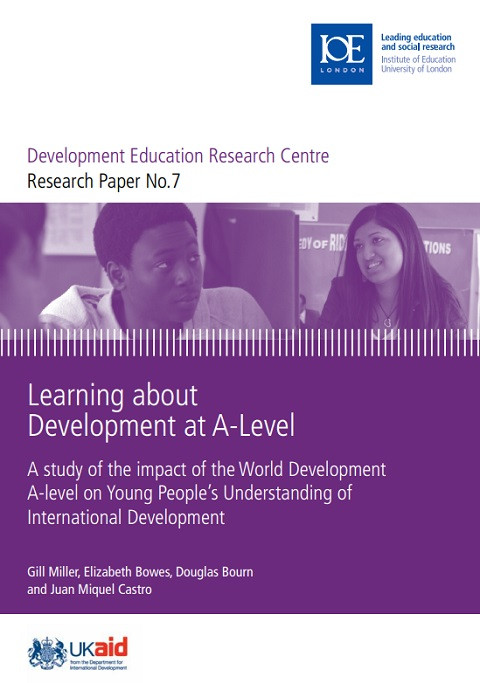 Learning about Development at A-Level: A study of the impact of the World Development A-level on Young People’s Understanding of International Development (Development Education Research Centre Research Paper; No.7) 발행 연도: 2012 저자: Gill Miller | Elizabeth Bowes | Douglas Bourn | Juan Miquel Castro 단체 저자: Development Education Research Centre (DERC) Learning about development has been a feature of the school curriculum in England for a number of years, most notably through Geography and there has been increased interest in examination courses at post-sixteen. By reviewing what young people have learnt and gained from such a course, this report aims to demonstrate how young people perceive international development issues and what impact this has had on their views about the wider world.
 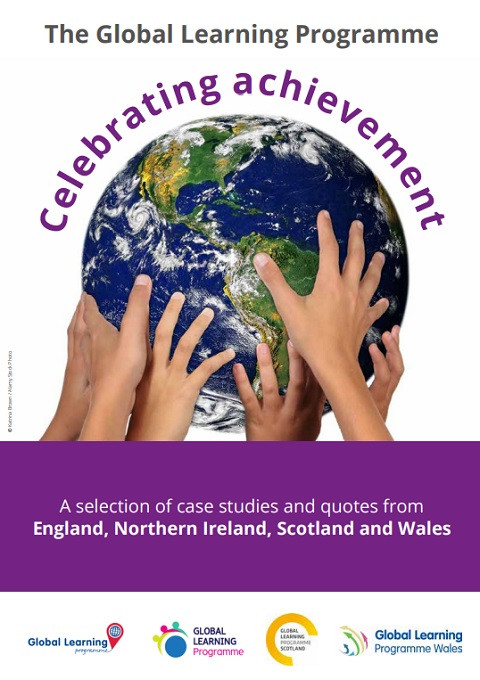 The Global Learning Programme: Celebrating Achievement; A Selection of Case Studies and Quotes from England, Northern Ireland, Scotland and Wales 단체 저자: Global Learning Programme (GLP) The Global Learning Programme has achieved unprecedented success in its reach to schools across the United Kingdom, with over 10,000 schools registered, and more than 40,000 teachers and 500,000 pupils involved. A high proportion of schools that engaged with the programme had not been involved with global learning previously, and there is a high percentage of positive impact recorded in schools all across the UK. Each of the programmes, in England, Northern Ireland, Scotland and Wales, has a range of case studies and other evidence from schools on their websites. Here is gathered together a small selection of these and a range of quotes that show glimpses of what has been achieved, the diversity of the schools, and the benefits and impact of global learning.
 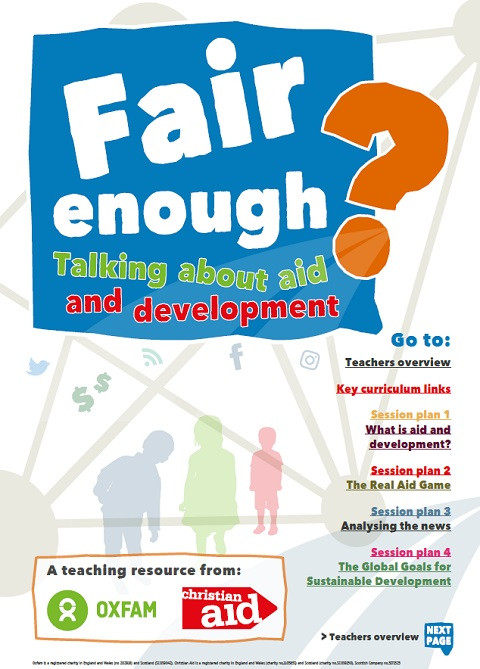 Fair enough? Talking about aid and development 발행 연도: 2017 단체 저자: Oxfam | Christian Aid This resource aims to introduce to learners the concepts of aid and development and how these differ; how a limited development budget might be most effectively spent; critically evaluating media stories around development spending and the Global Goals for Sustainable Development. There are four session plans. Each includes an outline of the session with activity description, background information, photocopiable resource sheets for learners and links to online articles and video.
 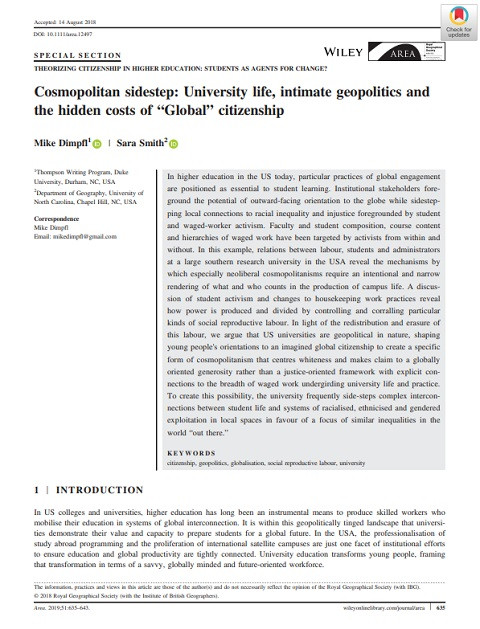 Cosmopolitan Sidestep: University Life, Intimate Geopolitics and the Hidden Costs of “Global” Citizenship (Area; Vol. 51, No. 4) 발행 연도: 2018 저자: Mike Dimpfl | Sara Smith 단체 저자: Royal Geographical Society | Wiley In higher education in the US today, particular practices of global engagement are positioned as essential to student learning. Institutional stakeholders foreground the potential of outward‐facing orientation to the globe while sidestepping local connections to racial inequality and injustice foregrounded by student and waged‐worker activism. Faculty and student composition, course content and hierarchies of waged work have been targeted by activists from within and without. In this example, relations between labour, students and administrators at a large southern research university in the USA reveal the mechanisms by which especially neoliberal cosmopolitanisms require an intentional and narrow rendering of what and who counts in the production of campus life. A discussion of student activism and changes to housekeeping work practices reveal how power is produced and divided by controlling and corralling particular kinds of social reproductive labour. In light of the redistribution and erasure of this labour, we argue that US universities are geopolitical in nature, shaping young people's orientations to an imagined global citizenship to create a specific form of cosmopolitanism that centres whiteness and makes claim to a globally oriented generosity rather than a justice‐oriented framework with explicit connections to the breadth of waged work undergirding university life and practice. To create this possibility, the university frequently side‐steps complex interconnections between student life and systems of racialised, ethnicised and gendered exploitation in local spaces in favour of a focus of similar inequalities in the world “out there.”