
자료
세계시민교육에 대한 이해를 넓히고 연구, 옹호 활동, 교수, 학습 등을 향상시킬 수 있는 다양하고 유용한 자료를 찾아보세요.
950 건의 결과가 검색되었습니다
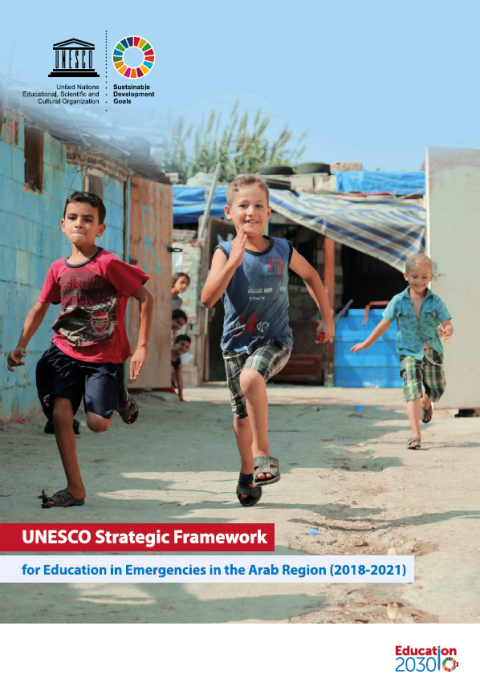 UNESCO Strategic Framework for Education in Emergencies in the Arab Region (2018-2021) 발행 연도: 2017 단체 저자: UNESCO The Strategic Framework consists of four strategic goals that are anchored in the three pillars of education (Access, Quality and System Strengthening) and which emphasize the importance of relevant and inclusive education to meet the challenges confronting learners, educators, and education systems in both crisis and post-crisis settings. The strategic goals are: Strategic Goal 1: Children and youth affected by crisis access inclusive and quality learning opportunitiesStrategic Goal 2: Learners affected by crisis are empowered with values, knowledge, and skills for life and workStrategic Goal 3: Education actors provide quality education for better learning outcomesStrategic Goal 4: Education systems are responsive and resilient to crisis
 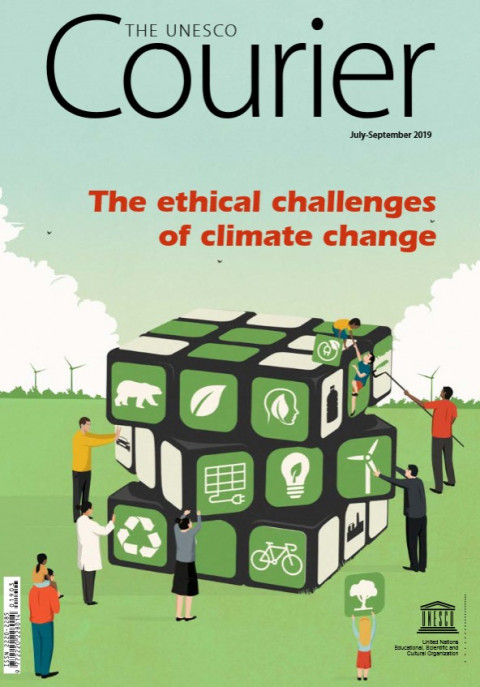 Cambio climático y desafíos éticos (El Correo de la UNESCO 3, July-September 2019) 발행 연도: 2019 단체 저자: UNESCO El cambio climático no solo pone en peligro nuestros ecosistemas; también quebranta los cimientos de nuestros derechos fundamentales, agrava la desigualdad y genera nuevas injusticias. La adaptación al cambio climático y la atenuación de sus efectos no es únicamente un asunto de conocimientos científicos y voluntad política, sino que exige además una perspectiva amplia sobre una situación compleja. Con el fin de ayudar a los Estados y demás entidades pertinentes en la toma de las decisiones apropiadas y la ejecución de políticas eficaces en materia de desarrollo sostenible, adaptación al cambio climático y mitigación de sus consecuencias adversas, la UNESCO aprobó en noviembre de 2017 una Declaración de principios éticos en relación con el cambio climático.La ética determina la esencia de todo compromiso. Su capacidad de movilización permite orientar la acción, establecer arbitrajes, decidir entre intereses contradictorios y fijar prioridades. La ética facilita la articulación de la teoría con la práctica, de los principios generales con la voluntad política, y de la toma de conciencia de ámbito mundial con la aplicación de medidas a escala local. The ethical challenges of climate change (The UNESCO Courier no. 3, July-September 2019) 발행 연도: 2019 단체 저자: UNESCO Climate change not only threatens our ecosystems, it undermines the foundation of our fundamental rights, deepens inequalities and creates new forms of injustice. Adapting to climate change and trying to mitigate its impacts are not just a matter of scientific knowledge and political will; they also demand a broader view of a complex situation. In order to help Member States and other stakeholders to make appropriate decisions and implement effective policies for sustainable development, adaptation to climate change and the mitigation of its negative effects, UNESCO adopted a Declaration of Ethical Principles in relation to Climate Change in November 2017.Ethics constitute the substantial core of any commitment. As a mobilizing force, ethics can steer action, facilitate arbitration, resolve conflicting interests, and establish priorities. Ethics have the capacity to connect theory with practice, general principles with political will, and global awareness with local actions. Défis climatiques, défis éthiques (Le Courrier de l'UNESCO 3, July-September 2019) 발행 연도: 2019 단체 저자: UNESCO Le changement climatique ne met pas seulement en péril nos écosystèmes : il ébranle le socle de nos droits fondamentaux, il creuse les inégalités et crée de nouvelles injustices. S’adapter au changement climatique et tenter d’en atténuer les effets n’est pas seulement affaire de connaissance scientifique et de volonté politique; cela implique une vue d’ensemble sur une situation complexe. Afin d’aider les États et les autres acteurs concernés à prendre des décisions appropriées et à mener des politiques efficaces en matière de développement durable, d’adaptation au changement climatique et d’atténuation de ses effets néfastes, l’UNESCO a adopté, en novembre 2017, une Déclaration de principes éthiques en relation avec le changement climatique.L’éthique constitue le cœur substantiel de tout engagement. Grâce à sa force mobilisatrice, elle permet d’orienter l’action, de faire des arbitrages, de trancher entre des intérêts contradictoires, de fixer des priorités. L’éthique permet d’articuler la théorie et la pratique, les principes généraux et la volonté politique, la prise de conscience globale et les actions locales.
 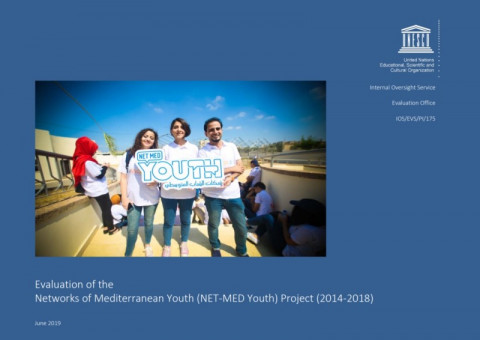 Evaluation of the Networks of Mediterranean Youth (NET-MED Youth) Project (2014-2018) 발행 연도: 2019 저자: Maksymilian Fras | Yael Ohana | Kimiko Hibri Pedersen | Christophe Dietrich | Mamoun Besaiso 단체 저자: UNESCO The Networks of Mediterranean Youth (NET-MED Youth) Project is a regional project funded by the European Union and implemented by UNESCO from 2014 until 2018. It followed a comprehensive approach through interdisciplinary activities in different thematic areas aimed at advancing youth legal and policy frameworks, enhancing youth representation in media, and reinforcing youth employability and skills in response to the challenges experienced by young women and men in the region regarding their transition to full autonomous citizenship in the civic, political, economic, social and cultural spheres. NET-MED Youth contributed to the creation of an enabling environment for young women and men from nine of the Southern countries of the European Neighbourhood Policy (i.e. Algeria, Israel, Jordan, Lebanon, Libya, Morocco, Palestine, Syria and Tunisia) to develop their competencies, to exercise their rights and meaningfully engage as active citizens in the development and implementation of national strategies on youth. The evaluation found that, overall, the NET-MED Youth Project was a successful initiative and created a momentum for Youth empowerment in the respective beneficiary countries. Its high relevance in the context of the Agenda 2030 resulted not least from UNESCO’s longstanding experience and good practices in working with youth organizations and youth-related stakeholders through youth engagement as partners and beneficiaries. The Project thus constituted a significant contribution to the UNESCO Operational Strategy on Youth 2014-2021. Gender equality was a central concern of NET-MED Youth, and systematically embedded throughout all activities as a transversal feature. In line with the Agenda 2030 commitment of leaving no one behind, several activities focused on issues of disadvantaged or traditionally underserved groups, such as youth with disabilities. Challenges identified are mainly related to the often difficult and in some countries unstable political environments. Together with the needs-based and rather context-specific approach in each country, this also affected to some extent the full implementation of the regional perspective. Furthermore, in the absence of a coherent and explicit longer-term exit strategy, the structures and results achieved risk not to be maintained, or scaled up over time, despite the strong local commitment and ownership created over the project duration. Through successfully incorporating youth aspirations in its design and implementation, the NET-MED Youth Project represented a new and innovative approach to youth engagement and empowerment in an interdisciplinary fashion, and should thus be considered as a basis for new thinking on which to build in the future. The high potential for replication of the NET-MED Youth Project, as a continuation or as an example of good practice for a comprehensive and interdisciplinary approach is thus to be further explored.
 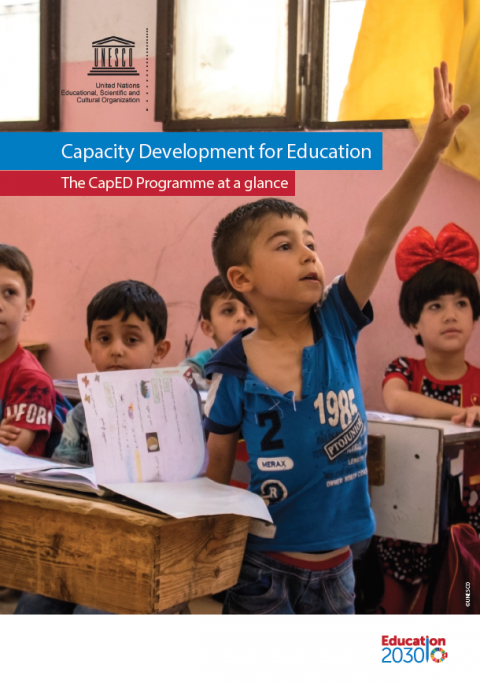 Capacity Develoment for Education: the CapED Programme at a glance 발행 연도: 2019 단체 저자: UNESCO Education has the power to transform lives and is at the heart of UNESCO’s mission to build peace, eradicate poverty and drive sustainable development. Right now, 750 million adults – two-thirds women – still lack basic literacy skills. Around 264 million children and youth are out of school and the international community must have almost 69 million new teachers to reach the 2030 education goals. These challenges can be tackled effectively through education reforms. However, these can only take place when countries have the capacities to put this change into action. As well as trained staff, countries need efficient organizational processes, functioning institutions and the tools and resources to design, implement and manage tailored education policies and plans. This is where the CapED Programme steps in. By mobilizing UNESCO’s global network, the Programme provides selected countries with a cohesive package of support. It works alongside stakeholders to reinforce national capacities to undertake evidence-based education reforms that fit into their national priorities and respond to SDG4 commitments, in order to offer quality education opportunities to all.
 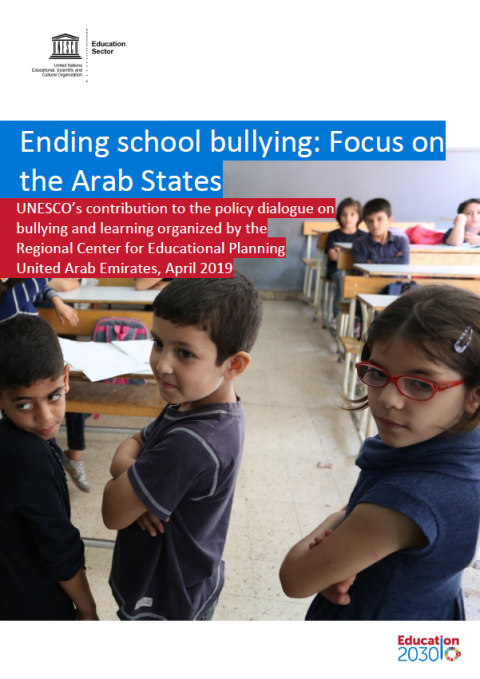 Ending school bullying: Focus on the Arab States and North Africa UNESCO’s contribution to the policy dialogue on bullying and learning organized by the Regional Center for Educational Planning United Arab Emirates 발행 연도: 2019 단체 저자: UNESCO Bullying is a form of school violence. According to an agreed international definition, bullying is characterised by aggressive behaviour that involves unwanted, negative actions and an imbalance of power or strength between the perpetrator or perpetrators and the victim. Unlike isolated incidents of school violence, bullying is also characterised by repetition over time. The number of repetitions may vary and, for example, major surveys that collect data on bullying measure the frequency of bullying in different ways. The international Sustainable Development Goal Thematic Indicator 4.a.2 that measures the ‘percentage of students who experienced bullying during the past 12 months, by sex’, which was adopted in 2018, defines that the frequency of aggressions should be at least once or twice a month or more for a student to be considered a victim of bullying. It is important to note that here is no standard definition of bullying across the six international surveys that collect data on the prevalence of bullying. Some of them do not even provide a definition. These surveys are the following:Two international surveys that measure the health behaviours of students as well as protective factors including school climate: the WHO Global School-based Student Health Survey (GSHS) and the Health Behaviours in School-aged Child survey (HBSC) conducted by the HBSC Consortium.Four international surveys that focus mostly on the measurement of learning outcomes of students but also ask questions on the school climate including bullying: the Regional Comparative and Explanatory Study in Latin America (Estudio Regional Comparativo y Explicativo, ERCE in Spanish); theProgress in International Reading Literacy Study (PIRLS); the Programme for International Students Assessment (PISA); and the Trends in Mathematics and Science Study (TIMSS).
 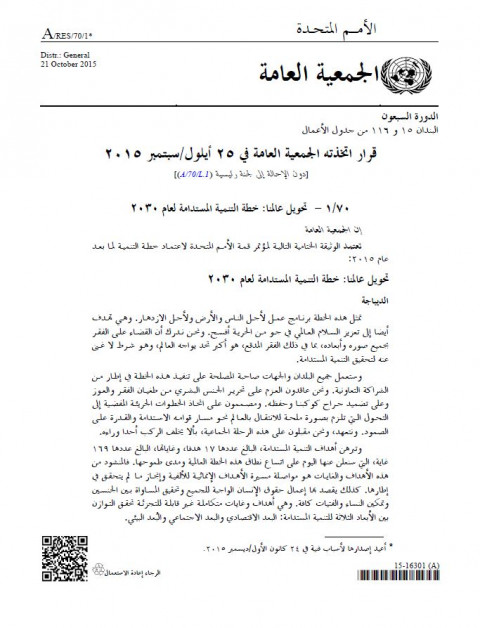 تحويل عالمنا: خطة التنمية المستدامة لعام ٢٠٣٠ - الجمعية العامة للامم المتحدة 발행 연도: 2015 단체 저자: United Nations (UN) تمثل هذه الخطة برنـامج عمـل لأجـل النـاس والأرض ولأجـل الازدهـار. وهـي ـدف أيضا إلى تعزيز السـلام العـالمي في جـو مـن الحريـة أفسـح. ونحـن نـدرك أن القضـاء علـى الفقـر بجميع صوره وأبعاده، بما في ذلك الفقر المدقع، هو أكبر تحد يواجه العالم، وهـو شـرط لا غـنى عنه لتحقيق التنمية المستدامة. وستعمل جميع البلدان والجهات صاحبة المصلحة على تنفيـذ هـذه الخطـة في إطـار مـن الشراكة التعاونية. ونحن عاقدون العـزم علـى تحريـر الجـنس الب شـري مـن طغيـان الفقـر والعـوز وعلى تضميد جـراح كوكبنـا وحفظـه. ومصـممون علـى اتخـاذ الخطـوات الجريئـة المفضـية إلى التحـول الـتي تلـزم بصـورة ملحـة للانتقـال بالعـالم نحـو مسـار قوامـه الاسـتدامة والقـدرة علـى الصمود. ونتعهد، ونحن مقبلون على هذه الرحلة الجماعية، بألا يخلف الركب أحد ا وراءه. وتبرهن أهداف التنمية المستدامة، البالغ عددها ١٧ هدفا، وغاياا، البالغ عددها ١٦٩ غاية، التي سنعلن عنها اليوم على اتساع نطاق هذه الخطة العالمية ومدى طموحها. فالمنشود من هذه الأهداف والغايـات هـو مواصـلة مسـيرة الأهـداف الإنمائيـة للألفيـة وإنجـاز مـا يت لم حقـق في إطارها. كذلك يقصد ا إعمال حقوق الإنسان الواجبة للجميع وتحقيق المسـاواة بـين الجنسـين وتمكين النساء والفتيات كافة. وهي أهداف وغايات متكاملـة غـير قابلـة للتجزئـة تحقـق التـوازن بين الأبعاد الثلاثة للتنمية المستدامة: البعد الاقتصادي والبعد الاجتماعي والب عد البيئي. Transforming our world: the 2030 Agenda for Sustainable Development - United Nations General Assembly 발행 연도: 2015 단체 저자: United Nations (UN) This plan represents a program of action for people and land and for prosperity. It is also aimed at promoting world peace in a more free atmosphere. We recognize that the eradication of poverty in all its forms and dimensions, including extreme poverty, is the world's greatest challenge and an indispensable condition for sustainable development. All countries and stakeholders will implement this plan within the framework of the cooperative partnership. We are determined to free mankind from the tyranny of poverty and want and to heal and preserve the wounds of our planet. We are determined to take the bold steps leading to the transformation that are urgently needed to move the world towards a path of sustainability and resilience. As we embark on this collective journey, we pledge that no one will be left behind. The 17 Sustainable Development Goals and the 169 targets that we will announce today demonstrate the breadth and ambition of this global agenda. The aim of these goals and objectives is to continue the process of the Millennium Development Goals and achieve what has not been achieved within the framework. They are also intended to realize human rights for all, achieve gender equality and empower all women and girls. These are integral and indivisible goals and objectives that balance the three dimensions of sustainable development: the economic, social and environmental dimensions.
  A Transformative Agenda: Outcomes of the CONFINTEA VII Regional Preparatory Conferences 발행 연도: 2022 단체 저자: UNESCO Institute for Lifelong Learning (UIL) In preparation for the Seventh International Conference on Adult Education (CONFINTEA VII), in Marrakech, Morocco, in June 2022, a series of regional conferences took place between February and September 2021, in some cases preceded by sub-regional consultations. Each of the regional preparatory conferences produced an outcome document summarizing the discussion, including key achievements in adult learning and education, crucial challenges and key recommendations. This document provides a synthesis of the outcomes of these regional and subregional consultations and will contribute to the Marrakech Framework for Action, the main outcome document from CONFINTEA VII, as well as providing a guide for all relevant stakeholders and UNESCO Member States to the key current issues in adult learning and education.