
자료
세계시민교육에 대한 이해를 넓히고 연구, 옹호 활동, 교수, 학습 등을 향상시킬 수 있는 다양하고 유용한 자료를 찾아보세요.
3,451 건의 결과가 검색되었습니다
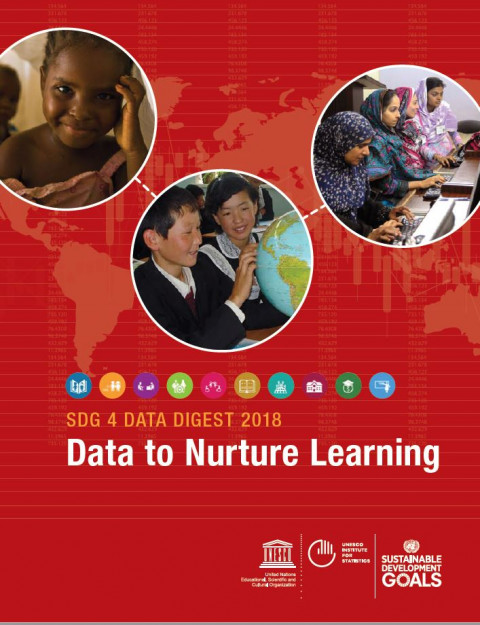 ЦУР 4 Дайджест данных 2018: данные для обучения 발행 연도: 2018 단체 저자: UNESCO Institute for Statistics (UIS) Мир сталкивается с кризисом обучения, когда многие дети покидают школу без базовых навыков, необходимых для процветающей и продуктивной взрослой жизни. Две трети из примерно 617 миллионов детей и подростков, посещающих школу, не могут прочитать простое предложение или произвести элементарные математические вычисления. При этом качественное образование для очень многих продолжает оставаться недоступным.Как показывает Дайджест данных ЦУР 4 2018 года, недостаточно просто надеяться, что они, оставаясь в школе, каким-то образом приобретут навыки чтения и математики. Очень важно следить за развитием этих навыков по мере того, как дети учатся в школе. Сопоставление данных с течением времени является необходимым фактором, гарантирующим, что дети и системы образования, которые их обслуживают, находятся на правильном пути.Учитывая исключительную важность обучения для достижения всех Целей в области устойчивого развития (ЦУР), от сокращения бедности до мирных обществ, выпуск Дайджеста данных ЦУР 4 в этом году посвящен теме результатов обучения. Он демонстрирует наиболее полную и актуальную подборку работ для информирования об учебных показателях ЦУР 4.В Дайджесте обсуждаются фактические данные о раннем развитии детей, математике и навыках чтения среди детей школьного возраста, а также трудовые навыки и навыки работы с цифровыми технологиями среди молодежи и взрослых. В нем освещаются концептуальные основы и инструменты, разработанные ведущими авторами и учреждениями для понимания, измерения, мониторинга и поддержки обучения для всех. В нем также рассматриваются результаты отчетности для ЦУР 4.
  [Video] Socio-emotional Learning - the Key to Building Global Citizenship 발행 연도: 2018 저자: Nandini Chatterjee Singh 단체 저자: Mahatma Gandhi Institute of Education for Peace and Sustainable Development (MGIEP) Dr. Nandini Chatterjee Singh, Programme Specialist, UNESCO MGIEP speaks about 'Socio-emotional Learning: the Key to Building Global Citizenship' as part of Association for Childhood Education International (ACEI)'s online learning event for educators, titled 'Breakthroughs in Education: Innovations in Equity, Access & Quality.
 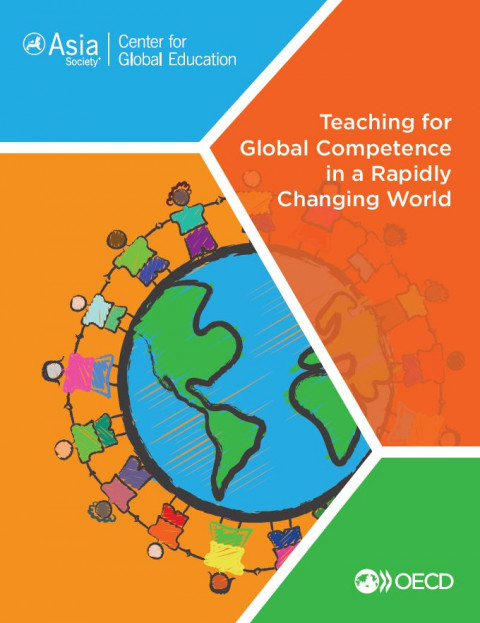 Teaching for Global Competence in a Rapidly Changing World 발행 연도: 2018 저자: Richard Lee Colvin | Virginia Edwards 단체 저자: Asia Society | Organisation for Economic Co-operation and Development (OECD) Educators and education systems worldwide are reassessing the knowledge, skills, and dispositions students need for success in today's rapidly changing and complex world. In a remarkable moment of global consensus, the member states of both the United Nations (UN), through its adoption of the Sustainable Development Goals (SDGs) in 2015, and the Organisation for Economic Co-operation and Development (OECD), through its Programme for International Student Assessment (PISA) in 2018, prioritized education for global citizenship and global competence.The OECD and the Center for Global Education at Asia Society have worked with academics, educators, and stakeholders in the global education field over several years to define global competence for primary and secondary education. The Center also has extensive experience supporting educators to integrate global competence into their teaching.A new publication from both organizations, entitled Teaching for Global Competence in a Rapidly Changing World, sets forward a new framework for global competence developed by OECD, which aligns closely with the definition developed by the Center for Global Education, and provides practical guidance and examples of how educators can embed global competence into their existing curriculum, instruction, and assessment.
  [Video] Global Citizenship Education - The Key to a Just, Peaceful and Inclusive World 발행 연도: 2015 단체 저자: Global Education First Initiative Global Citizenship Education gives students the knowledge and skills they need to answer the big questions of the day, and to help forge more tolerant, peaceful and inclusive societies.
 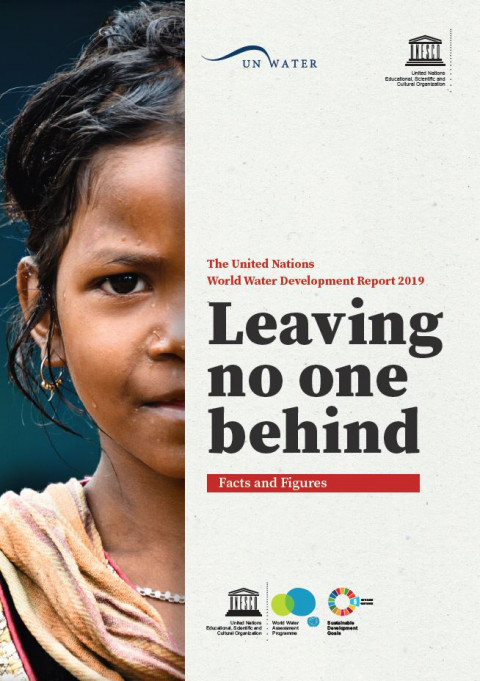 [Facts and Figures] The United Nations World Water Development Report 2019: Leaving No One Behind; Facts and Figures 발행 연도: 2019 저자: Engin Koncagül | Michael Tran | Richard Connor | Stefan Uhlenbrook 단체 저자: UNESCO World Water Assessment Programme (WWAP) Water availability and demandFigure 1 provides a global overview of countries experiencing different levels of water stress (the ratio of total freshwater withdrawn annually by all major sectors, including environmental water requirements, to the total amount of renewable freshwater resources, expressed as a percentage).Over 2 billion people live in countries experiencing high water stress. Recent estimates show that 31 countries experience water stress between 25% (which is defined as the minimum threshold of water stress) and 70%. Another 22 countries are above 70% and are therefore under serious water stress (UN, 2018a).Growing water stress indicates substantial use of water resources, with greater impacts on resource sustainability, and a rising potential for conflicts among users.It has been estimated that about 4 billion people, representing nearly two-thirds of the world population, experience severe water scarcity during at least one month of the year (Mekonnen and Hoekstra, 2016).
  Are We There Yet?: Education Unions Assess the Bumpy Road to Inclusive Education 발행 연도: 2018 단체 저자: Education International (EI) | Tania Principe This report is based on a global membership survey that Education International conducted in 2017-18. The report shows that while many countries have integrated the UN Conventions into their national laws, implementation is running far behind. School materials and facilities are often not accessible, teachers are not adequality supported or consulted, and there are too few education support personnel. In addition, public services are not consistently made available for families with children and youth with disabilities, which can be a major barrier to school attendance. The survey results are a wake-up call for governments to take action and show that a thorough rethinking of past policy-making and current implementation is urgently needed.
  Global Education Digest 2015-2017: Compiled by the Development Education Research Centre 발행 연도: 2018 단체 저자: Development Education Research Centre (DERC) This is the first edition the Global Education Digest, a bibliography of recent published academic and research material relevant to the field of global education. This Digest has been compiled by Development Education Research Centre (DERC) on behalf of Global Education Network Europe (GENE) in the framework of ANGEL activities. ANGEL (Academic Network on Global Education & Learning) is the academic network of global education researchers and academics. The Digest is divided into eight themes/ areas of work, and within each we have identified policy reports, books, academic articles and doctoral research related to global education. Items for inclusion were found through keyword searches of Scopus, Web of Science, Google Scholar, and British Library (including ETHOS and Proquest) databases, as well as through informal discussions with colleagues in the field. The core focus of the Digest is on literature on global education. Selected literature with a focus on related concepts, such as global citizenship, environmental education, and education for sustainable development, has also been included where these have clear links to concerns in global education.
 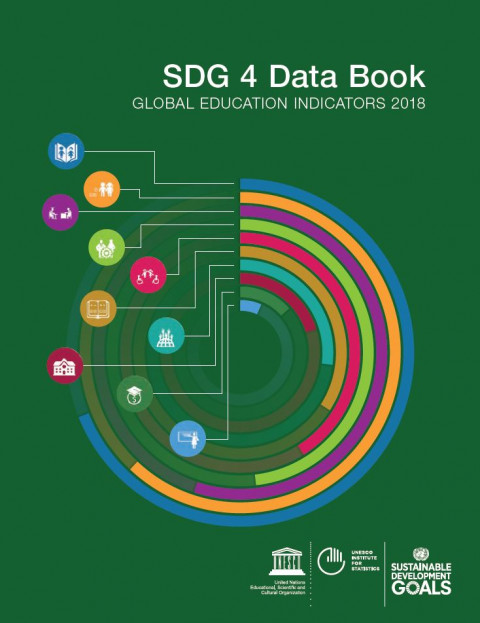 SDG 4 Data Book: Global Education Indicators 2018 발행 연도: 2018 단체 저자: UNESCO Institute for Statistics (UIS) This publication presents the global monitoring indicators used by countries and the international development community to monitor progress towards Sustainable Development Goal 4 (SDG 4) on education. The indicators were produced by the UNESCO Institute for Statistics (UIS), based on the latest available data.The UIS is the official source of internationally-comparable education data and the custodian agency for SDG 4 data.This mandate reflects the trust of the international community in UIS data and its proven track record in methodological work and standard-setting with national statistical offices, line ministries and technical partners in every region.This publication presents a snapshot of the data used to monitor progress towards the global education goal and targets. It complements the UIS Quick Guide to Education Indicators for SDG 4, which provides more detailed information on the development, interpretation and use of the indicators.
 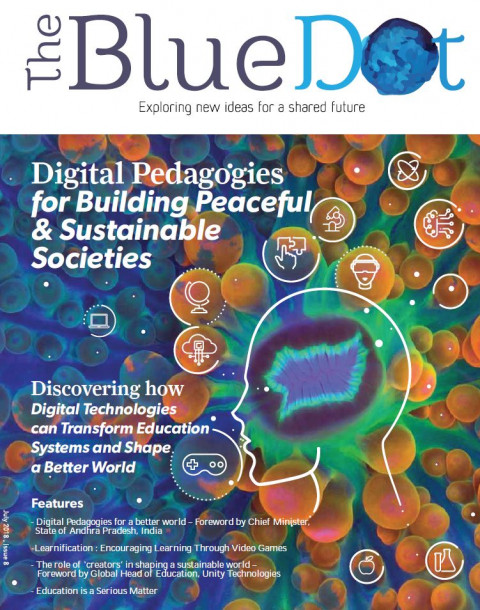 Digital Pedagogies for Building Peaceful & Sustainable Societies (The Blue Dot Issue 8, 2018) 발행 연도: 2018 단체 저자: Mahatma Gandhi Institute of Education for Peace and Sustainable Development (MGIEP) In this issue of The Blue Dot (Digital Pedagogies for Building Peaceful and Sustainable Societies), some of the most prominent experts in the field of digital pedagogies share with us their views and perspectives in the growing field for education. Foreword by the visionary Chief Minister, Honourable Nara Shri Chandrababu Naidu of the State of Andhra Pradesh, India, pretty much lays the ground for the future of EdTech and the way he sees its role in his state as well as for the global community. The second foreword by the Global Head of Education, Unity Technologies, one of the world’s largest provider of game engines, demonstrates the willingness of the private sector to engage with educators to provide the platform to develop learners as creative explorers.
 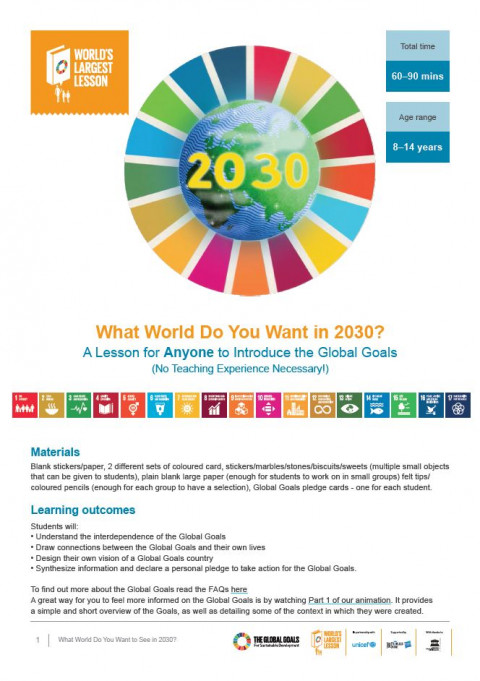 What World Do You Want in 2030?: A Lesson for Anyone to Introduce the Global Goals 발행 연도: 2018 단체 저자: World’s Largest Lesson MaterialsBlank stickers/paper, 2 different sets of coloured card, stickers/marbles/stones/biscuits/sweets (multiple small objects that can be given to students), plain blank large paper (enough for students to work on in small groups) felt tips/coloured pencils (enough for each group to have a selection), Global Goals pledge cards - one for each student. Learning outcomesStudents will:• Understand the interdependence of the Global Goals• Draw connections between the Global Goals and their own lives• Design their own vision of a Global Goals country• Synthesize information and declare a personal pledge to take action for the Global Goals.