
자료
세계시민교육에 대한 이해를 넓히고 연구, 옹호 활동, 교수, 학습 등을 향상시킬 수 있는 다양하고 유용한 자료를 찾아보세요.
1,448 건의 결과가 검색되었습니다
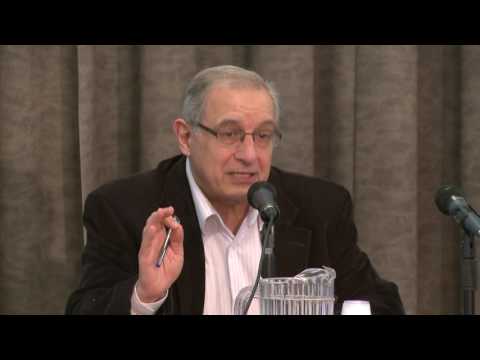 1er rendez-vous de l'éducation à la citoyenneté mondiale de l'AQOCI: Panel d'experts 발행 연도: 2017 단체 저자: Association québécoise des organismes de coopération internationale (AQOCI) Panel d'experts: l'ÉCM en contextes social et scolaire.Rachad Antonius, professeur de sociologie à l’UQÀM, chercheur, consultant et personne-ressource dans les milieux de la solidarité internationale, propose des éléments de réflexion sur l’éducation, sur le rôle de différents intervenants – militants, OCI, chercheurs et intellectuels - en ÉCM, sur le sens et les dimensions du concept de citoyenneté dans le contexte et face aux enjeux actuels et sur les réponses que le travail en ÉCM est appelé à apporter face à la mondialisation.La présentation de Marie-Hélène Chastenay, responsable de l’éducation interculturelle à la Direction des services d’accueil et d’éducation interculturelle du ministère de l’Éducation et de l’Enseignement supérieur (MÉES), examine l’apport de l’ÉCM à l’éducation des jeunes du Québec; l’intégration actuelle de l’ÉCM aux curriculums et à la vie scolaires; les enjeux et les défis de l’ÉCM en milieux scolaires et académiques et le rôle des organismes de coopération internationale et de la société civile dans la promotion de l’ÉCM en contextes scolaires et académiques.
  Eduquer à la citoyenneté mondiale et solidaire pendant le confinement 발행 연도: 2020 단체 저자: Fédération Francophone et Germanophone des Associations de Coopération au Developpement (ACODEV) | Annoncer la Couleur (ALC) | Îles de Paix Dans le cadre de la période de confinement inédite que nous vivons actuellement toutes et tous, l’ensemble des ONG actives en éducation à la citoyenneté mondiale, regroupées dans la fédération ACODEV et Annoncer la Couleur, avec la collaboration de Iles de Paix, poursuivent leur mission de soutien aux enseignant·e·s de tous niveaux, tous réseaux et toutes disciplines confondues. Ensemble, nous vous proposons ici une liste – non exhaustive – d’outils pédagogiques digitaux clé sur porte que vous pouvez partager à vos élèves, pour leur demander de réagir, pour leur proposer une ouverture virtuelle sur le monde, sa diversité, ses richesses et ses interdépendances, ou tout simplement pour garder le contact d’une manière à la fois ludique et éducative. Voici déjà quelques jeux, capsules vidéo et autres webdocumentaires qui permettent, en très peu de temps, de se familiariser avec une thématique ou d’interpeller sur un enjeu de société à échelle mondiale.
  Management of Transboundary Water Resources in the Danube and the Sava River Basins 발행 연도: 2019 저자: Aksulu Kushanova 단체 저자: Regional Environmental Centre for Central Asia (CAREC) This analytical work “Management of transboundary water resources in the Danube and Sava River Basins” conveys knowledge and information on the management of the transboundary water resources by acknowledging the importance of the WEF Nexus in the Danube and Sava River Basins. Firsthand information was received during face-to-face meetings with the ICPDR and the ISRBC and the summarized work at hand shares the European experience with a wider audience.The analytical work narrates the institutional and legislative frameworks within the sectoral characteristics on the management of two River Basins: the Danube River Basin, which is the largest and the most international one in Europe, and the Sava River Basin, which serves as the greatest tributary to the Danube River. The study reviews the operations of the ICPDR and the ISRBC and technical tools applied at the basin level, which include accident emergency warning systems, monitoring networks, flood forecasting and more. Управление трансграничными водными ресурсами в бассейнах рек Дунай и Сава 발행 연도: 2019 저자: Aksulu Kushanova 단체 저자: Regional Environmental Centre for Central Asia (CAREC) Настоящая аналитическая записка «Управление трансграничными водными ресурсами в бассейнах рек Дунай и Сава» передает знания и информацию по вопросам управления ТВР, которые еще раз подчеркивают важную роль взаимосвязи (нексуса) «вода-энергия-продовольствие» (ВЭП), в данном случае на примере трансграничных рек Дунай и Сава. Информация из первых рук была получена в ходе рабочих встреч с представителями МКОРД и МКБРС и впоследствии обобщены для ознакомления с европейским опытом более широкой аудитории.В настоящей аналитической работе описываются институциональные и нормативно-правовые принципы построения и характеристики систем управления двумя речными бассейнами, а именно, бассейном р. Дунай – крупнейшим в Европе с наибольшим количеством прибрежных государств, и бассейном р. Сава – самого крупного притока Дуная. В документе анализируется деятельность МКОРД и МКБРС и технический инструментарий, применяемый ими на бассейновом уровне, включая системы предупреждения о чрезвычайных ситуациях, мониторинговые сети, системы прогнозирования наводнений и др.
 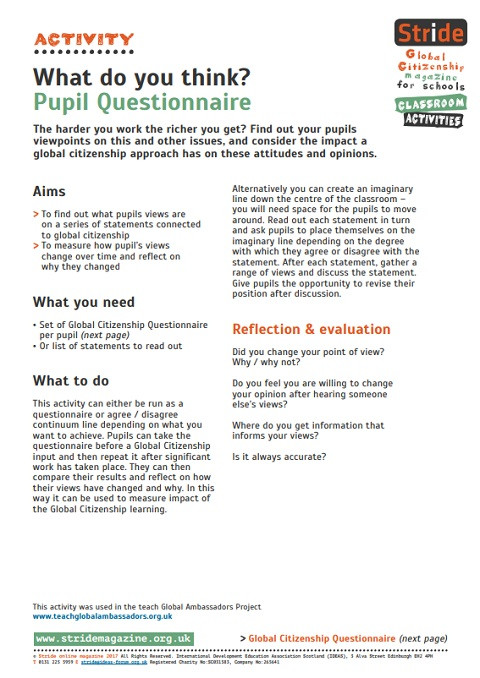 What Do You Think?: Pupil Questionnaire; Activity 발행 연도: 2017 단체 저자: Stride | International Development Education Association Scotland (IDEAS) This material aims to find out what pupils views are on a series of statements connected to global citizenship and to measure how pupil’s views change over time and reflect on why they changed.
  Tackling Controversial Issues in the Citizenship Classroom: A Resource for Citizenship Education 발행 연도: 2012 저자: Lesley Emerson | Mary Gannon | Conor Harrison | Valerie Lewis | Anne-Marie Poynor 단체 저자: City of Dublin Vocational Education Committee (CDVEC). Curriculum Development Unit | European Union (EU) The purpose of this resource is to provide teachers with the opportunity to reflect on a number of issues associated with teaching controversial issues in the classroom. It offers a practical approach which allows students to explore controversial issues which arise in citizenship and other areas of the curriculum in a way which is safe for both teacher and students.
  Intercultural Multilingual Education in Latin America: Mexico, Guatemala, Colombia, Brazil, Ecuador, Peru, Bolivia and Paraguay, and Norway 발행 연도: 2011 단체 저자: Internacional de la Educación para Latinoamerica This document deals with Intercultural Bilingual Education (IBE), its current status and the concepts and processes driving it today – and in a certain way the conflicts encompassing it. It contains information on Mexico, Guatemala, Colombia, Brazil, Ecuador, Peru, Bolivia and Paraguay, and includes some data and comments on Norway. Certainly all Latin America is involved in the topic, one way or another, but for now this is the geographical scope of the paper. It seeks to give an overview of the whole and profile a few specific aspects by country.
  Equality & Diversity: Building a Culture of Equality in Our Society; A Citizenship Education Resource for Transition Year and Key Stage 4 발행 연도: 2012 저자: Mary Gannon | Aoife Ruane-Kelly 단체 저자: City of Dublin Vocational Education Committee (CDVEC). Curriculum Development Unit | Centre for Cross Border Studies This resource is intended to support young people in critically exploring the concepts of equality and diversity and in acting to build a culture of equality within their own environment and within society. Looking specifically at equality and diversity within the school, community and society, the resource provides an opportunity for students to increase their knowledge and understanding of equality, develop the skills to critically analyse inequality, and become empowered to actively promote equality within their school and/or community.The resource is intended primarily for use in Citizenship Education in Transition Year (Ireland) and Key Stage 4 (Northern Ireland). As a resource on equality and diversity, it is clearly based on human rights, which underpin the citizenship curricula in both jurisdictions. It meets the aims of the KS 4 curriculum for Local and Global Citizenship by helping students:Respond to the specific challenges and opportunities which diversity and inclusion present in Northern Ireland and the wider worldIdentify and exercise their rights and social responsibilities in relation to local, national and global issuesDevelop their understanding of the role of society and government in safeguarding individual and collective rights in order to promote equality and to ensure that everyone is treated fairlyDevelop their understanding of how to participate in a range of democratic processesDevelop awareness of key democratic institutions and their role in promoting inclusion, justice and democracy.
  Adult Learning and Gender: EAEA Background Paper 발행 연도: 2020 저자: Agatha Devlin 단체 저자: European Association for the Education of Adults (EAEA) Gender sensitivity in adult learning and education (ALE) is about more than trying to improve targeted outreach programmes for men and women who seem to be slipping through the gaps. By providing gender sensitive education opportunities, people are not only more likely to engage but also more likely to get the most out of their experiences. This background paper explores the problems that gender sensitive adult education could attempt to solve, good practices and examples to help make current structures more gender sensitive, and the wider benefits of gender sensitivity in ALE.This background paper takes various subtopics or examples of gender sensitivity in adult education and analyses them as individual areas, making its content easier to navigate according to the reader’s interests or concerns.
  Global Citizenship Education Starts With Curricular Reform and Active Student Learning (Journal of Global Citizenship & Equity Education; Vol. 7, No. 1) 발행 연도: 2020 저자: Evan Saperstein 단체 저자: Centennial College In this new age of globalization, the concept of global citizenship has taken root and become the subject of increasing scholarly attention and analysis. While the study of global citizenship has become part of high school curricula in several countries across the globe, it has not to the same degree in the United States. To expand upon the existing literature and advance the study of global citizenship in the United States, this qualitative, interpretivist case study evaluates the perceptions and experiences of an administrator, two teachers, and six students of a global studies course at an urban high school in New Jersey. The study included interviews of the participants, as well as analysis of the course curriculum, syllabus, and student assignments.This study advances three primary findings. First, the need for continued curriculum development and design of global studies related courses and content in U.S. high schools. Second, the importance of experiential learning, among other forms of pedagogy and instructional practices, in furthering the goals of global citizenship education. Third, the need for class projects, international education programs, and other experiential learning opportunities (such as fieldwork, service-learning, or community programs) to cultivate student interest in global citizenship. Based on these findings and the prevailing literature, this study is proposing that U.S. high schools offer an elective course on global citizenship with ten units: 1) Introduction to Global Citizenship; 2) Sustainable Development; 3) Poverty and World Hunger; 4) Global Health Issues; 5) Child Mortality; 6) Peace and Conflict; 7) Human Rights and Gender Equality; 8) Universal Education; 9) Liberal Democratic Governance and Rights; 10) Global Citizenship Action Plan.