
자료
세계시민교육에 대한 이해를 넓히고 연구, 옹호 활동, 교수, 학습 등을 향상시킬 수 있는 다양하고 유용한 자료를 찾아보세요.
3,401 건의 결과가 검색되었습니다
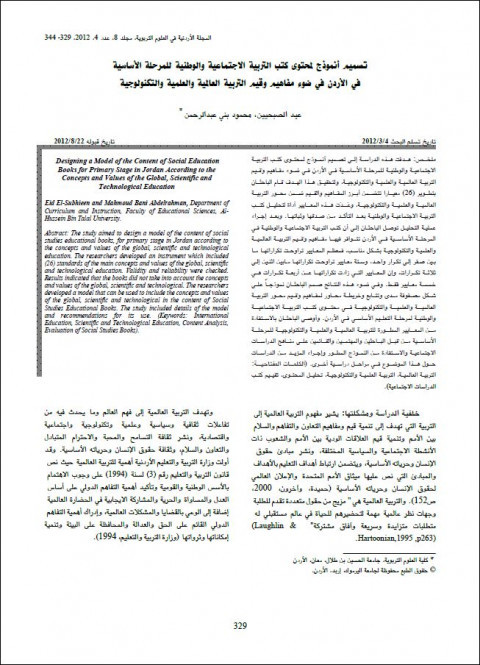 Designing a Model of the Content of Social Education Books for Primary Stage in Jordan according to the Concepts and Values of the Global, Scientific and Technological Education 발행 연도: 2012 저자: الصبحيين، عيد 단체 저자: Yarmouk University The study aimed to design a model for the contents of the social studies educational books, for the primary stage in Jordan according to the concepts and values of the global, scientific and technological education. The researchers developed an instrument of 26 standards of the relevant main concepts and values. Validity and reliability were checked. Results indicated that the books did not take into account the concepts and values in question. The researchers developed a model that can be used to include the concepts and values of the global, scientific and technological education in the curriculla of social studies educational books. The study included details of the model and recommendations for its use.
  دور التربية الاسلامية في مواجهة العصبية في زمن العولمة الاجتماعية 발행 연도: 2012 저자: آل جحراف، عايض بن محمد بن عايض 단체 저자: Umm Al-Qura University منهج الدراسة: المنهج الوصفي. الفصل الأول:الإطار العام للدراسة. الثاني: العصبية مفهومها، أنواعها، أسبابها، آثارها السلبية. الثالث: موقف الإسلام من العصبية - لمحة تاريخية لظهور العصبية عند الأمم، موقف القرآن الكريم من العصبية وموقف السنة النبوية. الرابع: موقف العولمة الاجتماعية من العصبية - ظهور العولمة عمومًا والعولمة الاجتماعية خصوصًا، الدعوة إلى الامتزاج الاجتماعي والعوامل المؤثرة على تفعيل مؤسسات العولمة الاجتماعية وآثارها على الدول النامية والفقيرة. الخامس: المبادئ التربوية الإسلامية التي دعت إلى نبذ العصبية ومنها مبدأ المساواة، مبدأ المصير والجزاء الواحد، مبدأ حقوق الإنسان وكرامته، مبدأ التسامح والإحسان، مبدأ العدل وعدم الظلم، مبدأ الوسطية والاعتدال. السادس: دور التربية الإسلامية في مواجهة العصبية من خلال المؤسسات التربوية - الأسرة، المسجد، المدرسة، وسائل الإعلام. السابع: الاستخلاصات العامة والتوصيات والمقترحات. أهم نتائج الدراسة: 1) وجود آثار خطيرة للعصبية تؤثر على التنشئة الصالحة كالجمود وحب التقليد والحقد، والسخرية، والأنانية، وتصنيف الناس على أساس تكبر واحتقار، وما يترتب عليه من خلافات وحروب وتأثر مما يمزق جسد الأمة الإسلامية. 2) قيام مؤسسات العولمة الاجتماعية على هدف خدمة الإنسان، والدفاع عن حقوقه يتطلب احترام ثقافات وعادات وتقاليد كل بلد أو عرق أو قومية وعدم فرض مبدأ القوة والفكرة الواحدة. 3) نشر ثقافة المساواة وحقوق الإنسان والتسامح والعدل والوسطية والاعتدال والمصير والجزاء الواحد بين أفراد المجتمع منذ الصغر لكي يتربى الفرد ويشرب تلك المبادئ. 4) تلعب القدوة الحسنة والحوار الفعال في الأسرة، والمسجد، والمدرسة ووسائل الإعلام دورا فعالا في توجيه نفوس أبناء المجتمع نحو مجتمع مترابط ينبذ العصبية وآثارها السيئة. 5) تعلم مبادئ الاحترام للآخرين وتعزيزها في نفوس الأبناء يولد شخصية متوازنة تفخر بانتمائها لأمتها، وتحترم الآخرين ولا تتعدى عليهم ويمكن للمدرسة القيام بذلك من خلال التنوع في طرائق التدريس والتركيز على الأنشطة الجماعية الطلابية وتفعيلها داخل وخارج المدرسة. أهم توصيات الدراسة: 1) قيام المؤسسات الدينية، والثقافية، والإعلامية، والتربوية بدورها الفعال في تصحيح فكر المجتمع، واستخدام أساليب جذابة وفعالة لمواجهة العصبية. 2) على الدول الإسلامية القيام بعمل منظمات غير حكومية تتابع وتساعد في حل علاج مشكلات العصبية بين أفراد الأمة الإسلامية. 3) على الجامعات في المجتمعات القيام بإنشاء كراس علمية تعنى بالبحوث التي تدرس ظواهر العصبية، وتساهم في تزويد المنظمات والمؤسسات المتابعة لظاهرة العصبية بالوسائل والطرق والحلول. أهم مقترحات الدراسة: يقترح الباحث عمل دراسات عن العصبية ضد المرأة، وفي داخل المدرسة بين المعلمين أو الطلاب، وكذلك دراسة أساليب التربية النبوية في مواجهة العصبية في المجتمع المدني، ودراسة الاختلاف والتنوع البشري وربطه بالتربية الإسلامية، ودراسة لبعض المقررات المدرسة ومدى تناولها لموضوع العصبية من وجهة نظر الخبراء، وعمل دراسة عن القبلية وآثارها داخل المدرسة الثانوية في منطقة عسير باعتبارها منطقة تتميز بالتنوع القبلي. The Role of Islamic Education in Countering Tribalism in the Age of Social Globalization 발행 연도: 2012 저자: آل جحراف، عايض بن محمد بن عايض 단체 저자: Umm Al-Qura University Methodology: descriptive approach. Chapter I: A general framework. Chapter II: Tribalism: concept, types, causes and negative effects. Chapter III: Islam's position on tribalism - a Historical overview of the emergence of tribalism; Holy Quran’s and Sunnah’s positions; Chapter IV: Social Globalization’s Position on Tribalism - the emergence of Globalization in general and social globalization specifically; social globalization, calls for Social mixing and the factors affecting activation of social globalization institutions; The Effects of Social Globalization on the Developing and Poor Countries.Chapter V: Educational Principles that called for the rejection of tribalism”, including equality, determination and unified penalty, human rights and dignity, tolerance and philanthropy, justice and the rejection of injustice, moderation. Chapter VI: The role of Islamic Education in countering tribalism through educational institutions -the Family, the mosque, the school and the Media. Chapter VII: General conclusions and recommendations and proposals.Following the prime results and recommendations, the researcher proposes the following: “conducting studies on discrimination against women, and within school communities with regard to teachers or students, as well as studying Sunnah educational methods with regard to countering tribalism in the civil society, and studying human differences and diversity in addition to linking it to Islamic education.Also, there should be a study of some school curricula in order to examine the extent to which it addresses the issue of tribalism from the viewpoint of experts, as well as conducting a study of tribalism and its effects within the high school in Asir region as this region is characterized by tribal diversity”.
 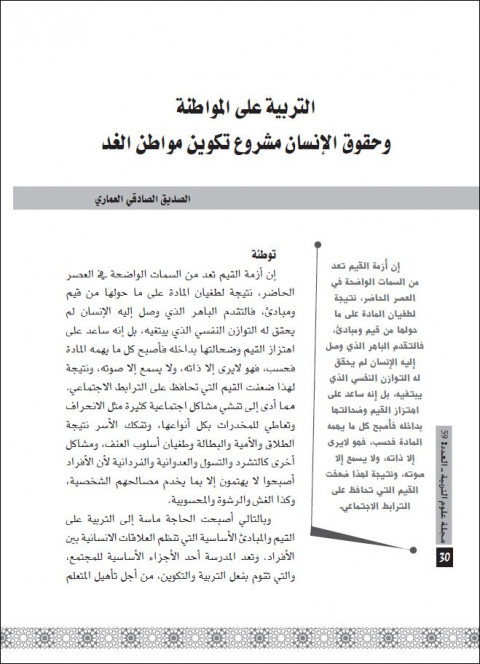 التربية على المواطنة وحقوق الإنسان مشروع تكوين مواطن الغد 발행 연도: 2014 저자: العماري، الصديق الصادقي هدفت هذه المقالة إلى إدماج ثقافة المواطنة وحقوق الإنسان كبيداغوجيا في الحقل التعليمي، وترسيخ تلك الثقافة عبر التربية الشاملة، مع تأطير ذلك كله داخل فضاء ثقافي مجتمعي عقلاني. لكن هذا الهدف لن يتحقق إلا باعتماد فلسفة تربوية تقوم على برامج ومناهج حية تستهدف ترسيخ قيم المواطنة والسلوك المدني وقيم حقوق الإنسان، يكون لها آثار إيجابية على الفرد والمجتمع. وقد تمّت معالجة هذا الموضوع من خلال الإجابة عن الأسئلة التالية: ما هي علاقة التربية بمنظومة القيم؟ كيف تساهم التربية على قيم المواطنة وقيم حقوق الإنسان في تكوين متعلم اليوم، وتأهيله ليصبح مواطن الغد؟ هل يكفي اعتماد هذه التربية القيمية في البرامج والمناهج التعليمية للحكم على سلوك المتعلم بالاستقامة والصلاح بما يجعله مستقبلا مواطنا صالحا؟ أم أن هناك إجراءات أخرى أساسية إضافة إلى الفلسفة التربوية المعتمدة؟ وقد ختمت الورقة بتحديد معالم التربية على المواطنة وحقوق الإنسان والتي تتمثل في أن يكون للأفراد الثقة في هويتهم وأن يعملوا من أجل تحقيق السلام وحقوق الإنسان في مجتمعهم وذلك من خلال: تحمل المسؤولية الاجتماعية، التعاون من أجل معالجة المشكلات، احترام الاختلافات بين الناس، دعم التضامن والعدالة. Education on Citizenship and Human Rights: A Project for Training the Human Being of Tomorrow 발행 연도: 2014 저자: العماري، الصديق الصادقي This article aimed to integrate citizenship culture and human rights as pedagogy into education and to consolidate that culture through global education while farming all of this within a social, cultural and rational space. However, this aim won’t be realized unless an education philosophy is adopted that is based on lively curricula and programs aiming at consolidating the values of citizenship, civic behavior and human rights, a philosophy that has positive impact on the individual and on society.This topic was treated by responding to these questions: How is the system of values related to education? How does education on citizenship values and human rights values contribute to the development of today’s learner and to his/her qualification to become tomorrow’s citizen?Would the adoption of these values based education into the educational curricula and programs suffice to judge the learner’s behavior as being straight and correct enough to qualify him/her to be the good citizen of the future? Or are there other fundamental additional procedures than the adopted education philosophy?The paper concluded with defining the aspects of the education on citizenship and human rights expressed in the ability of individuals to have confidence in their identity and to work for peace and human rights in their society through the following: shouldering social responsibility, cooperate for the sake of solving problems, respect differences among people and support solidarity and justice.
  The State of Global Education in Europe 2018 발행 연도: 2018 단체 저자: Global Education Network Europe (GENE) The State of Global Education in Europe reports on policy, strategy and funding for Global Education in European countries, based primarily on information submitted by the ministries, agencies and national coordinating bodies that participate in GENE (Global Education Network Europe). This third edition of the report identifies thematic trends and crosscutting issues and explores funding levels for Global Education across Europe. It also includes a chapter outlining some of the work done on evaluation across GENE, and concludes with a selection of highlights from the network. There are examples of national policy and practice throughout the report. This report on the State of Global Education in Europe has been developed to provide an overview of current key issues, policy priorities, funding trends and activities in Global Education in Europe. It draws on the expertise and information provided by organisations that participate in Global Education Network Europe – GENE. These comprise Ministries of Foreign Affairs, Ministries of Education, and their respective national agencies, and other bodies with responsibility for policymaking, support or coordination of Global Education in European countries.
  Aperçu de l’intégration de l'éducation planétaire dans les écoles primaires du Canada: Perspectives à l’échelle des provinces, des districts et des écoles 발행 연도: 2007 저자: Karen Mundy | Caroline Manion | Vandra Masemann | Megan Haggerty 단체 저자: UNICEF Canada Ce rapport donne une description préliminaire d’une vue d’ensemble de l’éducation planétaire au Canada, documentant de quelle manière l’éducation planétaire est formulée dans les politiques et les programmes scolaires à l’échelle provinciale, comment elle est soutenue par les districts et de quelle façon elle est mise en pratique dans les écoles canadiennes.Comme nous l’avons souligné précédemment, le chapitre 2 présente les faits saillants de plusieurs débats qui animent la mission professorale contemporaine relativement à l’éducation planétaire, et passe en revue les récentes études. Le chapitre 3 examine certaines des caractéristiques structurales de la société, le système politique et les établissements scolaires du Canada, et la manière dont ceux-ci ont contribué à une expérience strictement canadienne en matière d’éducation planétaire. Nous avons également examiné la configuration actuelle des acteurs participant aux activités relatives à l’éducation planétaire et pratique canadienne, selon une perspective comparative.Les six chapitres suivants présentent une brève étude de cas de la pratique en matière d’éducation planétaire de chaque province ou territoire aux trois paliers d’application (des écoles, des districts et de la province). Le chapitre dix présente les données provinciales de la Colombie-Britannique.Dans le chapitre 11, nous résumons les résultats de nos sept études de cas et examinons les différences et similitudes entre elles. Nous situons nos résultats par rapport à la recherche récente sur l’éducation planétaire dans d’autres contextes et y comparons la pratique canadienne. Nous étudions également la façon dont les « définitions perçues » de l’éducation planétaire, telles que nous les avons obtenues dans les écoles canadiennes, peuvent être appliquées aux débats normatifs contemporains sur l’éducation planétaire dans les ouvrages savants et les comptes rendus de recherche. Nous présentons enfin une série de recommandations, parmi lesquelles le besoin, selon nous, d’une nouvelle étude sur l’éducation planétaire au Canada.
  Teaching for Global Competence in a Rapidly Changing World 발행 연도: 2018 저자: Richard Lee Colvin | Virginia Edwards 단체 저자: Asia Society | Organisation for Economic Co-operation and Development (OECD) Educators and education systems worldwide are reassessing the knowledge, skills, and dispositions students need for success in today's rapidly changing and complex world. In a remarkable moment of global consensus, the member states of both the United Nations (UN), through its adoption of the Sustainable Development Goals (SDGs) in 2015, and the Organisation for Economic Co-operation and Development (OECD), through its Programme for International Student Assessment (PISA) in 2018, prioritized education for global citizenship and global competence.The OECD and the Center for Global Education at Asia Society have worked with academics, educators, and stakeholders in the global education field over several years to define global competence for primary and secondary education. The Center also has extensive experience supporting educators to integrate global competence into their teaching.A new publication from both organizations, entitled Teaching for Global Competence in a Rapidly Changing World, sets forward a new framework for global competence developed by OECD, which aligns closely with the definition developed by the Center for Global Education, and provides practical guidance and examples of how educators can embed global competence into their existing curriculum, instruction, and assessment.
  Inspiring Citizenship: Ontario's Careers/Civics Curriculum 발행 연도: 2009 단체 저자: Ontario Student Trustees' Association This publication is the culmination of over a year's work in research and collaboration on the part of student leaders from across Ontario. It seeks to celebrate the past years that the civics and careers curriculum has in the province while also challenging the system to do more.As the only province in Canada that has a recognized curriculum devoted to civic education system for responding to the need to nurture active, engaged citizens to tomorrow today. However, while implementation is one matter, delivery is another - and the two must go hand-in-hand. Stimuler la citoyenneté: Le curriculum de l'Ontario, le cours de Carrières/Citoyenneté 발행 연도: 2009 단체 저자: Ontario Student Trustees' Association Cette publication est l'aboutissement de plus d'un an de travail de recherche et de collaboration de la part d'élèves leaders à travers l'Ontario. Elle cherche à célébrer les années précédentes au cours desquelles le curriculum de carrières et citoyenneté a existé dans la province, tout en stimulant le système d'aller un peu plus loin.