
자료
세계시민교육에 대한 이해를 넓히고 연구, 옹호 활동, 교수, 학습 등을 향상시킬 수 있는 다양하고 유용한 자료를 찾아보세요.
1,322 건의 결과가 검색되었습니다
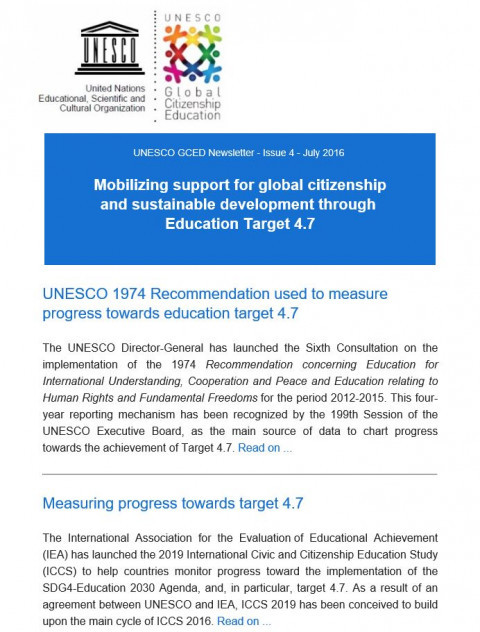 UNESCO GCED eNewsletter Issue 4 발행 연도: 2016 단체 저자: UNESCO Feature: Mobilizing support for global citizenship and sustainable development through Education Target 4.7 UNESCO 1974 Recommendation used to measure progress towards education target 4.7 Measuring progress towards 4.7 Gyeongju Action Plan: NGOs join UNESCO Global capacity-building workshop on GCED organized by APCEIU Southern Africa Regional Meeting on GCED convened in Johannesburg, South Africa UNESCO launches Teacher's Guide on the Prevention of Violent Extremism Expert meeting on the Prevention of Violent Extremism through Education European ministers back education for democracy to counter extremism and racaism UN discusses innovative solutions to prevent violent extremism through education UNESCO's YESPeace Network taps the power of youth worldwide to change the future GCED Topics and Learning Objectives available in seven languages.
  Ensinando sobre o Holocausto na Escola : Informações e Propostas para Professores dos Ensinos Fundamental e Médio 발행 연도: 2014 저자: Nilton Mullet Pereira | Ilton Gitz 단체 저자: UNESCO This textbook aims at helping teachers of primary and secondary education to address the Holocaust theme in their classes. This book contains suggested activities, lists of books and films references to help pupils to make connections between the Holocaust and others genocides but also to develop critical thinking and respect for human rights.
  Regional overview: Central and Eastern Europe and Central Asia 발행 연도: 2015 단체 저자: UNESCO Central and Eastern Europe (CEE) and Central Asia (CA) have both made significant advances towards Education for All (EFA) since 1999. However, the 2015 EFA Global Monitoring Report shows that despite progress, Education For All remains unfinished business, including in Central and Eastern Europe and in Central Asia. This must be taken into account in the post-2015 agenda. Региональный обзор: Центральная и Восточная Европа и Центральная Азия 발행 연도: 2015 단체 저자: UNESCO В настоящем региональном обзоре, где рассматривается прогресс, достигнутый с 2000 г., кратко излагаются ответы на важнейшие вопросы, которым посвящен Всемирный доклад по мониторингу (ВДМ) ОДВ за 2015 г. В ВДМ за 2015 г. показано, что, несмотря на прогресс, цели образования для всех еще не до конца достигнуты, в том числе в Центральной и Восточной Европе и Центральной Азии.
  How Does Education About the Holocaust Advance Global Citizenship Education? 발행 연도: 2018 저자: E. Doyle Stevick 단체 저자: UNESCO Can education about past genocides shape our understanding of how violence occur in today’s world? Can it foster a sense of belonging to a common humanity and empower young people to become active citizens who work globally for peace and human rights? How does learning about such crimes, which profoundly affect the core dignity of human beings, support the objectives of Global Citizenship Education (GCED), a priority of the 2030 Education Agenda?This paper, commissioned by UNESCO, offers an overview of empirical research on teaching and learning about the Holocaust and how such education may impact leaners’ cognitive, socio-emotional and behavioural skills and competencies. It provides insights for educators on how effective lessons about the Holocaust can meet some of the key expected outcomes of Global Citizenship Education (GCED), such as critical thinking skills, attitudes of empathy and solidarity, and motivation to take action to prevent human rights abuses.
 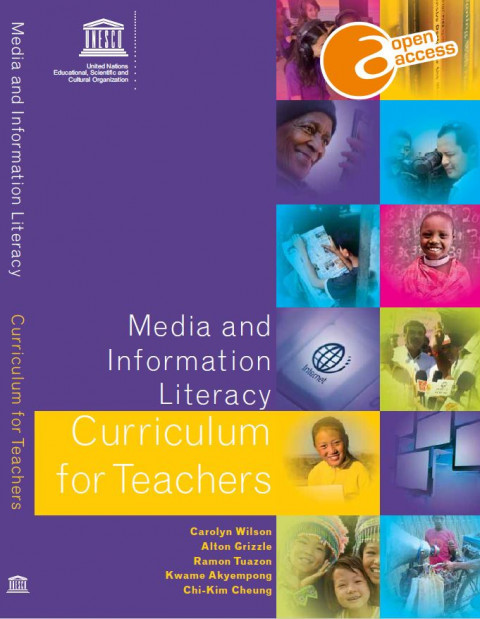 Education aux médias et à l'information: programme de formation pour les enseignants 발행 연도: 2011 저자: Carolyn Wilson | Alton Grizzle | Ramon Tuazon | Kwame Akyempong | Chi Kim Cheung 단체 저자: UNESCO Nous vivons dans un monde où la qualité de l’information que nous recevons détermine largement nos choix et nos actions et en particulier, notre capacité à pro ter des libertés fondamentales et notre possibilité d’autodétermination et de développement. Ce programme d’éducation aux médias et à l’information pour les enseignants est une ressource importante pour les États membres de l’UNESCO et une publication expérimentale. Elle est prospective et s’efforce de réaliser la convergence de la radio, la télévision, l’Internet, les journaux, les livres, les archives numériques et les bibliothèques sur une même plate-forme. Elle est aussi spécialement conçue pour permettre l’intégration de ce programme dans le système formel de formation des enseignants. L’UNESCO croit que ce programme sera une étape importante d’innovation et de progrès pour tous les niveaux d’éducation. Медийная и информационная грамотность: программа обучения педагогов 발행 연도: 2011 저자: Carolyn Wilson | Alton Grizzle | Ramon Tuazon | Kwame Akyempong | Chi Kim Cheung 단체 저자: UNESCO Данная программа обучения педагогов медийной и информационной грамотности — важный источник информации для государств-членов ЮНЕСКО, призванный содействовать их усилиям по достижению целей, сформулированных в Грюнвальдской декларации (1982 г.), Александрийской декларации (2005 г.) и Парижской повесткой дня (2007 г.), имеющих прямое отношение к медийной и информационной грамотности (МИГ). Данное издание состоит из двух частей. Часть 1 содержит описание программы обучения и системы компетенций МИГ. В ней описываются логика, структура и основные темы програм-мы. Она дополняет «Структуру ИКТ-компетентности учителей» (ICTs Competency Framework for Teachers), подготовленную ЮНЕСКО в 2008 г. Часть 2 включает в себя подробное описание базовых и дополнительных модулей учебной программы. Программа обучения учителей медийной и информационной грамотности переведена на арабский, французский, русский и испанский языки.
 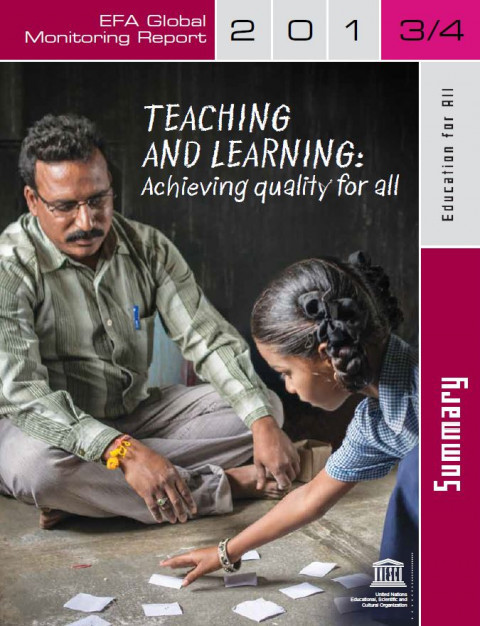 Teaching and Learning: Achieving Quality for All (EFA Global Monitoring Report, 2013-2014; Summary) 발행 연도: 2014 단체 저자: UNESCO This Report is an independent publication commissioned by UNESCO on behalf of the international community. It is the product of a collaborative effort involving members of the Report Team and many other people, agencies, institutions and governments. This 11th EFA Global Monitoring Report provides a timely update on progress that countries are making towards the global education goals that were agreed in 2000. It also makes a powerful case for placing education at the heart of the global development agenda after 2015.An education system is only as good as its teachers. Unlocking their potential is essential to enhancing the quality of learning. Evidence shows that education quality improves when teachers are supported – it deteriorates if they are not, contributing to the shocking levels of youth illiteracy captured in this Report. This Report identifies four strategies to provide the best teachers to reach all children with a good quality education. The Report shows also that teachers can only shine in the right context, with well-designed curricula and assessment strategies to improve teaching and learning. This Report’s evidence clearly shows that education provides sustainability to progress against all development goals. Educate mothers, and you empower women and save children’s lives. Educate communities, and you transform societies and grow economies. This is the message of this EFA Global Monitoring Report. Преподавание и обучение: Обеспечение качества для всех 발행 연도: 2014 단체 저자: UNESCO Настоящий доклад представляет собой независимую публикацию, подготовленную по заказу ЮНЕСКО для международного сообщества. Он является результатом совместной работы, в которой участвовали члены Группы по подготовке Всемирного доклада по мониторингу "Образование для всех" (ОДВ), а также многие другие специалисты, учреждения, институты и правительства.Настоящий 11-й Всемирный доклад по мониторингу ОДВ представляет обновленную информацию о прогрессе стран на пути к достижению глобальных целей в области образования, согласованных в 2000 г. В докладе также приводятся серьезные доводы в пользу обеспечения приоритетного внимания вопросам образования в рамках глобальной повестки дня в области развития на период после 2015 г.Система образования напрямую зависит от учителей. Раскрытие их потенциала играет ключевую роль для повышения качества обучения. Факты говорят о том, что качество образования повышается при оказании поддержки учителям и понижается при ее отсутствии, что влияет на шокирующий уровень неграмотности молодежи, отраженный в настоящем докладе.В данном докладе представлены четыре стратегии по обеспечению школ лучшими учителями в целях предоставления всем детям качественного образования. В докладе также отмечается, что учителя могут действительно добиваться успеха только в благоприятных условиях при использовании хорошо разработанных стратегий в области учебных программ и процедур оценки, направленных на повышение уровня преподавания и обучения. В настоящем докладе представлены четкие доказательства того, что образование обеспечивает устойчивые условия для достижения всех целей в области развития. Просвещение матерей позволяет не только расширить права и возможности женщин, но и сохранить жизни детей. Просвещение общин способствует преобразованию обществ и развитию экономики. В этом и заключается главная идея настоящего Всемирного доклада по мониторингу ОДВ.
 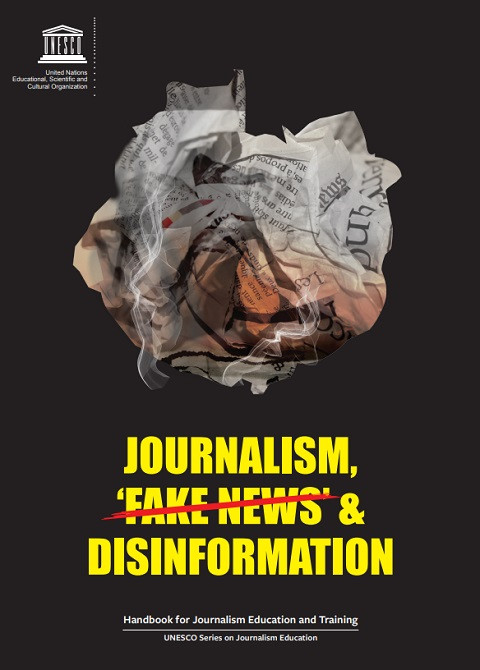 Journalism, Fake News & Disinformation: Handbook for Journalism Education and Training 발행 연도: 2018 저자: Julie Posetti | Cherilyn Ireton | Claire Wardle | Hossein Derakhshan | Alice Matthews | Magda Abu-Fadil | Tom Trewinnard | Fergus Bell | Alexios Mantzarlis 단체 저자: UNESCO This handbook seeks to provide an internationally-relevant model curriculum, open to adoption or adaptation, which responds to the emerging global problem of disinformation that confronts societies in general, and journalism in particular. Serving as a model curriculum, the publication is designed to give journalism educators and trainers a framework and lessons to help students and practitioners of journalism to navigate the issues associated with ‘fake news’.The contents draw together the input of leading international journalism educators, researchers and thinkers who are helping to update journalism method and practice to deal with the challenges of misinformation and disinformation. The lessons are contextual, theoretical and in the case of online verification, extremely practical. Used together as a course, or independently, they can help refresh existing teaching modules or create new offerings.It is part of the “Global Initiative for Excellence in Journalism Education”, which is a focus of UNESCO’s International Programme for the Development of Communication (IPDC). The Initiative seeks to engage with teaching, practising and researching of journalism from a global perspective, including sharing international good practices.