
자료
세계시민교육에 대한 이해를 넓히고 연구, 옹호 활동, 교수, 학습 등을 향상시킬 수 있는 다양하고 유용한 자료를 찾아보세요.
4 건의 결과가 검색되었습니다
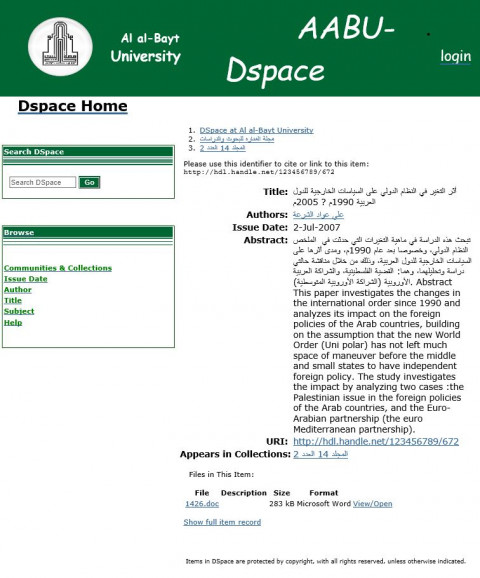 أثر التغير في النظام الدولي على السياسات الخارجية للدول العربية 1990م - 2005م 발행 연도: 2008 저자: Ali Awad Al Sharaa تبحث هذه الدراسة في ماهية التغيرات التي حدثت في النظام الدولي، وخصوصا بعد عام 1990م، ومدى أثرها على السياسات الخارجية للدول العربية، وذلك من خلال مناقشة حالتي دراسة وتحليلهما، وهما: القضية الفلسطينية، والشراكة العربية الأوروبية (الشراكة الأوروبية المتوسطية). The Impact of the Change in the International System on the Foreign Policies of the Arab Countries 1990-2005 발행 연도: 2008 저자: Ali Awad Al Sharaa This paper investigates the changes in the international order since 1990 and analyzes its impact on the foreign policies of the Arab countries, building on the assumption that the new World Order (Uni polar) has not left much space of maneuver before the middle and small states to have independent foreign policy. The study investigates the impact by analyzing two cases :the Palestinian issue in the foreign policies of the Arab countries, and the Euro-Arabian partnership (the euro Mediterranean partnership).
 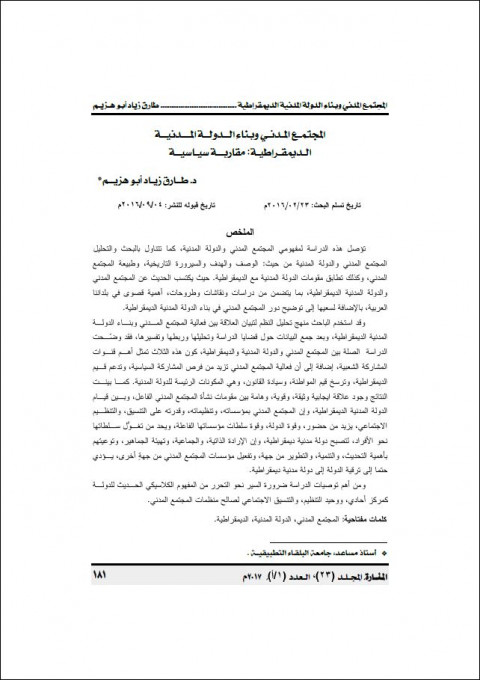 المجتمع المدني وبناء الدولة المدنية الديمقراطية: مقاربة سياسية 발행 연도: 2016 저자: Tareq Ziad Abu Hazeem تؤصل هذه الدراسة لمفهومي المجتمع المدني والدولة المدنية, كما تتناول بالبحث والتحليل المجتمع المدني والدولة المدنية من حيث: الوصف والهدف والسيرورة التاريخية, وطبيعة المجتمع المدني, وكذلك تطابق مقومات الدولة المدنية مع الديمقراطية. حيث يكتسب الحديث عن المجتمع المدني والدولة المدنية الديمقراطية, بما يتضمن من دراسات ونقاشات وطروحات, أهمية قصوى في بلداننا العربية, بالإضافة لسعيها إلى توضيح دور المجتمع المدني في بناء الدولة المدنية الديمقراطية. وقد استخدم الباحث منهج تحليل النظم لتبيان العلاقة بين فعالية المجتمع المدني وبناء الدولة المدنية الديمقراطية, وبعد جمع البيانات حول قضايا الدراسة وتحليلها وربطها وتفسيرها, فقد وضّحت الدراسة الصلة بين المجتمع المدني والدولة المدنية والديمقراطية, كون هذه الثلاث تمثل أهم قنوات المشاركة الشعبية, إضافة إلى أن فعالية المجتمع المدني تزيد من فرص المشاركة السياسية، وتدعم قيم الديمقراطية، وترسخ قيم المواطنة، وسيادة القانون، وهي المكونات الرئيسة للدولة المدنية. كما بينت النتائج وجود علاقة ايجابية وثيقة، وقوية، وهامة بين مقومات نشأة المجتمع المدني الفاعل، وبين قيام الدولة المدنية الديمقراطية، وإن المجتمع المدني بمؤسساته، وتنظيماته، وقدرته على التنسيق، والتنظيم الاجتماعي، يزيد من حضور، وقوة الدولة، وقوة سلطات مؤسساتها الفاعلة, ويحد من تغوُّل سلطاتها نحو الأفراد، لتصبح دولة مدنية ديمقراطية, وإن الإرادة الذاتية، والجماعية، وتهيئة الجماهير، وتوعيتهم بأهمية التحديث، والتنمية، والتطوير من جهة, وتفعيل مؤسسات المجتمع المدني من جهةٍ أخرى، يؤدي حتما إلى ترقية الدولة إلى دولة مدنية ديمقراطية. ومن أهم توصيات الدراسة ضرورة السير نحو التحرر من المفهوم الكلاسيكي الحديث للدولة كمركز أحادي، ووحيد التنظيم، والتنسيق الاجتماعي لصالح منظمات المجتمع المدني. كلمات مفتاحية: المجتمع المدني، الدولة المدنية، الديمقراطية. Civil Society and Building a Democratic Civil State: A Political Approach 발행 연도: 2016 저자: Tareq Ziad Abu Hazeem The purpose of this study is to find a foundation for the concepts of the 'civil society' and the 'civil state'. It examines and compares both from different dimensions: description, purpose, objectives, history, the reality of the civil society and finally, to what extent they are similar. Most discussion is about civil society and civil democratic state, including studies, discussions and arguments, because of their importance in the Arab countries. In addition, this discussion seeks to clarify the role of civil society in building a democratic civil state. The researcher uses the systems analysis to point out the relationship between how active the civil society is and the establishment of the democratic civil state. After collecting and analyzing related statistics, this study has shown how much the civil society, the concept of democracy, and the state are related. The three represent the most important channels of public participation. In addition, the activeness of the civil society increases opportunities of political participation, supports the values of democracy and citizenship, and enhances the sovereignty of law.The three are the major components of the civil state. The results have revealed a number of facts: (1) there is a strong positive relation between the reasons behind the establishment of an active civil society and the establishment of the democratic civil society. Furthermore, (2) the civil society, its institutions and organized units, its ability of social coordination have created a strong state with powerful active institutions and limited the dominance of the society's powers over individuals. This has created a democratic civil state. (3) Individual and communicative will, increasing the public awareness of the importance of modernization and development, as well as stimulating the role of the active civil society lead to the development of a simple state to a democratic one. The study concludes with a major recommendation: the classical concept of the modern state as an independent uni-center of an isolated social coordination should be abandoned for the civil social organizations.