
자료
세계시민교육에 대한 이해를 넓히고 연구, 옹호 활동, 교수, 학습 등을 향상시킬 수 있는 다양하고 유용한 자료를 찾아보세요.
3 건의 결과가 검색되었습니다
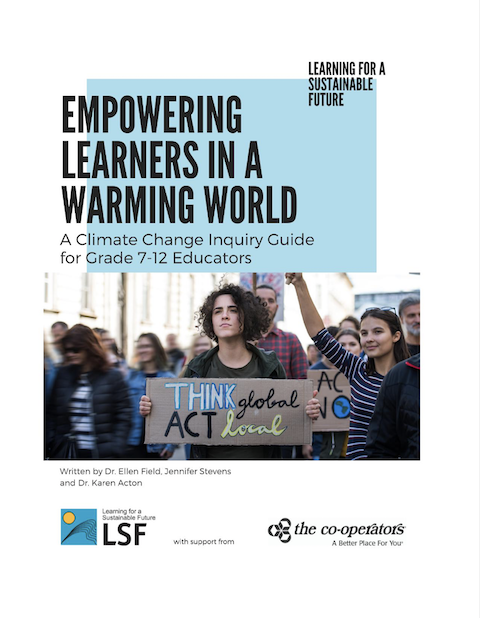 Équiper nos apprenants à un monde en réchauffement : Guide d’apprentissage par l’enquête sur le changement climatique pour les éducateurs du secondaire 발행 연도: 2020 저자: Ellen Field | Jennifer Stevens | Karen Acton 단체 저자: Learning for a Sustainable Future (LSF) Ce guide suit les principes directeurs de apprentissage par l’enquête. Il a pour but de proposer des occasions de favoriser l’évolution de la compréhension des élèves à l’égard du climat et du changement climatique, d’évaluer les risques et les occasions d’y remédier, de s’adapter au climat changeant, d’analyser les dimensions éthiques et de respecter les émotions qui découlent nécessairement du processus lié à la compréhension de la complexité et de l’urgence du problèmeLes stratégies d’enseignement transformatrices, telles que d’apprentissage par l’enquête , sont mieux adaptées à l’enseignement de problèmes complexes, comme le changement climatique. Ces stratégies utilisent souvent, comme point de départ, les connaissances et les expériences que les élèves détiennent déjà. Les éducateurs, qui eux-mêmes sont aux prises avec les enjeux liés au changement climatique, jouent le rôle de facilitateur pour guider les apprenants et aider la classe à collaborer pour apprendre, penser de façon critique et passer à l’actionEnfin et surtout, ce guide vise à mobiliser les élèves pour qu’ils contribuent aux solutions à école, dans la communauté et à la maison. Ce guide propose aux éducateurs des stratégies didactiques permettant aux élèves d’exprimer leurs perspectives et leur voix, des recherches et données scientifiques courantes sur le changement climatique, des ressources et activités, ainsi que des solutions pour agir. Empowering Learners in a Warming World: A Climate Change Inquiry Guide for Secondary Educators 발행 연도: 2020 저자: Ellen Field | Jennifer Stevens | Karen Acton 단체 저자: Learning for a Sustainable Future (LSF) The purpose of this guide is to present opportunities to evolve students’ understanding of the climate and climate change, assess the risks and opportunities to mitigate and adapt to the changing climate, unpack ethical dimensions, and honour emotions that are part of the process of coming to understand the complexity and urgency of the issue.Transformative teaching strategies used throughout this guide are important to tackling complex problems like climate change. These strategies often begin with the understanding and experiences that students bring with them. Educators, who themselves are grappling with climate change issues, take the role of facilitators and co-learners as the class works together to learn, critically reflect, and take action.Most importantly, this guide aims to engage students in contributing to solutions in their schools, communities and homes. It aims to connect educators to instructional strategies that allow for students’ perspectives and voice, currently available climate change science and research, teacher resources and activities, datasets, and action solutions.
 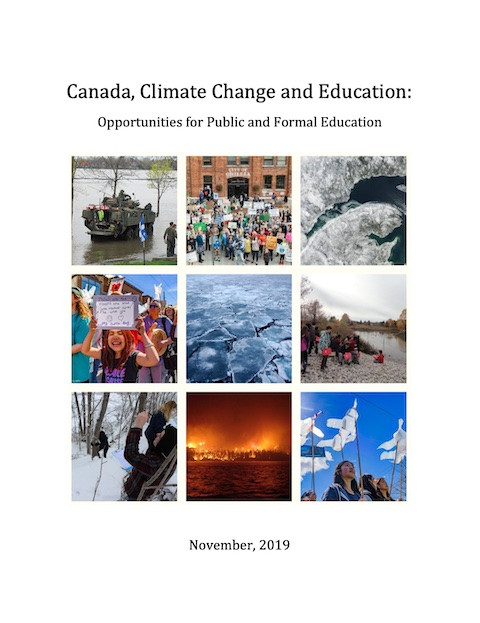 Canada, Climate Change and Education: Opportunities for Public and Formal Education 발행 연도: 2019 저자: Ellen Field | Pamela Schwartzberg | Paul Berger 단체 저자: Lakehead University | Learning for a Sustainable Future (LSF) The nationwide study of 3,196 Canadians entitled, Canada, Climate Change and Education: Opportunities for Public and Formal Education, establishes benchmarks of Canadians’ knowledge and understanding of climate change, their perspectives on the importance of climate change and its risks, and views on the role of schools and climate change education. It also provides the first comprehensive snapshot of climate change educational practice in Canada. The results are presented both nationally and from provincial/regional jurisdictions.