
Ресурсы
Изучайте широкий спектр ценных ресурсов ВГГ, чтобы углубить своё понимание и повысить эффективность исследований, просветительской деятельности, преподавания и обучения.
Найдено: 2
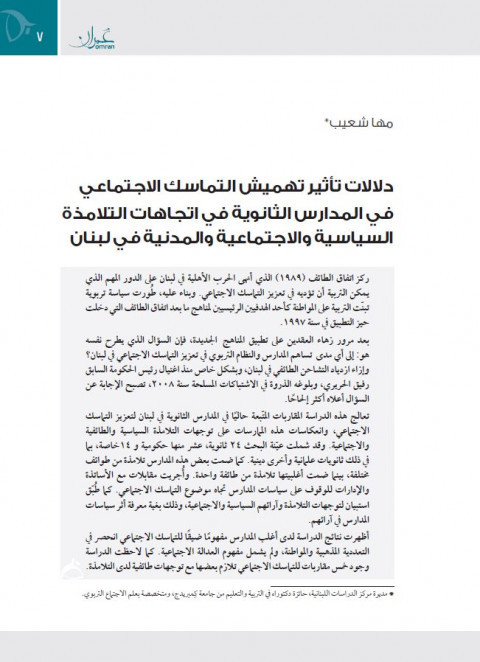 دلالات تأثير تهميش التماسك الاجتماعي في المدارس الثانوية في اتجاهات التلامذة السياسية والاجتماعية والمدنية في لبنان Год публикации: 2014 Автор: شعيب، مهى Организация-автор: Arab Center for Research and Policy Studies ركز اتفاق الطائف (1989) الذي أنهى الحرب الأهلية في لبنان على الدور المهم الذي يمكن التربية أن تؤديه في تعزيز التماسك الاجتماعي . وبناء عليه، طُورت سياسة تربوية تبنّت التربية على المواطنة كأحد الهدفين الرئيسيين لمناهج ما بعد اتفاق الطائف التي دخلت حيز التطبيق في سنة 1997. بعد مرور زهاء العقدين على تطبيق المناهج الجديدة، فإن السؤال الذي يطرح نفسه هو: إلى أي مدى تساهم المدارس والنظام التربوي في تعزيز التماسك الاجتماعي في لبنان؟ وإزاء ازدياد التشاحن الطائفي في لبنان، وبشكل خاص منذ اغتيال رئيس الحكومة السابق رفيق الحريري، وبلوغه الذروة في الاشتباكات المسلحة سنة 2008، تصبح الإجابة عن السؤال أعلاه أكثر إلحاحًا. تعالج هذه الدراسة المقاربات المتّبعة حاليًا في المدارس الثانوية في لبنان لتعزيز التماسك الاجتماعي، وانعكاسات هذه الممارسات على توجهات التلامذة السياسية والطائفية والاجتماعية. وقد شملت عيّنة البحث ٢٤ ثانوية، عشر منها حكومية وتسع خاص، بما في ذلك ثانويات علمانية وأخرى دينية. كما ضمت بعض هذه المدارس طلابًا من طوائف مختلفة، بينما ضمت أغلبيتها طلابًا من طائفة واحدة. وأُجريت مقابلات مع الأساتذة والإدارات للوقوف على سياسات المدارس تجاه موضوع التماسك الاجتماعي. كما طُبّق استبيان لتوجهات الطلاب وآرائهم السياسية والاجتماعية ،وذلك بغية معرفة أثر سياسات المدارس في آرائهم. أظهرت نتائج الدراسة لدى أغلب المدارس مفهومًا ضٌيقًا للتماسك الاجتماعي انحصر في التعددية المذهبية والمواطنة، ولم يشمل مفهوم العدالة الاجتماعية. كما لاحظت الدراسة وجود خمس مقاربات للتماسك الاجتماعي تلازم بعضها مع توجهات طائفية لدى التلامذة. The Implications of the Impact of the Marginalization of Social Cohesion on the Political, Social and Civic Attitudes of in Secondary Schools in Lebanon Год публикации: 2014 Автор: شعيب، مهى Организация-автор: Arab Center for Research and Policy Studies The Taef Agreement (1989) which put an end to the civil war in Lebanon focused on the role that education could play in consolidating social cohesion. Thus, following the Taef Agreement, the education policy developed adopted education on citizenship as one of the two main objectives of the curricula and which entered into implementation in 1997. Nearly two decades later today, the question is: to what extend do schools and the education system contribute to social cohesion in Lebanon? Considering the escalation in sectarian agitation, especially since the assassination of prime minister Rafiq Hariri, which peaked in the armed clashes in 2008, the answer to this question becomes even more urgent.This study examines the approaches currently practiced in the secondary schools in Lebanon to promote social cohesion and their reflections on the students’ political, sectarian and social attitudes. The sample consisted of 24 secondary schools, 10 public and 14 private, both secular and religious. Some of the schools had students from different sects whereas most of them included student majorities from one and the same sect. Interviews were done with teachers and administrations in order to explore the school policies regarding social cohesion. In addition, a questionnaire was used to explore the of students, their political and social views and to identify the impact of school policies on informing them. The results showed that most schools had a narrow concept of social cohesion that is limited sectarian pluralism and citizenship while social justice was not included. The study also identified five approaches to social cohesion some of which were coupled with sectarian attitudes of students.