
Ресурсы
Изучайте широкий спектр ценных ресурсов ВГГ, чтобы углубить своё понимание и повысить эффективность исследований, просветительской деятельности, преподавания и обучения.
Найдено: 190
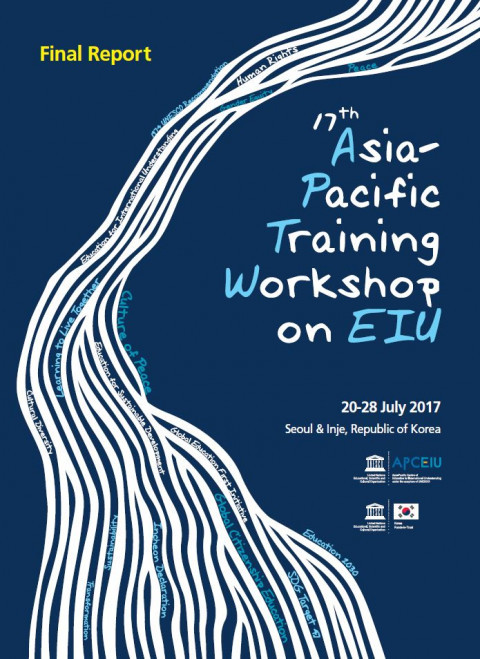 17th Asia-Pacific Training Workshop on EIU: Final Report Год публикации: 2017 Автор: Yeonwoo Lee | Grace Na Организация-автор: APCEIU Since its establishment in 2001, APCEIU has been organizing capacity building training workshops on Education for International Understanding (EIU) for educators to promote a Culture of Peace through education. The critical importance of preparing educators towards building a more peaceful and sustainable world has been reaffirmed by the increased attention to GCED (Global Citizenship Education), with the adoption of the Sustainable Development Goals (SDGs) and Education 2030 Framework for Action in 2015. Fostering global citizenship is in line with EIU’s core values in terms of the promotion of learning to live together to make a more just, peaceful, and inclusive society.The Asia-Pacific Training Workshop on EIU (APTW), APCEIU’s flagship programme, aims to enhance participants’ knowledge, skills, and commitment to EIU and GCED and enable them to competently design and implement EIU/GCED activities in their local and national contexts. Designed as a Training of Trainers (TOT), the APTW not only encompasses key themes and concepts surrounding EIU/GCED, but also has a strong focus on creative methodologies and approaches to teach EIU/GCED. In order to achieve this goal, this intensive 9-day training workshop includes lectures, discussions, workshops, in-depth seminars, field visits, action plan development in small groups where participants can learn from one another and from the experiences they encounter during the workshop. Furthermore, participants are encouraged to plan and carry out their own training workshops to spread the messages of EIU/GCED after their participation in the workshop.This workshop is sponsored by Ministry of Education and partnered with UNESCO Bangkok, supported by Korea Funds-in-Trust. 28 teacher educators/trainers in the Asia-Pacific region participated in the workshop and strengthened their understanding of Global Citizenship Education and discussed pedagogy, and action planning to practice GCED at national and international levels. This report provides an overview, summary, photographs and other information about the 17th Asia-Pacific Workshop on EIU (APTW).
  [Video] Pedagogical Principles of GCED Год публикации: 2018 Организация-автор: APCEIU Here we introduce a fast, fun, and friendly way of learning GCED.The series of bite-sized animation will take you on a journey to GCED in minutes!
 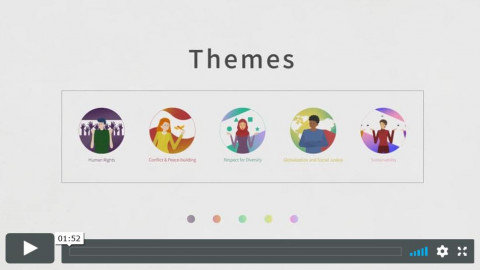 [Video] Thematic Areas and Learning Domains of GCED Год публикации: 2018 Организация-автор: APCEIU Here we introduce a fast, fun, and friendly way of learning GCED.The series of bite-sized animation will take you on a journey to GCED in minutes!
 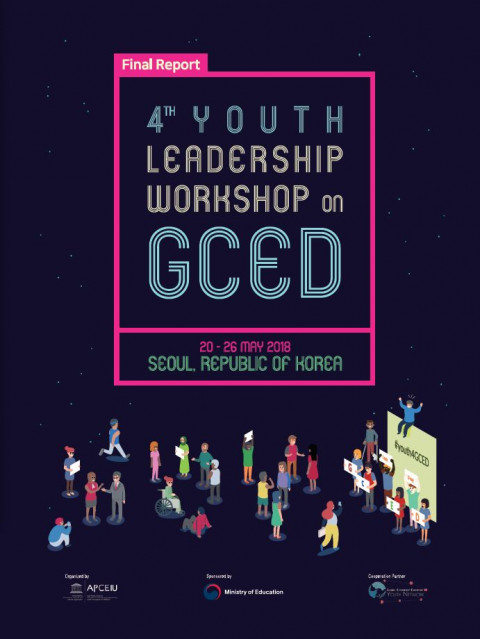 4th Youth Leadership Workshop on GCED: Final Report Год публикации: 2018 Организация-автор: APCEIU This report provides an overview of the activities and outcomes of the 4th Youth Leadership Workshop on GCED held in Seoul, Republic of Korea from 20 - 26May 2018.The 4th Youth Leadership Workshop on GCED invited 48 dynamic youth leaders around the world including those from developing countries and representatives of marginalized groups, and focused on developing effective advocacy strategies to maximize youth contribution in achieving SDG 4.7 through promotion of global citizenship.
 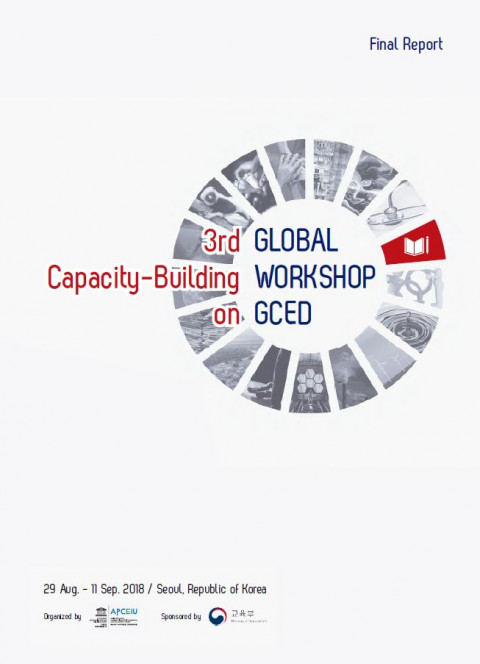 3rd Global Capacity-Building Workshop on GCED: Final Report Год публикации: 2018 Организация-автор: APCEIU This report provides an overview of the activities and outcomes of the 3rd Global Capacity-Building Workshop on GCED held in Seoul, Republic of Korea from 29 August - 11 September 2018.APCEIU organized the 3rd Global Capacity-Building Workshop on GCED with the aim of enhancing the capacities of teacher educators in developing countries on utilizing GCED. This 2-week intensive workshop provided participants opportunities to better understand the concept and principles of GCED, while engaging in meaningful dialogues and sharing experiences with educators from different countries, cultures, and contexts, and to develop their own action plans.
 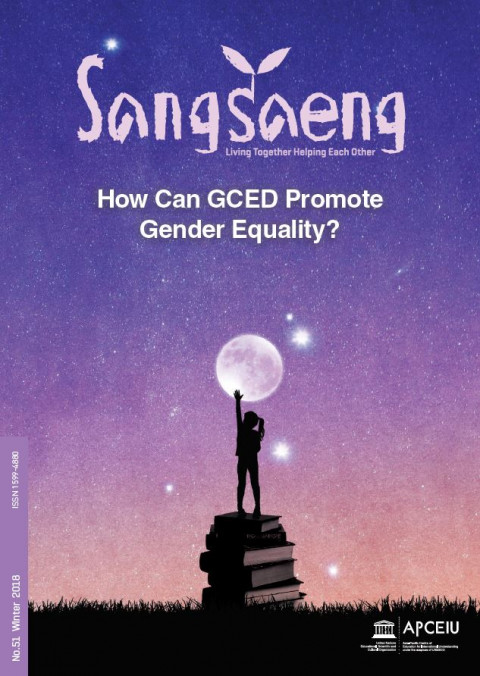 How Can GCED Promote Gender Equality? (SangSaeng no. 51 Winter 2018) Год публикации: 2018 Организация-автор: APCEIU The 51th issue of SangSaeng, under the theme of “How Can GCED Promote Gender Equality?,” explores the role of GCED to bolster gender equality. In this issue, readers are reminded that GCED is not an abstract idea- rather, it is connected to real-life issues such as questioning gendered roles, expectations and stereotypes that are prevalent in many societies; and therefore, it can be a vital accelerator in building a more equitable world. 3 Director’s Message 4 Special ColmunTools that Promote Gender Equality 8 Focus : How Can GCED Promote Gender Equality?8 Bringing Gender Equality to Science World12 Women For Better World15 Setting GCED Principles to Promote Girls’ Education in Tado18 Path to Building Next Gen Men 22 Best Practice22 Using GCED to Promote Gender Equality in Senegal26 Adapting GCED into a Specific Learning Environment 29 Special ReportThe 3rd International Conference on GCED 32 InterviewGirls in GCED 35 Youth NetworkGlobal Citizenship Education in Refugee Crisis Relief 38 LetterPoetry - The Sword in Our Sheath 42 Peace In my MemoryBachcha Posh : An Inside Look 46 Understanding the Asia-Pacific RegionGrafting Human Rights Tree in Five ‘Stans’ 50 APCEIU in Action
  Youth Advocacy Kit on Global Citizenship Education Год публикации: 2018 Организация-автор: APCEIU APCEIU has published the Youth Advocacy Kit on Global Citizenship Education (GCED) in order to provide youth leaders a guideline on advocacy for GCED. Targeting youth activists who currently participate in GCED programmes around the world, the kit offers the overview of GCED and advocacy as well as tips and tools to effectively implement advocacy campaign for GCED in local and global context. Furthermore, by sharing cases of youth advocacy in diverse fields, this kit also provides the real life examples which can be easily referred by youth interested in GCED advocacy. <Table of Contents> Youth Advocacy Kit on GCEDChapter 1 - What is Global Citizenship Education (GCED)?Chapter 2 - What is GCED Advocacy?Chapter 3 - Youth as an Active Agent for GCEDChapter 4 - Sharing Cases of Youth AdvocacyChapter 5 - Youth Initiatives on GCED
 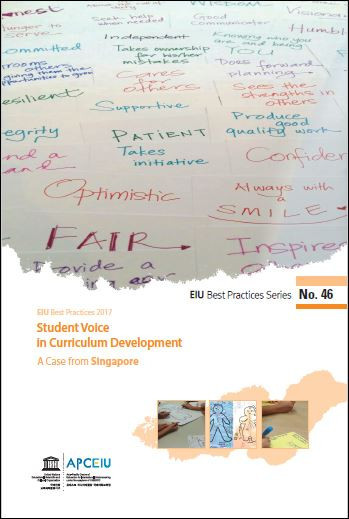 EIU Best Practices Series No.46: Student Voice in Curriculum Development Год публикации: 2017 Организация-автор: APCEIU This monograph is one of APCEIU's EIU Best Practices Series, which aims to encourage educators, scholars, and activists to implement and share local initiatives on EIU. The Series No. 46 introduces a programme called “Student Voice in Curriculum Development.” By giving students a voice as leaders, the programme reinforces students to take ownership of their own learning and growth particularly since leadership development is a life-long journey that extends beyond the students’ time in school. This exemplary programme brings teachers and students to work together on identifying what student leadership is and developing a complementary curriculum.
  3rd Youth Leadership Workshop on GCED: Final Report Год публикации: 2017 Организация-автор: APCEIU This report provides an overview of the activities carried out during the 3rd Youth Leadership Workshop on Global Citizenship Education (GCED) held in Jeju, Republic of Korea, from 28 May - 3 June 2017. This programme invited 50 youth activists from 43 countries around the world to exchange their ideas and identify GCED leadership strategies in order to mobilize young people for GCED in local and national contexts and advance the agenda globally. This report also aims to convey the voice of the youth represented by GCED Youth Network: their thoughts and reflections on GCED and its priority areas. The workshop was organized by APCEIU and in partnership with GCED Youth Network, Jeju Forum for Peace and Prosperity, Jaejudo Joa and Global Inner Peace; it was sponsored by Ministry of Education of the Republic of Korea and Jeju Special Self-Governing Province.For more information, please contact APCEIU's Office of Education and Training at ent@unescoapceiu.org.
  2nd Global Capacity-Building Workshop on GCED: Final Report Год публикации: 2017 Организация-автор: APCEIU This report provides an overview of the activities and outcomes of the 2nd Global Capacity-Building Workshop on GCED held in Seoul, Republic of Korea from 4 - 15 September, 2017. APCEIU organized the 2nd Global Capacity-Building Workshop on GCED in order to contribute to achieving the Sustainable Development Goals (SDGs) target 4.7 by enhancing the capacity of teacher educators and trainers in implementing GCED. This 2-week workshop provided participants opportunities to better understand the concept and internalize the pedagogical principles of GCED, while engaging in meaningful dialogues and sharing experiences with educators from different countries, cultures and contexts, and developing their own action plans. For more information, please contact APCEIU's Office of Education and Training at ent@unescoapceiu.org.