
Ресурсы
Изучайте широкий спектр ценных ресурсов ВГГ, чтобы углубить своё понимание и повысить эффективность исследований, просветительской деятельности, преподавания и обучения.
Найдено: 20
 Education on the Holocaust and on Anti-Semitism : An overview and analysis of Educational Approaches Год публикации: 2006 Организация-автор: OSCE. Office for Democratic Institutions and Human Rights (ODIHR) This study provides both the background on what is already being done in the field of Holocaust education and the identification of good practices to support future efforts by OSCE states and civil society. It also highlights new challenges that need to be addressed in education on both the Holocaust and on anti-Semitism. The first part of the study is based on information provided to the ODIHR by national ministries of education; national delegations of the Task Force for International Cooperation on Holocaust Education, Remembrance and Research (ITF); experts; educators; Jewish communities; and NGOs, in response to a questionnaire sent out by the ODIHR between December 2004 and April 2005. Comprehensive recommendations regarding Holocaust education conclude this first part of the overview. The second part of this report constitutes a first step in this regard: using country overviews on four OSCE states, it highlights the need to supplement Holocaust education in response to new forms of anti-Semitism and provides a number of relevant recommendations. (By the publisher)
  التصدي لمعدات السامية عن طريق التعليم مبادئ تةجيهية لواضعي السياسات Год публикации: 2018 Организация-автор: OSCE. Office for Democratic Institutions and Human Rights (ODIHR) A new UNESCO and OSCE co-publication takes up the challenge of educating learners to resist contemporary anti-Semitism at a time when the issue is becoming ever more crucial around the world. It suggests concrete ways to address anti-Semitism, counter prejudice and promote tolerance through education, by designing programmes based on a human rights framework, global citizenship education, inclusiveness and gender equality.It also provides policymakers with tools and guidance to ensure that education systems build the resilience of young people to anti-Semitic ideas and ideologies, violent extremism and all forms of intolerance and discrimination, through critical thinking and respect for others.
  Holocaust Memorial Days : An overview of remembrance and education in the OSCE region Год публикации: 2015 Организация-автор: OSCE. Office for Democratic Institutions and Human Rights (ODIHR) This publication provides an overview of governmental and non-governmental practices in the OSCE area to commemorate the Holocaust. It is intended to promote remembrance and education by publicizing and facilitating the exchange of good practices. The publication shows that most OSCE governments, as well as many local and municipal authorities, schools, civil society organizations, religious groups and others, are actively involved in Holocaust commemoration activities. While many of these activities take place throughout the year, there is a particular focus on promoting Holocaust remembrance, research and education during Holocaust Memorial Days. Across the world, 27 January, the International Day of Commemoration in Memory of the Victims of the Holocaust, is devoted to educating future generations about the Holocaust. This overview provides a snapshot of the types of Holocaust education activities that have been developed to mark Holocaust Memorial Days, while also identifying where and how the Holocaust is taught in schools throughout the region. (By the publisher) Addressing Anti-semitism through Education: Guidelines for Policymakers Год публикации: 2018 Организация-автор: OSCE. Office for Democratic Institutions and Human Rights (ODIHR) A new UNESCO and OSCE co-publication takes up the challenge of educating learners to resist contemporary anti-Semitism at a time when the issue is becoming ever more crucial around the world. It suggests concrete ways to address anti-Semitism, counter prejudice and promote tolerance through education, by designing programmes based on a human rights framework, global citizenship education, inclusiveness and gender equality.It also provides policymakers with tools and guidance to ensure that education systems build the resilience of young people to anti-Semitic ideas and ideologies, violent extremism and all forms of intolerance and discrimination, through critical thinking and respect for others. Prévenir l’antisémitisme par l’éducation: Lignes directrices à l’intention des décideurs politiques Год публикации: 2018 Организация-автор: OSCE. Office for Democratic Institutions and Human Rights (ODIHR) Cette nouvelle publication UNESCO/OSCE relève le défi de l’antisémitisme contemporain à un moment où la question devient de plus en plus cruciale dans le monde entier. Elle propose des moyens concrets pour combattre l’antisémitisme, lutter contre les préjugés et promouvoir la tolérance par l’éducation, sur la base de programmes fondés sur les droits humains, l’éducation à la citoyenneté mondiale, l’inclusion et l’égalité des sexes. Elle fournit également aux décideurs politiques des outils et des recommandations pour garantir que les systèmes éducatifs renforcent la résilience des jeunes aux idées et idéologies antisémites, à l’extrémisme violent et à toutes les formes d’intolérance et de discrimination, par l’acquisition d’une pensée critique et le respect des autres. Addressing Anti-semitism through Education: Guidelines for Policymakers Год публикации: 2018 Организация-автор: OSCE. Office for Democratic Institutions and Human Rights (ODIHR) A new UNESCO and OSCE co-publication takes up the challenge of educating learners to resist contemporary anti-Semitism at a time when the issue is becoming ever more crucial around the world. It suggests concrete ways to address anti-Semitism, counter prejudice and promote tolerance through education, by designing programmes based on a human rights framework, global citizenship education, inclusiveness and gender equality.It also provides policymakers with tools and guidance to ensure that education systems build the resilience of young people to anti-Semitic ideas and ideologies, violent extremism and all forms of intolerance and discrimination, through critical thinking and respect for others.
 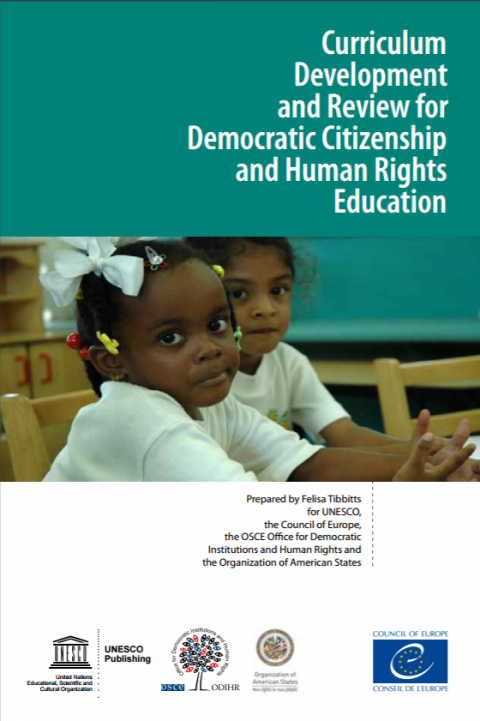 Curriculum Development and Review for Democratic Citizenship and Human Rights Education Год публикации: 2016 Организация-автор: UNESCO | Council of Europe | Organization of American States (OAS) | OSCE. Office for Democratic Institutions and Human Rights (ODIHR) Education for democratic citizenship and human rights education are vital for peaceful, sustainable and inclusive societies based on respect for the human rights of every person. Effective teaching and learning processes require well-trained teachers, positive learning environments and high-quality learning materials. This is underpinned by education policy, including curriculum development and review, which is the main focus of this book. The strengthening of education policies in the fields of education for democratic citizenship and human rights lies at the very heart of the efforts of the Council of Europe, the United Nations Educational, Scientific and Cultural Organization, the Office for Democratic Institutions and Human Rights of the Organization for Security and Co-operation in Europe, and the Organization of American States. These organisations have jointly produced this publication in order to support states’ commitment to fostering citizenship and human rights education and improving access to quality education for all. Élaboration et révision des programmes d'enseignement pour l'éducation à la citoyenneté démocratique et aux droits de l'homme Год публикации: 2016 Организация-автор: UNESCO | Council of Europe | Organization of American States (OAS) | OSCE. Office for Democratic Institutions and Human Rights (ODIHR) Education for democratic citizenship and human rights education are vital for peaceful, sustainable and inclusive societies based on respect for the human rights of every person. Effective teaching and learning processes require well-trained teachers, positive learning environments and high-quality learning materials. This is underpinned by education policy, including curriculum development and review, which is the main focus of this book. The strengthening of education policies in the fields of education for democratic citizenship and human rights lies at the very heart of the efforts of the Council of Europe, the United Nations Educational, Scientific and Cultural Organization, the Office for Democratic Institutions and Human Rights of the Organization for Security and Co-operation in Europe, and the Organization of American States. These organisations have jointly produced this publication in order to support states’ commitment to fostering citizenship and human rights education and improving access to quality education for all. Разработка и пересмотр учебных программ по воспитанию демократической гражданственности и образованию в области прав человека Год публикации: 2016 Организация-автор: UNESCO | Council of Europe | Organization of American States (OAS) | OSCE. Office for Democratic Institutions and Human Rights (ODIHR) Education for democratic citizenship and human rights education are vital for peaceful, sustainable and inclusive societies based on respect for the human rights of every person. Effective teaching and learning processes require well-trained teachers, positive learning environments and high-quality learning materials. This is underpinned by education policy, including curriculum development and review, which is the main focus of this book. The strengthening of education policies in the fields of education for democratic citizenship and human rights lies at the very heart of the efforts of the Council of Europe, the United Nations Educational, Scientific and Cultural Organization, the Office for Democratic Institutions and Human Rights of the Organization for Security and Co-operation in Europe, and the Organization of American States. These organisations have jointly produced this publication in order to support states’ commitment to fostering citizenship and human rights education and improving access to quality education for all.
  Human rights education in the school systems of Europe, Central Asia and North America: a compendium of good practice Год публикации: 2009 Организация-автор: Council of Europe | UNESCO | UN. Office of the United Nations High Commissioner for Human Rights (UN. OHCHR) | OSCE. Office for Democratic Institutions and Human Rights (ODIHR) “Human Rights Education in the School Systems of Europe, Central Asia and North America: A Compendium of Good Practice” is a compilation of 101 examples of good practice in human rights education in primary schools, secondary schools and teacher training institutions in the Organization for Security and Co-operation in Europe (OSCE) area, which is also covered by the United Nations Educational, Scientific and Cultural Organization (UNESCO), the Office of the United Nations High Commissioner for Human Rights (OHCHR) and, partially, the geographical mandate of the Council of Europe (CoE).The term “human rights education” is often used in this resource in a broader sense, to also include educationfor democratic citizenship and education for mutual respect and understanding, which are all based on internationally agreed human rights standards. These three areas are seen as interconnected and essential within educational systems in order to prepare youth to be active, responsible and caring participants in their communities, as well as at the national and global levels.Human rights education has been defined as education, training and information aimed at building a universal culture of human rights. A comprehensive education in human rights not only provides knowledge about human rights and the mechanisms that protect them, but also imparts the skills needed to promote, defend and apply human rights in daily life. Education for democratic citizenship focuses on educational practices and activities designed to help young people and adults to play an active part in democratic life and exercise their rights and responsibilities in society. Education for mutual respect and understanding highlights self-respect, respect for others, and the improvement of relationships between people of differing cultural traditions.This book aims to support quality teaching in these areas and to inspire educational policymakers (those working in education ministries and local school boards) and administrators, teachers, teacher trainers, non-formal educators and all other interested actors, as well as to facilitate networking and the exchange of experience among education professionals.