
Ресурсы
Изучайте широкий спектр ценных ресурсов ВГГ, чтобы углубить своё понимание и повысить эффективность исследований, просветительской деятельности, преподавания и обучения.
Найдено: 1,578
 Gender, Media and ICTs: New Approaches for Research, Education & Training Год публикации: 2019 Автор: Lisa French | Aimée Vega Montiel | Claudia Padovani Организация-автор: UNESCO Higher education has to grapple with intense change in communications technologies, genres and business models - and with stubborn continuities in gender inequalities. This publication helps to navigate and transform the conundrum. It provides seven structured and practical modules, and a treasure trove of links to further resources. The book’s contents can empower its readers to advance gender equality in and through communications.
  Culture | 2030 Indicators: Thematic Indicators for Culture in the 2030 Agenda Год публикации: 2019 Организация-автор: UNESCO The Culture|2030 Indicators is a framework of thematic indicators whose purpose is to measure and monitor the progress of culture’s enabling contribution to the national and local implementation of the Goals and Targets of the 2030 Agenda for Sustainable Development (SDGs). The methodology is developed to assist countries and cities with very different capacities regarding the collection of data and cultural statistics. The evidence gathered will inform policies and decisions as well as operational actions enabling greater investments in culture as a sector of activity and a greater recognition of its transversal role across other sectors.
  학습의 인본주의적 미래: 유네스코 석좌와 유니트윈의 시각에서 Год публикации: 2020 Организация-автор: UNESCO 유네스코의 ‘교육의 미래’(Futures of Education) 이니셔티브는 교육을 다시 생각해보고 교육의 미래를 만들어가는 것을 목표로 한다. 이 이니셔티브는 복잡성, 불확실성, 불안정성이 증가하는 세계에서 지식, 교육, 학습은 어떻게 재구상되어야 하는가라는 문제에 대한 전세계적 논의를 촉진하고 있다. 이 책은 현재 115개 이상의 국가의 800개 이상의 고등교육기관으로 구성된 광범위한 글로벌 네트워크를 대표하는 유니트윈/유네스코 석좌프로그램(UNITWIN/UNESCO Chairs Programme)이 교육의 미래 이니셔티브에 제출한 글들을 일차적으로 정리해 엮은 것이다. 이 책은 인류와 지구의 미래를 위해 교육의 비전과 목적을 재설정할 때 고려해야 할 핵심적 차원들을 조명하는 글들을 담고 있다. 이 글들은 사회적·환경적 지속가능성 강화에 있어 문화의 역할; 미래 세대 육성에 필요한 가치와 태도; 건실한 공교육 및 기타 학습공간의 중요성; 디지털 시대에 인간의 창의력과 역량을 강화할 필요성과 지식을 창출하고 세상을 변화시키는 데 필요한 혁신을 주도하는 고등교육의 역할 등 중요 영역에 더욱 초점을 맞출 것을 촉구한다. Les futurs humanistes de l’apprentissage: Perspectives des chaires UNESCO et des réseaux UNITWIN Год публикации: 2020 Организация-автор: UNESCO L’initiative de l’UNESCO intitulée Les futurs de l’éducation vise à repenser l’éducation et à façonner l’avenir, en lançant un débat mondial sur la manière de réinventer le savoir, l’éducation et l’apprentissage dans un monde de plus en plus complexe, incertain et précaire. Le présent volume constitue la première collection de contributions soumises à l’initiative Les Futurs de l’éducation de l’UNESCO par le Programme des chaires UNESCO/UNITWIN, un vaste réseau mondial regroupant plus de 800 établissements d’enseignement supérieur dans plus de 115 pays. Les documents de réflexion qu’il contient mettent en évidence les dimensions essentielles à prendre en compte pour ré-imaginer et redéfinir l’éducation dans l’intérêt de l’avenir de l’humanité et de la planète. Cette collection appelle à insister davantage sur un certain nombre de domaines critiques tels que le rôle de la culture dans le renforcement de la durabilité sociale et environnementale, les valeurs et les attitudes nécessaires pour préparer les générations futures, l’importance d’une éducation publique et robuste, ainsi que d’autres espaces d’apprentissage, la nécessité de renforcer la créativité et les capacités humaines à l’ère numérique, ainsi que le rôle de l’enseignement supérieur concernant la génération des savoirs et la conduite de l’innovation nécessaire pour transformer notre monde.
  Non-Formal Education, Sustainable Development and the Education 2030 Agenda: Study of Civil Society Practices in Latin America and the Caribbean Год публикации: 2020 Организация-автор: UNESCO This publication shows 27 civil society initiatives from various countries in Latin America and the Caribbean that work to promote actions and programs to comply with Target 4.7 within non-formal education. The study seeks that these organizations show their work, the challenges they face as regards the implementation of their programs and their greatest achievements.
  Education Transforms Lives Год публикации: 2017 Организация-автор: UNESCO This brochure explores UNESCO’s role in leading and coordinating the Education 2030 Agenda, which is part of a global movement to eradicate poverty through 17 Sustainable Development Goals by 2030. Education, essential to achieve all of these goals, has its own dedicated Goal 4, which aims to “ensure inclusive and equitable quality education and promote lifelong learning opportunities for all”. UNESCO is the United Nations’ specialized agency for education and the Education Sector provides global and regional leadership in education and responds to contemporary global challenges through education with a special focus on gender equality and Africa. L’éducation transforme la vie Год публикации: 2017 Организация-автор: UNESCO Grâce au nouveau Programme audacieux de développement durable entériné par la communauté internationale en septembre 2015, le monde s’est fixé pour objectif d’éradiquer la pauvreté à l’horizon 2030 à travers 17 Objectifs de développement durable (ODD). Ces objectifs ambitieux ont été adoptés à l’unanimité par les 193 États membres de l’Organisation des Nations Unies. C’est à ces derniers qu’incombe en premier lieu la responsabilité de les réaliser. L’éducation, cruciale pour atteindre l’ensemble des ODD, bénéficie d’un objectif dédié, l’ODD 4, visant à « assurer l’accès de tous à une éducation de qualité, sur un pied d’égalité, et promouvoir les possibilités d’apprentissage tout au long de la vie ».L’UNESCO est la seule agence des Nations Unies chargée de tous les aspects de l’éducation et possède également un réseau mondial d’instituts et de bureaux spécialisés. C’est pourquoi elle s’est vue confier la direction et la coordination de cet objectif, aux côtés de ses partenaires, par le biais de l’agenda Éducation 2030.
  Désinfodémie: Déchiffrer la désinformation sur le COVID-19 (Note d’orientation; 1) Год публикации: 2020 Автор: Julie Posetti | Kalina Bontcheva Организация-автор: UNESCO Le but de cette note d’orientation est de présenter une structure pour comprendre la désinfodémie sur le COVID-19 et les réponses possibles, en mettant en évidence les pratiques liées aux Objectifs de développement durable (ODD) des Nations Unies, le droit à la santé et le droit à la liberté d’expression. L’ODD 16.10 appelle à « un accès public à l’information et aux libertés fondamentales ».
  Media Literacy in Finland: National Media Education Policy Год публикации: 2019 Организация-автор: European Training and Research Centre for Human Rights and Democracy (Austria) | UNESCO Media literacy in Finland is the media literacy policy and the national media education policy document, published by the Ministry of Education and Culture in 2019. The document updates and extends the cultural policy guidelines for media literacy published in 2013. The need to update the policy arose from the changes that have taken place in media culture and the broader than before target groups of media education in particular. The Program of the Government also highlights the need for media skills for all age groups, from children to seniors. The vision of the policy is to improve everyone’s opportunities to develop their media literacy.
 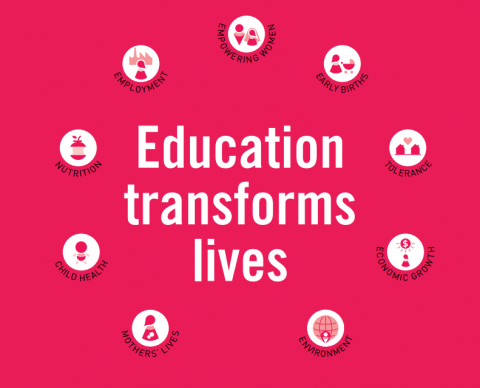 La Educación transforma la vida Год публикации: 2013 Организация-автор: UNESCO Education lights every stage of the journey to a better life, especially for the poor and the most vulnerable. Education’s unique power to act as a catalyst for wider development goals can only be fully realized, however, if it is equitable. That means making special efforts to ensure that all children and young people – regardless of their family income, where they live, their gender, their ethnicity, whether they are disabled – can benefit equally from its transformative power. Education empowers girls and young women, in particular, by increasing their chances of getting jobs, staying healthy and participating fully in society – and it boosts their children’s chances of leading healthy lives. To unlock the wider benefits of education, all children need the chance to complete not only primary school but also lower secondary school. And access to schooling is not enough on its own: education needs to be of good quality so that children actually learn. Given education’s transformative power, it needs to be a central part of any post-2015 global development framework.