
Ресурсы
Изучайте широкий спектр ценных ресурсов ВГГ, чтобы углубить своё понимание и повысить эффективность исследований, просветительской деятельности, преподавания и обучения.
Найдено: 795
 Ethical Impact Assessment: A Tool of the Recommendation on the Ethics of Artificial Intelligence Год публикации: 2023 Организация-автор: UNESCO As stated in article 50 of UNESCO’s Recommendation on the Ethics of Artificial Intelligence (UNESCO, 2021), the goal of this instrument is to “identify and assess benefits, concerns and risks of AI systems, as well as appropriate risk prevention, mitigation, redressal and monitoring measures, among other assurance mechanisms. Such assessments should identify the impacts on human rights and fundamental freedoms, in particular but not limited to the rights of people in vulnerable and precarious situations, labour rights, the environment and ecosystems and ethical and social implications, and facilitate citizen participation in line with the values and principles set forth in this Recommendation”. This instrument is primarily designed to help government officials (individuals and teams) involved in the procurement of AI systems. The goal of the methodology is to equip procurement officers with the set of questions to ask in order to ensure that the AI systems they are purchasing are aligned with the ethical standards set out in the UNESCO Recommendation on the Ethics of AI.
  A New Social Contract for Education: Advancing a Paradigm of Relational Interconnectedness Год публикации: 2023 Автор: Elena Toukan Организация-автор: UNESCO This paper looks at recent calls for “a new social contract for education” through the lens of a relational ontology for humanity and a living planet. Through a critical view of social contract theory, the paper looks at how this call can be an entry point to a deeper paradigmatic shift in framing questions of justice, social organization, and education itself. It proposes a shift from a rules-based transactional model to a relationship-based model grounded in understanding and appreciation of interdependence and interconnectedness. In order to shape more just and sustainable futures for humanity and the planet, a new social contract for education will need to transcend atomistic, transactional, and adversarial social dynamics and instead be organized around relational interconnectedness.
  Nurturing the Social and Emotional Wellbeing of Children and Young People During Crises (UNESCO COVID-19 Education Response: Education Sector issue notes; No.1.2, 2020) Год публикации: 2020 Организация-автор: UNESCO The COVID-19 pandemic has necessitated lockdowns, school closures, physical distancing and loss of familiar environments. The restriction on movement, disruption of routines, curtailment of social interactions and deprivation of traditional learning methods has led to increased pressure, stress and anxiety for young people, their families and communities. Parents and adult care-givers are struggling to meet the challenges of home schooling while juggling work and community obligations, caring for family members and maintaining individual well-being. Teachers are having to rapidly adapt to new and untested teaching methods. Young people are concerned about their education as national examinations are cancelled and are grappling with the insecurity of isolation and uncertainty. In poor households where income is a first priority, children are left on their own to home school or are pulled into other tasks. The stress and anxiety of the pandemic is compounded by the circulation of dynamic information - both accurate and false, often fuelled by sensationalist media reporting. This not only increases insecurity but also acts as fertile ground for the spread of intolerance, racism, xenophobia and hate crimes. To address and counter the social anxiety, emotional upheaval and fearful insecurity unleashed by COVID-19, it is urgent and necessary that families and communities build vital coping skills and emotional resilience. Social and emotional skills are well established, evidence-based practices, that can be adapted to help equip children, young people, parents and teachers with the knowledge, skills, attitudes and behaviours they need to stay healthy and positive, navigate emotions, practice mindful engagement, exhibit pro-social behaviour and cope with daily challenges.
  Protect Her Rights, Strengthen Your Laws: Her Atlas; Status Report on Girls’ and Women’s Right to Education Год публикации: 2022 Организация-автор: UNESCO UNESCO’s Her Education, our future initiative, Her Atlas was launched in 2019 with the aim to enhance public knowledge and monitor the status of national constitutions, legislation and regulations related to girls’ and women’s education rights in order to encourage countries to take actions to improve their legal frameworks. Three years after its launch, the research phase has been completed: overall, the legal frameworks of 196 countries have been thoroughly analyzed to evaluate the level of protection of girls’ and women’s right to education around the world. In an interactive world map format, Her Atlas uses a color-coded scoring system to monitor 12 indicators of legal progress towards gender equality in the right to education. This report marks the completion of the first research phase and intends to highlight some key trends outlined by the research work, and to emphasize examples of legal provisions regarding some aspects of girls’ and women’s right to education guaranteed by States’ domestic laws.
 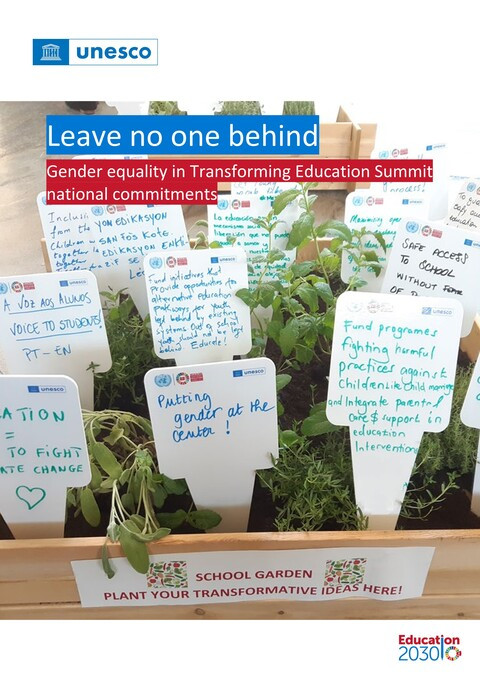 Leave No One Behind: Gender Equality in Transforming Education Summit National Commitments Год публикации: 2023 Организация-автор: UNESCO The Transforming Education Summit was convened in response to a global crisis in education – one of equity and inclusion, quality and relevance. This paper applies a gender lens to the national statements of commitments made by countries during the Summit. It considers the scope of commitments to gender equality and gender- transformative education, common gender themes and considerations emerging across commitments, and notable gaps. It aims to inform future actions by the Global Platform to Drive Leadership and Accountability for Gender Equality and Girls’ and Women’s Empowerment in and through Education, and support to country action to transform education systems to advance gender equality.
 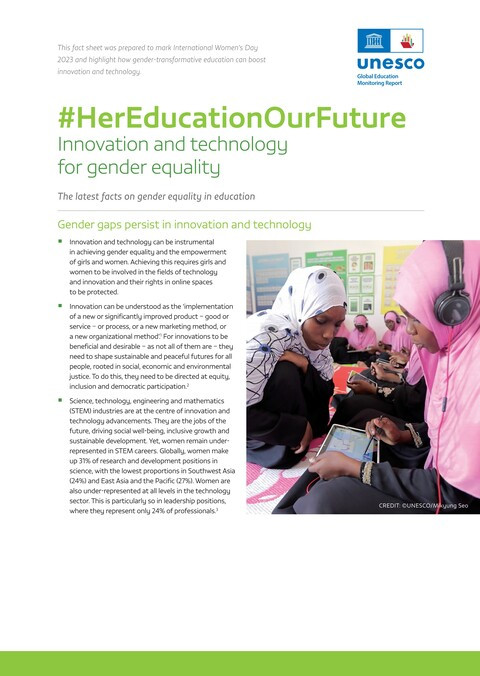 #HerEducationOurFuture: Innovation and Technology for Gender Equality; the Latest Facts on Gender Equality in Education Год публикации: 2023 Организация-автор: UNESCO | Global Education Monitoring Report Team Gender gaps persist in innovation and technology Innovation and technology can be instrumental in achieving gender equality and the empowerment of girls and women. Achieving this requires girls and women to be involved in the fields of technology and innovation and their rights in online spaces to be protected.
  Artificial Intelligence Needs Assessment Survey in Africa Год публикации: 2021 Автор: Prateek Sibal | Bhanu Neupane Организация-автор: UNESCO There are encouraging signs of AI innovation and development across Africa, from community run AI classes over weekends, AI training bootcamps for students and young researchers to the establishment of private sector and government driven innovation hubs across the continent. Even as there is an enormous potential for AI development, there are also legacy challenges in terms of infrastructure availability as well as human and institutional capacity gaps to develop and govern AI to optimise benefits and minimise harms. Building upon the recommendations of UNESCO report Steering AI and Advanced ICTs for Knowledge Societies, the findings of this survey aim to bridge the information gap concerning the strategic priorities, policy measures, developmental challenges, human and institutional capacity needs, and legal frameworks concerning AI in African countries.
 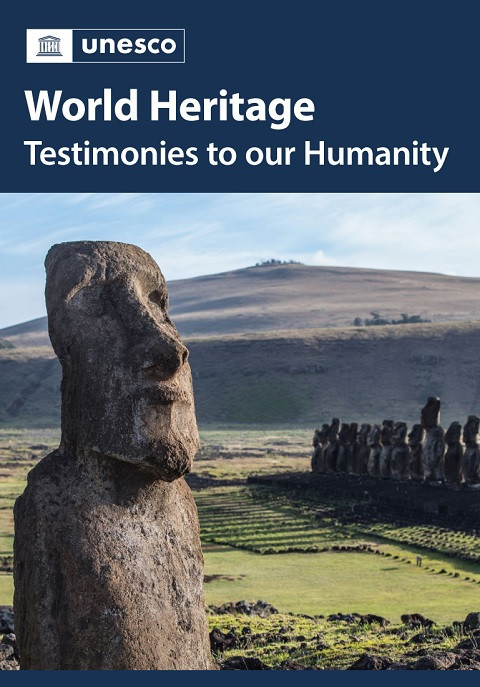 World Heritage: Testimonies to Our Humanity Год публикации: 2022 Организация-автор: UNESCO The Convention for the Protection of the Cultural and Natural Heritage is an international agreement based on the principle that some places on Earth embody outstanding universal value that should be part of the shared heritage of humankind. UNESCO recognizes cultural and natural sites of outstanding universal value, and protects them for the benefit of all. As a basis for mutual understanding and dialogue, the responsibility for protecting our shared heritage requires cooperation among all States Parties as well as civil society, local communities and the private sector. The idea of reconciling the conservation of cultural sites with that of natural sites originated in the United States of America. A White House conference in Washington, D.C., in 1965 called for the creation of a “World Heritage Foundation” that would stimulate international cooperation to protect “the most extraordinary places, landscapes, and historic sites for the present and future of all mankind.” In 1968, the International Union for Conservation of Nature (IUCN) made similar proposals to its members. These proposals were presented at the United Nations Conference on the Human Environment in Stockholm in 1972. Eventually, all parties concerned agreed on a single text. The Convention concerning the Protection of the World Cultural and Natural Heritage was adopted by the General Conference of UNESCO on 16 November 1972. In recognizing both cultural and natural aspects of heritage, the Convention reminds us of the interaction between human beings and nature and the fundamental need to preserve the balance between the two.
 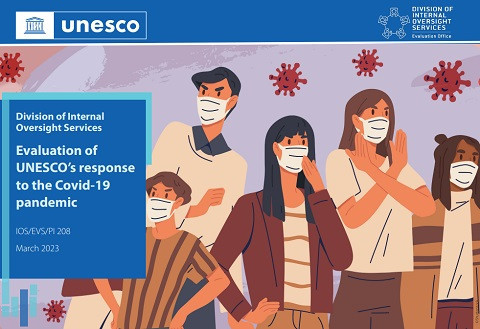 Evaluation of UNESCO’s response to the Covid-19 pandemic Год публикации: 2023 Организация-автор: UNESCO This evaluation report summarises the findings of a comprehensive evaluation on how UNESCO has adapted and responded to the Covid-19 pandemic. It describes and assesses the relevance and effectiveness of UNESCO’s programmatic response across all of its Sectors, and reviews how efficiently the Organization adapted itself to ensure business continuity during the pandemic. With an overall focus on learning, the evaluation identified a series of lessons and useful innovations made during the pandemic. The report’s five recommendations aim to guide UNESCO towards sustaining useful innovations and further increasing the crisis resilience of its operations and programme.
  UNESCO Guidance for the World Heritage ‘No-Go’ Commitment: Global Standards for Corporate Sustainability Год публикации: 2022 Организация-автор: UNESCO UNESCO World Heritage properties are cultural, natural and mixed sites of outstanding universal value (OUV) that exemplify some of humanity’s most exceptional heritage and treasures on our planet. They cover over a thousand properties in all regions of the world and it is the duty of the international community as a whole to cooperate on their protection. UNESCO World Heritage sites provide major benefits to our society and help safeguard ecosystem services and cultural resources vital for human well-being. Yet the threats to UNESCO World Heritage sites have been rising steadily for decades, including those arising from harmful industrial and infrastructure projects, extractive activities such as mining, oil and gas and large hydropower projects, among others. In view of these significant threats, several leading companies and financial institutions have committed to protect World Heritage by respecting them as ‘no-go’ areas. UNESCO World Heritage sites are protected under international law as humanity’s legacy to future generations and, as such, merit particular attention in corporate policies and business conduct. However, there is wide variation in the nature and strength of sustainability policies and due diligence processes. This guidance was developed to assist companies to develop comprehensive strategies for World Heritage as part of their efforts to measure and manage environmental, social and governance risks.