
Ресурсы
Изучайте широкий спектр ценных ресурсов ВГГ, чтобы углубить своё понимание и повысить эффективность исследований, просветительской деятельности, преподавания и обучения.
Найдено: 795
 Human Rights Education: Key Success Factors Год публикации: 2023 Организация-автор: UNESCO This study, commissioned by the UNESCO in cooperation with the United Nations Office of the High Commissioner for Human Rights (OHCHR), examines the impact of human rights education (HRE) pedagogies and good practices worldwide, with a specific focus on the primary and secondary levels in formal education. Using a data-driven approach that includes a literature review and surveys and interviews with informants, the study identifies key success factors for impactful HRE and provides recommendations for future research and practice. The study finds that HRE can have a positive impact on learners’ knowledge and understanding of human rights, as well as their attitudes and behaviours related to human rights. It is an essential resource for education stakeholders looking to promote HRE at all levels of society and through a lifelong learning lens.
  Revision Process of the 1974 Recommendation concerning Education for International Understanding, Co-operation and Peace and Education relating to Human Rights and Fundamental Freedoms: Comments from Observers to the Plenary Meetings of the International Expert Group (IEG) Год публикации: 2023 Организация-автор: UNESCO Adopted in 1974, the Recommendation concerning education for international understanding, co-operation and peace and education relating to human rights and fundamental freedoms is considered a landmark legal instrument that brings together for the first time peace, international understanding, human rights, fundamental freedoms and education. In line with the Resolution adopted at UNESCO’s General Conference at its 41st Session in November 2021 (41C/Resolution 17), UNESCO launched the revision of the Recommendation and convened an International Expert Group (IEG) to advise the Organization on the changes. The work of the IEG took place between May and June 2022. Though the meetings of the IEG were technical in nature (category VI), in order to ensure an open and transparent process, the Permanent Delegations were invited to listen-in to the deliberations of the IEG online, as observers, along with a select number of non-governmental organizations, intergovernmental organizations, and United Nations entities. At the end of each plenary meeting, observers to the IEG plenary meetings could submit written comments. This document compiles the comments received from observers during this process and submitted to the IEG members for their consideration.
  Because youth perspectives matter: UNESCO toolbox for youth policy and programming Год публикации: 2023 Организация-автор: UNESCO <Short summary>Placing trust in youth voicesYoung people fear for their future. Pandemics, conflict, climate change, inequality – these are the issues defining their reality.Yet their potential to provide solutions to the multiple crises is not realized. From low representation and tokenistic approaches, to institutional obstacles to participation and limited civic spaces, young people are disconnected from influencing decisions and actions that affect their lives. They need real opportunities to participate in decision-making and contribute to practical solutions.Policy-makers, public officials and practitioners – as well as development sector and civil society actors – can and should create such opportunities for youth. This Toolbox is a comprehensive go-to resource to make that possible. It is intended to support these stakeholders in designing and implementing effective policies and programmes to address the multidimensional needs of youth at national and local levels.It consists of:• A guide for participatory youth policy design;• Intergenerational dialogue tools on holistic youth development and youth civic engagement; and• A training tool on meaningful youth engagement. Together, we can prove that youth perspectives matter.
 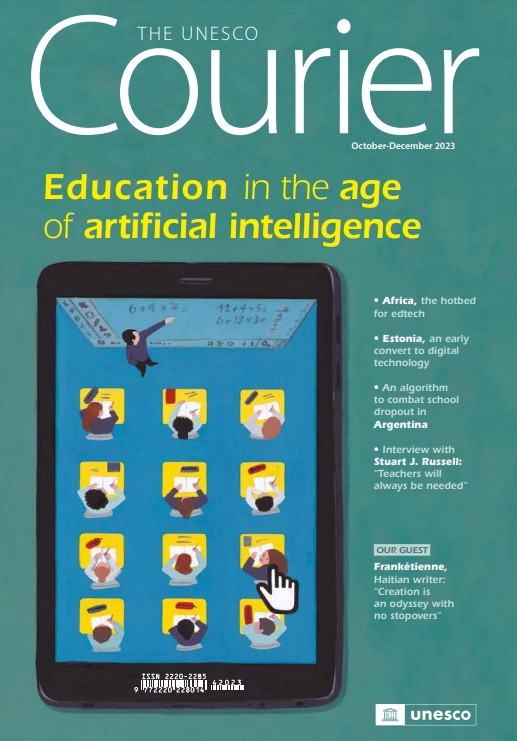 Eduaction in the Age of Articial Intelligence (The UNESCO Courier no. 4, October-December 2023) Год публикации: 2023 Организация-автор: UNESCO At a time when the field of education is in worldwide ferment, a single instructional phenomenon has captured the attention not only of professionals but of laymen.” Does the innovation in question refer to artificial intelligence (AI), or to the use of augmented reality in the classroom? Neither one. This quote is from an article in The UNESCO Courier about “teaching machines”, a set of programmes developed in the USA to guide students in their learning. It dates back to… March 1965. Which just goes to show that pondering the role of computers in learning is nothing new. Whether lauded or decried, technologies are increasingly part of the school landscape, at least in industrialized countries. Digital learning games, online tutorials or massive open online courses (MOOCs) have become a reality for a growing number of pupils and students. The COVID-19 pandemic has only accelerated the phenomenon, spurring the rise, including in Africa, of companies specializing in digital educational services, the so-called “edtechs”. Yet no matter how sophisticated these technologies may be, they have not challenged the founding principle of a teacher giving a class simultaneously to a group of students. Artificial intelligence could be a game-changer. Does the arrival of content-generating tools like ChatGPT and intelligent tutorials mean the oft-heralded revolution has started? In any case, the use of generative AI in learning presents unprecedented challenges to education systems. As UNESCO’s Global Education Monitoring Report 2023 highlights, these new tools can prove invaluable in providing personalized support for students, particularly those with disabilities or living in remote areas. But they also raise questions about the digital divide, data confidentiality and the preponderance of major global corporations in this sector. And for the moment, safeguards are lacking. It is therefore urgent that regulations be adopted to ensure the use of AI in education remains human-centred, in the best interests of students. To support this, UNESCO published in September 2023 the first-ever Guidance for generative AI in education and research, designed to address the disruptions caused by these technologies. It complements other tools produced by the Organization, including the Recommendation on the ethics of artificial intelligence and a guidance for policy-makers on AI and education, both published in 2021.
 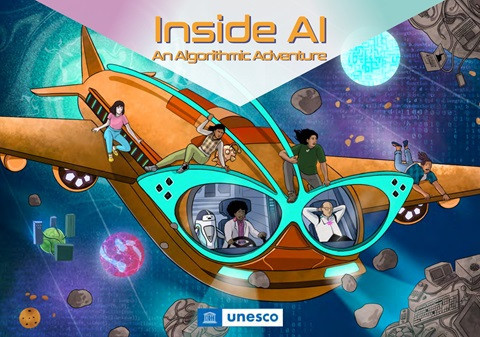 Inside AI - An Algorithmic Adventure Год публикации: 2022 Автор: Katherine Evans Организация-автор: UNESCO In the framework of UNESCO’s work to harness emerging technologies for sustainable development, this graphic novel for policymakers as well as youth explores the impact of Artificial Intelligence on humankind. Dive into the world of AI and follow the adventures of four characters whose lives are affected by algorithmic hazards: By following characters in four different corners of the globe as they grapple with the limits of AI technologies, the audience jointly embarks on a mission in an algorithmic galaxy called Plethor.A.I.. There, they have but one option: travel across this hidden world behind our screens to learn about the social, technical, ethical and human rights impacts of Artificial Intelligence, and help the characters find a way back to reality.UNESCO’s first graphic novel on Artificial Intelligence (AI) aims at providing an educational media to policymakers, adults and youth who are curious and interested in learning more about AI, its challenges and stakes.
 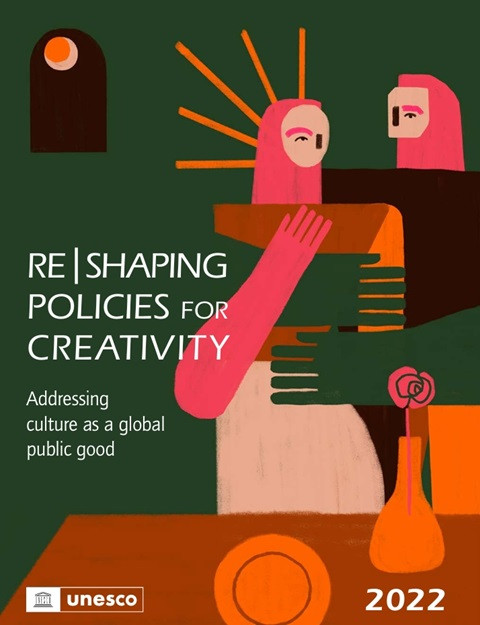 Re|shaping Policies for Creativity: Addressing Culture as a Global Public Good Год публикации: 2023 Организация-автор: UNESCO The Global Report series monitors the implementation of the 2005 Convention on the Protection and Promotion of the Diversity of Cultural Expressions, as well as progress towards achieving the United Nations 2030 Agenda for Sustainable Development, within and with the cultural and creative sectors. Its 2022 edition revolves around two major questions: What is the state of the cultural and creative sectors? What policy changes to promote sustainable, human rights-based systems of governance for culture and equitable access to cultural opportunities and resources have resulted from stakeholders’ implementation and ownership of the Convention? In line with the 2015 and 2018 editions, this third edition of the Report presents the latest policy developments to support creativity and sheds light on current and future challenges in areas such as the digital environment, media diversity, sustainable development, mobility of artists and cultural professionals, gender equality and artistic freedom. The trends, innovative practices, gaps and recommendations that emerge from the 2022 edition provide valuable evidence to inform the policy dialogue leading up to the UNESCO World Conference on Cultural Policies and Sustainable Development – MONDIACULT 2022. With the mission to contribute to the 2030 Agenda, it feeds into a renewed vision of cultural policies based on a better understanding of what impacts the diversity of cultural expressions and the avenues for anchoring culture and creativity in the broader public policy spectrum.
  Freedom of Expression Toolkit: A Guide for Students Год публикации: 2013 Организация-автор: UNESCO Everyone should have all the necessary tools and mechanism to allow the free flow of information. Much has been written about freedom of expression, indeed it is one of the most debated concepts and issues of our times. However, few such publications are written with youth as the main target readers, especially for young women and men still in high schools and pre-university level. This Toolkit is one such tool targeted at high schools and pre-university students. Young women and men must be empowered and literate in the issues and concepts of freedom of expression in order to become a discerning citizen in a democracy.
 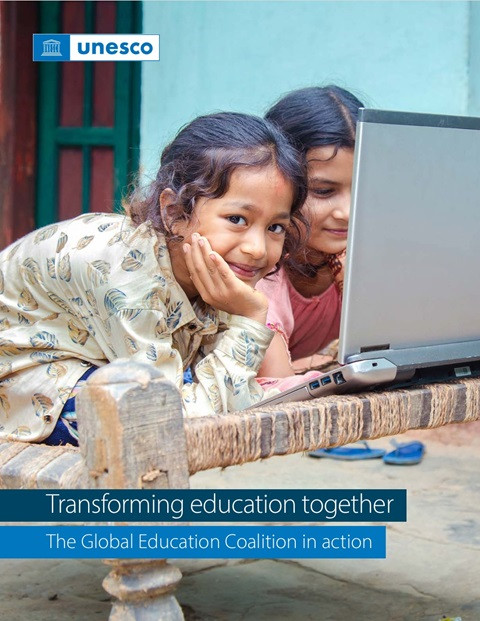 Transforming Education Together: The Global Education Coalition in Action Год публикации: 2023 Организация-автор: UNESCO The Global Education Coalition, launched by UNESCO, is a platform for col-laboration and exchange to protect the right to education during this unprec-edented disruption and beyond. This is the fourth progress report of the Coalition and builds on the inaugural document released in September 2020 and the first annual report published in March 2021. This document covers activity between November 2021 and March 2023.
 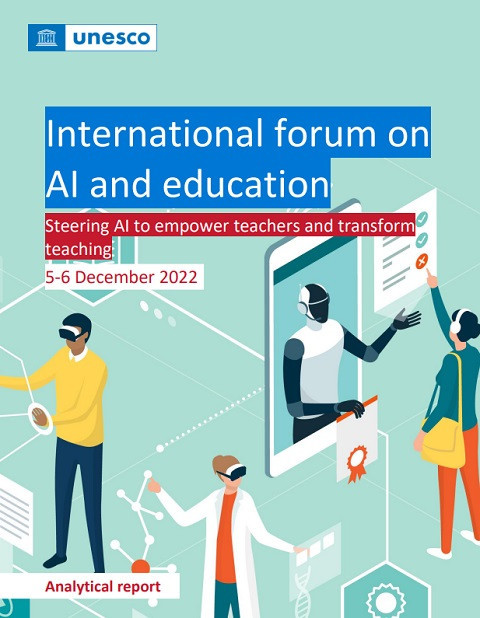 International Forum on AI and Education: Steering AI To Empower Teachers and Transform Teaching, 5–6 December 2022; Analytical Report Год публикации: 2023 Автор: Fengchun Miao | Kelly Shiohira | Zaahedah Vally | Wayne Holmes Организация-автор: UNESCO | JET Education Services The International Forum on AI and Education has contributed ‘to peace and security by promoting collaboration among the nations through education, science and culture’ (UNESCO, 1945). The Forum has now become the world’s leading event promoting knowledge-sharing, the understanding of peoples, and the achievement of international agreements, in the fast-developing and increasingly impactful field of AI and education. The fourth edition of the International Forum on Artificial Intelligence and Education aimed to foster knowledge sharing specifically on how to steer the design and use of AI to empower teachers and to transform teaching methodologies within the broad framework of digital transformation of education. The Forum sought to bring together a range of expertise and experiences across the globe, and, in keeping with UNESCO priorities, a special focus was placed on Africa. A total of 16 national strategies were presented at the Forum by the various national ministers and representatives invited to attend. The national strategies shared during the Forum also unveiled the varying levels of preparedness and policy responses toward AI across different regions, a reminder that the pre-existing digital divide still underpins the system-wide uptake and integration of AI in education. Therefore, not all of the strategies were directly related to or containing AI because some areas that were represented at the conference are still at the nascent stages of AI Strategy development. The presentations of national initiatives and strategies related to AI from these countries shed light on the general awareness of policy-makers on the impact of AI in education and the commitment of national governments to fostering AI competencies among students and teachers. This report focus on the following key themes: national strategies on AI and education; critical reviews of roles of AI in the digital transformation of education; ethical principles and their implementation with a specific focus on gender equality; AI competencies for teachers, and notable algorithms or AI platforms and AI-informed pedagogies. The report concludes with considerations for the future based on the authors’ own analysis of the key role of human teachers, steering the human-centered approach, mainstreaming gender equity, designing education-specific AI models and innovative pedagogy, and ensuring human agency in defining problems and designing solutions.a
  International Forum on AI and Education: Ensuring AI as a Common Good To Transform Education, 7–8 December 2021; Synthesis Report Год публикации: 2022 Организация-автор: UNESCO The ‘International Forum on AI and the Futures of Education: Ensuring AI as a Common Good to Transform Education’ was co-organized by UNESCO, the Ministry of Education of the People’s Republic of China, and the National Commission of the People’s Republic of China for UNESCO. Building on the previous ‘AI and the Futures of Education’ forums, held in 2019 and 2020, this 2021 forum set out to explore the importance and role of digital humanism in AI and education. With people and governments worldwide becoming increasingly aware of both the potential and the challenges of AI and education, the forum engaged participants in dialogue about how AI governance and innovation can be enhanced for the common good. Forum participants included government ministers and other high-level ministry officials from Member States, together with representatives of international organizations, NGOs and academic institutions.This synthesis report has been developed by drawing from the International Forum on AI and the Futures of Education held in Beijing and simultaneously online from 7 to 8 December 2021.