
Ресурсы
Изучайте широкий спектр ценных ресурсов ВГГ, чтобы углубить своё понимание и повысить эффективность исследований, просветительской деятельности, преподавания и обучения.
Найдено: 795
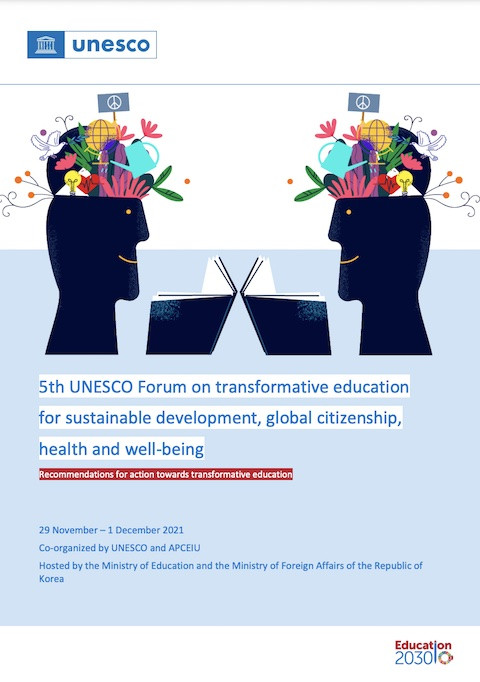 5th UNESCO Forum on Transformative Education for Sustainable Development, Global Citizenship, Health and Well-Being: Recommendations for Action Towards Transformative Education Год публикации: 2022 Организация-автор: UNESCO In light of contemporary and emerging challenges such as climate change, violent and hateful ideologies, conflicts and risks of global pandemics, education must teach young people the knowledge, skills, values and attitudes to live cooperatively, be flexible, think critically, respect diversity, care for the environment, and be actively involved in finding solutions, both locally and globally. Transformative education – as enshrined in Target 4.7 of Sustainable Development Goal 4 – is critical in supporting individuals to develop these competencies. Transformative education involves teaching and learning that motivates and empowers learners to make informed decisions and actions at the individual, community and global levels. With a focus on sustainability, global citizenship, health and well-being for all, transformative education implies ensuring that curriculum, pedagogy, learning materials, schools and learning environments are meaningful for the social, political, economic, cultural and environmental contexts. To better understand concrete progress in transformative education, UNESCO and the Asia Pacific Centre of Education for International Understanding (APCEIU) co-organized the 5th UNESCO Forum on Transformative Education for Sustainable Development, Global Citizenship, Health and Well-being (29 November – 1 December 2021).The conference enabled a productive dialogue among a diverse range of actors from the fields of education for sustainable development (ESD), global citizenship education (GCED), education for health and wellbeing under the broader “banner” of transformative education.
 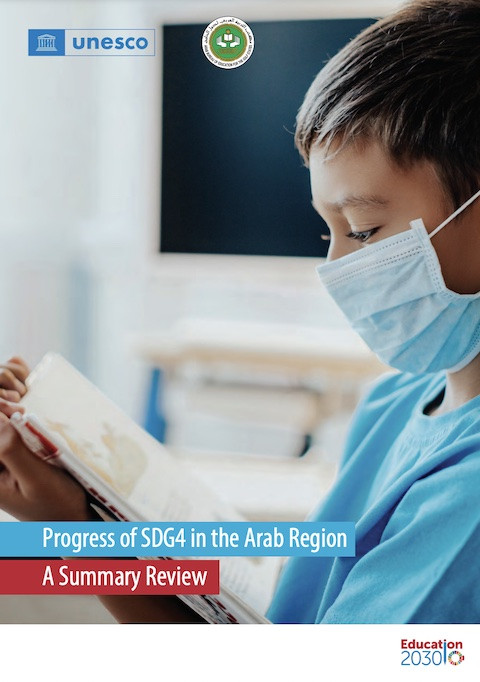 Progress of SDG4 in the Arab Region: A Summary Review Год публикации: 2022 Организация-автор: 유네스코 This report is a snapshot review of the progress of SDG 4 in the Arab region, based upon the national reports of the countries of the region and the valuable inputs from the regional education institutes of the region. In this review, SDG 4 is looked at as an essential part of an interconnected whole of all SDGs. However, it focuses on selected targets and indicators of SDG 4 because of difficulties of accessing consistent data pertaining to the region covering the period from 2010 to 2020. Therefore, internationally comparable data from various sources have been taken into consideration, highlighting at the same time the overall pictures as revealed by the country reports and flagging their selected best practices.
  Citizenship Education in the Global Digital Age: Thematic Paper Год публикации: 2022 Организация-автор: منظمة الأمم المتحدة للتربية والعلم والثقافة (UNESCO) This document, prepared by UNESCO Section on Global Citizenship and Peace Education with the contribution of Laura Engel and Evelyne Koumtingue, is part of several thematic papers developed by UNESCO to inform the Revision of the 1974 Recommendation concerning education for international understanding, co-operation and peace. These papers focus on topics that are not currently covered in the Recommendation but that require greater attention in the revised version in view of ensuring it addresses contemporary challenges to lasting peace.
  The Concept of Sustainability and Its Contribution Towards Quality Transformative Education: Thematic Paper Год публикации: 2022 Организация-автор: منظمة الأمم المتحدة للتربية والعلم والثقافة (UNESCO) This thematic paper explores the concept of sustainability and its contribution towards quality transformative education, and serves as a background document to clarify the scope and depth of the revised 1974 Recommendation. Specifically, this document presents the need to update and broaden the scope of the 1974 Recommendation by introducing the concept of sustainable development, and discussing the role of education in addressing contemporary global challenges in particular climate change and climate justice, peace, biodiversity loss, poverty and inequality, and discriminations and human rights.
 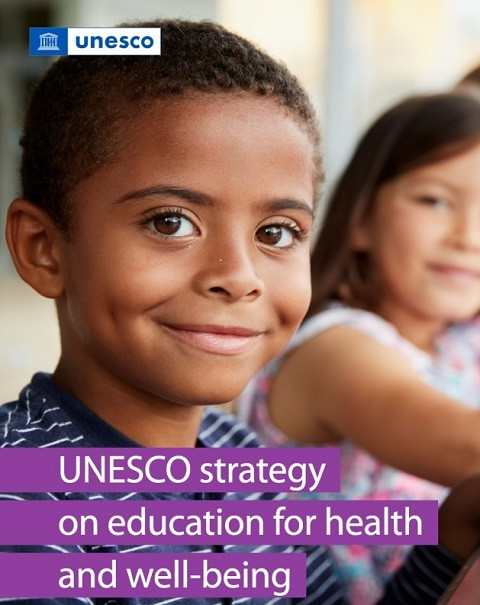 UNESCO Strategy on Education for Health and Well-being Год публикации: 2022 Организация-автор: UNESCO This strategy guides UNESCO to promote the physical and mental health and well-being of learners. By reducing health-related barriers to learning, such as malnutrition, early and unintended pregnancy, HIV and sexually transmitted infections (STIs) and violence and discrimination, UNESCO, governments and school systems can unlock the potential of all learners. The evidence for increased focus on the link between education and health is strong. Education strongly impacts health outcomes and health is equally fundamental to education. This calls for a more comprehensive approach to school health and more coordinated action across sectors.This revised and updated strategy is a roadmap for UNESCO to promote comprehensive sexuality education (CSE) and safe and inclusive learning environments, and place more emphasis on the role of schools and education systems in promoting health and well-being.
  Freedom of Expression, Media and Information Literacy and Digital Competencies to Support Peace and Human Rights: Thematic Paper Год публикации: 2022 Организация-автор: UNESCO This document is part of the thematic papers developed by UNESCO to inform the Revision of the 1974 Recommendation concerning education for international understanding, co-operation and peace. It focuses on Freedom of Expression, Media and Information Literacy and Digital Competencies that are not currently covered in the Recommendation but that require greater attention in the revised version in view of ensuring it addresses contemporary challenges to lasting peace.
  The Relevance and Contributions of Education for Health and Well-Being to the Advancement of Human Rights, Sustainable Development & Peace: Thematic Paper Год публикации: 2022 Организация-автор: UNESCO This document is part of the thematic papers developed by UNESCO to inform the Revision of the 1974 Recommendation concerning education for international understanding, co-operation and peace. This paper aims to provide a few recommendations for revising the 1974 Recommendation.
 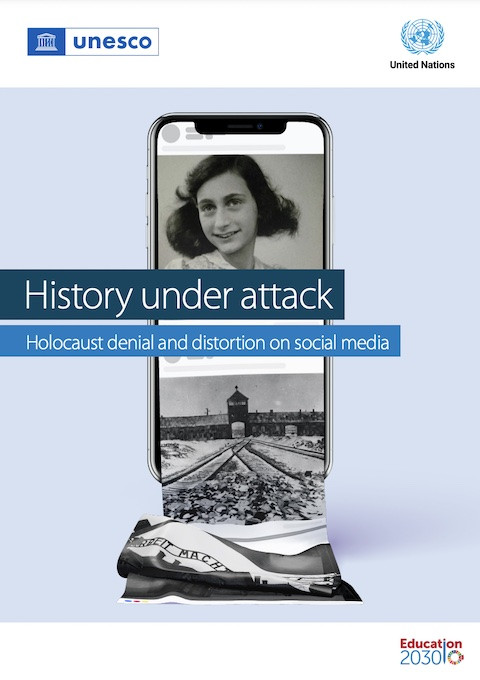 History Under Attack: Holocaust Denial and Distortion on Social Media Год публикации: 2022 Организация-автор: UNESCO | United Nations (UN) Holocaust denial and distortion are dangerous. It is an attack on truth and knowledge. It feeds on and spreads antisemitic tropes and prejudices, and threatens our understanding of one of the most tragic and violent histories: The genocide of six million Jews by Nazi Germany, its allies and collaborators. In countries across Europe, people became complicit in the persecution and murder of their neighbours. Holocaust denial and distortion can prevent society from reckoning with this past. It impedes our comprehension of the causes and warning signs of genocide, and that might strengthen efforts for genocide prevention. It is insulting to the victims and survivors of the Holocaust, and risks the rehabilitation of violent, antisemitic ideologies. At its most extreme, it celebrates and glorifies this history, inciting violence against Jews and calling for another genocide. The United Nations and UNESCO condemn the rise of Holocaust denial and distortion online as a dangerous form of hatred, and commissioned this report in partnership with the World Jewish Congress to raise awareness of the forms and functions of Holocaust denial and distortion on social media, and determine a series of policy and educational responses. This report is a data-driven investigation into the extent and nature of Holocaust denial and distortion on online platforms. It is based on a manual review of almost 4,000 pieces of content collected in June and July 2021 that related to Jews, the Holocaust, antisemitism and Holocaust denial and distortion from five major online platforms and messenger apps. It looks at content posted on Facebook, Instagram, Telegram, TikTok and Twitter: some of the world’s largest online platforms and collectively home to billions of users. It addresses content in four different languages: English, French, Spanish and German, with the aim of providing a wide-ranging review that addresses multiple countries and contexts. This report aims to answer four questions:How much Holocaust-related content on social media either denies the Holocaust or distorts key elements of history?What are the key narratives in contemporary Holocaust denial and distortion?How are Holocaust denial and distortion communicated, and how are they situated within wider discourses and frames?What can online platform companies, policy-makers, educators and organizations promoting Holocaust remembrance, education and research do to tackle the problem? Based on the findings of this report, it provides a series of recommended actions that online platforms, policy-makers, civil society, researchers and educators can implement to prevent and counter Holocaust denial and distortion online.
  Berlin Declaration on Education for Sustainable Development Год публикации: 2022 Организация-автор: UNESCO In light of the dramatic challenges the world is facing today there is urgent need to transform learning and redesign our societies for the survival of our planet. Education for Sustainable Development (ESD) is key in achieving this change. In May 2021 Ministers of Education from around the world, youth, teachers, scientists and civil society, came together virtually at the UNESCO World Conference on Education for Sustainable Development. They adopted the Berlin Declaration for Sustainable Development, expressing their commitment to harness the power of ESD to build a more just, equal, equitable and sustainable world.The purpose of this online publication is to contextualize the promises made in the Berlin Declaration and explain complex terms and concepts contained in the document, thus rendering its content easily accessible to the wider public. The main body of the text presents the Declaration itself, while the explanatory boxes provide practical background information about sustainable development, Sustainable Development Goal target 4.7 as well as interesting links to find more information about ESD, climate change, green technologies and other related issues.
 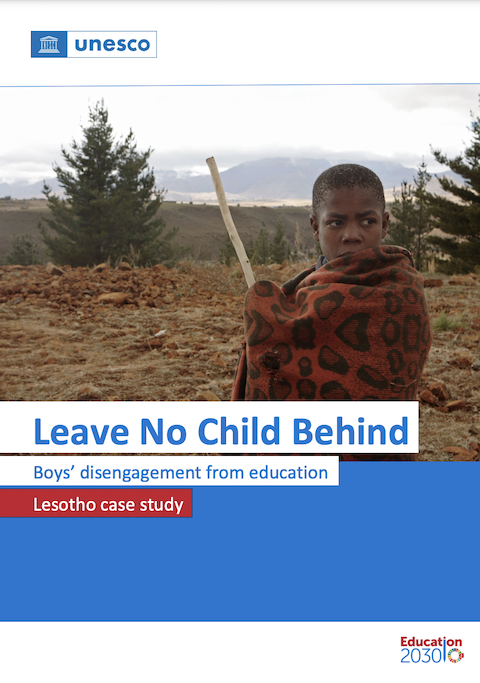 Leave No Child Behind: Boys’ Disengagement From Education; Lesotho Case Study Год публикации: 2022 Автор: Paseka A. Mosia Организация-автор: UNESCO In the framework of its work gender equality in and through education better understand boys’ disengagement from education, UNESCO commissioned five country case studies to inform the publication “Leave no child behind: Global report on boys’ disengagement from education”. National research teams examined the situation in five countries – Fiji, Kuwait, Lesotho, Peru and the United Arab Emirates.This case study presents the results from Lesotho.