
Ресурсы
Изучайте широкий спектр ценных ресурсов ВГГ, чтобы углубить своё понимание и повысить эффективность исследований, просветительской деятельности, преподавания и обучения.
Найдено: 795
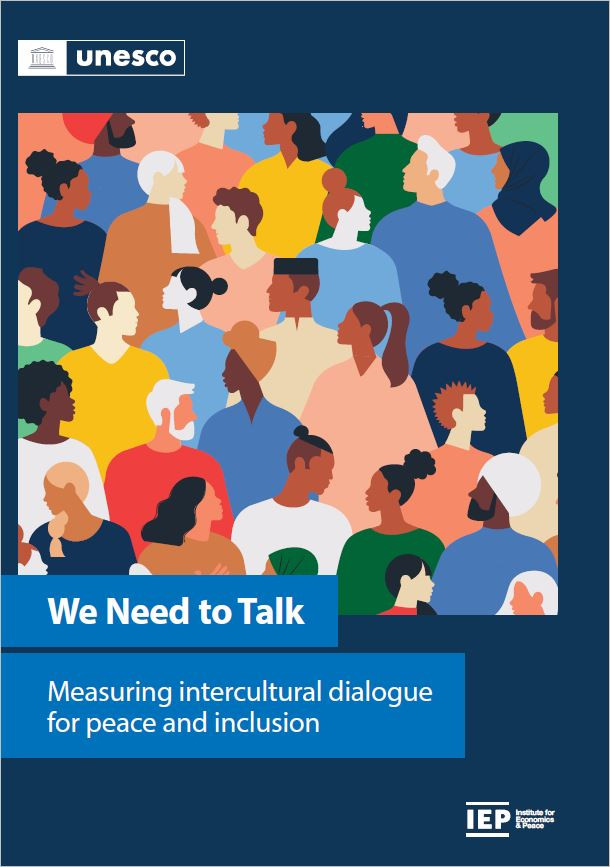 We Need to Talk: Measuring Intercultural Dialogue for Peace and Inclusion Год публикации: 2022 Организация-автор: UNESCO | Institute for Economics and Peace An analysis into the power of intercultural dialogue and the new UNESCO Framework for Enabling Intercultural Dialogue, We Need to Talk presents the first evidence of the link between intercultural dialogue and peace, conflict prevention and non-fragility, and human rights. Using data covering over 160 countries in all regions, the report presents a framework of the structures, processes and values needed to support intercultural dialogue, examining the dynamics and interlinkages between them to reveal substantial policy opportunities with broad spanning benefits. Providing policy support and guidance, the report also includes information on regional trends as well as deep diving case studies.The data, case studies, and think pieces contained in this report highlight key policy and intervention opportunities for intercultural dialogue as an instrument for inclusion, peace and wider societal benefits. Policy makers, development workers, peace and security actors, academics and more are invited to leverage the analysis in this report and findings of the Framework to strengthen intercultural dialogue around the world.
  National Distance Learning Programmes in Response to the COVID-19 Education Disruption: Case Study of the Republic of Korea Год публикации: 2022 Организация-автор: Организация Объединенных Наций по вопросам образования, науки и культуры (UNESCO) This document is one of several case studies on national distance learning programmes in response to the COVID-19 education disruptions. The case of the Republic of Korea was drawn from the 2020 edition of Mobile Learning Week, organized online in October 2020 under the theme of 'Beyond Disruption: Technology Enabled Learning Futures'. Envisaged to be a continuously enriched mechanism for knowledge sharing and dissemination, the case studies aim to surface best practices worldwide in leveraging digital technology to build inclusive and crisis-resilient learning systems, and to inform the planning of digital transformation of education towards SDG 4 and the futures of learning. Each case study documents governance and funding mechanisms, needs-driven planning of distance learning solutions, evaluation of digital learning’s effects on mitigating disruptions and ensuring inclusion, and pedagogical innovations to maintain or improve the quality of learning.
  Social Media 4 Peace Год публикации: 2021 Организация-автор: UNESCO | European Union (EU) The overall objective of the UNESCO project 'Social Media 4 Peace' funded by the European Union is to strengthen the resilience of societies to potentially harmful content spread online, in particular hate speech inciting violence while protecting freedom of expression and enhancing the promotion of peace through digital technologies, notably social media. For more information, please visit:https://en.unesco.org/social-media-4-peace
  Framework for the Implementation of Education for Sustainable Development (ESD) Beyond 2019 Год публикации: 2019 Организация-автор: UNESCO This document contains the proposal for a new framework for Education for Sustainable Development (ESD) beyond 2019 and the comments and observations of the Executive Board thereon.
  The Universal Periodic Review (UPR) and its Potential to Foster Freedom of Expression, Access to Information and Safety of Journalists: Guidelines for National Human Rights Institutions (NHRIs) Год публикации: 2022 Автор: Hina Jilani Организация-автор: UNESCO This document introduces The Universal Periodic Review (UPR), including its function, content and guideline for practice, and evaluates its positive contributions to global human rights.
  International Forum on AI and the Futures of Education: Developing Competencies for the AI Era Synthesis Report; 7-8 December 2020 Год публикации: 2021 Автор: Fengchun Miao | Wayne Holmes Организация-автор: UNESCO This synthesis report has been developed by the UNESCO Unit for Technology and Artificial Intelligence in Education within the Future of Learning and Innovation Team, drawing on the International Forum on AI and the Futures of Education held in Beijing and simultaneously online from 7 to 8 December 2020.The Forum underlined the importance of reviewing the very purpose of education, together with the opportunity for real transformation, and the role that AI might play. It is widely acknowledged that current educational practices and educational environment are very rigid, and that the future of education should be more flexible and responsive to changing circumstances and innovation. National education authorities should identify what skills young people need to enable them to live and thrive in the new realities of a constantly changing world, and what digital transformation makes possible in the national and international context. In short, new education models are needed to put students at the centre, to move away from a focus on memorizing content, to integrate the digital and the analogue, and to foster human cognitive, socioemotional and critical skills, all of which might – with foresight and careful attention – be enabled by AI and other digital technologies.
  Artificial Intelligence for Sustainable Development: Synthesis Report; Mobile Learning Week 2019 Год публикации: 2019 Организация-автор: UNESCO During the five-day event for Mobile Learning Week 2019, UNESCO gathered participants from around the world to share experiences, initiatives and plan joint actions with a view to harnessing artificial intelligence (AI) to achieve Sustainable Development Goal (SDG) 4. The report stems from the work that the speakers presented and the insights that all the participants shared at the event.
  AI and Education: Guidance for Policy-Makers Год публикации: 2021 Автор: Fengchun Miao | Wayne Holmes | Ronghuai Huang | Hui Zhang Организация-автор: UNESCO Artificial intelligence (AI) is envisioned as a new tool to accelerate the progress towards the achievement of SDG 4. Policies and strategies for using AI in education are central to maximizing AI’s benefits and mitigating its potential risks. Fostering AI-ready policy-makers is the starting point of the policy development process.This publication offers guidance to policy-makers in understanding AI and responding to the challenges and opportunities in education presented by AI. Specifically, it introduces the essentials of AI such as its definition, techniques, technologies, capacities and limitations. It also delineates the emerging practices and benefit-risk assessment on leveraging AI to enhance education and learning, and to ensure inclusion and equity, as well as the reciprocal role of education in preparing humans to live and work with AI.The publication summarizes three approaches to the policy responses from existing practices: independent approach, integrated approach and thematic approach. In a further step, it proposes more detailed recommendations and examples for planning AI and education policies, aligned with the recommendations made in the 2019 Beijing Consensus on AI and Education.
 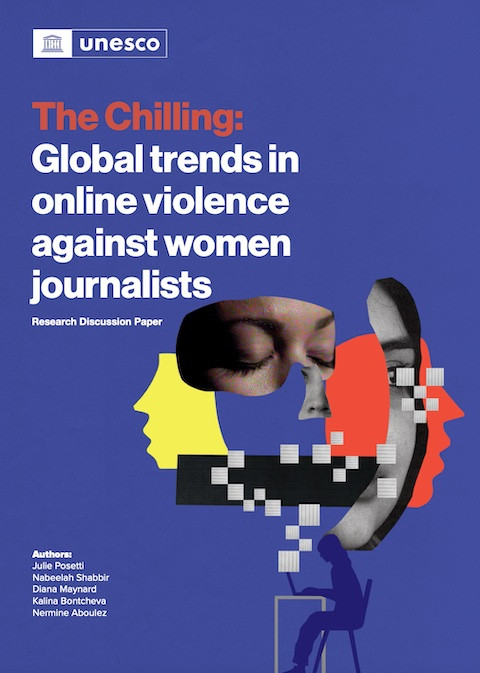 The Chilling: Global Trends in Online Violence Against Women Journalists; Research Discussion Paper Год публикации: 2021 Автор: Julie Posetti | Nabeelah Shabbir | Diana Maynard | Kalina Bontcheva | Nermine Aboulez Организация-автор: UNESCO This report demonstrates that online violence against women journalists is a global phenomenon, albeit one with uneven impacts that are heightened at various intersectional points, including racism, religious bigotry, sectarianism, homophobia and disinformation. There is a climate of impunity surrounding online attacks on women journalists which must be more urgently and effectively addressed because impunity emboldens the perpetrators, demoralises the victim, erodes the foundations of journalism, and undermines freedom of expression. For too long, the emphasis has been on making women journalists responsible for their own defence and protection, rather than making the perpetrators and instigators, the platform enablers, and law enforcement and media employers accountable.These methods of attack are growing more sophisticated, and they are evolving with technology. They are also increasingly networked and fuelled by political actors. This points to the need for responses to online violence to grow equally in technological sophistication and collaborative coordination. Another point highlighted by this research: most women journalists do not report or make public the online attacks they experience, in line with low levels of reporting when it comes to violence against women more broadly. Many media employers still appear reluctant to take online violence seriously. This aligns with the evident failure of the internet communications companies - whose social networks, messaging and search services facilitate much of the harassment, intimidation, abuse and threats targeting women journalists - to take effective action to address this freedom of expression and gender equality crisis.
 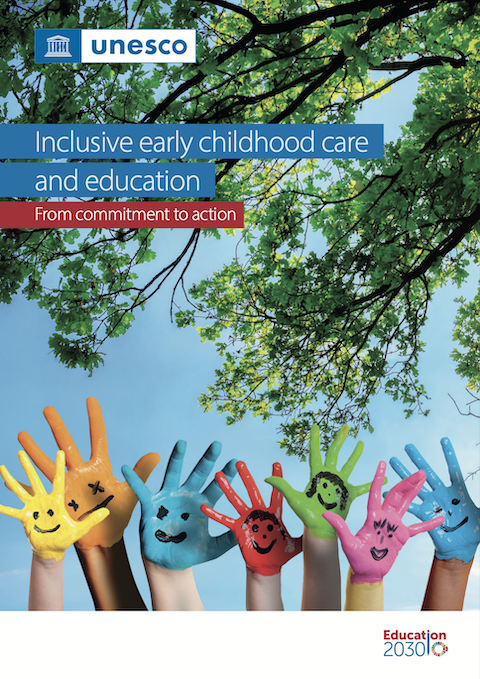 Inclusive Early Childhood Care and Education: From Commitment to Action Год публикации: 2023 Организация-автор: UNESCO The development of inclusive programmes and services for early childhood care and education is a priority of Sustainable Development Goal 4 on education to which the international community has committed itself to achieve by 2030.This publication calls for a renewed global commitment to early childhood inclusion through the presentation of qualitative and quantitative data and action-oriented thinking. It presents lessons from country practices and recent research to provide policy-makers, partners, and ECCD practitioners with guidelines for action.The publication contains key messages that stakeholders can draw upon for actions that address the diversity and trajectory of each child.