
Ресурсы
Изучайте широкий спектр ценных ресурсов ВГГ, чтобы углубить своё понимание и повысить эффективность исследований, просветительской деятельности, преподавания и обучения.
Найдено: 795
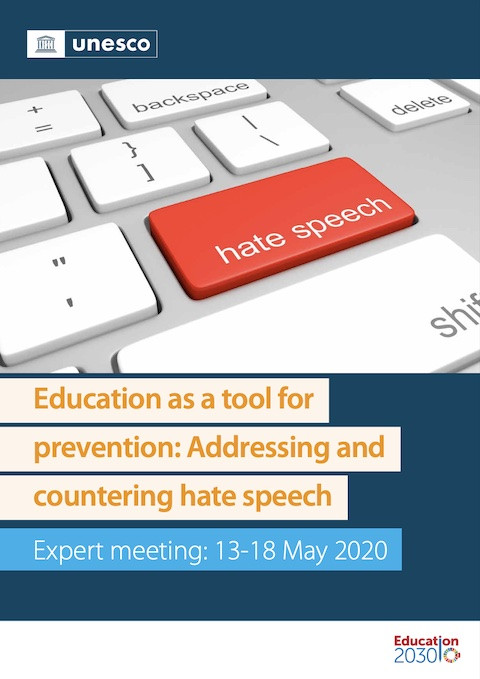 Education as a Tool for Prevention: Addressing and Countering Hate Speech (Expert Meeting: 13-18 May 2020) Год публикации: 2021 Организация-автор: UNESCO Addressing and countering hate speech is a multi-layered endeavour, which includes tackling its root causes and drivers, preventing it from translating into violence and dealing with its wider societal consequences.Within the framework of the Education 2030 Agenda, and more specifically target 4.7 of Sustainable Development Goal 4 (SDG 4), as well as the United Nations Strategy and Plan of Action on Hate Speech – which places specific emphasis on the role of education as a tool for addressing hate speech – UNESCO and the United Nations Office on the Prevention of Genocide and the Responsibility to Protect (OSAPG) convened a series of virtual meetings of experts from 13 to 18 May 2020. This report highlights some of the key discussion areas and unpacks the role of education as a preventive tool. It argues that strengthening educational responses to build the resilience of learners to exclusionary rhetoric and hate speech is paramount for sustainable development and peace for all.
 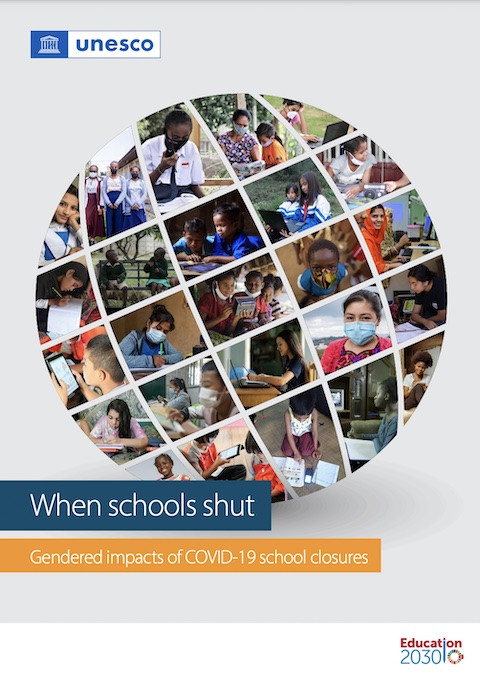 When Schools Shut: Gendered Impacts of COVID-19 School Closures Год публикации: 2021 Организация-автор: UNESCO School closures to mitigate the spread of COVID-19 have caused unprecedented disruption for nearly 1.6 billion learners across the globe. Beyond alarming effects on learning loss and school dropout, they pose an immediate and long-term threat to gender equality, with gender-specific effects on health, well-being and protection. This publication exposes these impacts and calls for effective strategies to ensure education continuity, promote gender equality and improve lives and futures. Through a review of published research, a global survey of actions taken by organizations in favour of gender equality in education, and in-depth data collection in five countries, UNESCO and its partners underline the challenges faced by children and young people to continue learning, and to return to school safely. When schools shut also showcases the efforts made by governments and the international community to mitigate harm and safeguard progress towards gender equality in and through education. While it is too soon to grasp the full scope of the impact of school closures, the publication sets out early evidence from across different contexts globally on how girls and boys have been participating in remote learning, planning for the return to school, and coping with mental and physical health challenges during the closures. It is a call to governments and their partners to put gender at the centre of education recovery to tackle declining participation and low return-to-school rates. When schools shut is a timely reminder that schools are essential sites not only for learning, but also lifelines when it comes to health, well-being and protection of all learners.
 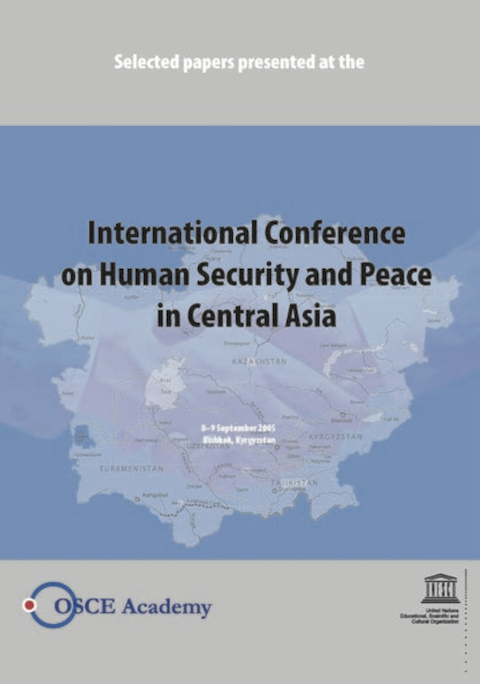 International Conference on Human Security and Peace in Central Asia Год публикации: 2007 Организация-автор: UNESCO | OSCE Academy in Bishkek From the perspective of confronting threats and encouraging development in Central Asia, UNESCO and the OSCE Academy organized an international conference on 'Human Security and Peace in Central Asia'. These two organizations are dedicated to promoting international security and understanding through highlighting and developing the diverse human and cultural values of peace and encouraging dialogue based on recognition, respect for diversity, and observance of human rights.
 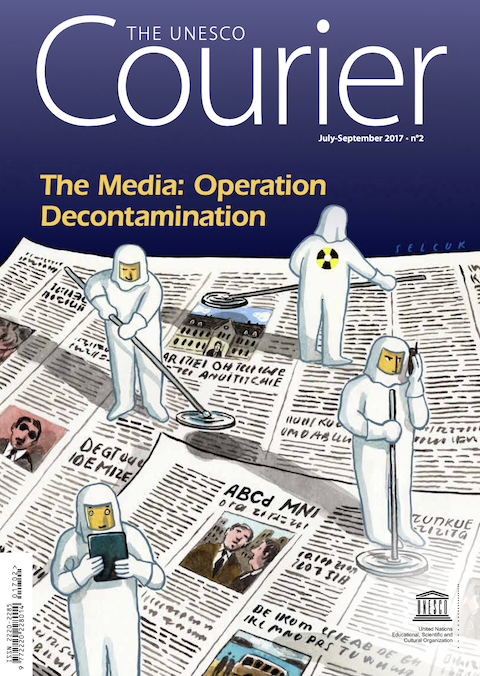 The Media: Operation Decontamination (The UNESCO Courier no. 2; July-September 2017) Год публикации: 2017 Организация-автор: UNESCO The plurality of enlightened opinions is a prerequisite of the democratic development of our societies. The quality of the information disseminated by the media – traditional or new – is decisive when it comes to shaping public opinion. This is why UNESCO puts special emphasis on education about media and information, which it considers a fundamental skill for citizens in the twenty-first century.Freedom of expression and the free movement of ideas by words and images are among the constitutive principles of UNESCO and at the core of the 2030 Agenda for Sustainable Development. UNESCO supports the work of dedicated journalists and activists who defend fundamental freedoms, like the journalist Dawit Isaak, winner of the 2017 UNESCO/ Guillermo Cano World Press Freedom Prize, whose story appears in this issue of the UNESCO Courier.Over the last decade, more than 800 journalists have been victims of crimes aimed at muzzling freedom of expression. Only one murder out of ten ended with a conviction. This impunity is unacceptable and further fuels the spiral of violence in the future. This is why UNESCO is committed to putting an end to these crimes against the press, on all continents, as an indispensable condition for peaceful societies that are all the more robust for being better informed.In this “post-truth” era, the role of UNESCO is more important than ever, and this issue of the Courier is a wonderful opportunity to renew our founding commitment to support information and communication to build peace in the minds of men and women.
  Teachers Have Their Say: Motivation, Skills and Opportunities to Teach Education for Sustainable Development and Global Citizenship Год публикации: 2021 Организация-автор: Organisation des Nations Unies pour l'éducation, la science et la culture (UNESCO) | Education International (EI) This report examines how ready teachers are to meet the promise of Sustainable Development Goal 4 on Education and Target 4.7, which calls on countries ‘to ensure that all learners acquire the knowledge and skills needed to promote sustainable development’.
  Global Citizenship Education: Comoros, Djibouti, Kenya, Madagascar, Mauritius and Seychelles Год публикации: 2022 Организация-автор: UNESCO This is a collection of papers of a research project undertaken in six countries of the Eastern Africa region, namely, Comoros, Djibouti, Kenya, Madagascar, Mauritius and Seychelles to assess the Understanding and Implementation of SDG 4.7 on Global Citizenship Education (GCED) in each of the six countries.The research findings were shared by each of the six countries in a Webinar hosted by the UNESCO Nairobi Regional Office for Eastern Africa on September 23, 2021. The Webinar Agenda is contained in this publication along with the Opening and Closing Remarks made by UNESCO and Keynote Address by an affiliate UNESCO Chair in Africa.
  The Impact of the COVID-19 Pandemic on Student Voice: Findings and Recommendations Год публикации: 2021 Организация-автор: UNESCO | Council of Europe The COVID-19 pandemic has had serious consequences on the education of young people and their ability to engage and participate meaningfully. In 2020, UNESCO and the Council of Europe decided to collaborate on a research project with a view to examining the impact of the COVID-19 pandemic on student voice and particularly the consequences of the subsequent school closures on student voice opportunities in Europe and in the Middle East and North Africa (MENA). This publication details the findings of this study and provides recommendations for school directors and personnel, teachers, educators, policy-makers and young people to build on the lessons learned from the pandemic and help the education community work collectively towards promoting societies that are guided by human rights, with student voice and participation at the centre. It is primarily intended for policy-makers, educators, teachers working in formal school systems. It may also be of interest to professionals working in non-formal education settings or other sectors – namely the justice, social and health sectors – working with student.
  From Access to Empowerment: Operational Tools to Advance Gender Equality in and Through Education Год публикации: 2021 Организация-автор: UNESCO This toolkit has been developed to strengthen individual and institutional capacity to integrate gender equality into education programmes in an effective manner. It has been prepared for all UNESCO Education Sector staff, including those at Headquarters, in Field/Regional/Cluster Offices and in Institutes as well as for implementing partners. This toolkit provides orientation and operational tools to meaningfully integrate gender into all education programmes. The first part provides a short introduction to key concepts on gender equality in and through education and an overview on how gender equality in education links to UNESCO’s vision and internationally agreed objectives. The second part provides practical guidance on how to mainstream gender equality into an education programme, how to design gender-transformative programmes and finally, how to monitor and evaluate gender results in education programmes.
  The Impact of the COVID-19 Pandemic on Education: International Evidence From the Responses to Educational Disruption Survey (REDS) Год публикации: 2022 Автор: Sabine Meinck | Julian Fraillon | Rolf Strietholt Организация-автор: UNESCO | International Association for the Evaluation of Educational Achievement (IEA) The COVID-19 pandemic disrupted education provision at an unprecedented scale, with education systems around the world being impacted by extended school closures and abrupt changes to normal school operations. The Responses to Educational Disruption Survey (REDS) investigated how teaching and learning were affected by the health crisis, and how education stakeholders responded to the educational disruption across and within countries. The study aimed to provide a systemic, multi-perspective, and comparative picture of the situation at the secondary education level (grade eight) in 11 countries spanning Africa, Asia, Arab region, Europe, and Latin America. While many other efforts exist that collect and provide similar information, they are mostly derived from non-representative rapid surveys and lack internationally comparable information from schools, collected in a systematic and scientific manner. The REDS International Report presents unique data, collected from countries, schools, teachers, and students for the first time, in chapters that cover several themes on which data were collected which include student and teacher well-being, students’ academic progress during the school closures, and the measures countries have implemented to keep all children learning. Initial findings provide evidence for better orienting and tailoring policy responses to crisis and provide invaluable information on what may be required to accelerate education, recover from crisis, and to strengthen the resilience of education systems in the future.
  The Journey Towards Comprehensive Sexuality Education: Global Status Report Год публикации: 2021 Организация-автор: UNESCO | Joint United Nations Programme on HIV/AIDS (UNAIDS) | United Nations Population Fund (UNFPA) | United Nations Children's Fund (UNICEF) | United Nations Entity for Gender Equality and the Empowerment of Women (UN Women) | World Health Organization (WHO) Comprehensive sexuality education (CSE) is central to children and young people’s well-being, equipping them with the knowledge and skills they need to make healthy and responsible choices in their lives. This report draws on multiple data sources to provide analysis of countries’ progress towards delivering good quality school-based CSE to all learners. 85 per cent of 155 countries surveyed have policies or laws relating to sexuality education, with considerably more countries reporting policies to mandate delivery at secondary education level than at primary level. However, the existence of policy and legal frameworks do not always equate to comprehensive content or strong implementation. Most countries report that they have some curricula in place but more detailed analysis suggests that it often lacks the breadth of topics needed to make sexuality education effective and relevant. Moreover, while efforts to scale-up teacher training are evident in a range of settings, research with teachers shows that many feel they lack confidence to deliver sexuality education. Surveys show that students frequently feel that they received information too late and would have preferred sexuality education to have started earlier in their schooling. There is evidence of opposition to CSE across a range of settings, often reflecting misinformation about the content, purpose or impact of such education. However, in many countries involvement of communities, including parents, school officials, religious leaders, media and young people themselves, has created a favourable environment for CSE. Recommendations to countries in this report include:Clear mandates and budgets to ensure implementation of policies and programmes that support the availability of good quality comprehensive sexuality education for all learners.Invest in quality curriculum reform and teacher training.Strengthen monitoring of the implementation of CSE.