
Ресурсы
Изучайте широкий спектр ценных ресурсов ВГГ, чтобы углубить своё понимание и повысить эффективность исследований, просветительской деятельности, преподавания и обучения.
Найдено: 795
 Her Atlas: Interactive Advocacy Tool on Girls’ and Women’s Right to Education Год публикации: 2023 Организация-автор: UNESCO Many girls and women cannot exercise their right to education due to gender inequality and discriminatory practices. Poverty, early marriage, and gender-based violence are just some of the many reasons behind the high percentage of global female illiteracy and school drop-outs. Strengthening the right of girls and women to quality education is key to eliminate discrimination and to achieve equal rights between genders. This cannot be achieved without solid national legal frameworks that are rightsbased, gender responsive and inclusive. This is where HerAtlas comes in. HerAtlas, is a first of its kind online tool that maps the right to education of girls and women. It aims to enhance public knowledge and monitor the status of national constitutions, legislation and regulations related to education rights for girls and women to encourage countries to take action, strengthen their laws and policies, and lead to long term change. Concrete changes are already apparent. In 2019, 4% of countries were explicitly restricting the right to education of married, pregnant, and parenting girls. This has dropped to 2% in 2022, benefiting millions of girls who can now legally attend school when they marry or become pregnant.
  Shadow education in the Middle East: private supplementary tutoring and its policy implications Год публикации: 2023 Автор: Mark Bray | Anas Hajar Организация-автор: UNESCO An increasing number of students around the world are receiving private lessons to supplement their school education. In much academic literature, this is called shadow education; Because the content of private lessons closely mimics the content of school education, as its content changes with the change in the curriculum in schools. Private lessons can take many forms. They can be offered one-on-one, in small groups, in large classes, or online. Some private lessons are provided by the Ministry’s teachers in order to obtain additional income, and some commercial institutions also provide these lessons. As for the categoryThe third group of private lesson providers includes university students, retirees, and seasonal workers.While much research and policy has focused on the shadow education system in East Asia and some other regions of the world, there has been less interest in the topic in the Middle East. However, the topic deserves greater focus because of its far-reaching implications for prevailing social structures and education systems. This study begins with the global picture before comparing patterns within and between 12 Arabic-speaking countries in the Middle East.
  Transforming Technical and Vocational Education and Training for Successful and Just Transitions: UNESCO Strategy 2022–2029 Год публикации: 2022 Организация-автор: UNESCO This strategy covering 2022 to 2029 guides UNESCO to promote skills development for empowerment, productive employment and decent work, and facilitate the transition to more digital, green and inclusive economies and societies. In alignment with the Sustainable Development Goals, the Education 2030 Agenda, and the recommendations of the Transforming Education Summit, UNESCO will support the transformation of Technical and Vocational Education and Training in all Member States and will work alongside bilateral and multilateral partners, institutions, governments, the private sector and educators from all over the world to put TVET at the top of the education agenda. It is evident that collective efforts must be met to equip youth and adults in acquiring new skills, helping them unlock their potential to successfully navigate the social, economic, and environmental changes which the world is undergoing.
  Recommendation on Education for Peace and Human Rights, International Understanding, Cooperation, Fundamental Freedoms, Global Citizenship and Sustainable Development Год публикации: 2023 Организация-автор: UNESCO Building more peaceful, just, and sustainable societies starts with education. It influences all aspects of our daily lives and our overall prospects while being impacted by our health and environment. In the global landscape of worsening climate change, democratic backsliding, persistent inequalities, rising discrimination, hate speech, violence and conflict, it can be a tool to address and prevent these problems in the future. And it can also be a long-term investment with increasing returns if shaped and deployed effectively. The new UNESCO Recommendation on Education for Peace and Human Rights, International Understanding, Cooperation, Fundamental Freedoms, Global Citizenship and Sustainable Development, which is commonly referred to as the Recommendation on Education for Peace, Human Rights and Sustainable Development is a landmark guidance document that defines what needs to evolve in and through education to accomplish these goals.
 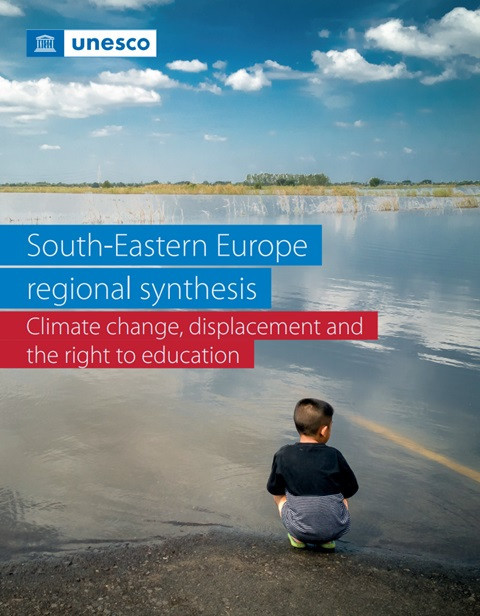 South-Eastern Europe regional synthesis: climate change, displacement and the right to education Год публикации: 2023 Организация-автор: UNESCO In 2021 alone, 23.7 million people were displaced in 137 countries and territories due to natural disasters, which the scientific community has recognized have become more frequent and intense due to climate change. Climate change and displacement is currently taking place in Europe, with particularly disastrous consequences in South-Eastern Europe due to regional specificities. Comparative country case studies were carried out in Bosnia and Herzegovina, the Republic of Moldova, and Serbia, as they exemplify clear, present patterns of climate displacement, to examine the impacts of climate change on the right to education in the region. The case studies show that climate change directly threatens education through the destruction of schools and property. It also indirectly puts learning in peril by leading people across borders where their legal residency nor right to education is ensured. This publication aims to guide policy-makers by providing recommendations on how to ensure the protection of the right to education in South-Eastern Europe in the face of climate change and displacement. It is one of four regional reports that will lead to the development of a global report providing global policy guidance.
 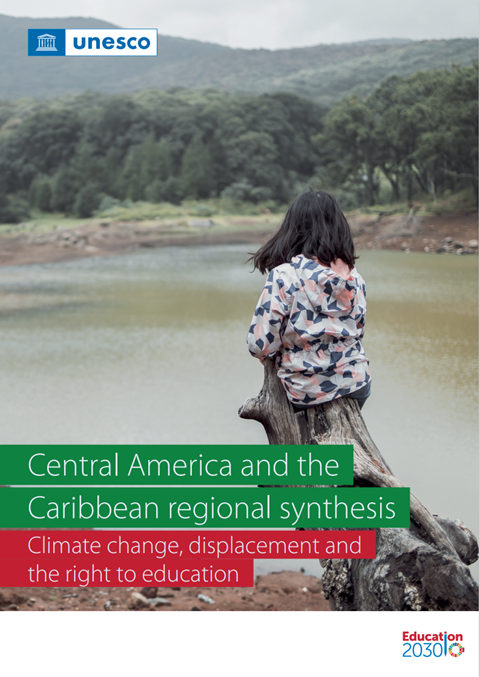 Central America and the Caribbean regional synthesis: climate change, displacement and the right to education Год публикации: 2023 Организация-автор: UNESCO From rising sea level to drought and increasingly frequent natural disasters - the effects of climate change are well-known today. However, its effect on human mobility is just coming to the forefront of the political discussion. In 2020 alone, 30.7 million people globally were displaced by natural disasters. Central America and the Caribbean region is prone to the effects of climate change and displacement due to its socioeconomic characteristics and geographic location. Country case studies were carried out in the Bahamas, Cuba, the Dominican Republic, Guatemala, and Jamaica to examine the impacts on the right to education in the region. The research shows that climate change directly threatens education through the destruction of schools and property. It also leads people across borders where their legal residency and right to education are not guaranteed. This report aims to guide policy-makers on how to ensure education is protected in the face of climate change and displacement. The report is one of four being developed and will contribute to UNESCO’s global initiative on climate change, displacement and the right to education. It will inform the development of a Global Report with policy recommendations.
 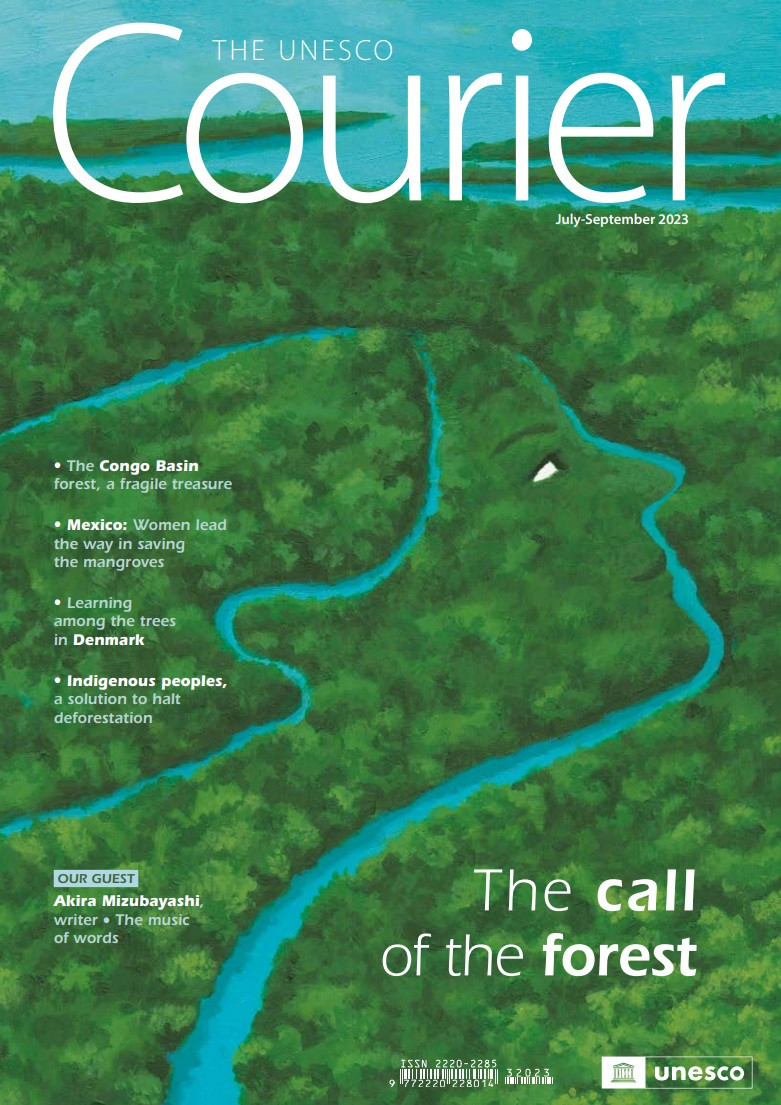 UNESCO World Heritage sites: key to biodiversity conservation Год публикации: 2023 Организация-автор: UNESCO
  Consultation Paper on AI Regulation: Emerging Approaches Across the World Год публикации: 2024 Автор: Juan David Gutiérrez Организация-автор: UNESCO Since 2016, over thirty countries have passed laws explicitly mentioning AI, and in 2024, the discussion about AI bills in legislative bodies has increased globally. This policy brief aims to inform legislators about the different regulatory approaches to artificial intelligence (AI) being considered worldwide by legislative bodies. The brief explains nine emerging regulatory approaches, each illustrated with specific cases worldwide. The order in which the nine AI regulatory approaches are presented is deliberately structured to guide readers from less interventionist, light-touch regulatory measures to more coercive, demanding approaches. These regulatory approaches are not mutually exclusive and AI bills often combine two or more approaches:1. Principles-Based Approach2. Standards-Based Approach3. Agile and Experimentalist Approach4. Facilitating and Enabling Approach5. Adapting Existing Laws Approach6. Access to Information and Transparency Mandates Approach7. Risk-Based Approach8. Rights-Based Approach9. Liability Approach The policy brief suggests parliamentarians how they can address three key questions before adopting AI regulations:1. Why regulate? Determine whether regulation is needed to address public problems, fundamental and collective rights, or desirable futures.2. When to regulate? Reach a consensus on why regulation is needed, map available regulatory instruments, compare them with other policy instruments, and assess the feasibility of adopting the former.3. How to regulate? Identify a combination of AI regulatory approaches that are tailored to specific contexts.
 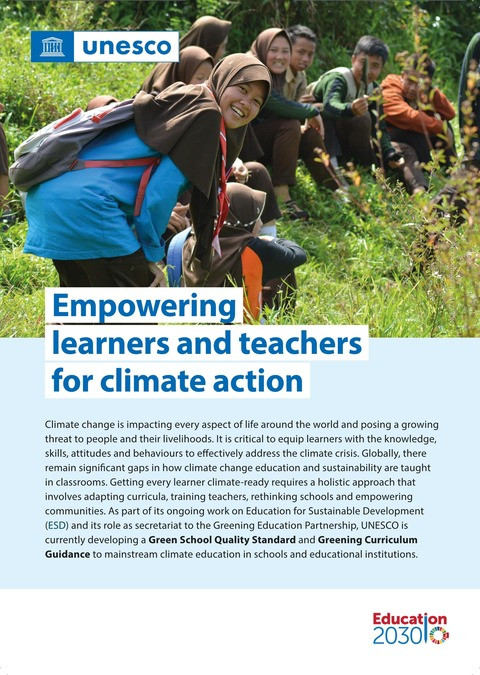 Empowering Learners and Teachers for Climate Action Год публикации: 2023 Организация-автор: UNESCO Climate change is impacting every aspect of life around the world and posing a growing threat to people and their livelihoods. It is critical to equip learners with the knowledge, skills, attitudes and behaviours to effectively address the climate crisis. Globally, there remain significant gaps in how climate change education and sustainability are taught in classrooms. Getting every learner climate-ready requires a holistic approach that involves adapting curricula, training teachers, rethinking schools and empowering communities. As part of its ongoing work on Education for Sustainable Development (ESD) and its role as secretariat to the Greening Education Partnership, UNESCO is currently developing a Green School Quality Standard and Greening Curriculum Guidance to mainstream climate education in schools and educational institutions.
 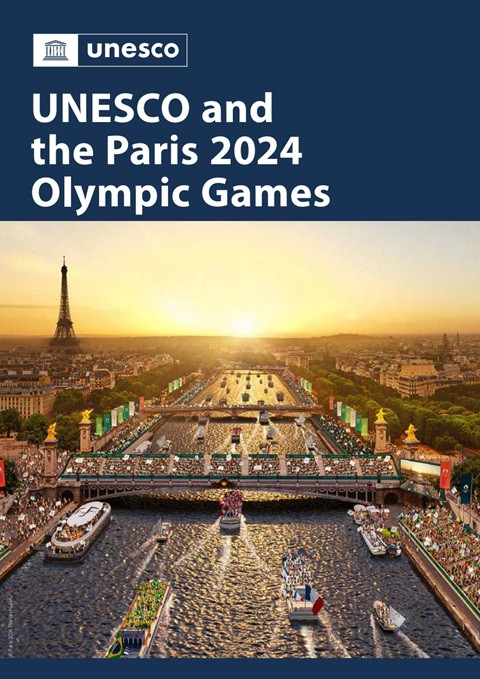 UNESCO and the Paris 2024 Olympic Games Год публикации: 2024 Организация-автор: UNESCO For the Olympic and Paralympic Games, UNESCO and The Associated Press are joining forces to ensure quality media coverage of Paris 2024. The Associated Press will set up on the premises and roof of the UNESCO headquarters building, facing the Eiffel Tower, to record and broadcast its television programmes. The Agency will provide spectators with unique media coverage of the Games and offer original content on the social impact of sport and sports policies, in collaboration with UNESCO.