
Ресурсы
Изучайте широкий спектр ценных ресурсов ВГГ, чтобы углубить своё понимание и повысить эффективность исследований, просветительской деятельности, преподавания и обучения.
Найдено: 795
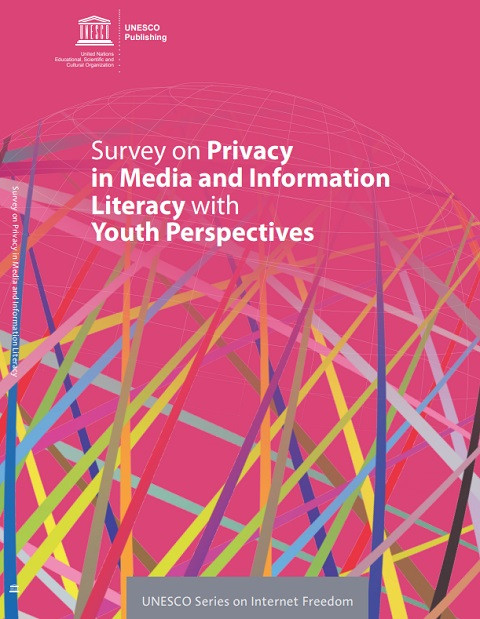 Survey on Privacy in Media and Information Literacy With Youth Perspectives Год публикации: 2017 Автор: Sherri Hope Culver | Alton Grizzle Организация-автор: UNESCO This report aims to provide conceptual, development and policy recommendations to foster privacy in MIL, while enabling the critical engagement of people, including young women and men, in an environment conducive to sustainable development and to freedom of expression online and offline. It seeks to provide clarity on the complex issue of how MIL and privacy intersect.
  Media Literacy in Finland: National Media Education Policy Год публикации: 2019 Организация-автор: European Training and Research Centre for Human Rights and Democracy (Austria) | UNESCO Media literacy in Finland is the media literacy policy and the national media education policy document, published by the Ministry of Education and Culture in 2019. The document updates and extends the cultural policy guidelines for media literacy published in 2013. The need to update the policy arose from the changes that have taken place in media culture and the broader than before target groups of media education in particular. The Program of the Government also highlights the need for media skills for all age groups, from children to seniors. The vision of the policy is to improve everyone’s opportunities to develop their media literacy.
 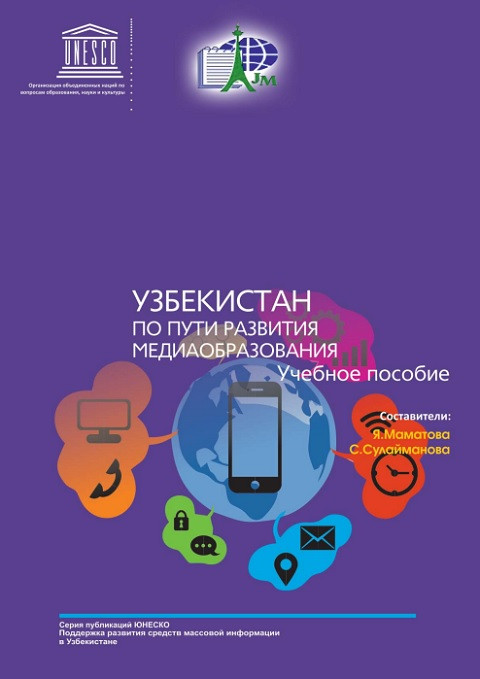 Promoting Media and Information Literacy in Uzbekistan Год публикации: 2015 Организация-автор: UNESCO The manual presents in popular visual form the fundamentals of Media and Information Literacy (MIL), using UNESCO's teacher education programs and other materials from the organization. This manual was developed within the framework of the joint program of the UN and the Government of the Republic of Kazakhstan "Improving the well-being and quality of life in the Kyzylorda region through the introduction of innovative approaches to the provision of economic, social and environmental services to the local population, including the most vulnerable", carried out jointly by the Government of the Republic Kazakhstan and UN agencies in Kazakhstan: UNESCO, UNDP, UNFPA, UN Women, WHO and UNICEF until December 2016.
  Media and Information Literacy: Training Materials Год публикации: 2015 Организация-автор: UNESCO This compendium contains the reports of four studies on religion and democracy conducted by the International Alert project "Constructive Dialogues on Religion and Democracy". The studies were carried out by young professionals trained in the framework of the project in 2017 and 2018.
 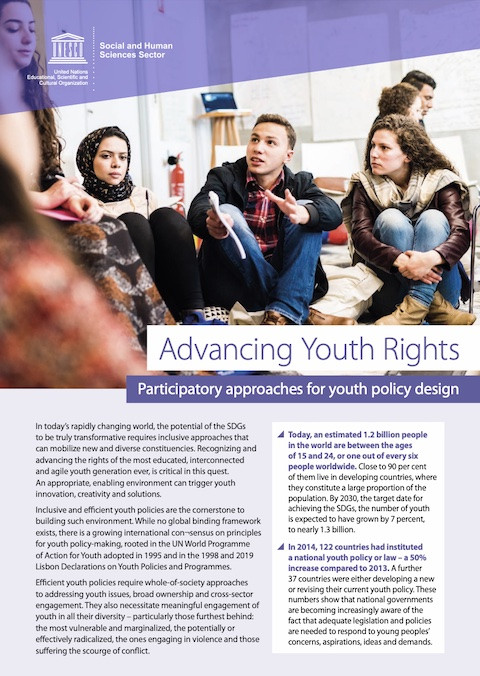 Advancing Youth Rights: Participatory Approaches for Youth Policy Design Год публикации: 2019 Организация-автор: UNESCO Inclusive and efficient youth policies are the cornerstone to building such environment. While no global binding framework exists, there is a growing international con¬sensus on principles for youth policy-making, rooted in the UN World Programme of Action for Youth adopted in 1995 and in the 1998 and 2019 Lisbon Declarations on Youth Policies and Programmes. Efficient youth policies require whole-of-society approaches to addressing youth issues, broad ownership and cross-sector engagement. They also necessitate meaningful engagement of youth in all their diversity – particularly those furthest behind: the most vulnerable and marginalized, the potentially or effectively radicalized, the ones engaging in violence and those suffering the scourge of conflict.
 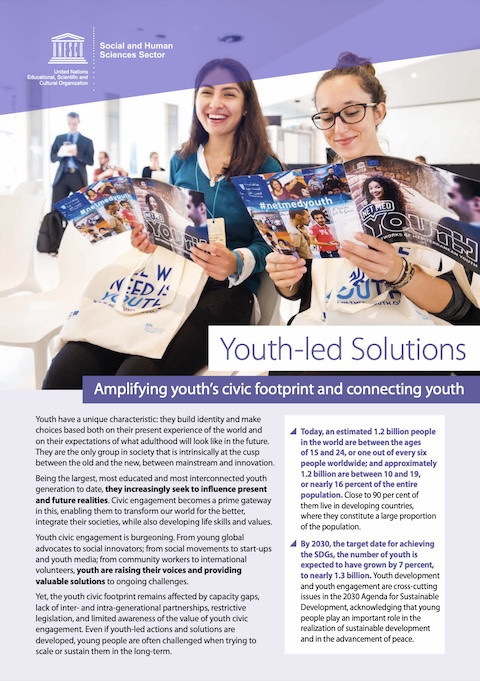 Youth-Led Solutions: Amplifying Youth’s Civic Footprint and Connecting Youth Год публикации: 2019 Организация-автор: UNESCO UNESCO believes in the value of youth civic engagement and youth‐led solutions. In line with our Operational Strategy on Youth (2014‐2021), our approach to meaningfully engaging with youth entails working with youth as change‐makers and partners, and not solely as beneficiaries. We apply cutting‐edge approaches and programmes that contribute to shaping an enabling ecosystem for meaningful, effective and sustainable youth civic engagement.
 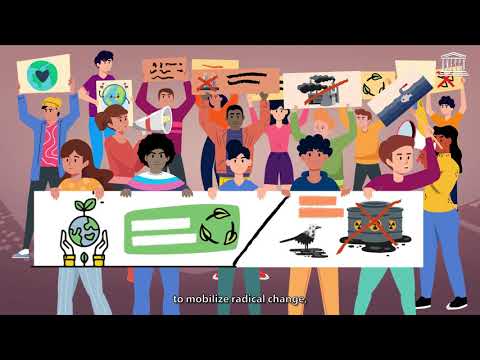 How Can Education Really Contribute to Solving the Climate Crisis? Год публикации: 2020 Организация-автор: UNESCO “Debating the Futures of Education” is a video series produced by UNESCO, within the framework of an initiative that seeks to reimagine the futures of education. The purpose of this video is to think about how education can really contribute to solving the climate crisis.
  UNESCO Green Citizens: A Global Voice for Local Actors of Change Год публикации: 2020 Организация-автор: UNESCO UNESCO launches the UNESCO Green Citizens Initiative, a flagship project to support citizen engagement for the planet. The UNESCO Green Citizens campaign echos the global voice of local actors of change, highlighting innovative citizen projects from around the world.
  Changing Minds, Not the Climate: UNESCO Mobilizes to Address the Climate Crisis Год публикации: 2019 Организация-автор: UNESCO The climate crisis is the challenge of the century. Scientific reports, including those of UNESCO, one after another describe increasingly pessimistic scenarios. All experts agree on one thing: we are in a race against time. A race to try to reserve our natural habitat in all of its beauty and diversity, to protect our ecosystems and natural resources and to pass them on to future generations. A race to mitigate the destructive effects of climate change and find the most appropriate innovative solutions.The disruptions caused by climate change are already part of our daily lives and trigger social, political, geopolitical and humanitarian upheavals. The climate crisis is not only threatening our ecosystems, it is also undermining fundamental rights, widening inequalities and creating new injustices. That is why ethical imperative must guide our action. Beyond the political and legal agreements essential to preparing for the future, change involves a shift in mindset, a different way of considering the place of humans in nature. This challenge mobilizes all resources, including education, research and creativity. It is an ethical and humanistic commitment. This is UNESCO’s mandate, and it is a matter of urgency.
 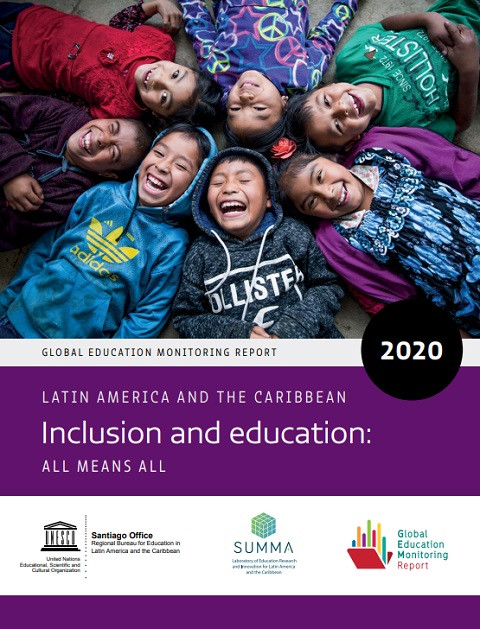 Latin America and the Caribbean 2020: Inclusion and Education; All Means All (Global Education Monitoring Report) Год публикации: 2020 Организация-автор: Global Education Monitoring Report Team | UNESCO | Laboratory of Education Research and Innovation for Latin America and the Caribbean (SUMMA) Latin America and the Caribbean has the largest and most challenging socio-economic inequalities in the world, which have shaped its education systems over the decades. This report looks at everyone both in and excluded from education in the region, pinpointing barriers facing learners, especially when multiple disadvantages intersect. The report also explores challenges in education posed by COVID-19 and the need for urgent action to prevent an exacerbation of inequalities. Produced by the Global Education Monitoring (GEM) Report team, in partnership with the UNESCO Regional Bureau for Education in Latin America and the Caribbean (OREALC) and the Laboratory of Education Research and Innovation for Latin America and the Caribbean (SUMMA), the report assesses key solutions for greater inclusion through several case studies from the region. It provides in-depth analysis on challenges to inclusion in education arising from migration and displacement in Colombia and Costa Rica; remoteness in Brazil and Suriname; disability in Cuba and Nicaragua; gender in Peru and Jamaica; sexual orientation, gender identity and expression in Chile and Mexico; poverty in the Dominican Republic and Honduras; ethnicity in Bolivia and Ecuador; and incarceration in El Salvador and Uruguay. Building on the 2020 Global Education Monitoring Report, this regional edition concludes that strong laws and policies in Latin America and the Caribbean demonstrate a commitment to inclusion, but that the daily realities faced by learners suggest implementation is lagging. Recommendations are aimed at promoting more inclusive education systems to benefit all children and youth, no matter their background, identity or ability. The recommendations provide a systematic framework for identifying and dismantling barriers for vulnerable populations, according to the principle that ‘every learner matters and matters equally’.